1/n Attention, Please! 🚀
Our work “Revisiting Attentive Probing Through the Lens of Efficiency” has been accepted at #ICLR2026.
We introduce Efficient Probing (EP) — a lightweight, multi-query attentive probing method for frozen encoders.
Paper + code at the end 👇
We are in an era where you can agentify almost anything, and often you get a more powerful system.
This work provides a neat example of that approach applied to optimizers:
DINOv2 has never seen a caption, and Qwen3 has never seen an image. We still aligned their embedding spaces without a single image-caption pair.
It even works when the images and the captions come from different datasets.
Project page: https://t.co/2YHSkXVz1D
⬇️
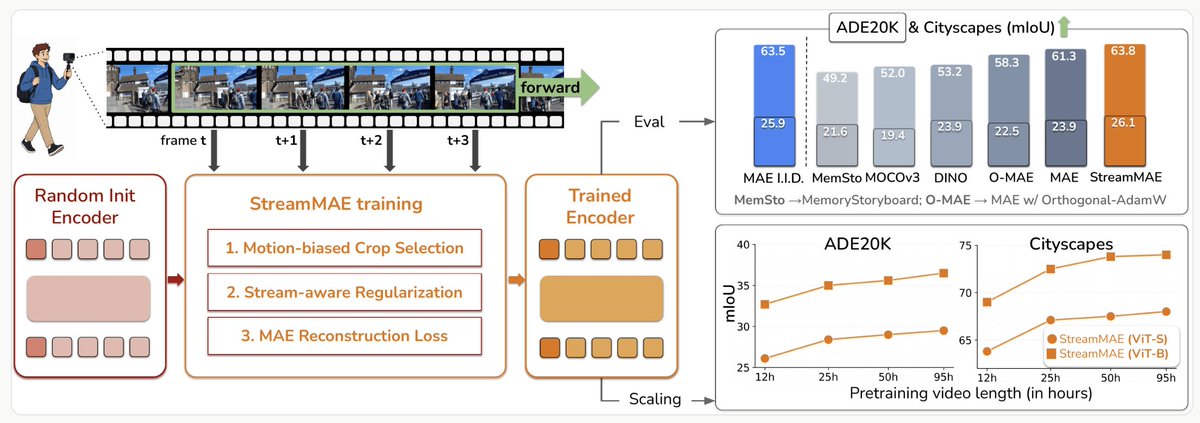
Besides scalability, self-supervised learning is attractive because we have a good real-life example of humans/mammals learning strong visual systems.
BUT: they do not learn from shuffled image collections. They learn from (essentially) a single long visual stream.
This is what we tackle in our new @NeurIPSConf paper, led by Ivan, together with @LukasKnobel1 and me. 1/
https://t.co/f2NTLHa9c5
🤖 🚀 I am opening one fully-funded 2-year postdoc position to explore egocentric 4D scene representation and understanding for robot learning, with fantastic collaborators @FrancisEngelman and @antoniloq
⏰ Deadline: November 23rd, 23:59
🔗 https://t.co/NDB1V77U9A
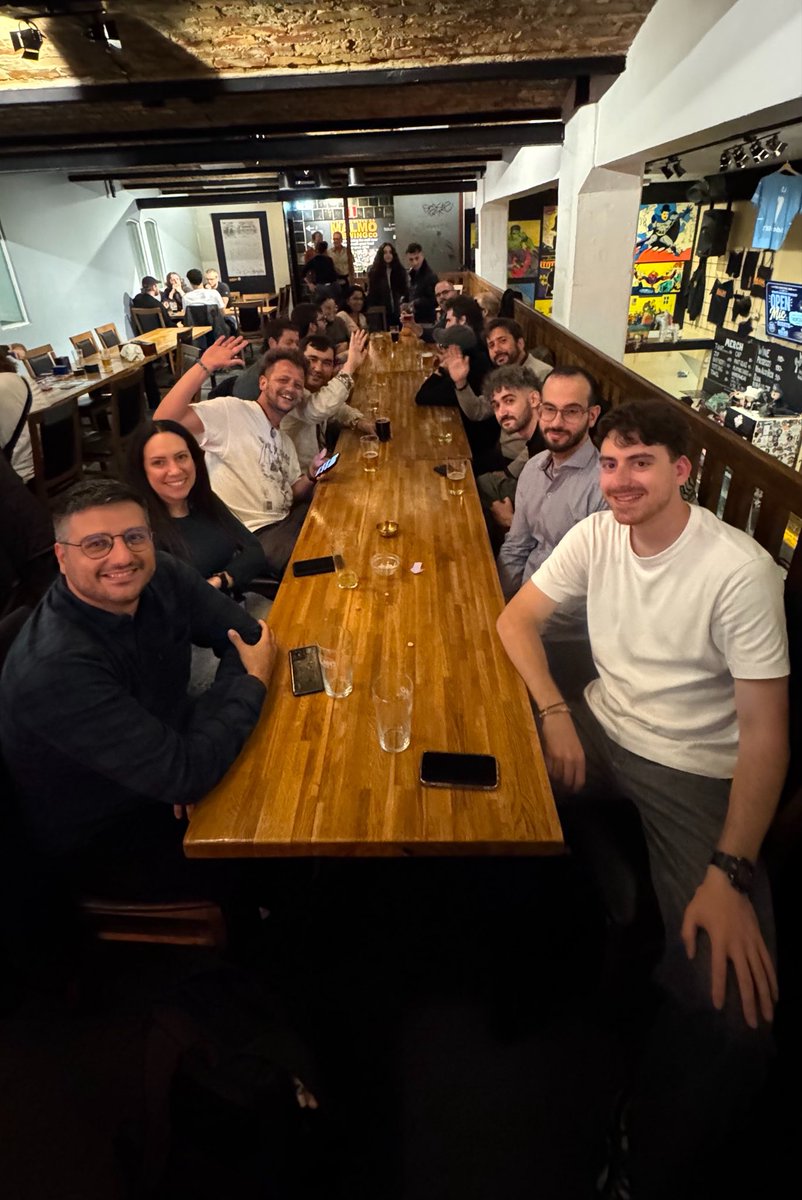
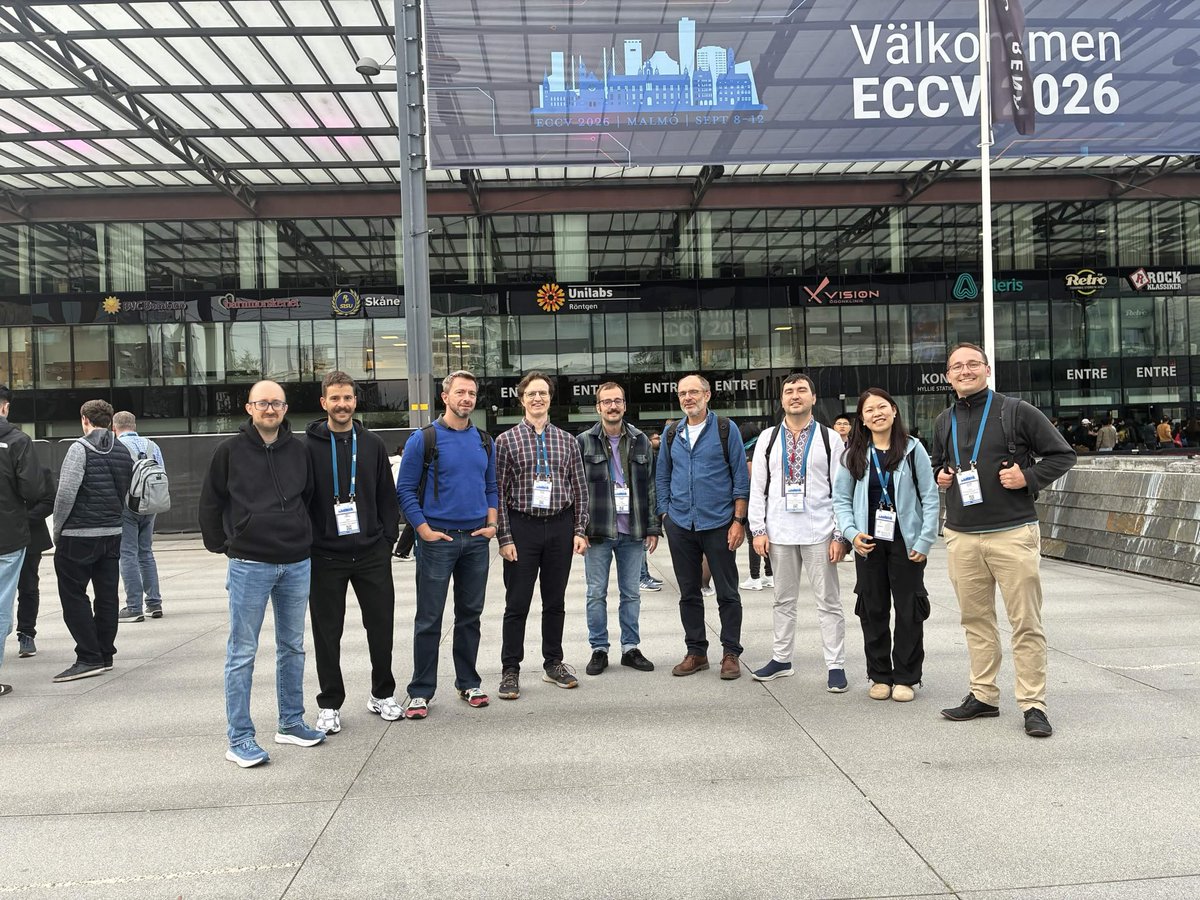
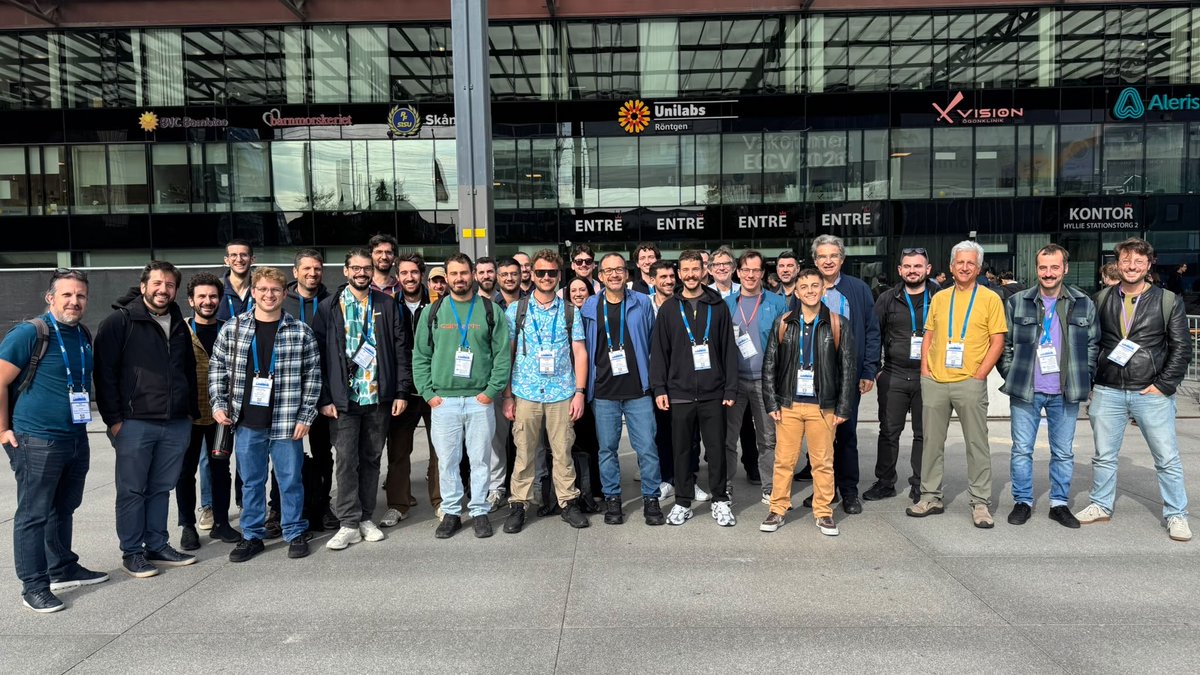
Many people at ECCV 2026 were actually worried about computer vision (and their own) future after the Astra came out.
If you are as well - watch this @dhh talk. That's the only good way to look at things.
https://t.co/jEMLWWsMBC
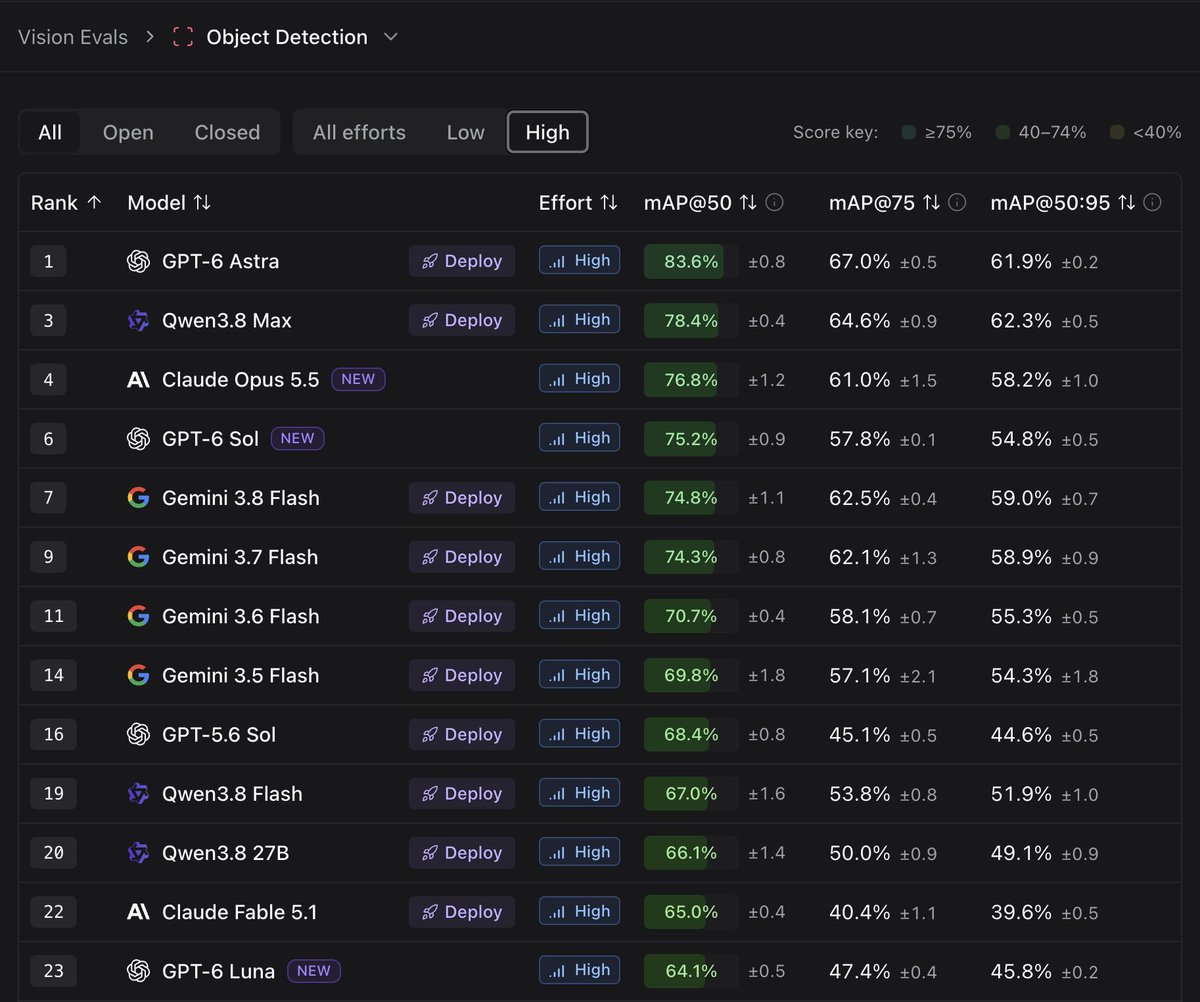
Opus 5.5, GPT-6 Sol, and GPT-6 Luna numbers are on the Playground leaderboard
crazy how fast Google lost the computer vision lead
object detection used to be their stronghold, now 3 labs and 4 models sit ahead of them
link: https://t.co/puUowt3HbY
🔥 Composed image retrieval, as it should be.
📸 i-CIR (NeurIPS 2025): a photo says which particular object, a text says how it should look.
🔍︎ Explore every composed query in our new dataset browser: https://t.co/sn1z6umn5u
More to come...
#ComputerVision#ImageRetrieval
Happy to co-host the 2nd edition of the FOUND Workshop in @eccvconf.
For this edition, we are heavily emphasizing on Physical AI and World Models, with a specific focus on data curation for real-world embodiment.
Join us on 9th Sept 8:30 to 12:30 at MalmöMässan E1. More info⬇️
Most of what @the_good_ai_lab does can be described as building a connection. A bridge between frontier AI research and humanitarian action, education, and sustainability. 🌱🧵
https://t.co/msR9b8C6sg w/ @MSF
@hassonofer_ Really happy to hear this😄 We've empirically observed some correlation between EP and FT performance too, on some models.
Also, Birder looks like a very cool project, wildlife/bird recognition at that scale🐦
🎉 Our #ICLR26 paper on efficient probing (EP) now has a home that outlives the paper.
⏱️ Probing Frozen Encoders — a standing ImageNet-1k benchmark for k-NN, linear (LP) and efficient probing (EP).
Built to stay. Issues and PRs welcome 👇
https://t.co/g2WAa2qYS8
🔮 Coming next:
🧠 EP head checkpoints — load & probe, no training 🎨 attention-map viz of EP's queries
🛰️ remote sensing foundation models
🆕 ReImageNet re-eval — ~12% of IN-1k val labels are wrong! (https://t.co/N0hng9IyRe, @klaaracz)
Stay tuned 🚀
🤝 Want your model in the table?
Clone, run the three commands (k-NN, LP, EP), open a PR with one row.
That's it — the leaderboard grows with the field.