How many San Francisco landmarks can you spot during this robotaxi engineering vehicle’s 70-minute drive around the city?
From construction to scooters to double-parked cars on some of SF’s most challenging streets, our universal AI driver can handle it all.
#autonomousvehicles #selfdriving #drivenbynuro
Watch the Nuro Driver circle the Imperial Palace in Chiyoda, Tokyo. One AI driver, all roads, all rides. Always smooth, conscientious, and human-like.
#autonomousvehicles#selfdriving#drivenbynuro#japan
https://t.co/H7SuRxrv5g Many, many thanks to the Ansys team for giving Inverted AI huge exposure at #CES2025. Our ITRA behavior models in AVx are poised to massively impact the AV/ADAS space. Stay tuned.
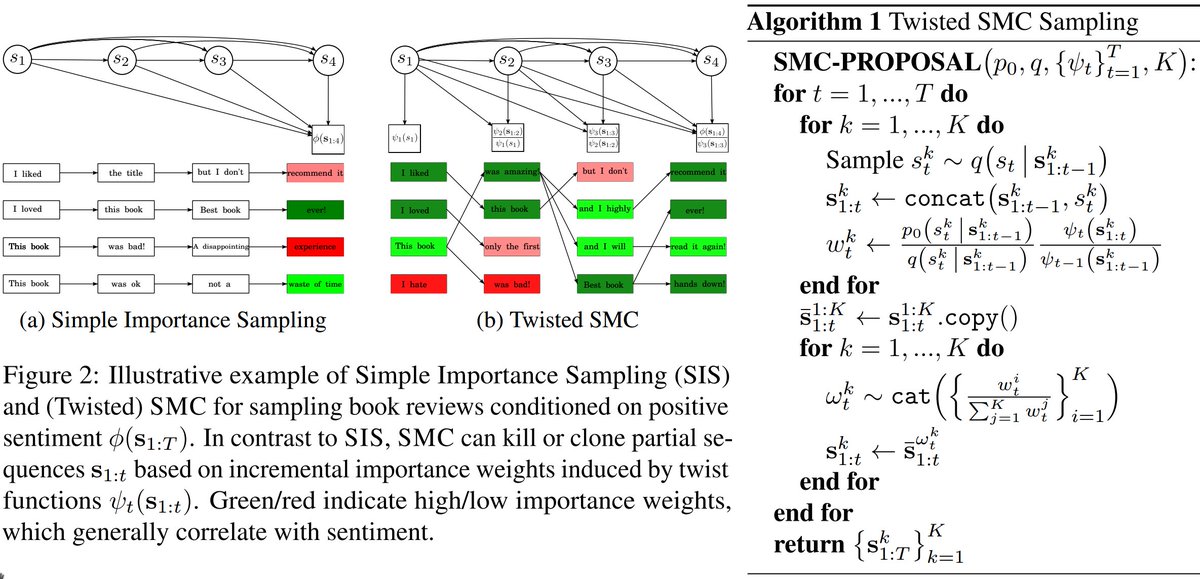
Introducing “Probabilistic Inference in Language Models via Twisted Sequential Monte Carlo”
Many capability and safety techniques of LLMs—such as RLHF, automated red-teaming, prompt engineering, and infilling—can be viewed from a probabilistic inference perspective, specifically as sampling from an unnormalized target distribution defined by a given reward or potential function. Building on this perspective, we propose to use twisted Sequential Monte Carlo (SMC) as a principled probabilistic inference framework to approach these problems. Twisted SMC is a variant of SMC with additional twist functions that predict the future value of the potential at each timestep, enabling the inference to focus on promising partial sequences. We show the effectiveness of twisted SMC for sampling rare, undesirable outputs from a pretrained model (useful for harmlessness training and automated red-teaming), generating reviews with varied sentiment, and performing infilling tasks.
Our paper offers much more! We propose a novel twist learning method inspired by energy-based models; we connect the twisted SMC literature with soft RL; we propose novel bidirectional SMC bounds on log partition functions as a method for evaluating inference in LLMs; and finally we provide probabilistic perspectives for many more controlled generation methods in LLMs.
Paper: https://t.co/Iu8hGWFki9 (with @ZhaoStep*, @brekelmaniac*, @RogerGrosse)
See Stephen’s thread for more details 👇
I'm pleased to announce https://t.co/QbZQwg9TTQ the @PLAIGroup's latest effort towards building an audio in/out,video,keyboard,mouse open-source embodied AI data collection effort. If you and or your children enjoy #Minecraft visit and contribute!
https://t.co/CwRGWvHnAY
.@UBC_CS to launch advanced machine learning training network.
@NSERC_CRSNG
“This program does nothing less than establish one of the best training experiences possible for any young #AI researcher in the world,” says Dr. Frank Wood (@frankdonaldwood)
https://t.co/LqJgs4Bzww
Great to see https://t.co/RFjM2SUEry featured on W&B. Building our human-like driving behavior models at our scale without the help of tools such as @wandb would be almost impossible.
Non Playable Characters (NPCs) are an integral part of autonomous driving. Find out how Inverted AI, a Vancouver-based startup, leverages W&B to develop world-class predictive models to build agents that act just like humans.
https://t.co/lEKRuXCKtw
At Inverted AI, we aim to improve our human-like driving simulators every day. Our latest work proposes CriticSMC, a novel method to solve hard planning as inference problems like avoiding infractions in #selfdriving.
w/ @adamscibior and @frankdonaldwood
https://t.co/KHbnvl9mbD
UBC machine learning spin-off Inverted AI awarded $1.2M from @MitacsCanada, providing funding for over a dozen grad students to work on deep-generative behavioral modeling for autonomous vehicles
@frankdonaldwood@PLAIGroup@CAIDA_UBC
https://t.co/T6amfTiGok
TITRATED: Learned Human Driving Behavior without Infractions via Amortized Inference
Vasileios Lioutas, Adam Scibior, Frank Wood
https://t.co/32TXYRu52T
At Inverted AI, we aim to improve our human-like driving simulators every day. Our latest work proposes CriticSMC, a novel method to solve hard planning as inference problems like avoiding infractions in #selfdriving.
w/ @adamscibior and @frankdonaldwood
https://t.co/KHbnvl9mbD
I think, much more than large language models, this work might be the first glimpse of what the foundation model for vision-based planning for embodied real-world AGI might look like. @sama, @demishassabis, @ylecun who is going to scale this first?
https://t.co/jzkoU8l6Tx
(1/n)
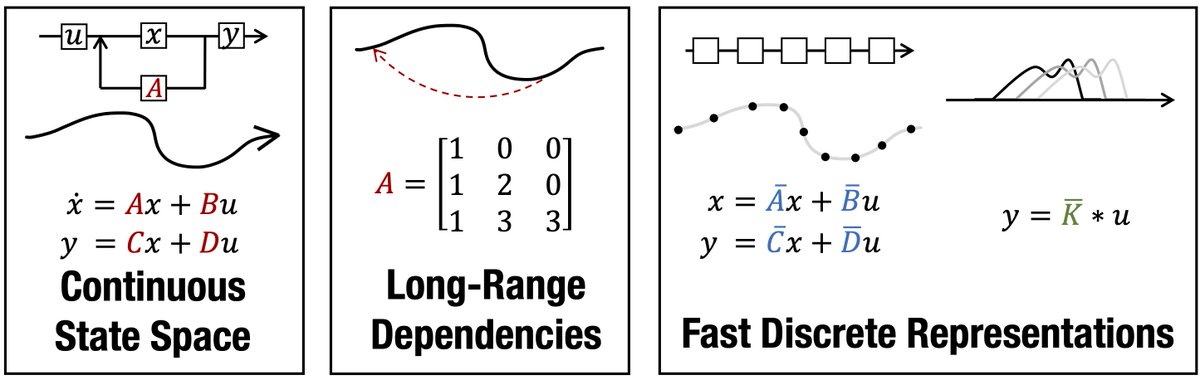
Excited to release 2 preprints that describe our progress on sequence modeling for long-range dependencies!
https://t.co/bOMrLGihZs (NeurIPS ‘21)
https://t.co/vziQWpZCPM
We build a new class of state space models that improve perf. on the Long Range Arena by 20 points!
If you write a paper about X because you read Y, give some love to Y. Don't bury that fact in some bullshit literature review. You might think we're competing but we're not.
To celebrate the start of the PROBPROG conference today (https://t.co/PKuVcbTwml), we have put the next iteration of our book on probabilistic programming online: https://t.co/5HSE0Rkk5a. [1/]



![jwvdm's tweet photo. To celebrate the start of the PROBPROG conference today (https://t.co/PKuVcbTwml), we have put the next iteration of our book on probabilistic programming online: https://t.co/5HSE0Rkk5a. [1/] https://t.co/Px490ouZWn](https://pbs.twimg.com/media/FCIONHvXIAEUHMj.png)