slate-yjs is actively maintained again, by me, thanks to @bitphinix for the awesome work on this and for handing over the baton.
New home: https://t.co/cFbbA2EP8b
First minor changes include updated dependencies, supply chain protection, a new fuzzer that is finding sync bugs which are about to be fixed.
Issues and PRs welcome.
Introducing SID-2, a new search model built on compute-scaling swarms.
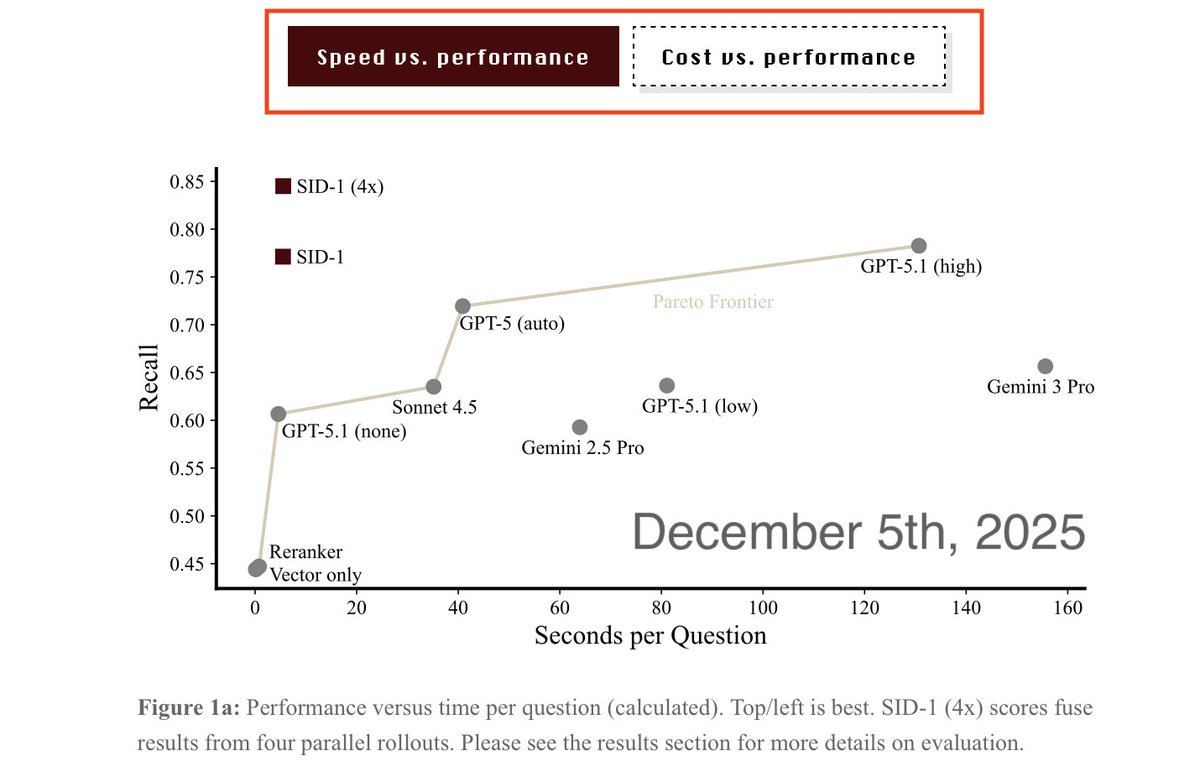
Our swarms find better results than Opus and Astra, while being 8x faster and 20x lower cost.
By 2030, AI will write an internet's worth of text every 24 hours. Current search pipelines were built on hand-designed rules, adding more won't scale to meet this incoming volume of data.
SID-2 is available on our API today. Try it on your most demanding searches.
Chroma's "new" model sure seems familiar. A story.
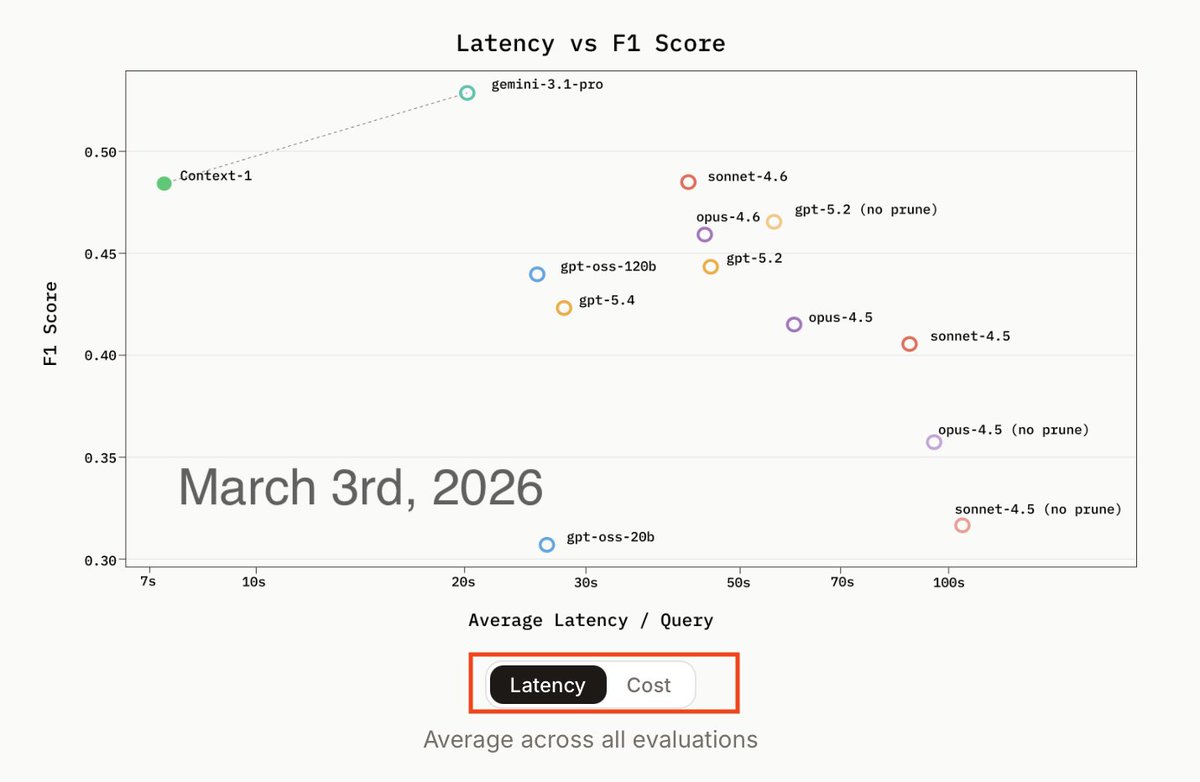
Imitation is the sincerest form of flattery. But there is a point where it goes from "inspiration" to whatever Context-1 is:
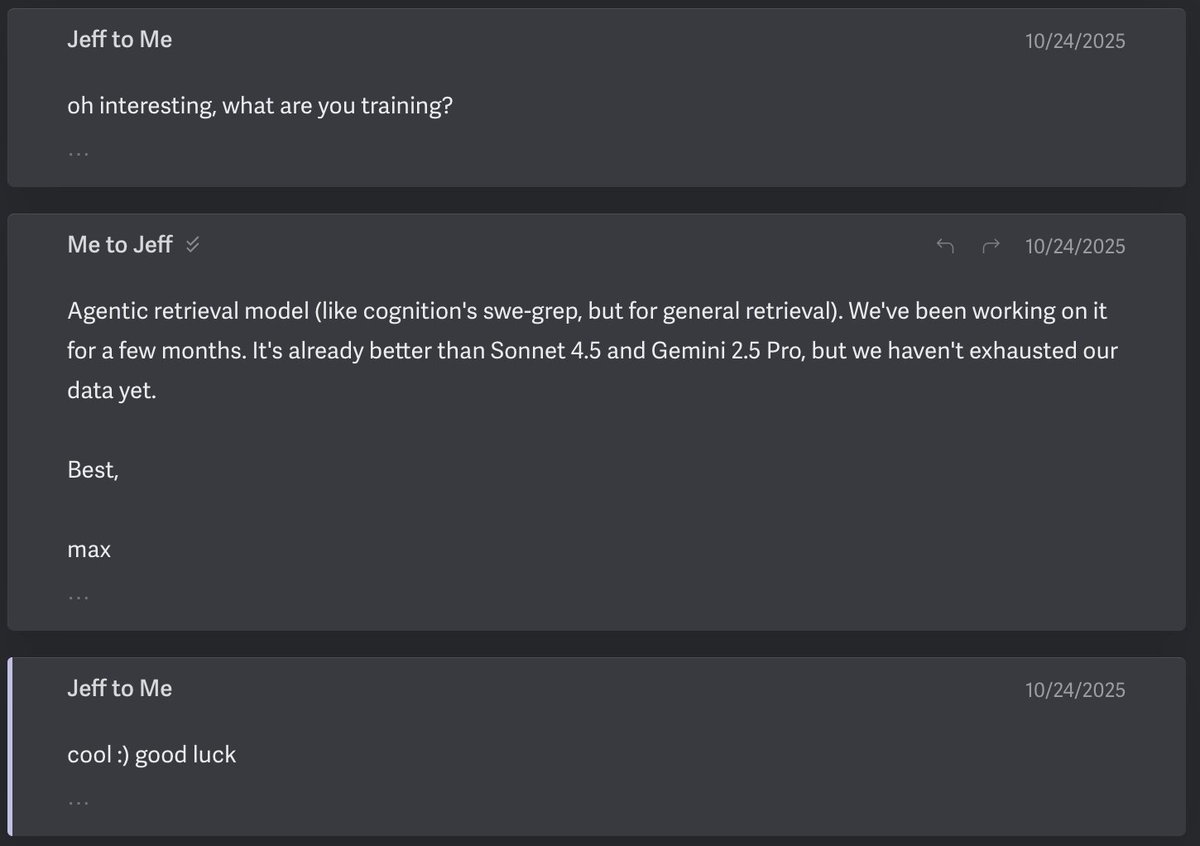
6 months ago, Chroma's CEO @jeffreyhuber asked us about our research. 4 months ago, we proudly shared SID-1's tech report with him. An exchange I now understand very differently (see the emails).
Today, they released a report heavily "inspired" by ours. Charts, datasets, methods, and the whole model itself. Down to the toggle for Figure 1 and our 4x RRF rollouts.
They never reached out to benchmark our model. Their claims of "pareto-optimality" ring hollow. They provable knew there was another model.
Unfortunately, we can't benchmark their model: While their weights are open, the harness they say one needs isn't yet. Their claims of "pareto-optimality" ring hollow. They knew there was another model. I know Jeff well and our offices neighbor.
We shared a lot of insights in our tech report. Maybe more than prudent. But we believe in advancing human knowledge. (Making search better is our way of doing so). We applaud companies like @thinkymachines that are brave enough to share the ideas that make the work possible.
But where do we go as a research community when we stop respecting each other's work? When we don't give credit where it's due? And trick "friends" into sharing more, just to steal it? While claiming moral high ground by calling this "open-source?"
This completely destroys any incentive for us (and others) to go into as much depth as we did in our tech report. It’s sad to see the poor research practices that are sadly common in academia making their way into startups. Context-1 has some interesting ideas: Pruning is clever. I wish I were writing about them.
Followers and copycats, even if they're bigger, don't scare us. I'm very proud of what we've built. And even more proud of who I'm building this with.
We're also hiring original thinkers.
AI products fail constantly—in ways both hilarious and terrifying.
Regular software throws exceptions. But AI products fail silently.
Meet @raindrop_ai : the first Sentry-like monitoring platform for AI products.