#TechTuesday#FlightTest Episode 5 ✈️ 📙
When one engine is out and the other at max thrust, what happens next?
Find out how Pilots use Minimum Control Speeds (VMC) and rudder deflection to keep their heading and safely maintain full control.
Watch now 👇
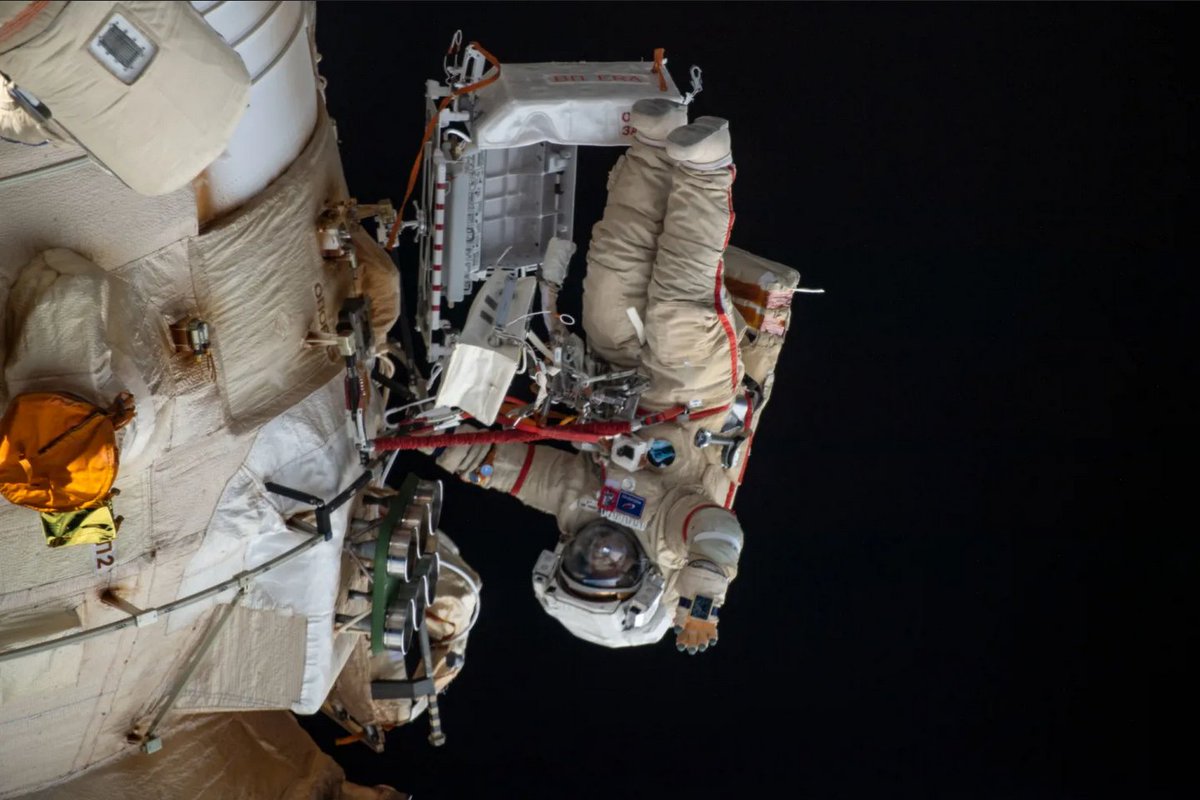
Two cosmonauts will step outside the @Space_Station on Wednesday, Oct. 25, for a seven-hour spacewalk. Live coverage begins at 1:30pm ET (1730 UTC): https://t.co/Chwntykyvd
SpaceX’s 29th resupply mission to the @Space_Station carries new experiments that will test laser communications, measure gravity waves, and evaluate water filtration.
Liftoff is currently scheduled for Nov 5. Check out the experiments here: https://t.co/bzXbiGxkCz
We're live at NBAA-BACE, the world’s largest business aviation event, and we couldn't be more excited to kick off the next few days alongside the industry's best.
Stop by booth N2526 to learn about our market-leading supply chain solutions!
#NBAA2023
https://t.co/zTqvuxYW6L
A new laser communications system is set for launch to the @Space_Station aboard the next @SpaceX resupply mission. On Thurs., Oct. 26, experts will answer questions on this @NASASCaN system and other research: https://t.co/yCV5cIy4M0
The #Artemis II crew finished part one of their training, called fundamentals, for their mission around the Moon! First was learning every inch of Orion's interior — now, the crew will start orbit operations training, practicing in the Orion mission simulator. More: https://t.co/NWoMaTlVUP
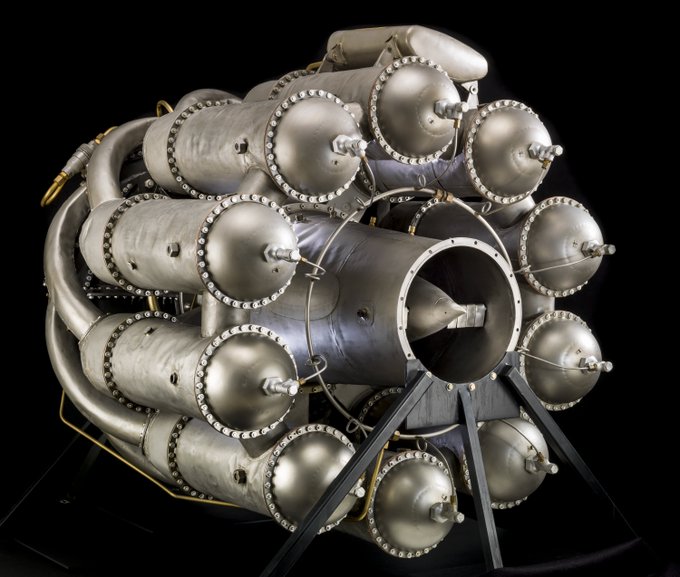
#OTD in 1945, Air Commodore Frank Whittle, inventor of the turbojet engine, flew a jet for the first time. What did he think of the experience? He found the flight "extremely satisfying."
Learn more about the Whittle W.1X engine in our collection: https://t.co/MK4Zi0t6Yx
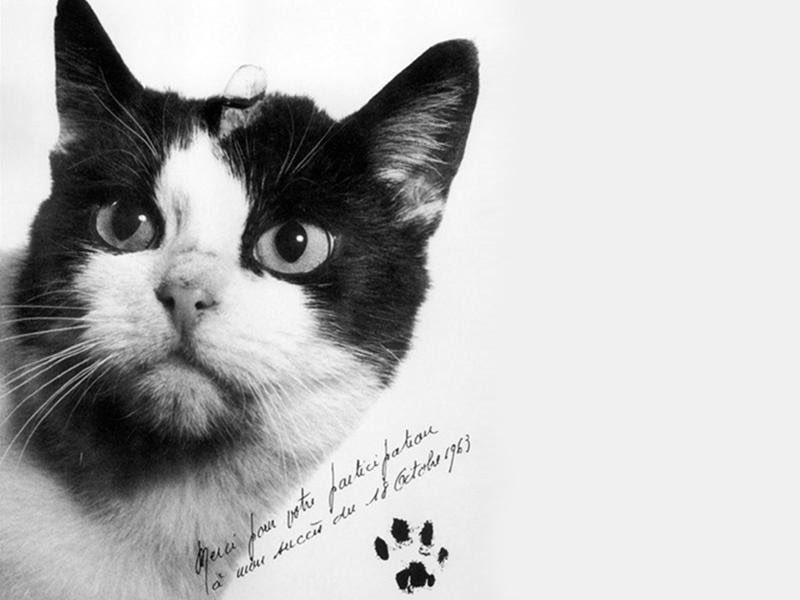
60 years ago today, a cat named Félicette became a feline space traveler when she launched into space on a mission conducted by the French space program. The spaceflight, which Félicette survived, was suborbital and lasted less than 15 minutes.
The XQ-58A Valkyrie boasts an entirely new and innovative design. This next generation stealth drone was developed by the Air Force Research Laboratory to be a high-speed, low-cost aircraft developed for the AFRL’s Low-Cost Attritable Aircraft Technology (LCAAT) project.
Congratulations to #MissionToPsyche on a successful launch and journey to heavy metals! Gateway's turn on the launchpad aboard a @SpaceX Falcon Heavy will be here before we know it. Can't wait to rock history as the first space station to orbit the Moon!
The Wright Flyer's first flight in December 1903 lasted just 12 seconds. The Wright brothers continued to build more refined versions of their flyer, and #OTD in 1905, Wilbur flew their third powered aircraft on a 39 minute flight.
📷: Wright Flyer III in 1908
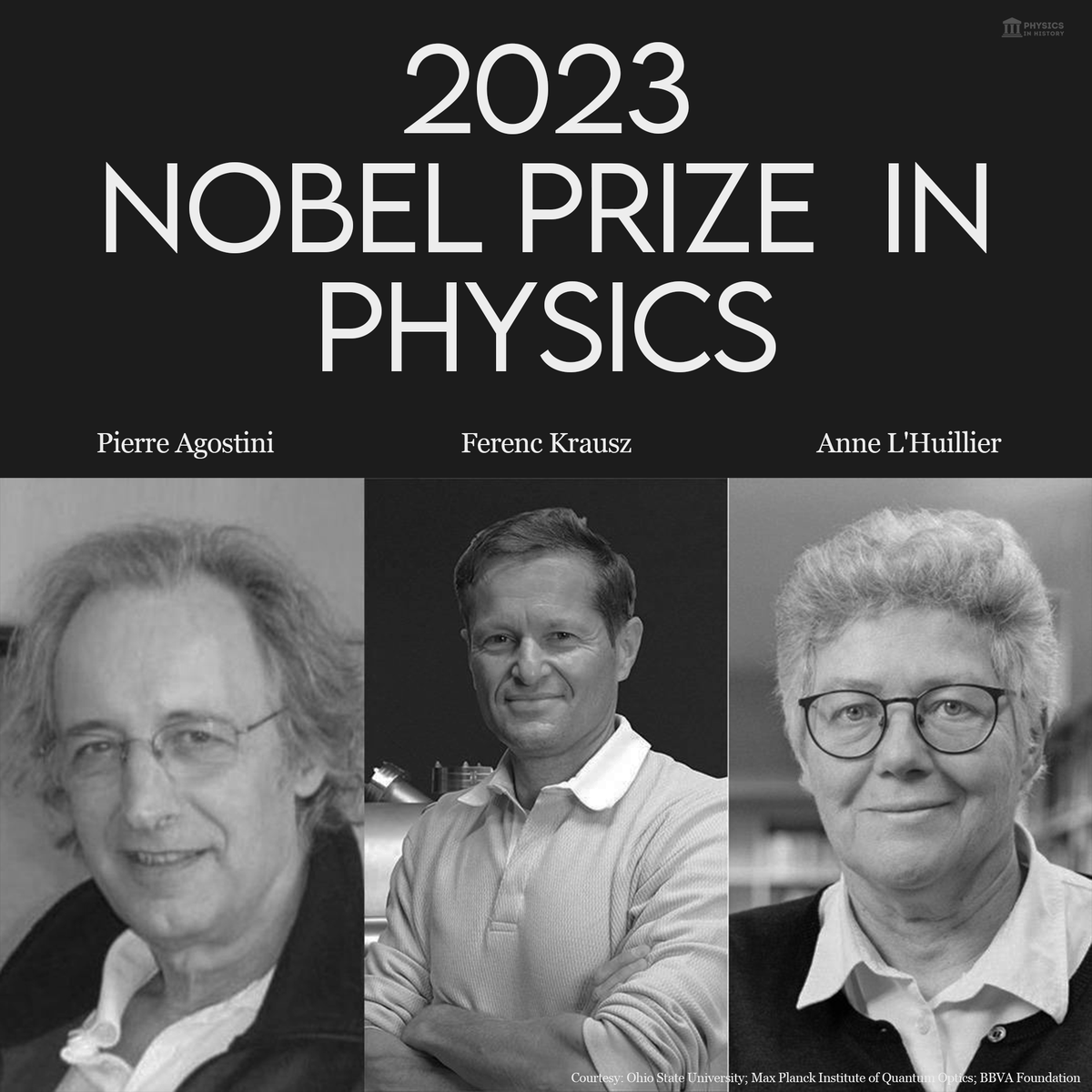
The 2023 Nobel Prize in Physics 🏅
The 2023 Nobel Prize in Physics is awarded to three scientists who developed experimental methods to generate extremely short pulses of light that can be used to study the dynamics of electrons in matter. These pulses are measured in attoseconds, which are one billionth of a billionth of a second. By using these pulses, the scientists were able to observe and manipulate the movements and interactions of electrons inside atoms and molecules, which are the building blocks of matter.
The three laureates are:
Pierre Agostini, a French physicist who works at The Ohio State University in the USA. He was the first to produce and investigate a series of consecutive light pulses, each lasting 250 attoseconds, in 2001. He used a technique called high-order harmonic generation, which involves shining intense laser light on a gas and creating overtones of light with higher frequencies and shorter wavelengths.
Ferenc Krausz, a German physicist who works at the Max Planck Institute of Quantum Optics in Germany and the Ludwig-Maximilians-Universität München. He was also working on high-order harmonic generation, but he managed to isolate a single light pulse that lasted 650 attoseconds, in 2001. He used a technique called carrier-envelope phase stabilization, which involves controlling the phase difference between the electric field and the envelope of a laser pulse.
Anne L’Huillier, a French physicist who works at Lund University in Sweden. She discovered the phenomenon of high-order harmonic generation in 1987, when she transmitted infrared laser light through a noble gas and observed many different overtones of light. She has continued to explore this phenomenon and laid the groundwork for the subsequent breakthroughs by Agostini and Krausz.
The Nobel Prize in Physics 2023 recognizes the contributions of these three scientists to the field of attosecond physics, which has opened up new possibilities for understanding and controlling the world of electrons. This could have applications in many areas, such as electronics, chemistry, biology, and medicine. For example, attosecond pulses could be used to identify different molecules, monitor chemical reactions, create new materials, or improve medical diagnostics.
Source: https://t.co/E92mg6smLo
📷Courtesy of Ohio State University, Max Planck Institute of Quantum Optics, and BBVA Foundation respectively