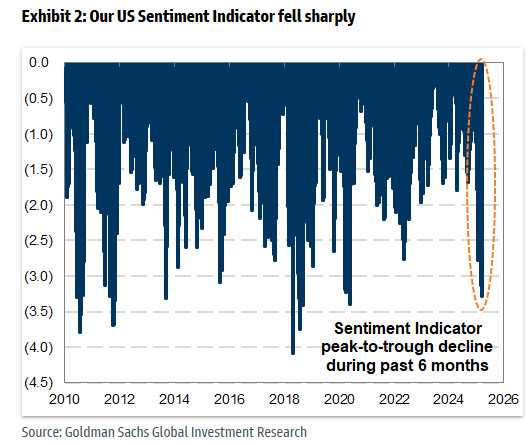
If you are curious why the Fed is once again choosing to favor growth over price stability, Read Arthur Burns from 46 years ago…
The Fed has completely lost its bearings and is no longer in control. The emperor has no clothes.
Powell’s uncertainty in the presser & his clear resignation to what has become a rudderless political process is clear.
The 🌎 where the simple 2 dimensional lever of monetary policy could reasonably be expected to navigate between growth & price stability is gone.
Enter the 1970’s👇
Dostoevsky was 28 when they stood him in front of a firing squad. Blindfolded. Hands tied. He could hear the rifles being loaded.
At the last second a messenger on horseback arrived. The Tsar had commuted the sentence. The entire execution was staged. Psychological torture designed to break him.
It worked. He had a seizure on the spot.
They sent him to a labour camp in Siberia. 4 years. Freezing. Starving. Sleeping on wooden planks next to murderers. His epilepsy got worse. He had no paper. No pen. Nothing.
When he got out he was broke. His first wife died. His brother died. He inherited his brothers debts. He was so desperate for money he signed a contract with a publisher that would have given away the rights to everything hed ever write if he missed the deadline.
He wrote The Gambler in 26 days to make it. Dictated it to a 20 year old stenographer named Anna. Married her three months later.
Then the real work started. Crime and Punishment. The Idiot. Demons. The Brothers Karamazov. The greatest novels in the history of the Russian language. Maybe any language.
The man who stood blindfolded before the firing squad, who convulsed on the ground while soldiers watched, who slept next to killers in Siberia for 4 years, who was buried in debt and grief.
That man wrote: "every minute can be an eternity of happiness."
He earned the right to say it.
its never over. never give up fren.
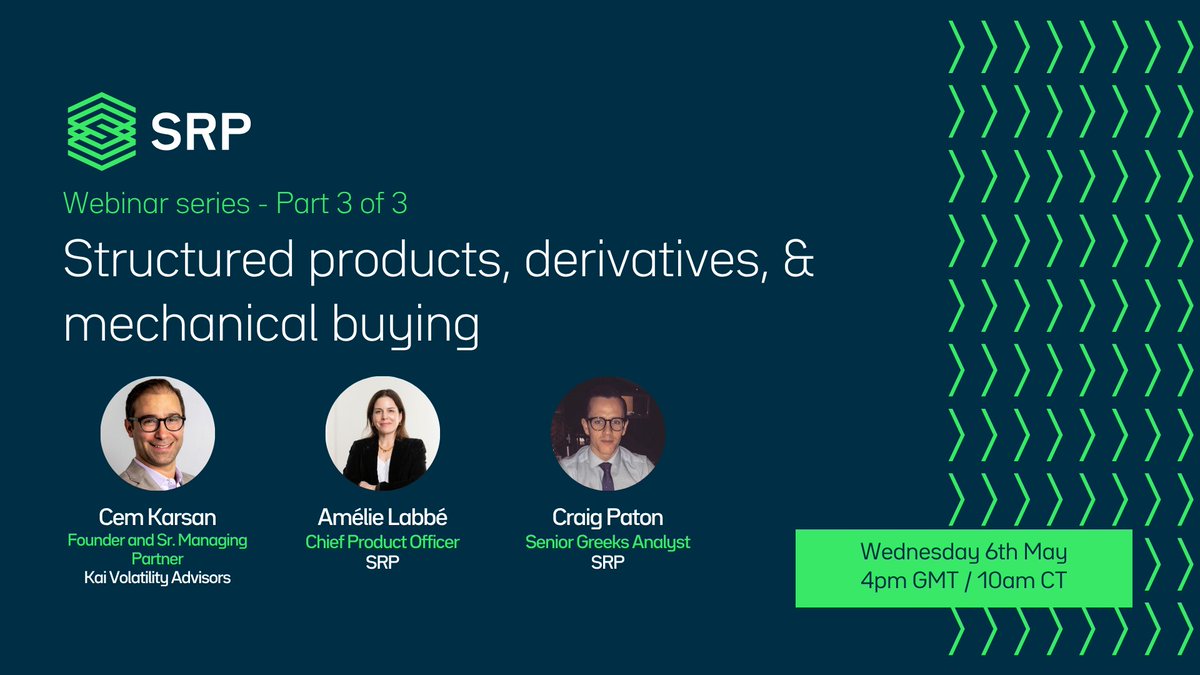
Joining SRP for Part 3 of their webinar series next Wednesday, May 6 at 11am ET.
We'll dig into how structured products and derivatives activity drives mechanical buying and hedging flows, and what that means for volatility and price action in the S&P 500.
Register: https://t.co/OraCemuU8Y
1/ Controversial take: hard work is more important than smart work.
It's a myth that we only have a few hours of good creative work per day. Train yourself to grind long hours first. You will surprise yourself. The work naturally become higher quality, less distracted.
Few things worry me more than this simple thought: I urge everyone to ponder what happens when the market embarks on its next downturn, & r/WSB discovers the power of puts & the gamma squeeze that they can generate going w/ institutional flow, as opposed to against it... ⚠️ ⚠️ ⚠️
A sharp re-correlation event is likely ahead:
In a healthy market, stocks tend to move together, either expanding breadth on the upside or compressing together on the downside. When large numbers of stocks simultaneously register extreme strength and extreme weakness, the market is signaling internal contradiction. This is investors disagreeing sharply about direction. This type of fractured structure has historically preceded turbulence, because markets rarely sustain contradictory internals for long. Eventually the tension resolves into a more uniform trend, and that shift often arrives with elevated volatility.
Fosback’s High–Low Logic Index quantifies this contradiction by measuring the share of stocks making new 52wk highs and new 52wk lows at the same time. Elevated HLLI readings indicate that the internal structure of the market is inconsistent with a stable trend. Too many stocks are behaving as if conditions are exceptional, but in opposite directions. Spikes in the indicator have repeatedly aligned with subsequent periods of negative returns and rising volatility, reflecting the market’s need to reconcile these mixed signals.
Return dispersion captures the same fragility from a return-based perspective. When individual stocks experience exceptionally large moves while the index barely changes, it indicates correlations have broken down and the cross‑section of returns has become disorderly. Extreme dispersion shows that capital is being pulled in opposing directions, precisely the dynamic highlighted by a high HLLI. The index becomes a misleading anchor, appearing calm while hidden instability builds underneath. Historically, such periods have been transitional, giving way to broad, correlated moves once a dominant macro driver emerges.
The LPPL framework fits naturally into this environment, as it mathematically identifies bubble-type price dynamics marked by accelerating, oscillatory behavior that cannot persist. The model detects “bubble exhaustion,” where prices have risen in a self-reinforcing pattern that becomes unstable, and “crash exhaustion,” where downside spirals have similarly run too far. Current LPPL readings show a market split between sectors exhibiting bubble-like upside exhaustion and others showing crash-like downside exhaustion. This mix reflects nonlinear dynamics characteristic of late-cycle instability and suggests that several sectors sit at mathematically unsustainable endpoints.
What ties LPPL signals to HLLI and dispersion is that all three frameworks diagnose instability rather than predict direction. LPPL captures instability in price patterns, HLLI in breadth, and dispersion in cross‑sectional returns. When all three light up simultaneously, they collectively describe a market stretched across conflicting pressures. This is the hallmark of late-cycle fragmentation, when internal relationships break down and sector behavior becomes desynchronized.
Taken together, the data materially increases the likelihood that correlations will snap back toward 1. A fractured state cannot sustain itself, and once the market resolves these contradictions, stocks tend to move together sharply. LPPL indicates that several sectors have reached unstable extremes, HLLI shows abnormal simultaneous highs and lows, and dispersion confirms extreme disagreement across stocks. Together, they portray a market approaching a phase transition.
Historically, when these conditions align, the resulting correlation spike is often asymmetric to the downside, as bubble exhaustion in defensives and cyclicals collides with crash exhaustion in growth and rate‑sensitive sectors. But regardless of the direction, the key takeaway is that diversification tends to evaporate at precisely the moment investors rely on it most. Correlations rise abruptly, idiosyncratic dispersion collapses, and the market resolves its internal conflict through a broad, unified move.
ht:
@TheMarketStats (High-Low Logic Index)
@VrntPerception (LPPL Chart)
Nomura (Dispersion)
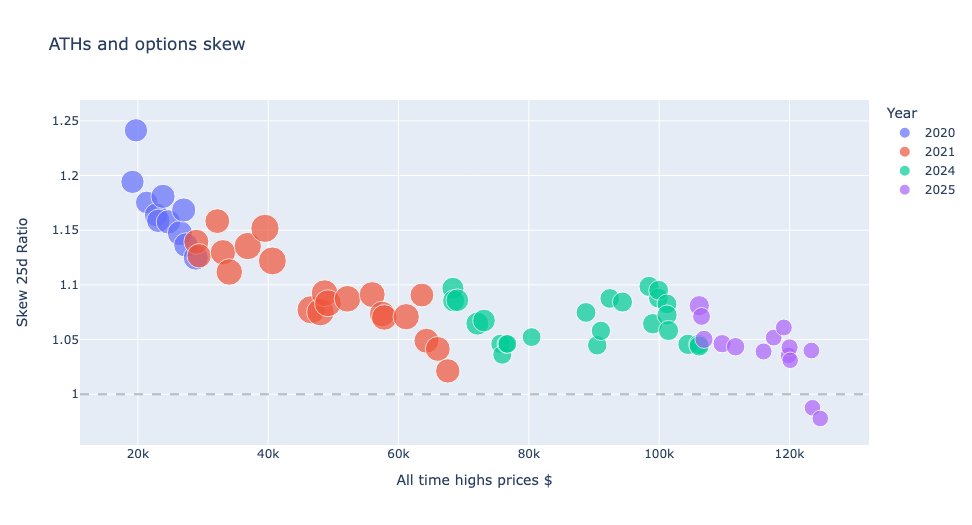
On October 6th, 2025 ATH was the most bearish ATH in Bitcoin history.
Spot price was pushing new boundaries, but the options market was signaling an exhaustion for upside demand.
A breakdown of the structural divergence and why I think we are in "TradFization" regime: 🧵👇
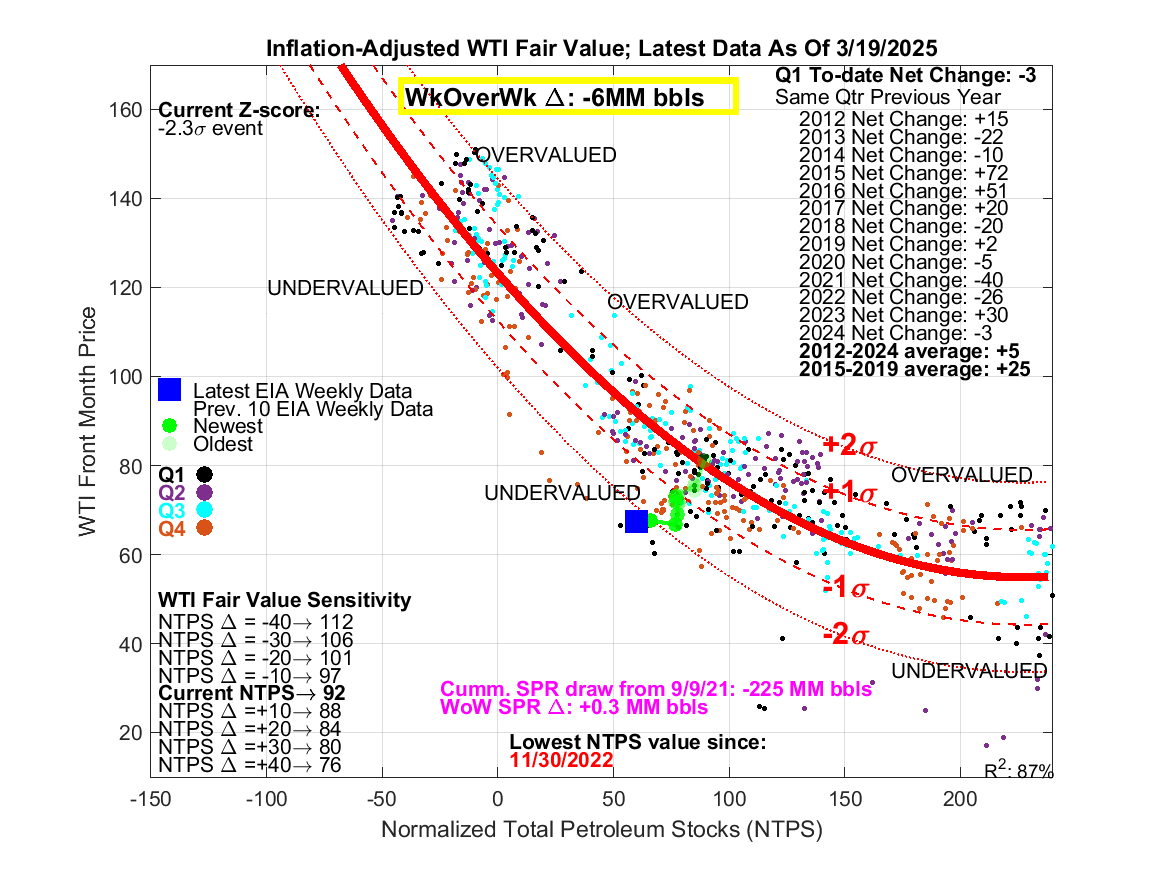
Total commercial inventory ex. other oils was down 6M bbls WoW. Implied WTI fair value price of 92, or $25 undervalued from current market price. commercial inv ex. other oils is at a 2.5 year low and the lowest print since Nov 2022. I remain long crude oil futures (CLK25).
European regulation MiCA requires Circle to swap part of its reserves from T-Bills into uninsured European bank deposits.
This makes USDC not only weaker, it also renders it impossible to keep 1:1 backing in USD cash and cash equivalents (without onchain KYC).
Quo vadis, Circle?
THE ALL-IN INTERVIEW IS BACK!
the legend @RayDalio joins @friedberg to discuss:
-- why the current market reminds him of 1998-1999
-- portfolio construction for uncertain times
-- why trump is the better option to avoid a debt crisis
-- the DC machine's opposition to @DOGE
-- the "AI war" and china risk factors (re: deepseek)
-- chances of conflict btwn us and china
(0:00) ray dalio joins friedberg!
(0:50) the current us fiscal situation
(6:23) breaking down "the big debt cycle," a potential us debt spiral, and the impact on real wealth
(24:54) usd vs other currencies and assets, best hedges against the dollar
(33:20) portfolio construction, how china increases risk for us ai companies, why this market reminds ray of 1998-1999
(41:45) how the us can avoid a debt crisis
(53:29) doge, trump, and ai's greatest risk
(1:05:31) chances of conflict between the us and china
🚨 NEW: Trump absolutely roasts Biden and world leaders at the same time. Best couple minutes you’ll watch today. Funnier than any comedian — he’s on fire. 😂 💀
today marks 10 years since i started trading. here are 41 things i've learned 📄
------
1. keep yourself to yourself
don't tell anybody about your trading until you're at a good place with it and have made money. along the way, you'll be continuously questioned and doubted by the people in your life that don't get it, and you don't need that negative energy in your headspace
2. the 90/90/90 rule is wrong
online "prop firms"/funded companies have shown that the success rate in trading is less than 1%. therefore, it makes no sense for you to listen to other traders when it comes to your strategy. literally everyone looks at the market differently. if i give 10 people the exact same trade idea with stop loss entry and tp, they'll all trade it differently. so you have to figure it out on your own and trust yourself and what you're seeing
3. social media is probably the biggest hindrance to your trading success these days.
you need a really solid mind to be able to navigate it whilst staying in your own lane. while you're learning, you will be distracted by fake traders setting an unachievable bar in your mind, when you're losing you'll ditch all the work you've done so far on your edge to copy someone who is supposedly winning. a period of time away will improve your trading 100x. when you need to talk to other traders, the time will present itself
4. master one strategy before adding more
success in trading starts with mastering one particular strategy and building from it to create several different ways to trade that core idea. there is so much correct information out there these days that you need to pick just one idea and focus solely on that. for example, strictly trading bull flags only. enough reps will teach you where and when and how to trade them. you'll also figure out when not to take them and when to trade the failure, etc. but it all starts with pure laser focus on one thing. a lot of free online strategies work, way more than you think. the reason most people fail in trading is because they don't give one idea enough reps and jump to something else when they're in a losing period, then rinse and repeat for years
5. stick with it
you have to ride through the losing periods if you have an edge that is genuinely profitable. never move to a completely different strategy in these moments. there can be a lot to blame such as poor market conditions but the real reason is because of you. you don't understand your edge enough to know NOT to trade during certain conditions, and that experience only comes from actually going through losses and coming out of the other side. your losing trades are information. you're building an intricate system with a ridiculous amount of moving parts and the only way to figure out which parts are any good is to literally try them all out.
5. it takes WAY more time and trades than you think
20 reps can tell you if your edge is profitable but it will take over 1000 reps before you feel any level of mastery
6. normalise taking wins
the "should have closed instead of taking a screenshot" meme is real. it's not a tough one to fix, but recognising you do it as a bad habit is difficult. the same principle applies to sharing your winners - if you feel the need to do so, explore why because it's likely holding you back
7. chart time trumps everything else.
you need 10,000s of hours to ingrain patterns and movements into your head and to build the intuition to know what comes next. you may experience some winning periods in your first 2-3 years and you'll think you've cracked it but real consistency won't come until many years after that
8. don't obsess over technical analysis
technicals matter to give you a map of where to trade, but they're like 10% of the battle. i spent years and years trying to refine the perfect technical analysis but when the number goes up, the number goes up. no need to overcomplicate it or talk yourself out of the trade because of a box you drew
9. don't rely on indicators
indicators work of course but they're a distraction from you working out the fundamentals with just raw chart information, which will make you a much better and adaptable trader. you don't need a volume indicator to tell you that the chart isn't moving much or that a breakout isn't going to follow through
10. make the most of backtesting
backtesting is a great tool to scratch the itch of needing to trade when the markets are dull to protect your live account. it's also great to keep your trading processes sharp. most people will talk you out of doing it. revert to point 2
11. stay focused on the task at hand
if you're trading, you're trading. you should be watching the charts and not taking your head out of the game by going on social media apps to talk to people whilst you wait for your setup to form. treat it like a job
12. a winning trader has a boring life
if there's a lot of chaos in your life, you need to remedy that situation before you can even think of trading profitably. your life as a trader must be calm and driven by routine without emotional distraction. if you're single and live alone, you have no excuse for not completely locking in
13. record all of your data
journaling is everything. you need as much information as you can gather from all areas of your life so that you can see what you were doing during your hot streaks and what you weren't doing in your cold streaks. journal your trades, journal your trade plans, journal your day to day life, journal your habits. it sounds like a lot because it IS a lot, and it's what is required
14. have a maximum daily trades rule
limiting your trades per day and being 100% strict with it will make you a better trader. it'll help control your problem with impulsive action, make you more selective with your trades, prevent account ruining spirals and teach you discipline for sticking to your rules. when you miss a winning trade because you have reached your daily limit already, that pain will teach you for tomorrow
15. narrow down your trading pairs
each chart moves differently almost like they have their own personalities. focusing on one or two charts only can help you better understand what you're trading and its behaviours. it puts you more in sync with the price action and helps you develop an edge with more consistency. your edge may work on another chart but it will likely need some tweaks because of the difference in behaviour, but you need a solid starting point
16. don't compare yourself to others
every trader comes from a different background, bringing to the table different emotional issues and psychological problems. a trader that comes from a stable background and loving childhood will reach profitability in a different timeframe to a trader that comes from a broken home with childhood trauma. so never compare where you are to where somebody else is, but use it as inspiration that what you want to achieve can be done. you will get there, you just haven't done enough work yet
17. figure out a timeframe that works for your personality
the lower the timeframe the higher the difficulty. trading is a catalyst for self improvement because it shows you what's wrong with you right in front of your face, forcing you to change parts of you in order to not bring those issues onto the chart, so that you can make money. executing on the one minute timeframe will throw many more demons at you all at once compared to the daily timeframe, but the reward is higher. if you want to take it on, you need to dedicate a lot more time into solving your psychological issues. revert back to point 12
18. internalise that missing trades is part of the job
accepting that you miss an opportunity is hard but once you get to grips with it, your results will increase massively. it stops you from revenge trading and it stops you trying to jump into every single move. it also stops you from looking for something to trade constantly on multiple charts and giving you an information overload before you've even hit buy or sell. you're always going to miss a move, whether you're in front of the screen or not
19. psychological tools
tom dante's demon finder and van tharp's trade efficiency (book = super trader) were two of the biggest game changers for me
20. stay off the chart when you exit
once you're out of a trade, journal it immediately and don't look back on the chart. more often than not, your decision for closing won't be vindicated and you can avoid a lot of stress and frustration
21. changing your behaviours takes a very long time
you have to repeat the same mistakes many many times before you finally learn not to make those mistakes again. it can be that you need to do the same thing wrong so many times that eventually something inside of you breaks, in order to force that necessary change. the only way to learn in trading is the hard way
22. you can't skip anything
there are no shortcuts in this game, absolutely none. the sooner you make peace with that, the sooner you can start doing the work you don't want to do and get closer to being successful
23. trading is 90% psychological.
if you're given a trading pattern with a 100% success rate that only appears once a week, you will fuck up whilst waiting for that one pattern. then once you're in the right trade, you will question if you should hold it or close it early, or move to break even, or close in drawdown before a full loss. you have to dig into yourself and why your thoughts are like that and why you submit to those thoughts
24. there's nothing wrong with demo trading.
there's no point in throwing money away immediately while you're learning something brand new. you can learn the technical skills as a foundation on demo for as long as you need (no more than a year though) before adding the emotional side of it on the live market later. it can also be utilised to help you out of a losing period without fucking up your account
25. you have to earn calling yourself a discretionary trader
it takes way longer than you think
26. keep your rules simple
if you can't explain your edge simply with objective language, you don't understand your edge
27. not losing is a win
28. anyone can make money trading
the actual skill is in making it and keeping it and not as many people can do that as you think (revert to point 2)
29. trading is simple but not easy
we naturally make it seem like a really complicated thing because of our egos, but you really can reduce trading to just one line on a chart and the buy or sell button. looking for perfection will keep you broke
30. sticking to one timeframe reduces your information load
it stops you from overmanaging your trades by looking at other timeframes that could end up talking you out of a winning position
31. patience is the most important skill to focus on with trading
your level of patience will dictate your success, which is why if you're using trading as a way to try and escape your current lifestyle, you will make more losses than wins because you're squeezing too hard. that extra 10 seconds of patience to wait a little longer as you go to press the button to enter can be a key difference in your results
32. don't rely on trading to bail you out
if you're in debt, go and sort that out first before depositing money into a trading account. it'll put you into the completely wrong mindset when opening trades that your failure is almost inevitable
33. make trading a feature of your day, not your whole day
having a set amount of hours to trade in a day is better for your work/life balance but also for your trading account. being mentally fatigued after too many hours at the charts leads to poor decision making and reacting off of emotion, which will ruin your pnl. having a cut off point or only trading one session will be better for you in the long run. it also helps in accepting that you will miss trades, revert to point 18
34. become outcome independent
learn to embrace a mantra of "it is what it is" so that you don't attach emotions to any outcome whether positive or negative. this allows you to objectively work out what went right/wrong and you can carry that information forward for your next trades, as well as you trading what you see rather than what you want to see
35. don't dismiss any data
use all of the candle for gathering information. the wicks are just as important as the body close. it makes no sense to omit that data
36. don't rely solely on trading for income
having some form of income alongside trading will take the pressure off of your results and allow you to trade more freely. whatever brings you the most income, learn to mould your trading around that until trading takes over and then you can mould a second income around your trading
37. be careful where you put your money
use more established companies/brokers than newer ones. there may be an appeal of cheaper prices for challenges or tighter spreads, but there is more peace of mind knowing your funds are safu with a firm that has been around for longer
38. trading news events carries unnecessary risk
trying to guess news events is a pure gamble and even if you're right on the direction, you can still get totally fucked first. the higher the timeframe you trade, the less likely the news is to affect your trade in a meaningful way. trading afterwards is way more fun
39. don't double down on a losing position
just because something is going down, it doesn't mean that the more it goes down, the more likely it is to bounce. it's more likely to continue. so make sure to cut where you had intended rather than adding to a losing position
40. enjoy what you're doing
you have to actually have a passion for trading to be successful with it. having the genuine interest in the process and how to improve it is key. without that, you won't care enough to do what it takes to win. addiction and passion are different things
41. remain humble
you're always one trade away from completely ruining your trading account, even if you have had 10 wins in a row. one bad decision can spiral out of control, so you always need to check yourself and stay consistent with the things that you do to be successful, and be humble when things go well knowing you can royally fuck up tomorrow
-------
there's plenty more to talk about but that about does it for this list. if you've learned something let me know in the replies, or if you want to add to the list let me know something important to you