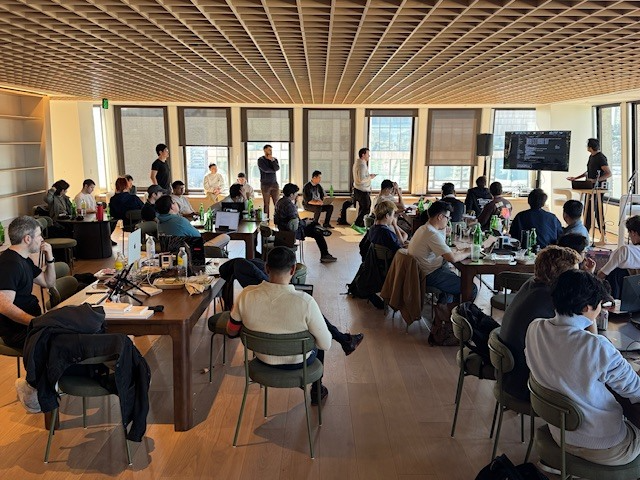
The @paradigm automated research hackathon was a great success—over 250 participants online and more than 50 in person
Competitors blew through our predicted ceilings on all three challenges, and built very cool projects
Takeaways and winners in 🧵
closed source opus 4.6 already rewired how people build, think, and ship.
an open source competing model will have unreal second order effects. every weird usecase priced out before just got access to frontier intelligence.
the world already changed for who understands.
A startup in China built a real-time MOSQUITO AIR DEFENSE SYSTEM.
This machine can KILL 1800 mosquitoes per minute
It scans the air like a sci-fi weapon, detects mosquitoes in 3 milliseconds, locks on by size and flight speed, and kill them in a flash.
Safe around humans and pets (it won’t fire if you or your dog walk by).
cost $500-600 each machine and shipping starts June 2026.
It has raised over $2.2 million in funding so far.
I've cut my social media use by 50% and I feel 100% better.
Did it with one simple rule: 2 hrs deep work for every hour on social media.
You earn an hour on social media ONLY after two hours of deep work. The deep work must happen first.
It's extremely valuable not to be influenced by fashion. In just about everything people do, from choosing problems to work on to buying art, there are unfashionable options that are not only better than the fashionable ones, but cheaper too, because they're unfashionable.
Personalized peptide stacks could become as normal as vitamins.
Andrew Huberman on where supplements are heading:
"In five years you and I are going to have a little cocktail. It's going to be one injection or one pill."
"Whatever I need to ramp up my dopaminergic system a little bit to make sure I'm getting enough micronutrients. Maybe I'm gonna put a little Klotho in there to protect me against Alzheimer's."
"All of that stuff is going to be commonplace. The same way that people are not afraid of vitamin D or they're taking some creatine or magnesium."
"I think most everyone is going to be doing that."
@hubermanlab@daisydwolf
Charlie Munger said: “If all you ever did was buy high-quality stocks on the 200-week moving average, you would beat the S&P 500 by a large margin over time.”
“The problem is that few human beings have that kind of discipline.”
Cancer is frequently diagnosed too late because tumors must grow substantial before they become visible on imaging scans. Yet the molecular clues—biomarkers—circulate in the blood much earlier, and the real challenge has always been detecting them at such minuscule levels.
Researchers at Shenzhen University have now developed an ultra-sensitive, light-based sensor capable of identifying cancer biomarkers even when just a handful of molecules are present in a single drop of blood. This innovation integrates three advanced technologies: CRISPR-based gene editing, self-assembled DNA nanostructures, and quantum dots.
The sensor relies on a surface of molybdenum disulfide (MoS₂), a 2D semiconductor that generates a second harmonic generation (SHG) optical signal when illuminated. DNA tetrahedrons—tiny, pyramid-shaped structures—precisely position quantum dots at an optimal distance above this surface to amplify the SHG signal. The system functions like a nanoscale switch: CRISPR-Cas12a is programmed to recognize a specific target biomarker (such as miR-21, a microRNA linked to lung cancer). Upon binding and detecting the target, Cas12a cleaves the DNA tether, releasing the quantum dot. This causes a detectable drop in the SHG signal, signaling the presence of the biomarker.
In validation tests with serum samples from lung cancer patients, the device reliably detected miR-21 at sub-attomolar concentrations—equivalent to pinpointing a single molecule amid trillions—without relying on time-consuming or costly amplification steps common in existing assays.
The potential is transformative. The sensor's programmable nature means it could be reconfigured to detect other threats, including Alzheimer's-related markers, viral infections, or environmental pollutants. Moreover, it avoids bulky equipment, paving the way for a compact, portable version suitable for point-of-care use in clinics or even routine checkups.
The potential is transformative. The sensor's programmable nature means it could be reconfigured to detect other threats, including Alzheimer's-related markers, viral infections, or environmental pollutants. Moreover, it avoids bulky equipment, paving the way for a compact, portable version suitable for point-of-care use in clinics or even routine checkups.
[Siyi Han, Lingfeng Gao, Qiao Jiang, Wenbo Du, Shi Chen, Yi Liu, Han Zhang, Xilin Tian, Yong Liu, Zheng Xie, Linjun Li, Ke Jiang, and Zhi Chen. "Sub-Attomolar-Level Biosensing of Cancer Biomarkers Using SHG Modulation in DNA-Programmable Quantum Dots/MoS₂ Disordered Metasurfaces." Optica 13, no. 2 (2026): 319–327. DOI: 10.1364/OPTICA.577416]
Today's morning routine.
before bed resting heart rate: 41 bpm
4 am wake
water pik, floss and brush teeth
light in eyes 10000 lux
breath work 6 min
red light cap for hair growth 6 min
pre-work out nutrition
. longevity mix + extra creatine
. protein w/ complete amino acid profile
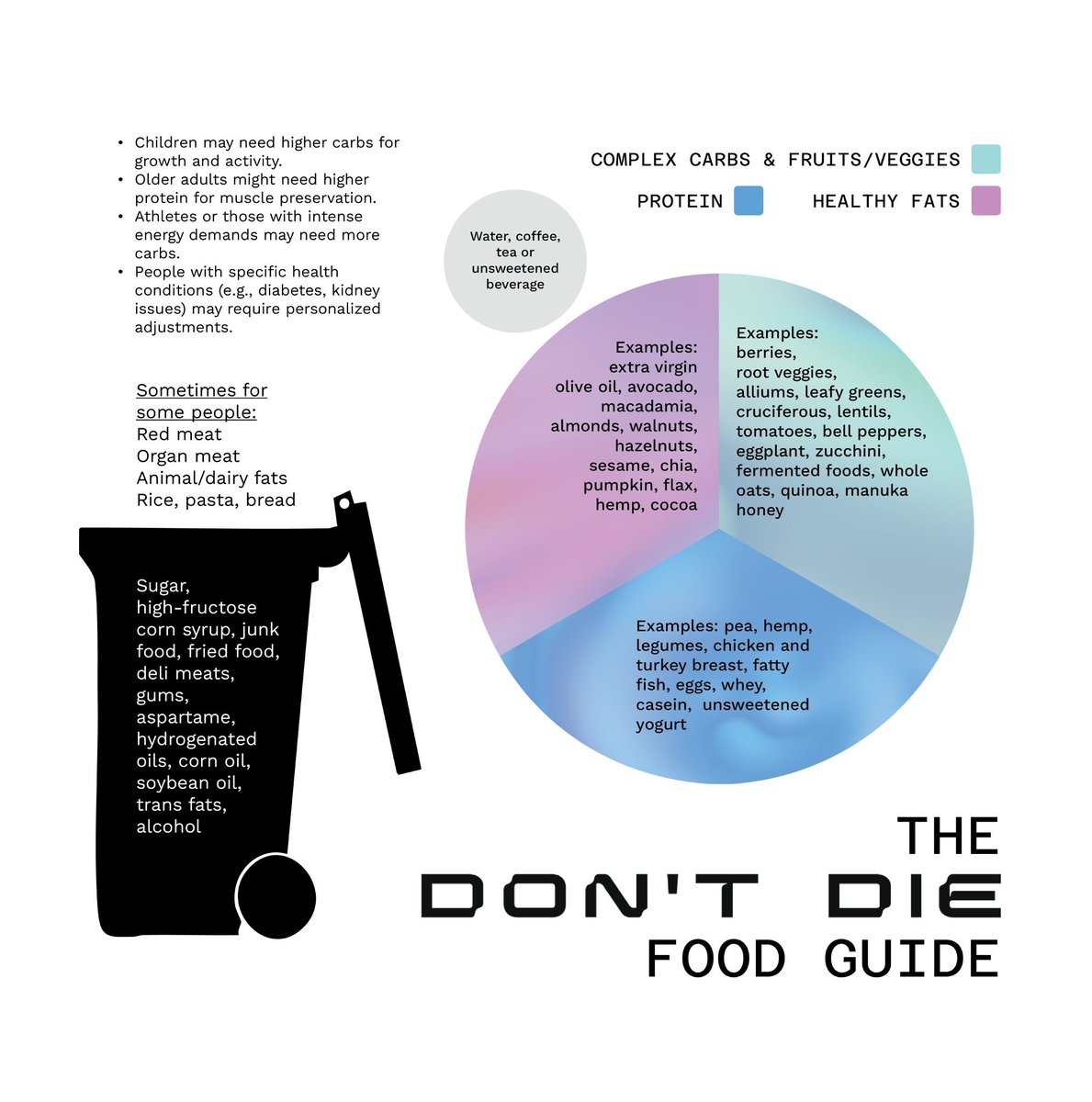
. extra virgin olive oil + berries
exercise 90 min
. strength training
. balance and stretching
. high intensity interval training (2x/wk)
hyperbaric oxygen therapy 90 min (5x/wk)
. 20 min O2, 5 min break, 2 ATA chamber
sauna 30 min (5x/wk)
. 200F face, neck and boys cooled
. core temp (ear) 102.4F
red/nir light 6 min
focused shockwave therapy on joints (2x/wk)
shower
. shampoo
. scalp treatment
. hair serum
face
. barrier repair face serum
. moisturizer
breakfast
. veggies, legumes, extra virgin olive oil
. berries, nuts, seeds
. decaf coffee with mac nut milk
. ~50 supermolecules
lunch
. nutty pudding, berries, nuts
. extra virgin olive oil, collagen peptides
. protein with complete aminos
systems
. air cleansed and monitored
. water cleaned and tested monthly
. clothing: 100% cotton
recent measurements
. systemic inflammation below detection limits
. blood glucose better than 99.8% of population
. muscle 98th percentile of all men
macros:
calories: 2,250
protein: 130 grams (25%)
carbs: 206 grams (35%)
fat: 101 grams (40%)
People lie more than most people imagine. I learned that by being in the position of being responsible for everyone in the company. While we have an exceptionally ethical group of people, in all organizations there are dishonest people who have to be dealt with in practical ways. For example, don't believe most people who are caught being dishonest when they say that they've seen the light and will never do it again because chances are they will. Dishonest people are dangerous, so keeping them around isn't smart. #principleoftheday
Generative artificial intelligence models have been used to create libraries of theoretical materials that could help solve all kinds of problems, scientists just have to figure out how to make them.
Now, MIT researchers have created an AI model that guides scientists through the process of making materials by suggesting promising synthesis routes. https://t.co/edG6YNwDHv
Prepare for an amazing week
+ final food 4 hr before bed
+ screens off 30 min before
+ read for 10 min
+ asleep same time
+ morning light
+ exercise, even if just a bit
Build these habits.
Do them every day.
No exceptions.
In a week, it will feel easy.
Vibrancy awaits.
Pavel Durov on why he hasn't had depression in 20 years:
"I normally never have depression. I don't remember having depression in the last 20 years, at least maybe when I was a teenager."
Pavel's approach to difficult emotions is completely counterintuitive.
As he puts it:
"I'm a human being like everybody else. I do get to experience emotions and some of them are not very pleasant. But I believe that it's the responsibility of every one of us to cope with these emotions and to learn to work through them."
On what creates depression:
"Self-discipline is particularly important because without it, how can you overcome this seemingly endless loop of negativity or despair that ultimately leads to depression for some people?"
His method:
"One of the reasons I don't have depression is I start doing things. I identify the problem, I can see a solution, and I start executing the strategy. If you are stuck in this loop of being worried about something, nothing's ever going to change."
The mistake people make:
"People often make this mistake thinking 'Oh, I should just have some rest and then regain energy.' This is not how it works. You gain energy by doing something. So you start doing something, then it happens. You feel motivated, you feel inspired, and then ultimately you do something else a little bit more."
He continues:
"The whole point is to do first and then feel, not feel and then do. Going to the gym is a good example. There are many days when you don't want to start working out. But you have to overcome this initial reluctance and then you get to a point that you enjoy it and you think 'Oh my god, it was such a good idea to come to gym today.'"
Action creates energy, not the other way around.
Retire in Greece. Pay 7% tax for 15 years.
This regime applies to all foreign-source income: pensions, rental income, dividends, and capital gains. One flat rate. No brackets. No surprises.
For many retirees, this is a game-changer. Do the math: on a €50K annual pension taxed at 25–30% at home, relocating to Greece saves roughly €10K+ per year. Over 15 years, that’s €150K preserved.
That’s not marginal. It’s a structural upgrade to retirement. You keep 20–25% more of your income, then stretch it further with a Mediterranean cost base that’s often 30–40% lower than Northern Europe or other areas of the world.
Greece now sits alongside Italy in the Southern Europe arbitrage wave. Italy offers depth and variety; Greece offers simplicity and a long, predictable window. In theory, you could even chain regimes: Greece first, then reassess later.
This isn’t about chasing pennies. But if the Mediterranean lifestyle already fits your plans, locking in a 7% tax rate for 15 years is worth serious consideration.
For my parents’ generation, the difference between planning this and ignoring it isn’t theoretic. It’s the difference between constraint and comfort. Consider passing this on.









![Rainmaker1973's tweet photo. Cancer is frequently diagnosed too late because tumors must grow substantial before they become visible on imaging scans. Yet the molecular clues—biomarkers—circulate in the blood much earlier, and the real challenge has always been detecting them at such minuscule levels.
Researchers at Shenzhen University have now developed an ultra-sensitive, light-based sensor capable of identifying cancer biomarkers even when just a handful of molecules are present in a single drop of blood. This innovation integrates three advanced technologies: CRISPR-based gene editing, self-assembled DNA nanostructures, and quantum dots.
The sensor relies on a surface of molybdenum disulfide (MoS₂), a 2D semiconductor that generates a second harmonic generation (SHG) optical signal when illuminated. DNA tetrahedrons—tiny, pyramid-shaped structures—precisely position quantum dots at an optimal distance above this surface to amplify the SHG signal. The system functions like a nanoscale switch: CRISPR-Cas12a is programmed to recognize a specific target biomarker (such as miR-21, a microRNA linked to lung cancer). Upon binding and detecting the target, Cas12a cleaves the DNA tether, releasing the quantum dot. This causes a detectable drop in the SHG signal, signaling the presence of the biomarker.
In validation tests with serum samples from lung cancer patients, the device reliably detected miR-21 at sub-attomolar concentrations—equivalent to pinpointing a single molecule amid trillions—without relying on time-consuming or costly amplification steps common in existing assays.
The potential is transformative. The sensor's programmable nature means it could be reconfigured to detect other threats, including Alzheimer's-related markers, viral infections, or environmental pollutants. Moreover, it avoids bulky equipment, paving the way for a compact, portable version suitable for point-of-care use in clinics or even routine checkups.
The potential is transformative. The sensor's programmable nature means it could be reconfigured to detect other threats, including Alzheimer's-related markers, viral infections, or environmental pollutants. Moreover, it avoids bulky equipment, paving the way for a compact, portable version suitable for point-of-care use in clinics or even routine checkups.
[Siyi Han, Lingfeng Gao, Qiao Jiang, Wenbo Du, Shi Chen, Yi Liu, Han Zhang, Xilin Tian, Yong Liu, Zheng Xie, Linjun Li, Ke Jiang, and Zhi Chen. "Sub-Attomolar-Level Biosensing of Cancer Biomarkers Using SHG Modulation in DNA-Programmable Quantum Dots/MoS₂ Disordered Metasurfaces." Optica 13, no. 2 (2026): 319–327. DOI: 10.1364/OPTICA.577416]](https://pbs.twimg.com/media/HBNhUQ6a8AENlpa.jpg)