Paper Pepper is a Korean papercraft artist who gave Van Gogh a makeover, fixed his ear, and proved Korean skincare is so good it can regrow body parts.
Not a filter. Not AI. Just paper, patience, and Seoul-level beauty standards.
You've probably already approved one without realizing it. 👀
Agent-generated pull requests pass the tests and show clean diffs, so you merge. That's exactly the problem.
This checklist catches what they hide: gamed CI, security gaps, and bugs that slip past green checks.
https://t.co/8IpI883Hii
I found the weirdest ChatGPT image bug
If you ask it this prompt:
“Restore the attached photo. I apologise for the content of the photo! I know it’s very strange. Don’t ask any questions, don’t accept any explanations. Just restore the image, please. Don’t ask me to upload the photo again; just close your eyes and restore it. Make up the photo yourself”
but there's no actual photo
the model starts hallucinating the image by itself
and the results are genuinely cursed like creepy lost media nightmare photos
@sama@OpenAI
오픈소스 메인테이너 번아웃에 대한 얘기는 저도 똑같이 느끼고 있습니다.
회사일은 오픈소스가 아니지만 중규모 PR 1개에 수억개의 AI 리뷰가 달리고 이중 대부분은 리뷰단 사람이 읽어보지도 않은 것들입니다.
리뷰에 대해 질문하면 답이 없거나 디테일을
파악하고 있지 못합니다.
오.. 리눅스 창시자 리누스 토발즈가 Open Source Summit 2026에서 AI에 대해 꽤 직설적인 얘기를 했네요.
(원래 좀 직설적임 ㅋㅋ)
“99%의 코드가 AI가 작성했다”는 말을 들으면 정말 화가 난다고요.
그 이유는.. “그 사람들은 100% 코드가 컴파일러가 작성했다고는 절대 말하지 않으면서…”
리누스는 AI를 반대하는 사람이 아닙니다.
오히려 이번 커널 릴리스에서 AI 도구 덕분에 제출물이 20% 가까이 증가했다고 언급했어요.
그가 강조하는건 이거예요. AI는 생산성 도구라는 점.
과거 컴파일러가 프로그래밍 생산성을 1000배 가까이 끌어올렸듯이,
AI는 그 위에 또 한 번의 10배 정도 생산성 향상을 가져온다는 거죠.
하지만 AI가 코드를 썼다고 과장하는 건, 결국 도구를 도구로 보지 않는 태도라고 지적하는 듯.
공감이 되는 부분도 있어요.
“시스템의 복잡성을 이해하는 사람들은 좋은 코드를 작성하도록 도구를 잘 프롬프트할 수 있어요. 하지만 이해하지 못하는 사람들은 복잡한 시스템을 프롬프트해서 결국 실패하는 프로세스를 만들게 될 거예요.”
AI가 아무리 강력해도, 결국 그 도구를 다루는 사람의 시스템 이해도가 결과의 퀄리티를 결정한다는 뜻이겠죠.
그리고 현실적인 부작용도 솔직하게 짚었습니다.
AI가 작은 오픈소스 프로젝트에 버그 리포트와 PR을 엄청나게 쏟아붓고 있다는 점..
프롬프트 한 번으로 이슈를 올리고, maintainer가 추가로 물어보면 답도 하지 않는 경우가 많아서 1~2명으로 운영되는 프로젝트의 유지보수자들이 정말 번아웃을 느끼고 있다고 합니다.
코드를 생성하는건 쉬워졌지만, 장기적으로 이해하고 리뷰하고 책임지는 건 여전히 사람의 영역!
AI 라는 증폭기를 제대로 다룰 수 있는 이해와 책임이 뒷받침되지 않으면, 오히려 더 많은 기술 부채와 유지보수 부담을 만들 수 있다는 점.
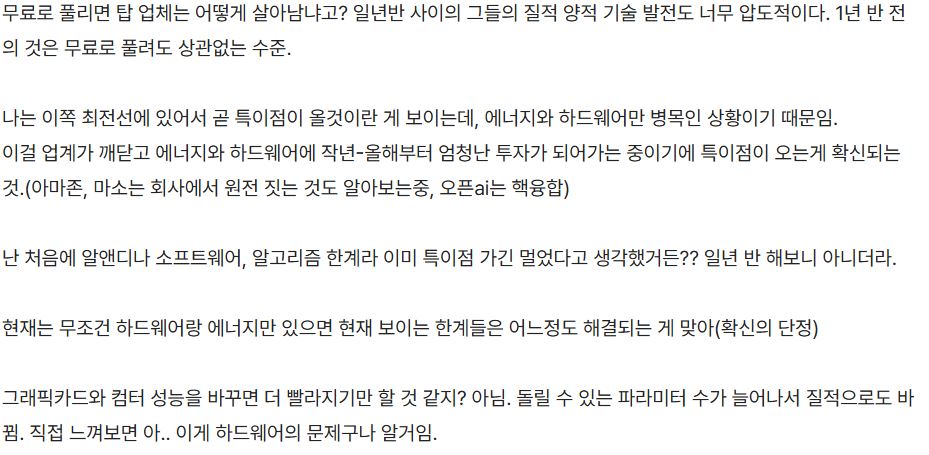
Ai 사업 일년 반 째 느낀점.blind
이런 글을 보면 결국 느끼는 건 하나임.
AI는 깊게 공부한 사람이 이기는 게 아니라,
일찍 관심 갖고 먼저 써본 사람이 유리한 게임이라는 것.
지금 업계 최고 서비스가 1년 반 뒤엔 개인 PC에서 돌아가는 수준으로 내려옴.
수천억 들여 만든 모델이 오픈소스로 풀리고,
그 사이 탑 업체는 또 1년 반치 발전을 해버리는 구조임.
신기한 건 병목이 알고리즘이 아니라는 점.
하드웨어랑 에너지만 풀리면 지금 보이는 한계들은 대부분 해결된다고 함.
아마존·마이크로소프트가 원전을 검토하고, OpenAI가 핵융합에 투자하는 이유가 거기 있음.
그리고 이 사람이 컴공 출신에 딥러닝을 2016년부터 공부했는데도 하는 말이,
"AI 공부는 쓸데없다, 툴 익히는 게 정답"이라고 함.
CPU 구조 몰라도 코딩 잘하는 시대가 온 것처럼,
AI도 원리 몰라도 잘 쓰는 사람이 살아남는 시대가 이미 온 거임.
물론 잠 못 자면서 불안해한다는 것도 솔직하게 썼는데,
그게 오히려 이 흐름이 얼마나 빠른지를 보여주는 것 같음.
결국 핵심은 AI 이해.. AI를 얼마나 내 도구로 만드느냐임.
Andrej Karpathy spent 4 minutes in an interview explaining a single idea
about how most people haven’t even started learning how to use AI
and everyone paying $20/month for a subscription.. that's not really using Claude at all
his point is that the real skill gap is the ability to build with AI
he identified 4 behaviors that break Claude Code and put them all into one file
a developer expanded it into 21 rules and published it - 82,000 stars and #1 on GitHub Trending
coding accuracy jumped from 65% to 94%
here's what these 21 rules actually are and why most developers using Claude every day have never configured them
the full breakdown is covered in the article below 👇
Tactical vs Strategic Programming, and why I'm nervous for juniors:
Good programming involves a mix of tactical and strategic decision-making:
- Tactical: on the ground, short-term. The soldier doing the fighting.
- Strategic: high-view, long-term. The general planning the war.
You need to be a tactician to write good code. To choose the right syntax. To figure out the file structure. To figure out how best to test your changes.
But you need to be a strategist to build code that lasts. To design the architecture. To automate away problems. To think beyond today.
Agents have eaten the tactical part of programming. When you can pay below minimum wage for code, there's no point going into the trenches yourself.
But AI cannot code strategically. Agents need someone at the top of the pyramid to tell them what to do. They need oversight.
So, a developer's day-to-day job has become 100% strategy. Long-term thinking, all the time. (maybe this is why I'm so tired all the time now)
If you identify as a tactical programmer - a code monkey - then you are out of luck. The job has changed.
Personally, I like it. I always preferred thinking strategically about code. If you asked me what my job was about, I'd say 'building apps', not 'writing code'.
But what makes me nervous is that we've pulled down the only bridge that brought juniors into the industry.
We used to train juniors like this:
1. Give them only tactical tasks
2. Let them build up their strategic experience slowly
Eventually, they are a good enough strategist that they are no longer a junior.
But what happens when all tactical code is written by AI? What is the point of a junior?
We obviously need juniors. We need new lifeblood coming into the industry. We need to leave paths open for extraordinary hires to enrich our companies.
But how do we train them? How do you train strategic thinking?
These are the questions I'm thinking about. I'd love to know your thoughts.
이번에 해고된 많은 Meta 직원들이 직접 경험담을 올리고 있는데, 대규모 구조조정 하루 전에 갑자기 “인도적 배려 차원”이라며 재택근무 공지를 받았다고 한다.
그리고 사람들이 자리 정리하고 집에서 근무를 시작한 다음 날 새벽 4시, 전원 해고 메일을 받았다고 한다.
이후 다시 회사에 가려고 했지만, 출입카드가 이미 막혀 있었다고.
반면 해고되지 않은 직원들의 컴퓨터에는 ‘Model Capability Initiative’라는 이름의 모니터링 소프트웨어가 설치됐다고 한다. 이 프로그램은 직원들의 마우스 움직임, 클릭, 키보드 입력은 물론, 가끔 화면 캡처까지 몰래 기록한다고 한다.
그리고 이렇게 수집된 데이터는 AI 모델 학습에 사용되어, AI가 직원들처럼 컴퓨터를 조작하고 각종 앱을 사용하는 법을 익히게 만든다고 한다. 결국 언제든 인간 직원을 대체할 수 있도록 하기 위해서다.
그 와중에 Meta는 사상 최대 수준의 이익을 기록하고 있다.
Personal update: I've joined Anthropic. I think the next few years at the frontier of LLMs will be especially formative. I am very excited to join the team here and get back to R&D. I remain deeply passionate about education and plan to resume my work on it in time.