It's another KRAS day at @CD_AACR! Three papers now online about mutant KRAS alleles, rewiring that occurs after allele-specific KRAS inhibition, and potential combination approaches - 2/3👇by William McDaid, Helen Adderley, Colin Lindsay, and colleagues @CRUK_MI@OfficialUoM
How should we be drugging RAS and developing clinical combinations for RAS-driven tumors?
@andrewaguirremd, Alice Shaw, @Julien__Dilly, and I have a lot of thoughts (>15,000 words of thoughts), and our mega review is out now at @CD_AACR! Check it out: https://t.co/sUU5fzpM7f
The RAS revolution continues!
Tango Therapeutics' new results date back to the discovery of a synthetic lethal interaction, in 2016: PRMT5 inhibition selectively kills cancer cells deficient in MTAP — about 40% of pancreatic cancer — while ~sparing normal cells
This mechanism itself is probably independent of RAS, but given RAS inhibition is the likely future foundation of therapy, Tango's PRMT5 inhibitor, Vopimetostat, was tested in combination with RevMed's RAS inhibitor, Daraxonrasib — in MTAP-deficient pancreatic cancer
Today's data come from a small number of patients, but the 6-month progression-free survival was 90% (compared, cross-trial, with Daraxonrasib alone, ~56%)
A very impressive study for how we could prevent lung cancer more than 5 years before it is diagnosed. Using machine learning, discovery of a 14-plasma protein signature of risk that predicts responsiveness to an antibody therapy to interleukin, IL-1β
Validated across 8 cohorts
@CellCellPress@CharlesSwanton
https://t.co/qpPtgs1dH0
🚨 BREAKING: A "holy grail" moment for lung cancer prevention. Funded in part by a @TheMarkFdn ASPIRE Award & published in @CellCellPress, @CharlesSwanton & team have discovered a 14-protein blood signature that can predict lung cancer risk over 5 years before a diagnosis. 🧵👇
https://t.co/FZEFlcY74q
One of the most amazing things I’ve ever seen: a standing ovation for the full Daraxonrasib results
I feel inspired and energised, to put it mildly — we have a targeted therapy for pancreatic cancer now, and nothing is undruggable anymore
Channing J. Der, PhD, and Jen Jen Yeh, MD, describe the scientific foundations of a phase 1–2 study of daraxonrasib to treat metastatic pancreatic ductal adenocarcinomas.
Learn about the science behind the study in the editorial “Advances in RAS Therapeutics for Pancreatic Cancer,” from the University of North Carolina at Chapel Hill (@unc): https://t.co/rDDjGqRJtL
1/n
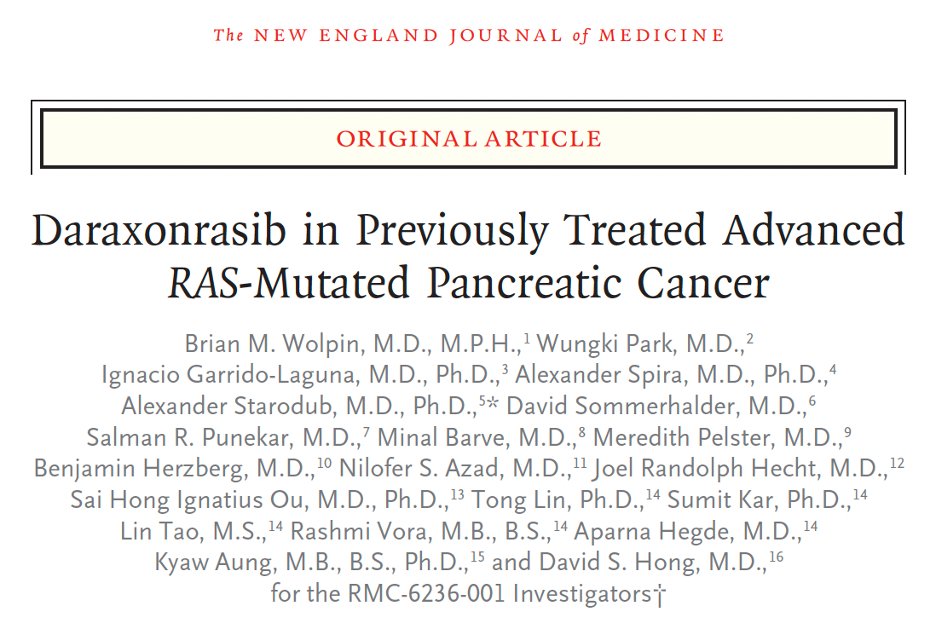
Daraxonrasib (RMC-6236), the first-in-human oral 💊RAS(ON) multi-selective tri-complex inhibitor, in previously treated RAS-mutated pancreatic cancer phase I/II study is now published in the New England Journal of Medicine @NEJM
A novel💡 way to shut down ⚔️RAS, one of the most important oncogenic drivers in cancer that had long been considered “undruggable.”
🔗https://t.co/ptfNVcxrb4
Shout out to Brian Wolpin, @CentralParkWMD@GarridoLagunaMD@AlexSpiraMDPhD@salmanpunekar@MeredithPelster@bherzbergmd Nilo Azad Aparna Hegde @DavidHongMD and the whole team who dedicated to this study. @EileenMOReilly
#HBP #HumansBeyondPatients
It’s strange that we ask trainees to read clinical trials but never really teach them how to read clinical trials.
I’d request all training program directors and mentors to please share this article to their trainees and fellows- https://t.co/HJhZlsAS4u
Grateful to @JCOOP_ASCO for making this free.
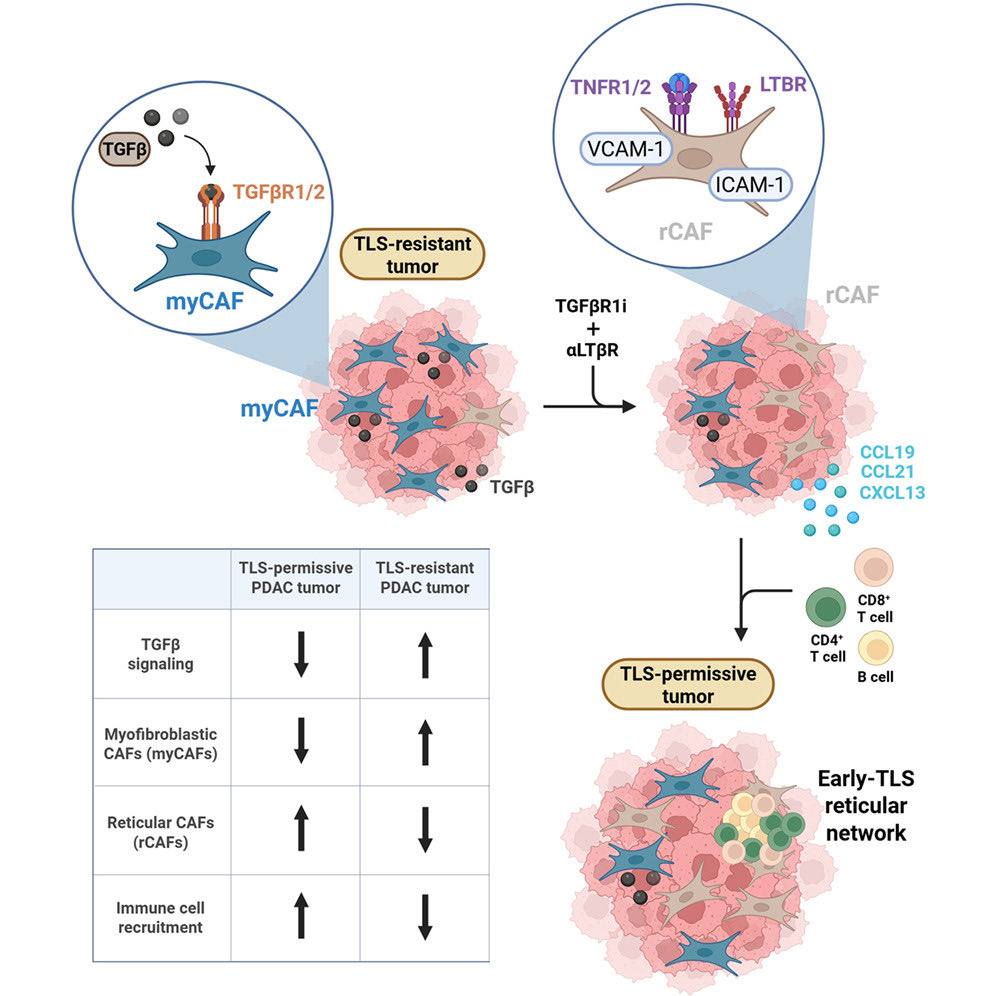
Pancreatic cancer has one of the most suppressive tumor microenvironments in oncology.
But two pancreatic cancer results dropped today. Both matter.
1. BioNTech mRNA neoantigen vaccine: nearly all responders still alive at 6 years. 98% of induced T cells were de novo — the immune system learned to see a cancer it had always been blind to.
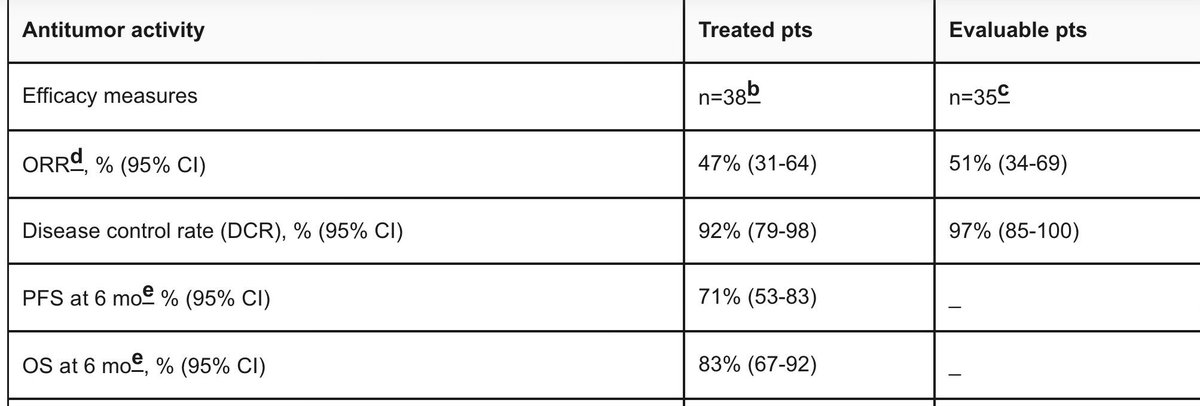
2. Daraxonrasib: 47% ORR, 92% disease control as first-line monotherapy. KRAS G12D, undruggable for 40 years, finally has a drug.
Different mechanisms. Same disease. Both working.
<13% of patients survive 5 years. That number is about to change.
great day for science! 🔥
We’re hiring! Tenure-track faculty position in cancer research at LSU Health Shreveport (Pathology & Translational Pathobiology). Looking for investigators building programs at the interface of cancer, metabolism, inflammation, and vascular biology.
https://t.co/lKrOo8aRkW
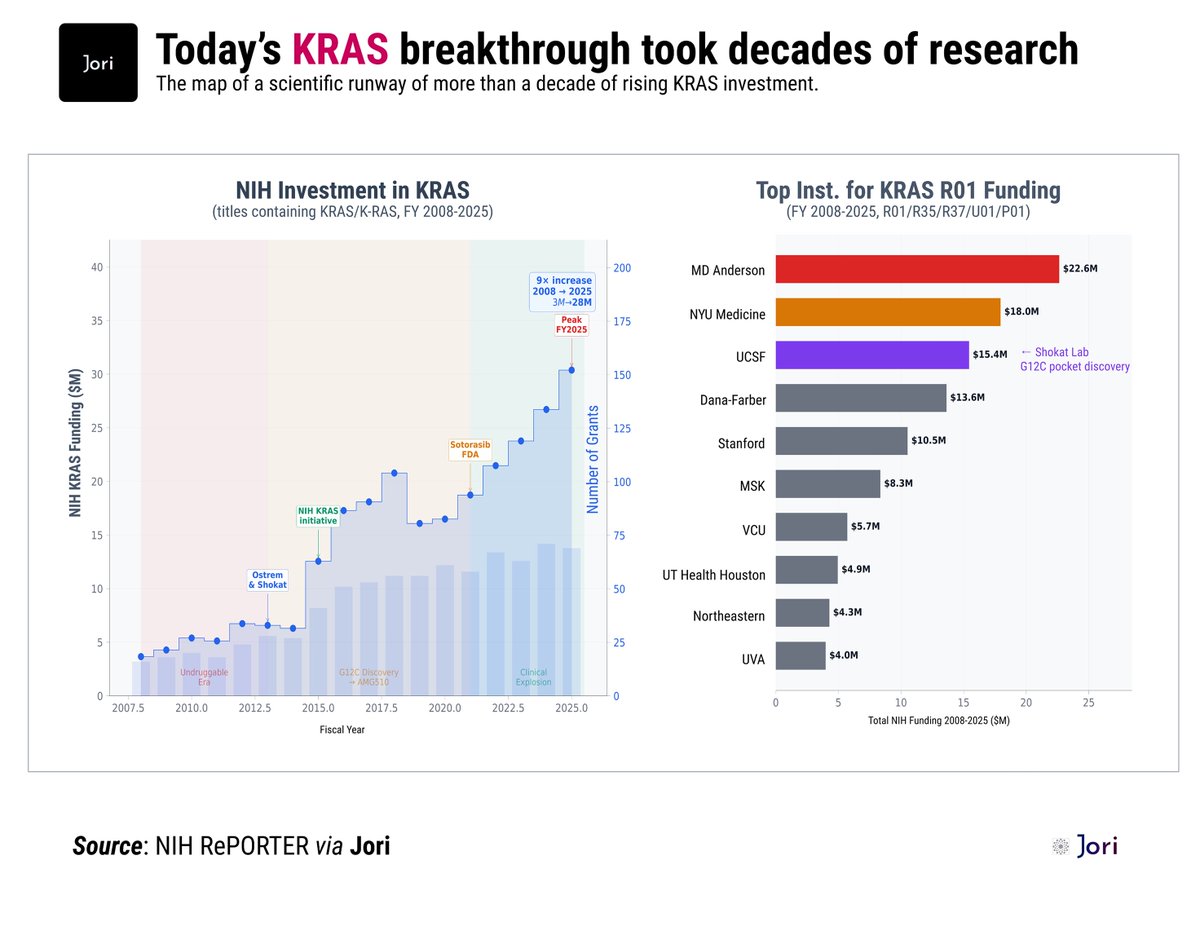
Today’s KRAS win didn’t start today.
It took decades.
Daraxonrasib nearly doubled survival in pancreatic cancer. That’s extraordinary!
But lets zoom out for a sec:
▪️KRAS was called “undruggable.”
▫️NIH quietly poured ~$172M behind it.
▫️Funding grew 9x.
💡One insight (Shokat lab, 2013) changed everything.
This is how breakthroughs are supposed to work:
public money → basic insight
academic labs → first leap
industry → drug + survival curve
Today’s headline has MANY authors.
Congrats to @Revolution_Med and every scientist who stayed on KRAS when it looked impossible.
🎈this is what compounding science truly looks like
= = = = =
Source: NIH RePORTER via @Jori_health
= = = = =
I think many people may not be aware. But if this $RVMD RM-055 really shows activity after Daraxonrasib progression, even with a 2-3m delta OS to chemo, it will absolutely destroy the OS significance of all competitors pan-RAS/KRAS Ph3 (unless someone come up with a next gen)
And $RVMD will put RM-055 in clinic before competitors initiate their Ph3s
🚨🚨🚨
RASOLUTE-302 Ph3 is POSITIVE
"Daraxonrasib demonstrated a median OS of 13.2 months versus 6.7 months for chemotherapy, with a hazard ratio of 0.40 (p < 0.0001)".... WOW!
AMAZING news for patients with #PancreaticCancer
The RAS Revolution is ON!!
https://t.co/I59NNWRB1O