🔥NEW PREPRINT🔥
Anthony here – excited to share work from my postdoc.
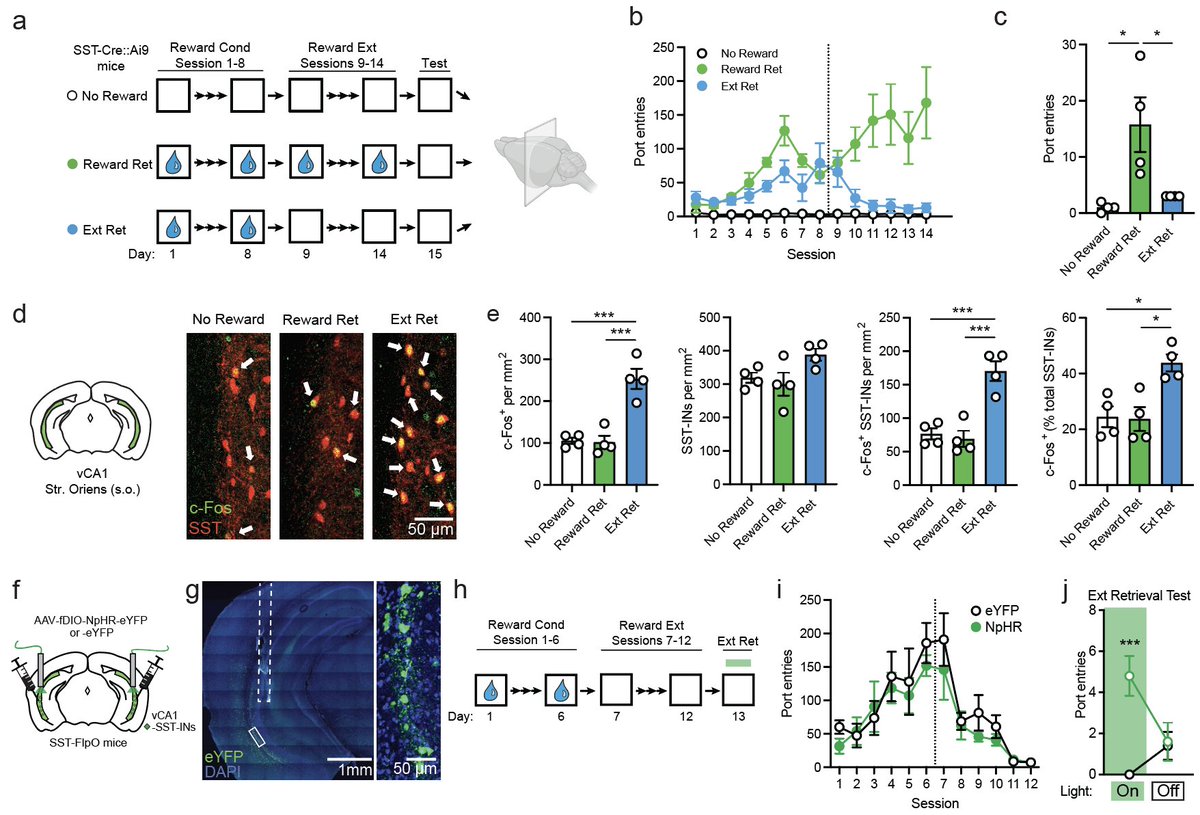
We found that ventral hippocampal somatostatin interneurons play a crucial role in extinction memory expression of both negative and positive associations.
Here’s the longer story:
https://t.co/Lr6FyigNZR
New paper from the lab. Using longitudinal ca imaging, activity-dependent tagging and optogenetics, we show that newly allocated fear engram neurons in amygdala undergo a brief period of coordinated “offline reverberation” immediately after learning.
https://t.co/ELcRXieer2
Out now:
Our AI team at Mila/McGill reveals how hallucinations arise in neural networks in global landmark study
In a five year effort, our lab has led a consortium across three continents to conduct the world’s largest study on how psychedelic drugs lead to instability and chaos that derails normal function in network circuits.
- Brain-scanning allowed to examine the activity changes inside neural networks in real time, as participants were under the influence of a psychedelic substance, compared to sober state.
- 10x bigger study than any previous brain research in psychedelics (>500 brain scans, hundreds of participants).
- Our study focused on psilocybin, lysergic acid diethylamide (LSD), mescaline, dimethyltryptamine (DMT), and ayahuasca.
- Main finding: 5 different drugs have something in common; they cause “flattening” of the hierarchy of network systems; higher information-generating networks form cross-layer short circuits with lower-level information-receiving network for seeing and hearing.
- Published in Nature Medicine; one of the most prestigious scientific journals.
Our systematic assessment explains key mechanisms of how hallucinations come about in human brain circuits.
Read our article: https://t.co/43leRp1LGF
Nature News: https://t.co/rX4QWEXcdO
The New York Times: https://t.co/wQqQWjeVf3
National Geographic: https://t.co/T3OI8KhFqh
The Guardian: https://t.co/r09mwLdO3T
Mila: https://t.co/wIGHQoPGtv
McGill: https://t.co/GoHEvFvE5K
@C_Angermayer, @RickDoblin, @ProfDavidNutt, @EricTopol, @Drug_Researcher, @hubermanlab, @tferriss, @DeepakChopra, @foundmyfitness, @PeterAttiaMD, @bryan_johnson, @dwarkesh_sp, @lexfridman, @labenz, @richroll, @paytonnyquvest, @PeteRei, @reidhoffman, @COMPASSPathway, @DillanDiNardo, @Gerd_Gruender, @Helus_Pharma, @definiumtx
Music helps to understand the mind and the brain. Throughout the history of science, metaphors have shaped how we understand complex phenomena. The brain-as-computer metaphor has guided decades of theories and research. We propose music as a scientific metaphor for understanding the mind and brain via triplicate interfaces (listener, performer, composer) and a compound set of predictions. Multiple domains of music can be mapped onto different neural, cognitive and intersubjective processes such as network coordination, prediction, emotion and meaning. Neurocognition is not static but a dynamic, embodied, and time-sensitive system, much like a self-organized orchestra in which multiple processes interact simultaneously. Drawing on synergetics, predictive processing, and embodied cognition, we outline musical principles illuminating cognitive and action integration across time, offering new conceptual frameworks and testable predictions for future research. I enjoyed writing this piece with these stellar authors: @Kaiameye, @acolverson1, Christopher Bailey, @brucemillerucsf, @dafneduron90, Nicholas Johnson, Olga Castaner, @PierLuigiSacco, Eoin Cotter and Lucia Melloni. Science, like music, advances through new ways of listening to complex systems: https://t.co/W3pJRyXJOH
SUPER EXCITED! 2024 Emerging Scholars Program Awardees are @VanderbiltU’s @JoseC_Zepeda, @CUanschutz’s @egstokes7 w/ HONORABLE MENTION to @CUNY's Katherine Anderson @zebrafinchkt. CONGRATULATIONS🎉JOIN US 6/21, 12:30pm as awardees present their work. RSVP👉https://t.co/CJFtDYgbeb
Between the banning of TikTok and the long-planned crackdown on anti-Israel speech and activism on US college campuses -- based on the familiar claim that it is racist hate speech -- the last six months have seen the greatest success for the pro-censorship movement in years.
UT Austin students chanting “You don’t scare us” even as countless militarized Texas Troopers swarm their campus, attack their protest, and bring in horses. This movement will not be stopped.
🔥NEW PREPRINT🔥
Anthony here – excited to share work from my postdoc.
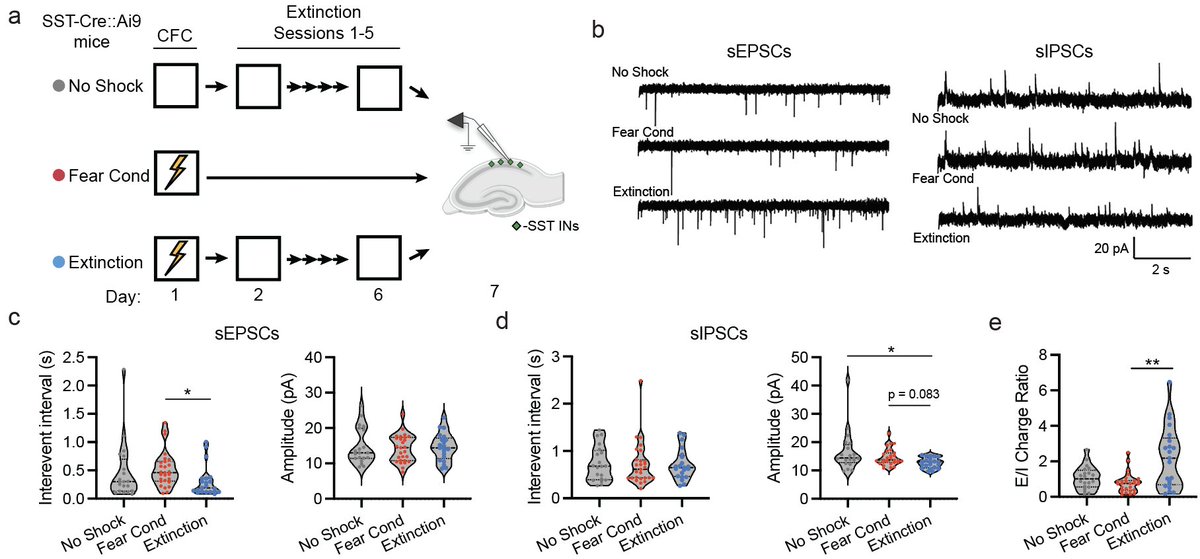
We found that ventral hippocampal somatostatin interneurons play a crucial role in extinction memory expression of both negative and positive associations.
Here’s the longer story:
https://t.co/Lr6FyigNZR
Huge thanks to @melcregor for all the support and guidance along the way, as well as help from amazing scientists @neurotriee, Rasika Iyer, Saqib Khan, and Mazen Mohamed, and all the @SinaiBrain community. And if you like what you see, I’m on the job market!
We hypothesize that once a context is rendered ambiguous following extinction learning, vCA1 SST-INs function like a mnemonic gate that controls whether new or old learning prevails, potentially by biasing which memory-related ensemble or synaptic pathway dominates.
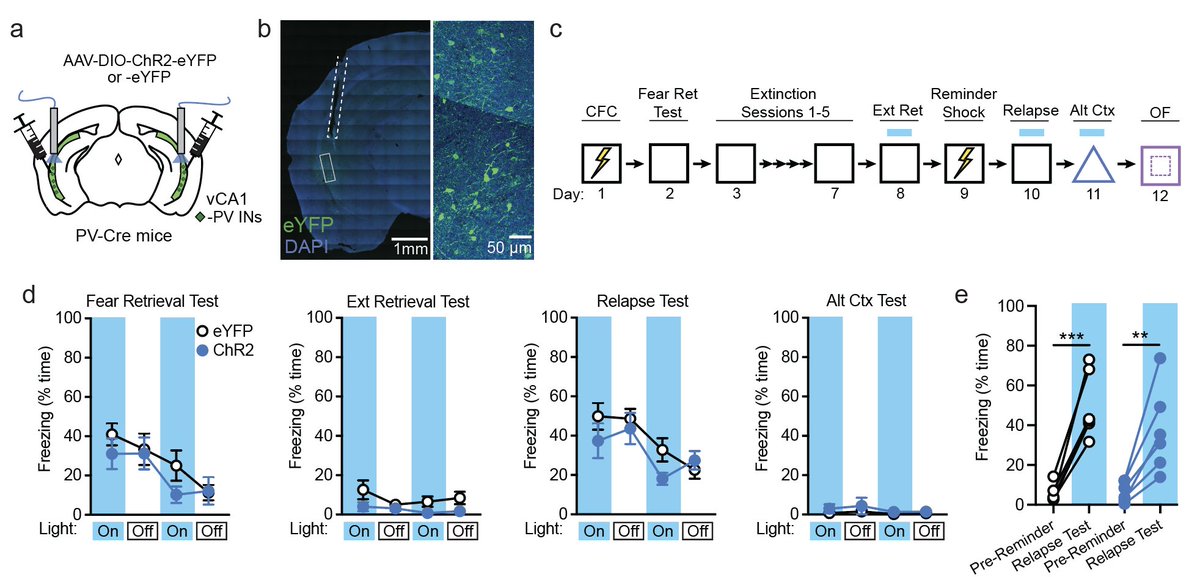
It’s possible that stimulating a large heterogenous population of INs disrupts typical brain function. However, when we stimulated *only* the SST-INs active during extinction retrieval, we replicated our findings.
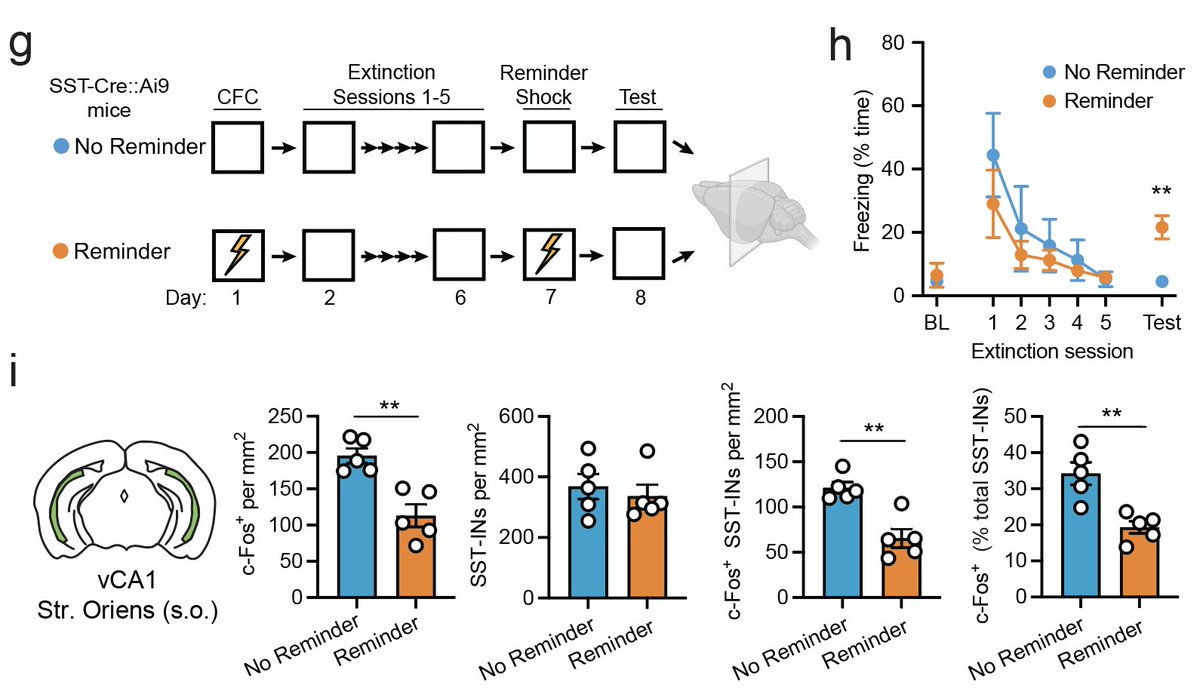
Optogenetically silencing vCA1 SST-INs impaired extinction retrieval, and stimulating these cells prevented relapse. Importantly, stimulating before extinction learning had no effect, suggesting extinction-dependent plasticity is required for SST-INs to affect freezing behavior.
During relapse, elevated c-Fos expression in vCA1 SST-INs is reversed, suggesting their activity relates to extinction retrieval and is subject to opposing modulation by extinction and relapse.