Mike Brown's journey:
*Fired from Cleveland on May 24, 2010
*Fired from LA (Lakers) on November 9, 2012
*Fired from Sacramento on December 27, 2024
*Wins an NBA Championship in his inaugural year as head coach with the NY Knicks
Moral of the story: Your failures don't define. How you respond to them does.
Competitive character is not “wanting to win.”
Everybody wants to win.
It’s whether your habits get sharper when you’re frustrated. Whether you can take hard coaching without making it personal. Whether you stop negotiating with the standard the second it gets uncomfortable.
Pressure doesn’t build character.
It audits it.
Welcome home Reid, Victor, Christina, and Jeremy! 🫶
The Artemis II astronauts have splashed down at 8:07pm ET (0007 UTC April 11), bringing their historic 10-day mission around the Moon to an end.
“Banners hang in gyms and rings collect dust. But who you become and who you impact you get to keep forever,” Cori Close
Your character defines winning.
At High Point, Flynn Clayman runs his staff differently.
Instead of assistants doing a little bit of everything, he assigns coordinators:
One owns offense.
One owns defense.
One owns special teams.
Not traditional. But intentional.
Because when everyone is responsible for everything… no one truly grows.
Clayman learned this from his mentors. When he was trusted to run the offense, it accelerated his development. So now, he does the same for his staff.
Yes, you give up some control.
But you gain clarity, ownership, and better coaching.
Assistants aren’t just helping anymore.
They’re leading.
And when coaches grow, the team grows.
Build a staff where people can specialize, own their role, and thrive, not just survive.
Are you asking your people to do everything… or putting them in positions to be great at something?
The Economics of Coaching 🏀
1. Opportunity Cost
Every rep you spend on a play set is a rep you didn't spend on decision-making. Every minute in practice has a cost. The question isn't what you're doing, it's what you're giving up to do it.
2. Scarcity
You have a limited amount of time with your team every day. A limited number of possessions per game. Great coaches treat everything like it's scarce, because it is. Stop acting like you have time to waste and focus on things that actually move the needle.
3. Marginal Utility
The 10th rep of a drill isn't worth as much as the 1st. At some point, more reps stop producing more results.
4. Diminishing Returns
At some point you can have TOO many plays and TOO many drills. Are you doing too much and in turn hurting your team?
5. Market Inefficiency
Most coaches are chasing the same trends (same plays, same systems, etc.) The edge is in the overlooked stuff. Decision-making. Spacing. Habits. Shooting. That's where the value is underpriced.
6. Incentives
Your players do what they're rewarded for. If you celebrate hustle but only play scorers, they'll figure it out fast. Culture is just incentive structure that you make visible consistently.
7. Information Asymmetry
This one is interesting. our opponent doesn't know everything about you. You don't know everything about them. The team that does their homework wins the information war. Film work isn't extra, it's an edge.
8. Cost-Benefit Analysis
Before you add another play, another drill, another concept, ask yourself: What does this cost me in time, reps, and mental load? And is the return worth it?
The best coaches are teacher and economists!
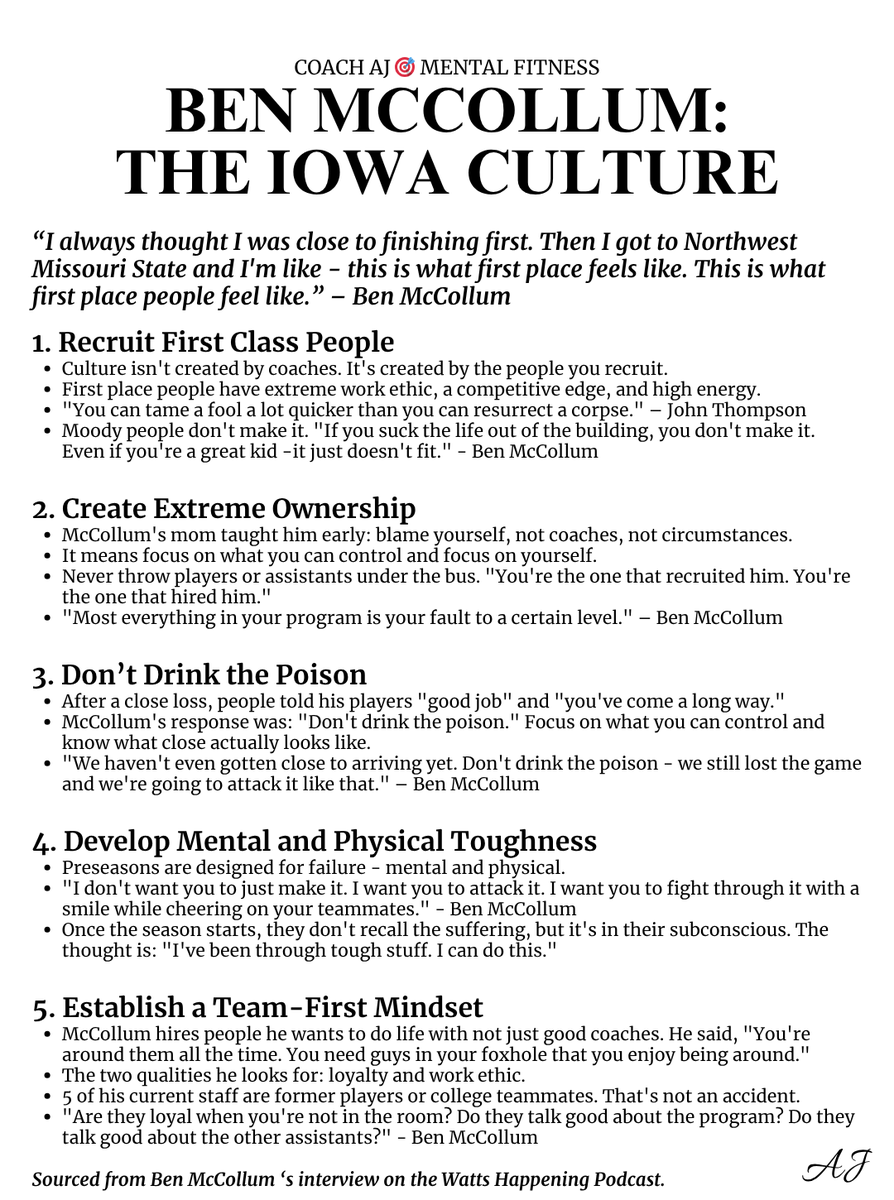
Ben McCollum knows that to change your team - it starts with the people and the culture.
• 4 national titles at Northwest Missouri State.
• Drake's first NCAA win in 50 years.
Now Iowa's first Sweet 16 in 27 years.
Here's how he builds culture:
(📌Bookmark this)
36 minutes of ALL SETS from the March Madness Bracket Breakdown series! We've got:
- Halfcourt Sets
- Early Offense
- Quick Hitters
- OBU's
- SOB's
and much more