@ORGrimsson frábær að vanda í gær á stofnfundi Áfram Ísland: “Mér er ekki sama um lýðveldið. Mér er ekki sama um árangurinn af þeim hundrað árum sem það tók að færa Íslandi fullgildan rétt í samfélagi þjóðanna frá því að Alþingi kom fyrst saman á ný 1845 og þar til lýðveldi var fagnað á Þingvöllum 1944. […] Á næstu hundrað árum þurfum við kannski að glíma á nýjan leik við fjarlægt vald og þá spyr ég í nafni kynslóðanna sem núna eru horfnar; til hvers var þá barist?”
English translation:
@ORGrimsson, as excellent as ever yesterday at the founding meeting of Áfram Ísland: “I care deeply about the Republic. I care deeply about what was achieved through the hundred years it took to secure Iceland’s rightful place among the nations of the world, from when Alþingi reconvened in 1845 to the founding of the Republic at Þingvellir in 1944. […] Over the next hundred years, we may now once again be subject to distant rule. And so I ask, on behalf of the generations who came before: Why, then, did we fight at all?”
Ríkisstjórnin ákveður að hækka skatta og segir að það hafi ekki áhrif á eitt né neitt. Fari hins vegar svo að einhver áhrif komi fram og fyrirtæki finni sig nauðbeygð til að bregðast við, þá verði sko bara bætt í og þeim refsað enn frekar. https://t.co/EvAqcZHEt7
We are pleased to share a preprint on the gene curation progress from the first 4 years of the @ClinGenResource Syndromic Disorders Gene Curation Expert Panel (GCEP). https://t.co/dn3vZGGuqk
🎉Excited to announce that our paper on the blueprint of the human spliceosome is now out in @ScienceMagazine ! A decade of work with Juan Valcárcel and the incredible team at @CRGenomica to uncover the intricate roles of this essential RNA machinery.https://t.co/azZ4aSlD3s
Happy birthday to Marie Skłodowska Curie, who was born on this day in 1867.
Marie Curie was the first person to be awarded the Nobel Prize twice, and is still the only individual to receive the prize in two different science categories.
Find out more: https://t.co/C00oKYwxxL
Directed evolution won a Nobel prize by unlocking new protein functions
How can we augment evolution to engineer proteins 10-100 times better? By using large language models!
Here we present EVOLVEpro, an LLM for accelerated protein evolution
https://t.co/lxFRFVEt2Q 1/
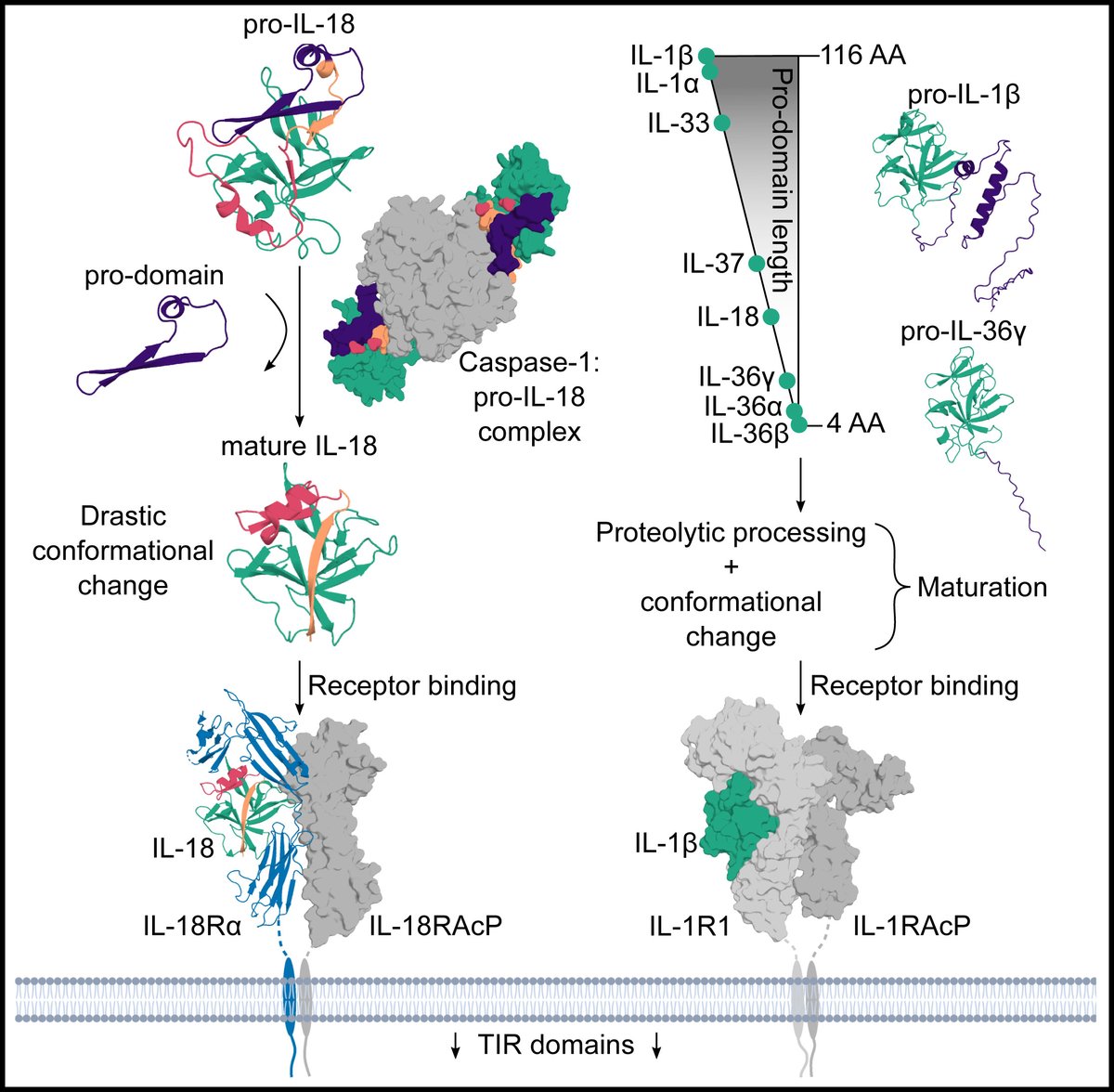
Excited to share our newly published preview in @ImmunityCP covering recent insights into IL-18 activation! There is still much to learn about the pro(domains) and conf(ormations) of IL-1 family cytokines! @julie_andries@SavvidesLab
https://t.co/Cy6vxh6KV5
So excited that our paper “De novo variants in the RNU4-2 snRNA cause a frequent neurodevelopmental syndrome” is out today in @Nature https://t.co/FeDLGm14MB
🧵 1/16
Excited to share this discovery: Huntington's disease is a DNA process for almost all of a cell's life. Inherited HD alleles are innocuous, just unstable – CAG repeats slowy expand throughout life, acquiring toxicity only when quite long (>150 CAGs). https://t.co/6wIAZKCWKN
Today, RGC has published an important paper in @Nature today, describing an analysis of close to a million human exomes (n=983,578) as a single variant call set (!). This is the largest and most diverse rare variant database created so far. This impressive feat is accomplished by a large @RegeneronDNA team led by my wonderful colleague @suganthibala.
@SunKat_y et al. Nature 2024
https://t.co/JiJQxCFKBT
What kind of insights can we learn from sequencing ~980k exomes? Below is a summary of the major findings from the paper.
Background of RGC
Regeneron Genetics Center (RGC) was established in 2014 just on time when major pharma companies started entering into the human genomics playfield. Last year, RGC celebrated its 10th year anniversary. I've written about the origin story of RGC before (https://t.co/LoZRQOpkK1).
The business model of RGC is simple and efficient. It collaborates with academic institutions across the world and provide sequencing as free service in exchange for access to genotypic and phenotypic data.
The first successful collaboration was made with Geisinger Health system (GHS) to sequence 100,000 individuals, which was soon followed by an avalanche of large collaborations. Some of our largest collaborators include UK Biobank (N=500k), GHS (N=175k) and Mexico City Prospective Study (N=150k). Today, RGC has more than 300 collaborations around the world. Just a few months ago, it surpassed the milestone of 2 million exomes. What is described in the current paper is only a fraction of that sample.
Diversity of samples
The 980k exome dataset come from a diverse set of samples. 23% (n=190k) of the participants are of non-European ancestries, the largest proportion to date for any similar datasets created so far. This includes both outbred populations and special populations enriched with communities with long-standing cultural history consanguineous and endogamous unions.
When it comes to human genetics, diversity is the key to making discoveries. Almost everyone agrees, and the field is embracing it now. But RGC is way ahead of the game. Just a few months ago, RGC partnered with other companies and laid the first foundational stone of what will become in a few years from now the world's largest genomics resource comprising half a million African Americans and Africans (https://t.co/JE0Yycm8E1).
Variant survey
Human genome is ~3 billion base pairs long. ~1% of which (~30 million base pairs), containing exons, is targeted by exome sequencing. By sequencing 980k exomes, the authors have captured ~16.5 million unique variants. That is, on average, one per every two base pairs across the exome.
The main goal of concentrating on exomes is to capture deleterious spelling errors in the genome, resulting in either loss or substantial decrease or, sometimes, increase in gene function. The authors have identified
- ~1.1 million predicted loss of function variants (pLOFs), ~50% of which are singletons (that is, seen in just one individual)
- ~10 million missense variants, 40% of which are singletons.
As expected, African ancestry groups had more variants (18% more) than any other ancestry group.
Footprints of selection
pLOFs in the human genomes are like bullet holes in aircraft returning from war. The genes untouched or rarely hit by the pLOFs are the most critical genes, without which life is probably impossible.
Studying ~980k exomes, the authors have identified ~4000 genes that are depleted of pLOFs, suggesting they are indispensable. For more than 20% of these genes, we are learning their critical requirement for normal life for the first time. Previous datasets were not able to quantify their mutation constraints because of the shorter length. Most of these genes were not linked to a human disease yet. The current list will inspire many Mendelian discoveries in the near future.
Regional selection
We have 10 times more missense variants than pLOFs, which means we can zoom into within genes and study which parts of a gene are indispensable and which parts aren't.
Not all parts of a protein are critical, but some parts are. For example, DNA binding regions of transcription factor protein, catalytic sites of an enzyme protein, transmembrane domains that forms the pore of channel proteins etc. With a knowledge of ~10 million missense variants from 980,000 humans, such critical regions are now starting to light up, illuminating the most crucial regions of proteins. For example, here is a trace of missense tolerance across different domains of cancer gene KRAS. Human genetics shows that the first 80 amino acids as the most critical region of KRAS, falling under the top 1 percentile of regional missense constrain metric.
Human knockouts
The function of a gene in an organism is understood, typically, by studying the phenotypic consequences of deleting the gene. We cannot do such experiments in humans. But fortunately, Nature has already done this mutagenesis experiments for us. By studying naturally occurring human knockouts, we can assess the consequences of completely inhibiting a gene. This is crucial data for drug developers, as it informs about safety of drugs that act by inhibiting a gene or its product.
Studying the pLOFs across 980k humans, the authors have found 4.686 genes with at least one human knockout, suggesting that a life without these genes is likely possible. In line with that, the authors find that these genes are the ones that were mutationally least constrained (that is, they are enriched for pLOFs). For >1700 genes, we are learning for the first time humans completely lacking these genes do exist in this world. This is an incredible resource for drug development.
Clinical genetics insights
One of the most important use case of reference variant databases is to help clinical geneticists to identify disease causing variants in the patients. Historically, variant databases have been biased towards European populations. As a result, clinical geneticists struggle when they study exomes of non-European ancestry patients and often label the suspected variants as variants of unknown significance (VUS), because of a lack of proper reference database.
Cross-referencing the clinvar database with RGC dataset, the authors find European ancestry groups had more variants labelled "pathogenic" in Clinvar than African ancestry groups. Conversely, African ancestry groups had more VUS than European ancestry groups. This is not because Africans are protected from pathogenic variants, but simply reflect current databases are ignorant to clinically important variants in non-European ancestry individuals. With growing diverse databases such as the current one from RGC, the situation will soon change.
Conclusion
RGC has created one of the largest reference database for studying human exomes. The implications of this resource are many, spanning all areas of human biology from basic science to drug discovery.
Congrats to all my colleagues (@SunKat_y et al.) on this incredible accomplishment. And thanks to all RGC collaborators and research participants without whom such a dataset wouldn't exist.
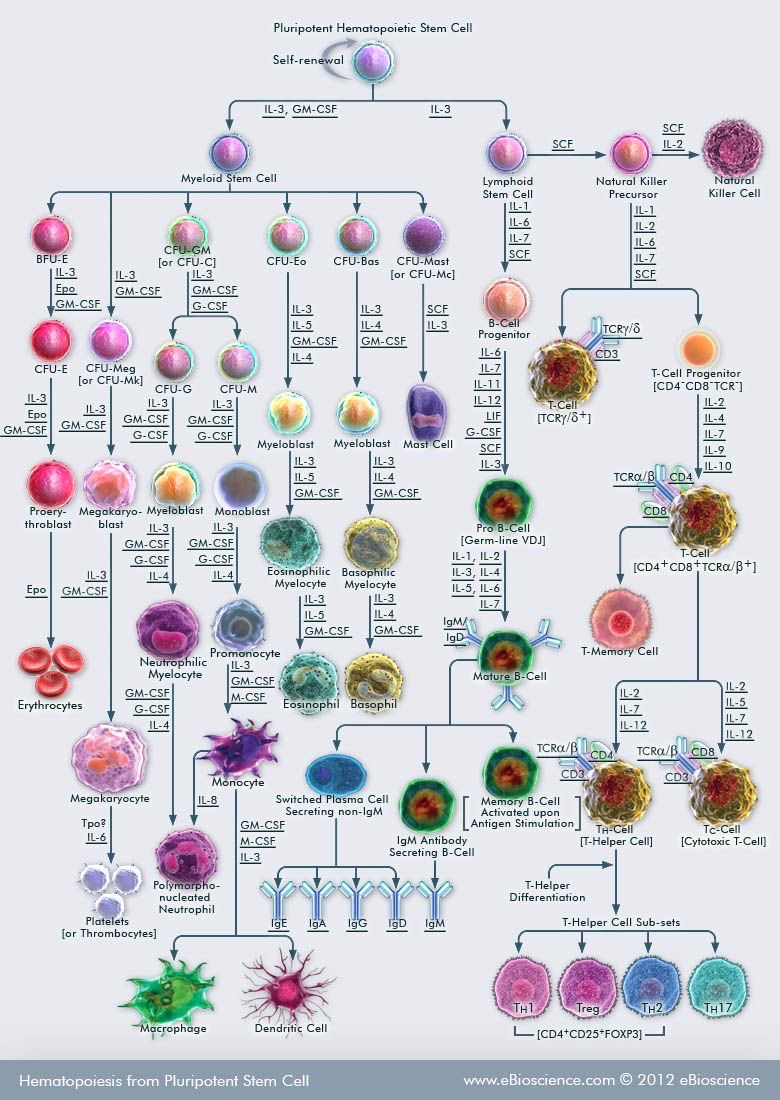
Happy International Day of Immunology!
Today we celebrate the incredible advancements in immunology that help protect us from disease and pave the way for healthier futures.
What are you doing to celebrate? Post and tag us for a chance to be featured!
The CAGI flagship paper establishes progress and prospects for computational genetic variant interpretation methods. It draws conclusions from the first 10 years of CAGI assessments
https://t.co/Ht7IGRKTgG
1/n