Everyone, meet 2023’s latest villain: the doomer. You see their pessimism ridiculed from the Guardian to the Washington Post.
But are they really wrong about the climate crisis, or are we just unwilling to face the magnitude of the problem? 1/6
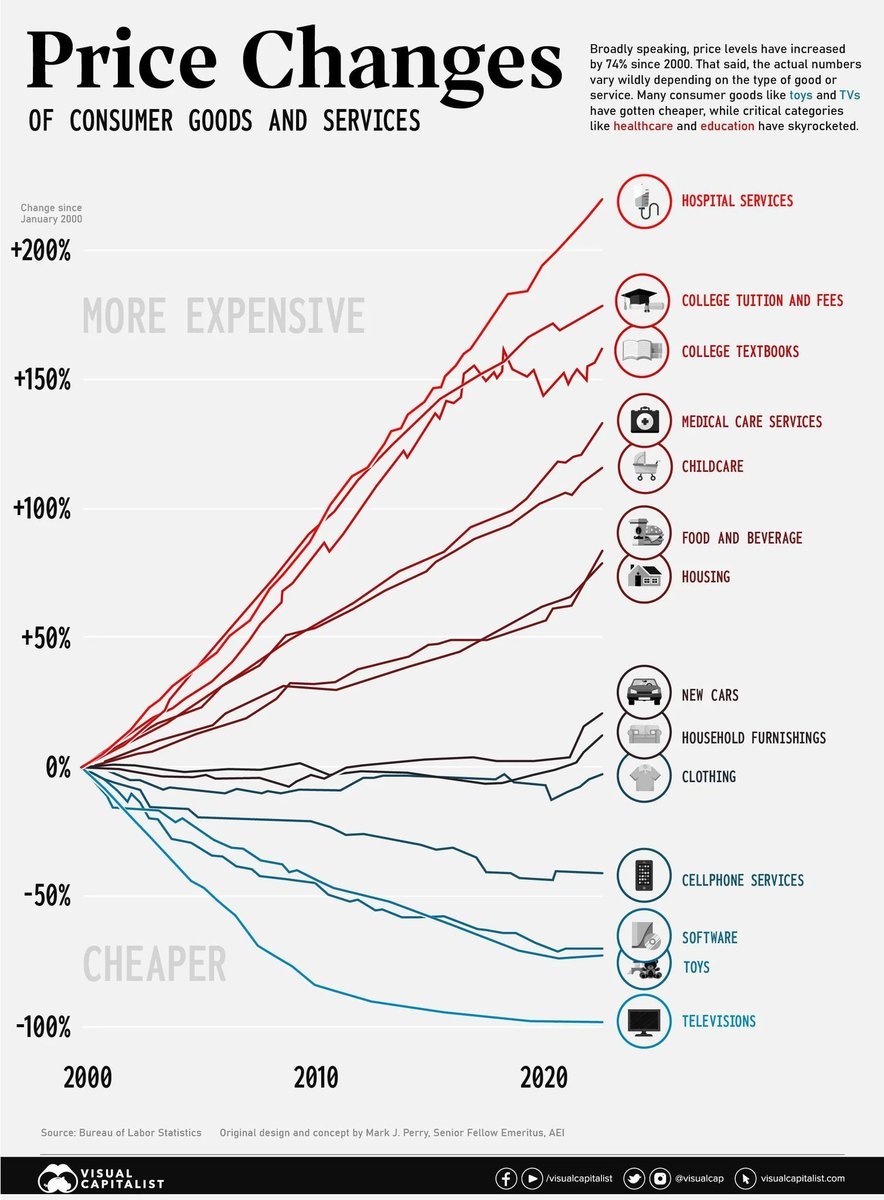
22. Inflationary Industries vs Deflationary Industries
• Why are hospital services and college tuition fees getting more expensive?
• Why are TVs and software getting cheaper?
@KevinClimate@PaulRoundy1@Jumpsteady@lucas_chancel @PikettyLeMonde @JKSteinberger To be honest I find this entire exchange off the mark. Debating 2.7 or 3 or 4 C is quite irrelevant, as we have no evidence that we can handle anything above 2 C, that already 1.5 C likely triggers tipping points, and 1 C is boundary for Justice
how i get gpt4 to efficiently teach me anything:
"Teach me how <anything> works by asking questions about my level of understanding of necessary concepts. With each response, fill in gaps in my understanding, then recursively ask me more questions to check my understanding."
@chrisedmond If the inflation driving profit margins are in inelastic goods, such as groceries, energy as well as debt repayments (banks, coles/Woolies etc)… demand/supply may be constant and prices could be raised under the false flag of “inflation”, could it not?
“We don’t just need a planet roughly the same size and temperature as Earth; we need a planet that spent billions of years evolving with us. We depend completely on the billions of organisms that make up Earth’s biosphere. Without them, we cannot survive.” https://t.co/aLiN9oCZiZ
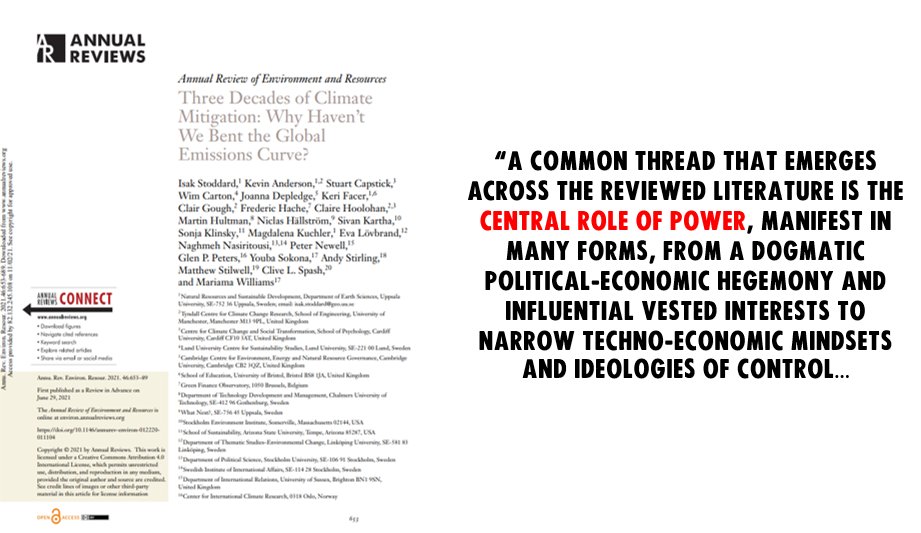
So, we need to ask why it is that we are failing to act on the scientific warnings.
This is what @IsakStoddard et al. do in a fantastic review in @AnnualReviews.
Their conclusion?: It's about political power! 7/n
https://t.co/tei22onT48
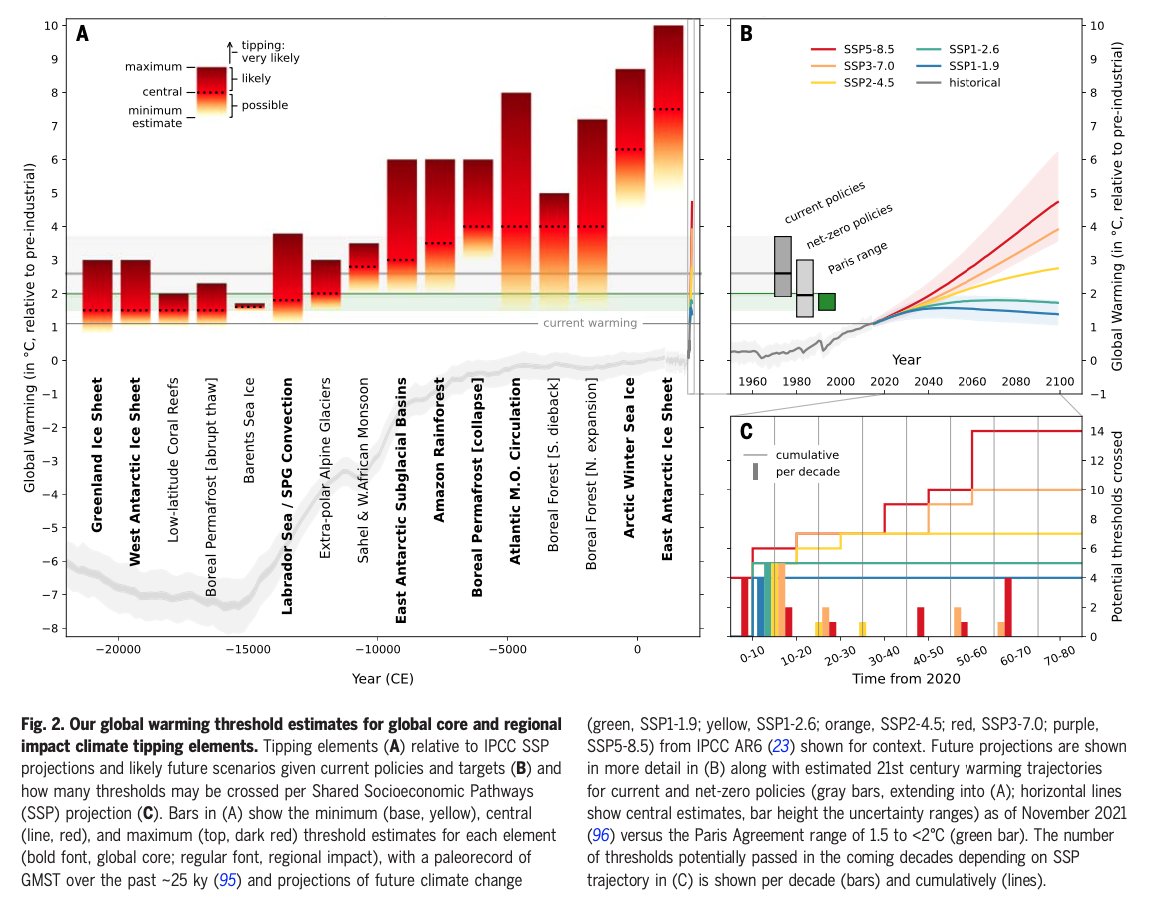
This is the key graphic from the recent tipping points paper:
A) Tipping elements in the Earth system and the temperature thresholds which might trigger them
B) The scenarios under which we might hit those temperature thresholds
C) How many tipping points we might cross
@_HannahRitchie@OurWorldInData@_HannahRitchie so, safe to say conventional cotton clothing is more environmentally friendly than organic cotton?
And the biggest factor is always going to be pace/size of production...?
Weekend reminder that SimCity's creators couldn't accurately reflect the scale of urban parking lots because if they did the game fell apart.
https://t.co/lOTjCzd3b5
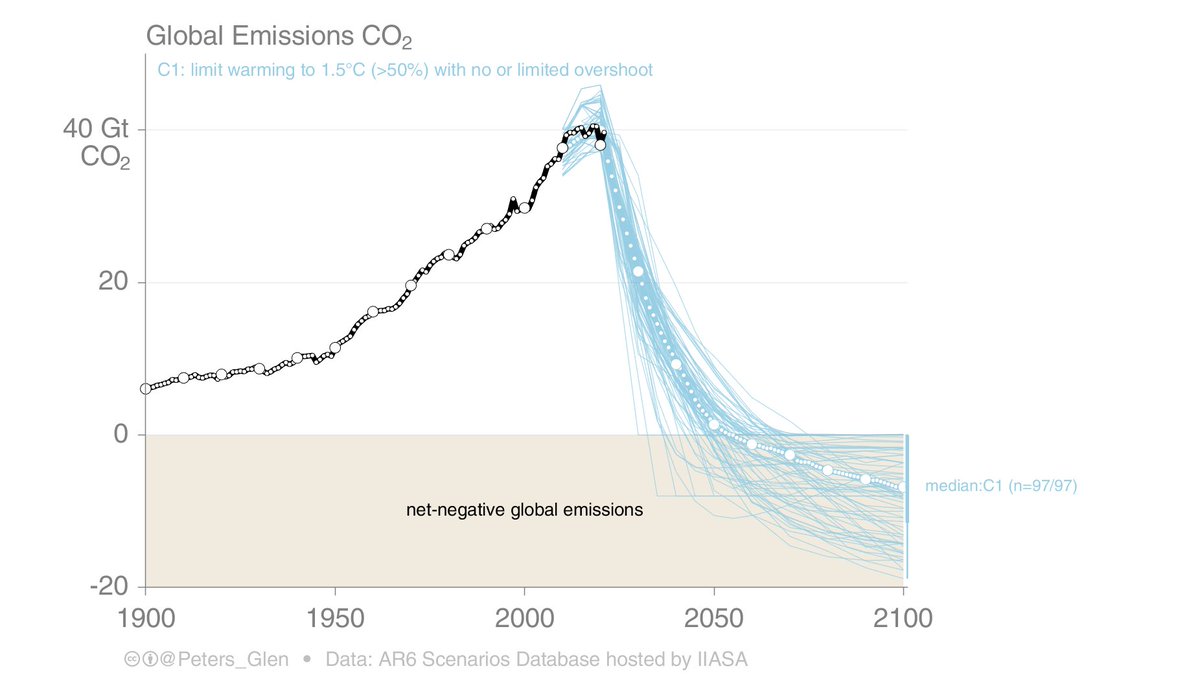
To keep the global average temperature increase below 1.5°C requires CO₂ emissions to fall in the next decades considerably faster than they rose over the last century...
Interesting study on whether hopeful messages on climate are effective or not:
"A cautionary note about messages of hope: Focusing on progress in reducing carbon emissions weakens mitigation motivation [ie the urge to take action]"
It says:
1/n 🧵
https://t.co/VGMm6VgUv4
🗞️Hot off the press @NatureComms📢:
Americans think a minority in the US are worried about climate change & support climate policy—it's really a super majority.
This “False Social Reality” is near-universal in the US & fully inverts the true norm: https://t.co/kNJCfLooKx 1/3
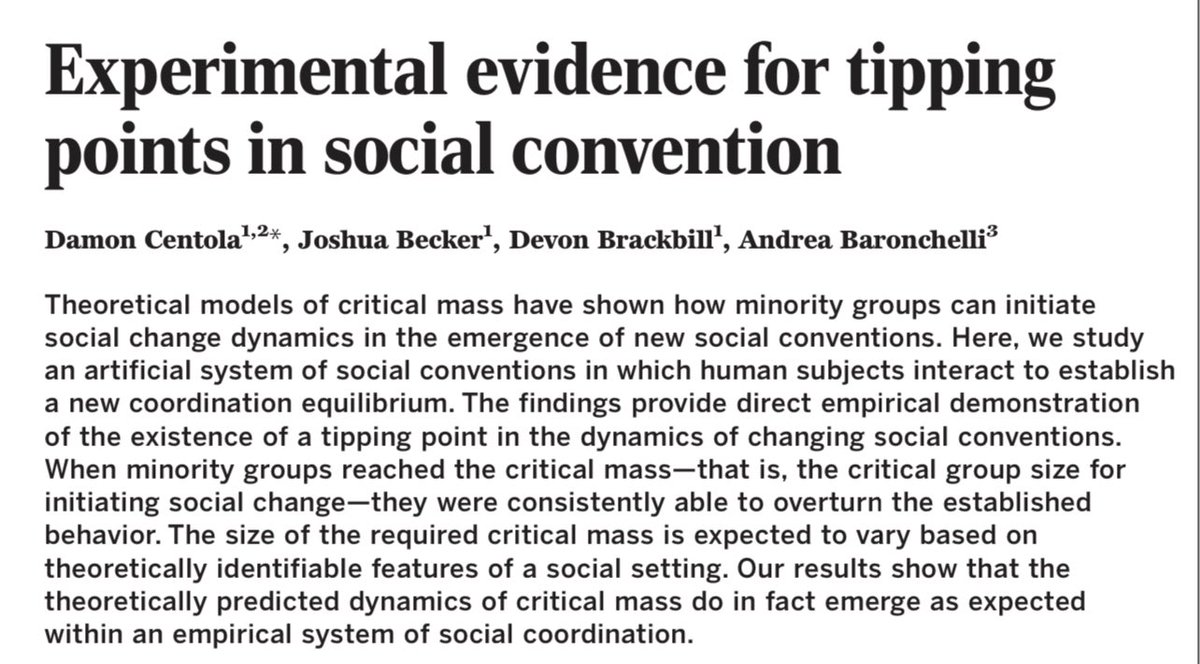
Social change happens very slowly, and then all at once, because there are tipping points in social beliefs. This paper found that when 25% of people shared a new norm, this could trigger a tipping point to change the consensus of the entire population. https://t.co/I4ZXBEpW0E
@paulkrugman It's great to see.
But unfortunately there's more to our environmental catastrophe than just C02.
Rampant material use, land use, agricultural sprawl and pollution are all degrading the planetary systems we rely on (biodiversity/top soil loss etc)
I'd stick to economics mate.