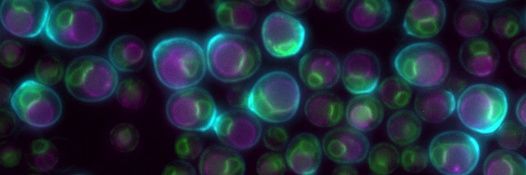
We are so happy to share our latest story led by Simon Prokisch (@KirschePro): "Partitioning into ER membrane microdomains impacts autophagic protein turnover during cellular aging". https://t.co/i7WoQUXwQ9
1/ Thrilled to share our new paper in @Nature: “CLCC1 promotes hepatic neutral lipid flux and nuclear pore complex assembly.” From our lab together with @apsarruda, led by co–first authors @alymathiowetz and @EmilyMeymand. 🥳
https://t.co/LHO31rNaxi
With so many great reviews on LDs already out, do we need another?
Sarah @cohenlaboratory & I were approached by @NatRevMCB to organize a review on LD heterogeneity and inter-organelle contacts...topics often in reviews, but not a focus. Fun project!
https://t.co/mSeynTW6vo
Join us for the DGZ Focus Workshop “Membrane Organization and Contact Sites” on Tuesday, March 25, 2025. Zoom-ID and passcode available in the flyer. Don't miss it!
Evolutionary origins of the lysosome-related organelle sorting machinery reveal ancient homology in post-endosome trafficking pathways | PNAS https://t.co/DKV5BjyPCy
So happy to finally see this out! Great work by first authors @A_STEDhammer and @petiaadarska which have shown that cargo flow along post-Golgi routes is driven by a key maturation step where compartments defined by ARF1 nature into recycling endosomes https://t.co/gkxHoYZV8y
Image summarizes the observations by Smith, Gay, and Babst @UofUBiology proposing a new function for the tricalbins: mediating the fusion of the ER to the plasma membrane at contact sites. https://t.co/6JH4OmagyF
#Membrane#lipid#Trafficking#Biochemistry#ER_literature
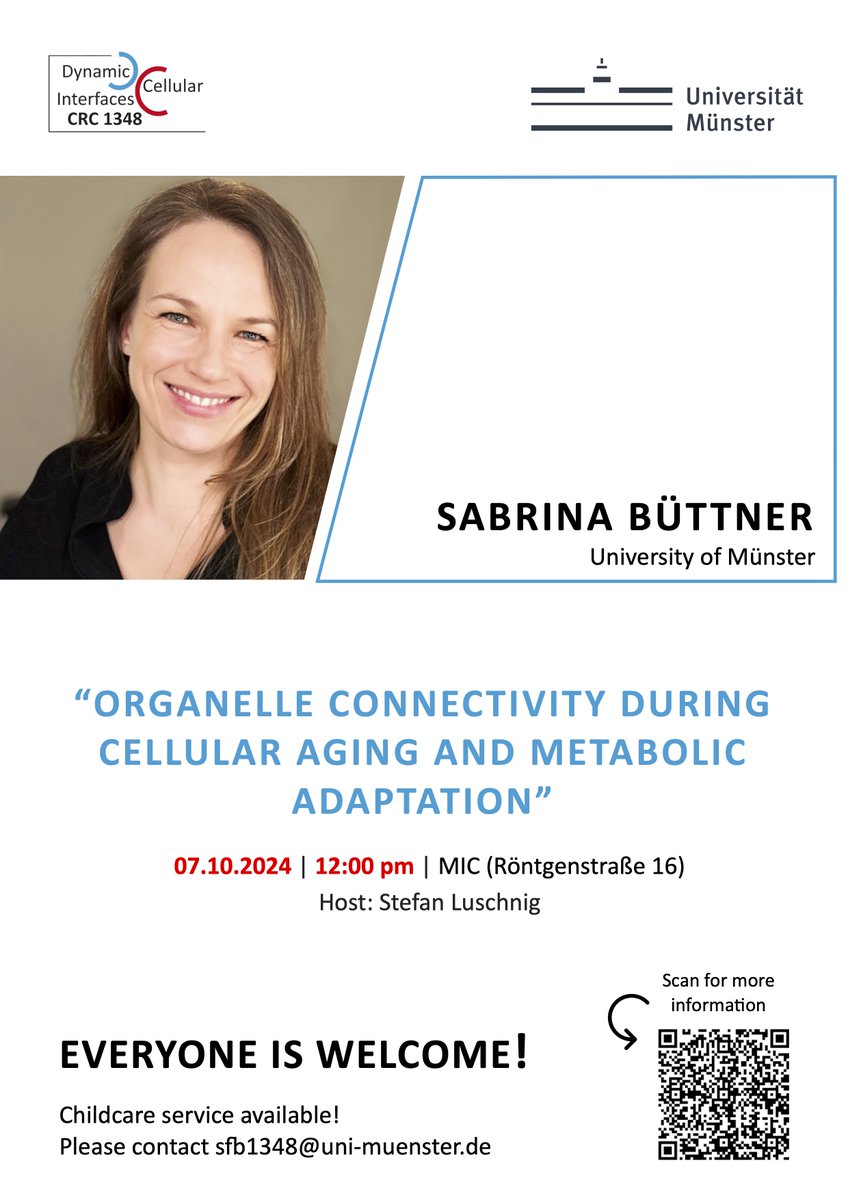
In a special seminar on Monday, October 07, at 12:00, @Sfb1348 will host Sabrina Büttner @ButtnerLab, who just joined @uni_muenster. Welcome to our scientific community! Don't miss Sabrina's seminar on
Organelle connectivity during cellular aging and metabolic adaptation!
Our new paper: Misfolded proteins activate HSF1 by releasing it from Hsp70. This has been clear in yeast for some time and we find that the mechanism is similar in human cells. https://t.co/TuLr8q2Ez3
Wilson, @Adam_L_Hughes et al. observe that mitochondrial-derived compartments selectively incorporate proteins from only the outer mitochondrial membrane (OMM) and robustly sequester both excess and mistargeted proteins into this OMM-enriched domain. https://t.co/mENQX84szx
Posor & Haucke discuss the recent study by @JasonCasler, @LLLackner et al. @LacknerLabNU (https://t.co/97AidqxP5u) describing how tripartite membrane contacts btwn #mitochondria, ER & plasma membrane regulate mitochondrial division & PI(4)P metabolism. https://t.co/SZlQplkIzK
Very excited to participate in this "Membrane Contact Sites in Cellular Homeostasis" meeting in Edinburgh. Earlybird registration and abstract submission closes the 23rd of July. Don't miss it! https://t.co/9PFMnHKd0a
#MembraneContactSite community: Do not miss July 23, the earlybird registration deadline for our “Membrane Contact Sites in Cellular Homeostasis” @BiochemSoc meeting in Edinburgh. Submit an abstract by then for being considered for a short talk! https://t.co/eXar1XHnKQ
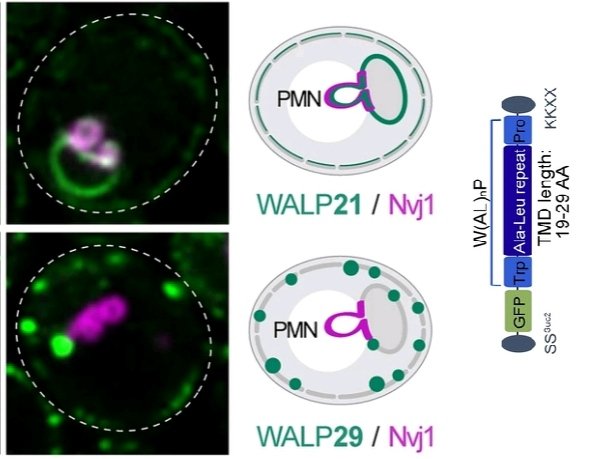
Among other things, Simon has found that protein TMD length conditions localization to the NVJ, thus enabling turnover via piecemeal microautophagy of the nucleus (PMN). Be sure to check out the paper for more!!
We are so happy to share our latest story led by Simon Prokisch (@KirschePro): "Partitioning into ER membrane microdomains impacts autophagic protein turnover during cellular aging". https://t.co/i7WoQUXwQ9
Great to see our preprint out. We uncovered a simple likely mechanism to fuse inner+outer nuclear envelopes to precede nuclear pore complex (NPC) insertion.
Our first step was to show that CLCC1 is the long-lost human homologue of Brl1 (previously only known in yeast, protists)
We are proud and excited to share the new study from our lab, led by the amazing @RanenAviner. It uncovers an important pathogenic mechanism causing cellular dysfunction in Huntington's Disease. We hope this work will inspire new and effective therapies
https://t.co/WS4o1BwUw6