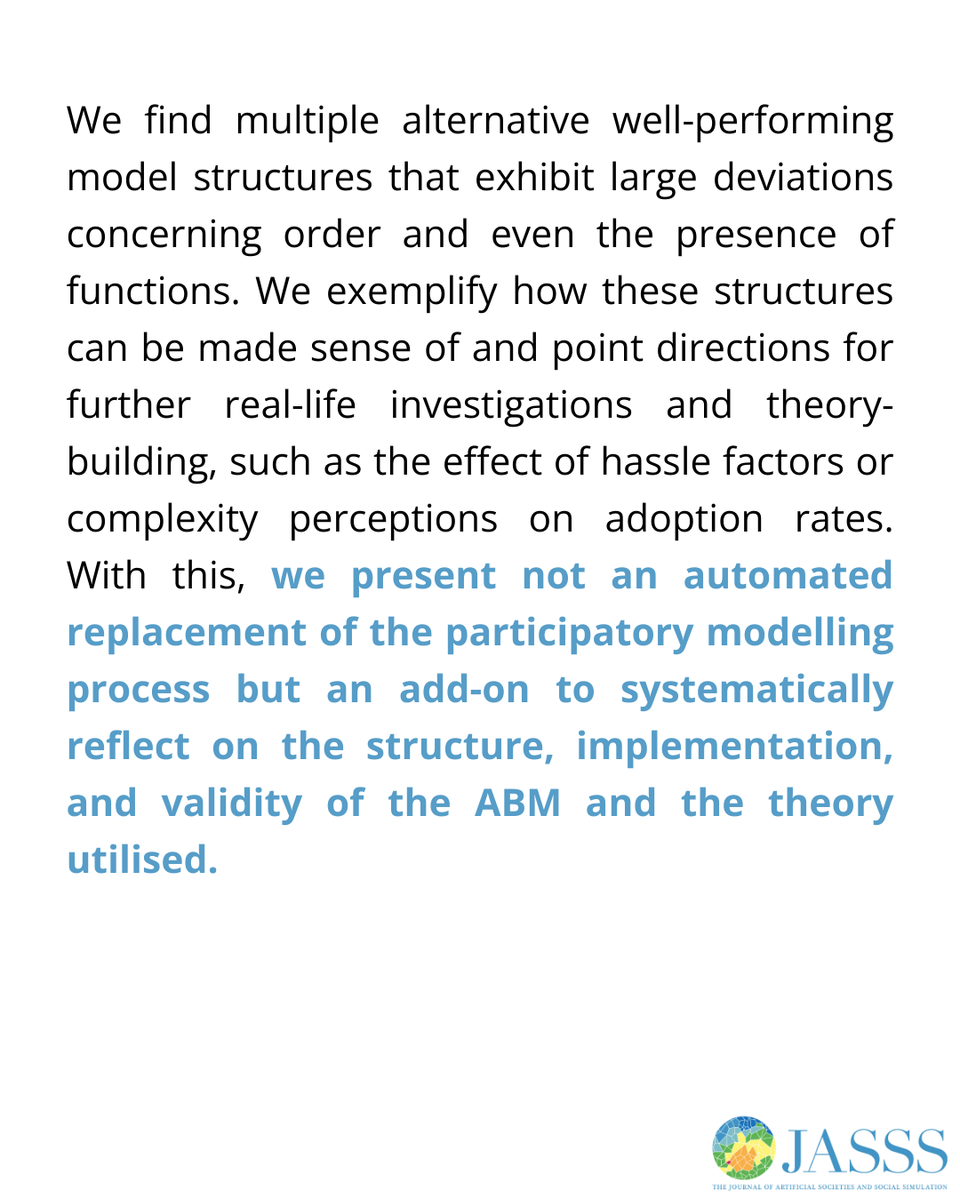
More realistic #AgentBasedModels are not always better: a new study shows that richer agent #Heterogeneity undermines #ModelCalibration reliability — reopening the KISS vs KIDS debate on new empirical ground.
Read the full #OpenAccess article in #JASSS: https://t.co/QE7kTV2EPB
@EspinosaRadio Depende de la disciplina; p. ej. en una revista top de administración (e.g. ASQ, AMR, etc) el lapso de tiempo entre envio y publicación puede ser ~2.5 años.
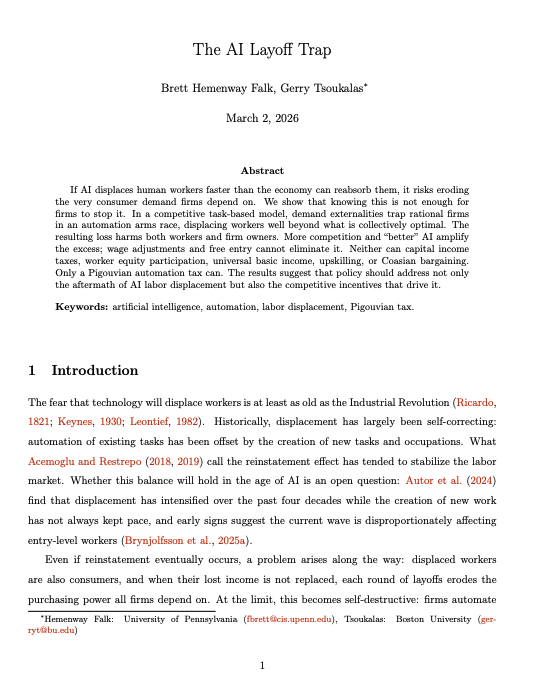
🚨BREAKING: Two researchers from UPenn and Boston University just published a paper that should be uncomfortable reading for every CEO automating their workforce right now.
The argument is straightforward. Every company replacing workers with AI is also eliminating its own future customers. Laid off workers stop spending. Enough of them stop spending and nobody can afford to buy anything. The companies that fired everyone end up selling into an economy with no purchasing power left.
Every executive can see this. The math is not complicated. But here is why nobody stops.
If you do not automate, your competitor does. They cut costs, lower prices, take your market share, and you collapse anyway. So every company automates knowing it is collectively destructive because the alternative is dying alone while everyone else survives. The researchers proved this is a Prisoner's Dilemma playing out in real time.
The numbers are already moving. Block cut nearly half its 10,000 employees this year. Jack Dorsey said AI made those roles unnecessary and that within the next year the majority of companies will reach the same conclusion. Salesforce replaced 4,000 customer support agents with AI. Goldman Sachs deployed a coding tool that lets one engineer do the work of five. Over 100,000 tech workers were laid off in 2025 and AI was cited as the primary driver in more than half those cases. 80% of US workers hold jobs with tasks susceptible to AI automation.
The researchers tested every proposed solution. Universal basic income does not change a single company's incentive to automate. Capital income taxes adjust profit levels but not the per-task decision to replace a human. Collective bargaining cannot hold because automating is always the dominant strategy.
They also identified what they call a Red Queen effect. Better AI does not solve the problem, it accelerates it. Every company chases faster automation to gain market share over rivals but at the end everyone has automated equally, the gains cancel out, and the only thing left is more destroyed demand.
The one thing the math says could work is a Pigouvian automation tax. A per-task charge that forces companies to account for the demand they destroy each time they replace a worker.
The conclusion is that this is not a transfer of wealth from workers to owners. Both sides lose. Workers lose income. Companies lose customers. It is a deadweight loss with no market mechanism to stop it on its own.
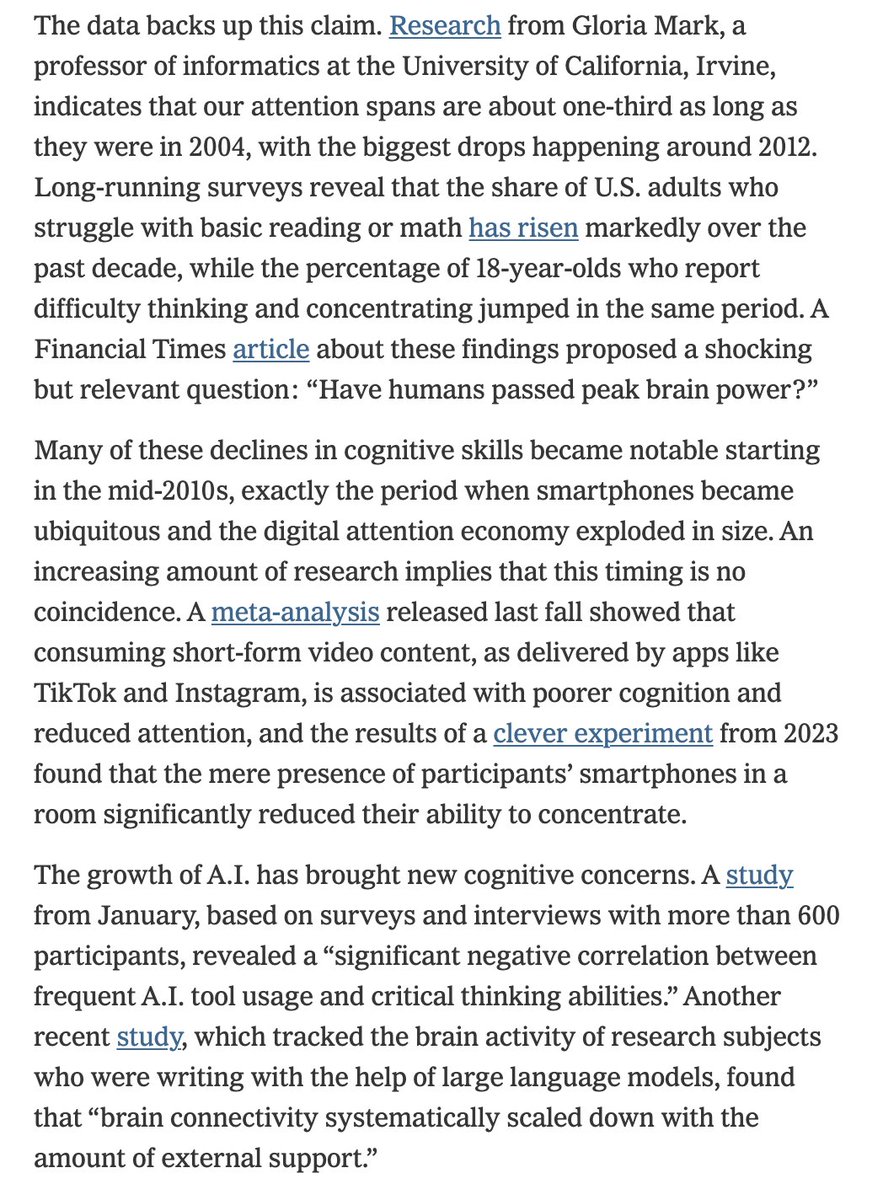
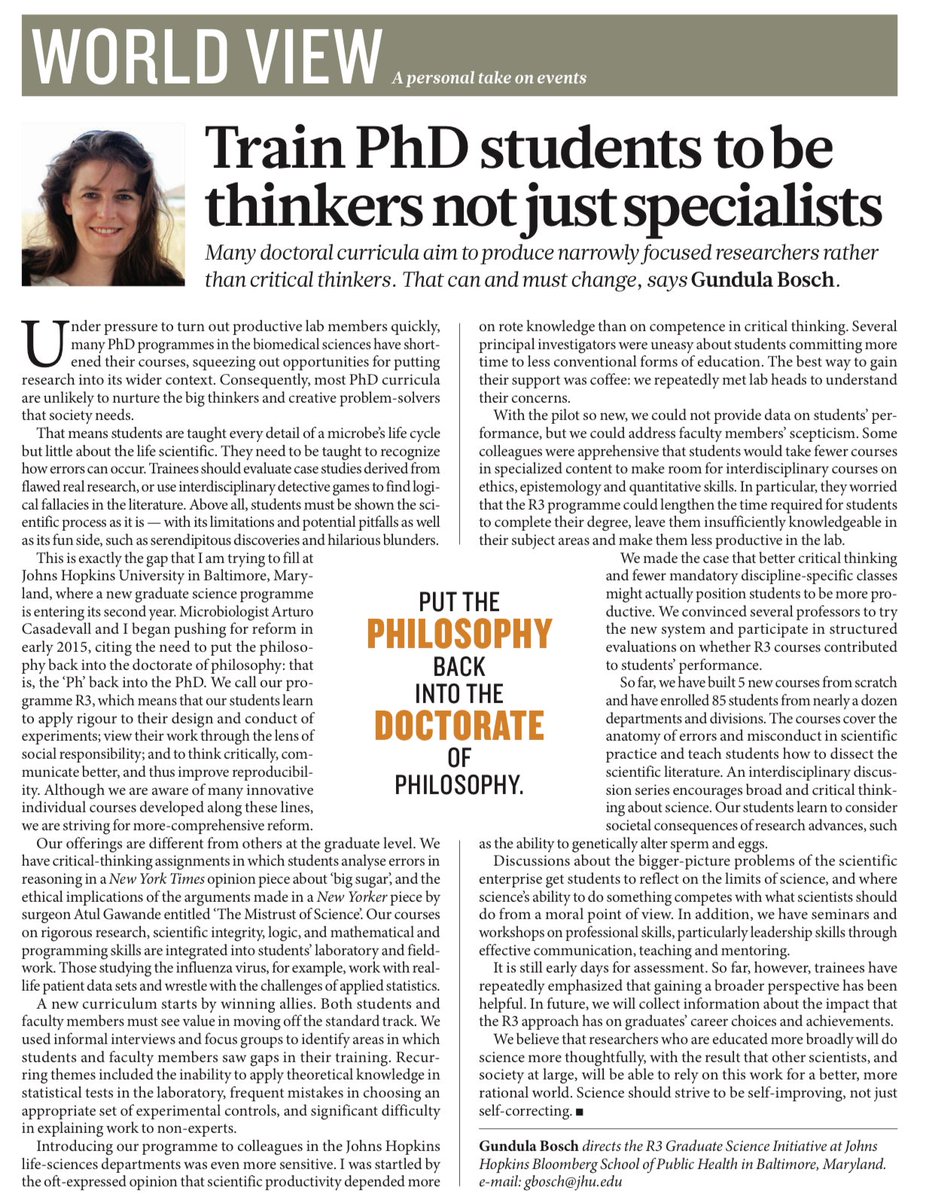
“Have humans passed peak brain power?”
We’re rapidly losing the ability to think deeply. This fantastic article explains how technology, from smartphones, social media to artificial intelligence is making us dumber.
"Long-running surveys reveal that the share of U.S. adults who struggle with basic reading or math has risen markedly over the past decade, while the percentage of 18-year-olds who report difficulty thinking and concentrating jumped in the same period. A Financial Times article about these findings proposed a shocking but relevant question: “Have humans passed peak brain power?”
Many of these declines in cognitive skills became notable starting in the mid-2010s, exactly the period when smartphones became ubiquitous and the digital attention economy exploded in size. An increasing amount of research implies that this timing is no coincidence. A meta-analysis released last fall showed that consuming short-form video content, as delivered by apps like TikTok and Instagram, is associated with poorer cognition and reduced attention, and the results of a clever experiment from 2023 found that the mere presence of participants’ smartphones in a room significantly reduced their ability to concentrate.
The growth of A.I. has brought new cognitive concerns. A study from January, based on surveys and interviews with more than 600 participants, revealed a “significant negative correlation between frequent A.I. tool usage and critical thinking abilities.” Another recent study, which tracked the brain activity of research subjects who were writing with the help of large language models, found that “brain connectivity systematically scaled down with the amount of external support.”"
We need to stop filling our minds with the equivalent of digital Doritos. We made physical fitness and a healthy diet into a national movement, we should do the same for our brains.
https://t.co/iwcAVeCstl
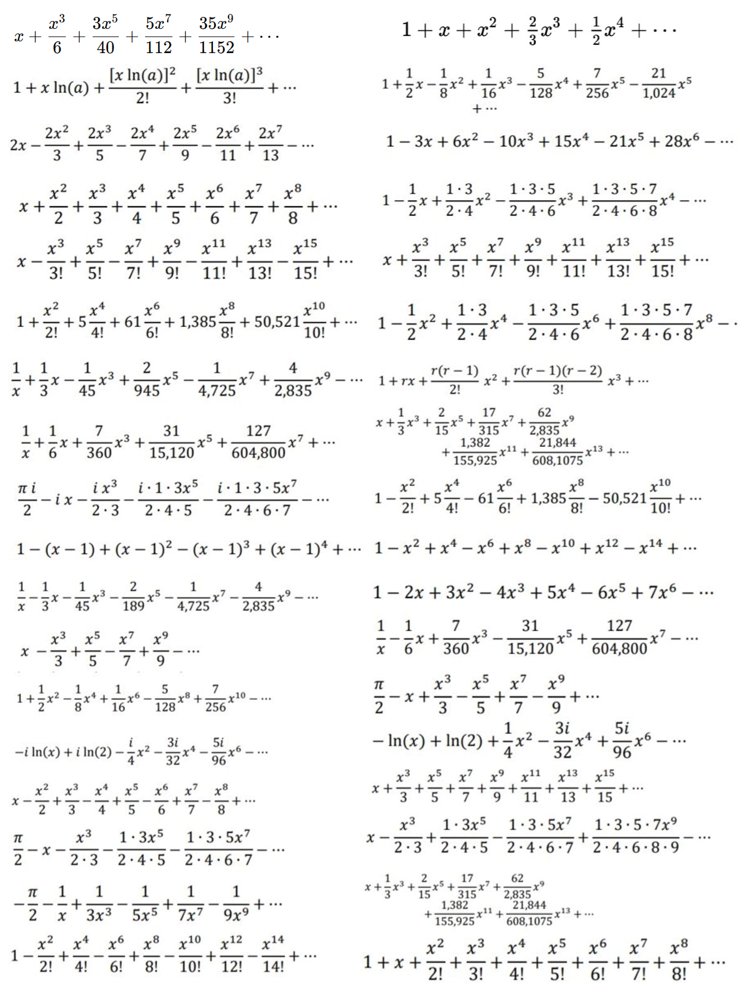
"Engineering is fundamentally a problem-solving process. Law is fundamentally about winning an argument. The first demands practical intelligence, the second reduces decisions to a kind of performative rationality." https://t.co/8gMivVRRjZ
Real-world #Policy problems are hard to capture with traditional models, but a #generative approach may change the game. GPLab combines #LLMs and #ABM to advance #computationalsocialscience for public decision support.
Read the full #OA article in #JASSS: https://t.co/B38L4JjjTK
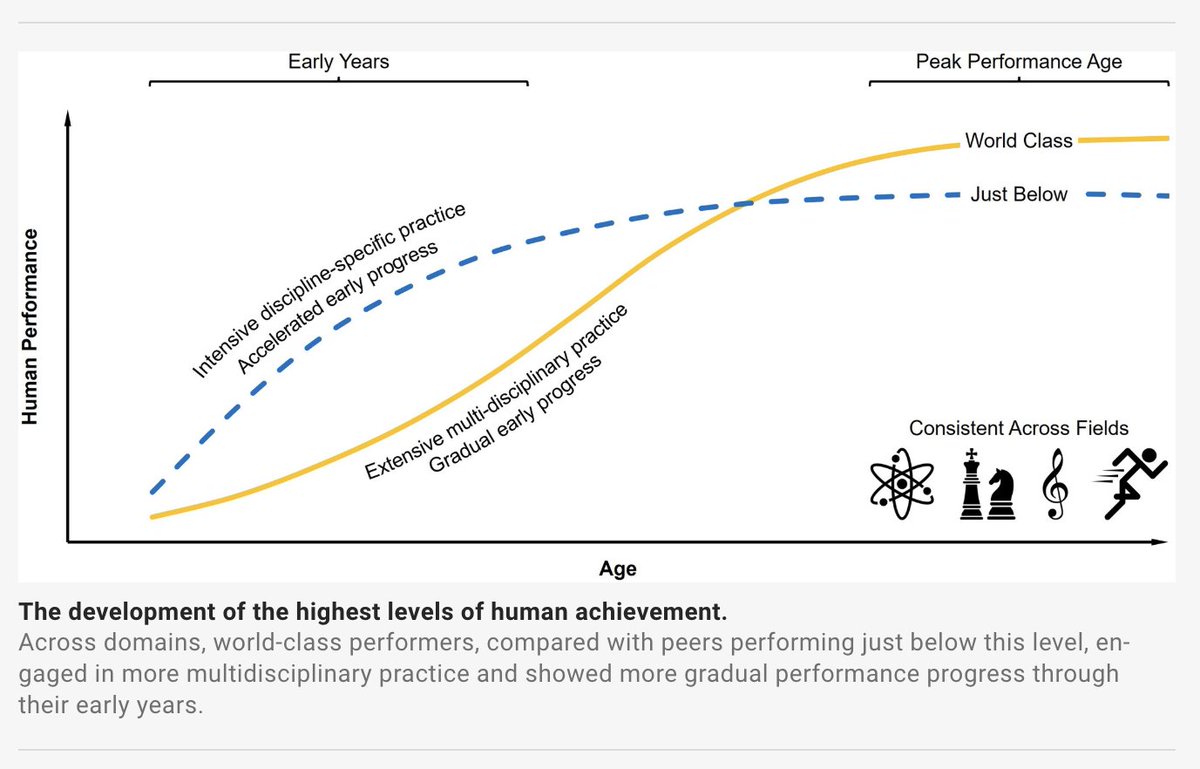
A massive new study on peak performance included 34,000 international top performers: Nobel laureates, renowned classical music composers, Olympic champs, and the world’s best chess players. It shows early specialization is a trap, and the road to greatness is long and varied.
@IterIntellectus Sure. While peer review is not perfect, it is the best safeguard available. Or would you prefer unreviewed research—for example, studies guiding medicine or public policy? What is your proposal?
Garcia-Diaz, C. (2025). Computer simulation in international business. Oxford Research Encyclopedia of Business and Management. https://t.co/q2fjq08qBS
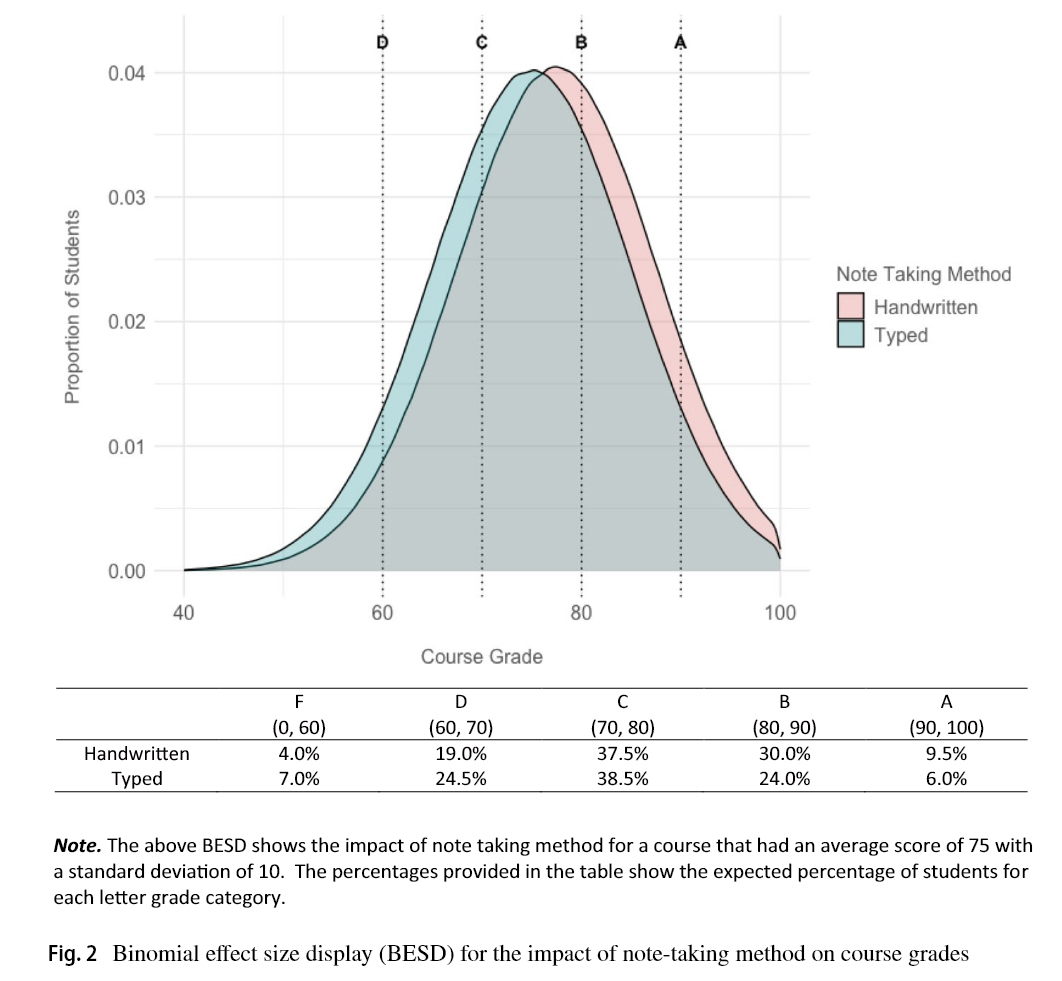
It's time to remove laptops from classrooms.
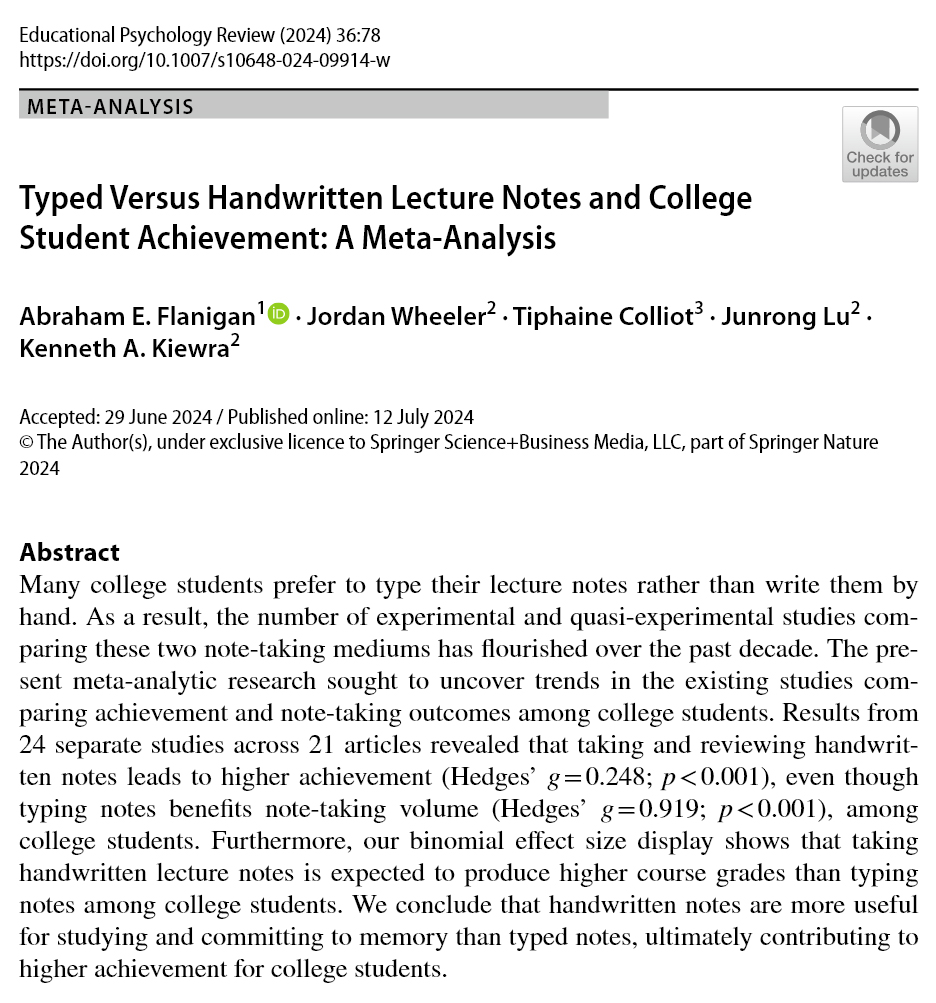
24 experiments: Students learn more and get better grades after taking notes by hand than typing. It's not just because they're less distracted—writing enables deeper processing and more images.
The pen is mightier than the keyboard.
How does deliberation reshape collective judgment? An #AgentBasedModel of the #DoctrinalParadox compares binary voting, belief aggregation, and interaction—revealing when talk helps or deepens contradictions.
Read the full #OpenAccess article in #jasss: https://t.co/1KWcSccZSX
The last #JASSS issue of 2025 has been published today with 11 articles! It covers topics such as #school choice, contact #tracing, #healthcare, #market concentration, natural #commons resource protection, #voting, #innovation adoption, and many others! https://t.co/6aOSsUG69X
Check out this perspective paper on the past, present and future of #ABM#computational#simulation#modeling by the former presidents of #ESSA the European Social Simulation Association! https://t.co/AVlXyIif98