It just seems implausible this is what we are made of, essentially, nanotechnology about a billion years beyond anything we can design or make ourselves.
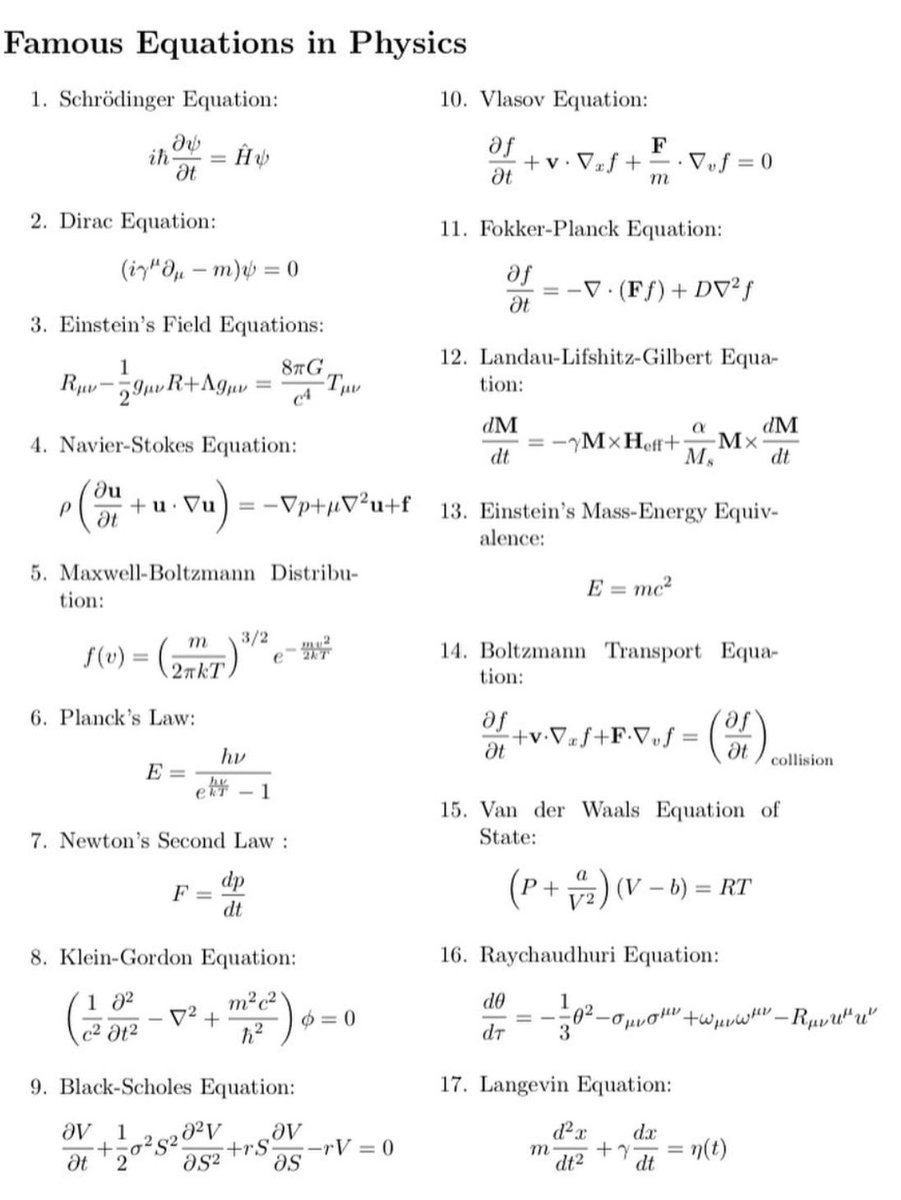
I’ve tested the latest generation of all the major AIs on theoretical physics research and Claude 4.6 has absolutely blown me away with how capable it is in physics. It feels like a Claude Code moment for research is not that far off.
It has a very detailed understanding of existing literature, and it’s able to do complex calculations that are several pages long, often without mistakes. It can also write amazing 20 page tutorials that help break down difficult technical topics in QFT and condensed matter physics. This is a huge difference compared to last year’s models, which would make tons of mistakes and were way too vague when you asked them to write formulas. Claude is still far (far) away from solving quantum gravity, but you can have a serious discussion with it about existing approaches and it can help you iterate faster on topics you understand well. The experience is similar to building a complex codebase with Claude Code in that you sometimes have to use your understanding to patch up some things that the model did wrong, but you end up being much faster and more confident when tackling hard problems. If you’re a physicist and don’t believe it, give it a try!
I took delivery of a beautiful new shiny HW4 Tesla Model X today, so I immediately took it out for an FSD test drive, a bit like I used to do almost daily for 5 years. Basically... I'm amazed - it drives really, really well, smooth, confident, noticeably better than what I'm used to on HW3 (my previous car) and eons ahead of the version I remember driving up highway 280 on my first day at Tesla ~9 years ago, where I had to intervene every time the road mildly curved or sloped. (note this is v13, my car hasn't been offered the latest v14 yet)
On the highway, I felt like a passenger in some super high tech Maglev train pod - the car is locked in the center of the lane while I'm looking out from Model X's higher vantage point and its panoramic front window, listening to the (incredible) sound system, or chatting with Grok. On city streets, the car casually handled a number of tricky scenarios that I remember losing sleep over just a few years ago. It negotiated incoming cars in tight lanes, it gracefully went around construction and temporarily in-lane stationary cars, it correctly timed tricky left turns with incoming traffic from both sides, it gracefully gave way to the car that went out of order in the 4-way stop sign, it found a way to squeeze into a bumper to bumper traffic to make its turn, it overtook the bus that was loading passengers but still stopped for the stop sign that was blocked by the bus, and at the end of the route it circled around a parking lot, found a spot and... parked. Basically a flawless drive.
For context, I'm used to going out for a brief test drive around the neighborhood to return with 20 clips of things that could be improved. It's new for me to do just that and exactly like I used to, but come back with nothing. Perfect drive, no notes. I expect there's still more work for the team in the long march of 9s, but it's just so cool to see that we're beyond finding issues on any individual ~1 hour drive around the neighborhood, you actually have to go to the fleet and mine them. Back then, I processed the incredible promise of vehicle autonomy at scale (in the fully scaleable, vision only, end-to-end Tesla way) only intellectually, but now it is possible to feel it intuitively too if you just go out for a drive. Wait, of course surround video stream at 60Hz processed by a fully dedicated "driving brain" neural net will work, and it will be so much better and safer than a human driver. Did anyone else think otherwise?
I also watched @aelluswamy 's new ICCV25 talk last week (https://t.co/RdaM23kvez) that hints at some of the recent under the hood technical components driving this progress. Sensor streams (videos, maps, kinematics, audio, ...) over long contexts (e.g. ~30 seconds) go into a big neural net, steering/acceleration comes out, optionally with visualization auxiliary data. This is the dream of the complete Software 1.0 -> Software 2.0 re-write that scales fully with data streaming from millions of cars in the fleet and the compute capacity of your chip, not some engineer's clever new DoubleParkedCarHandler C++ abstraction with undefined test-time characteristics of memory and runtime. There's a lot more hints in the video on where things are going with the emerging "robotics+AI at scale stack". World reconstructors, world simulators "dreaming" dynamics, RL, all of these components general, foundational, neural net based, how the car is really just one kind of robot... are people getting this yet?
Huge congrats to the team - you're building magic objects of the future, you rock! And I love my car <3.
MIT Course announcement: Machine Learning for Computational Biology #MLCB25
Fall'24 Lecture Videos: https://t.co/tA3zeuIF7g
Fall'24 Lecture Notes: https://t.co/C3WmXZuQur
(a) Genomes: Statistical genomics, gene regulation, genome language models, chromatin structure, 3D genome topology, epigenomics, regulatory networks.
(b) Proteins: Protein language models, structure and folding, protein design, cryo-EM, AlphaFold2, transformers, multimodal joint representation learning.
(c) Therapeutics: Chemical landscapes, small-molecule representation, docking, structure-function embeddings, agentic drug discovery, disease circuitry, and target identification.
(d) Patients: Electronic health records, medical genomics, genetic variation, comparative genomics, evolutionary evidence, patient latent representation, AI-driven systems biology.
Foundations and frontiers of computational biology, combining theory with practice. Generative AI, foundation models, machine learning, algorithm design, influential problems and techniques, analysis of large-scale biological datasets, applications to human disease and drug discovery.
First Lecture: Thu Sept 4 at 1pm in 32-144
With: Prof. Manolis Kellis @manoliskellis, Prof. Eric Alm @ejalm, TAs: Ananth Shyamal, Shitong Luo @luost26
Course website: https://t.co/ateGr6xKLM
@MIT@MITEECS@MITdeptofBE@MITCSBPhD@MIT_CSAIL@Harvard@HarvardMed@BroadInstitute
Just got a collection of o4-mini agents to collectively critique and work together on a piece of a research problem that I solved on my own that took about a week. It’s clear at this point that the latent capabilities of these models is much larger than is accessible via 1-shot generation.
So far they have independently come up with the same approach that I ended using to find a valid proof, and the bound they suspect is the key is true and exactly what I did.
I don’t know if it will end up getting a flawless proof (it’s been running for an hour), but this problem is well beyond what people currently believe these models to be capable of, & if I had gotten these ideas / steps ahead of time it would’ve cut how long this proof took me in half at least.
This kind of thing is going to revolutionize the field very soon
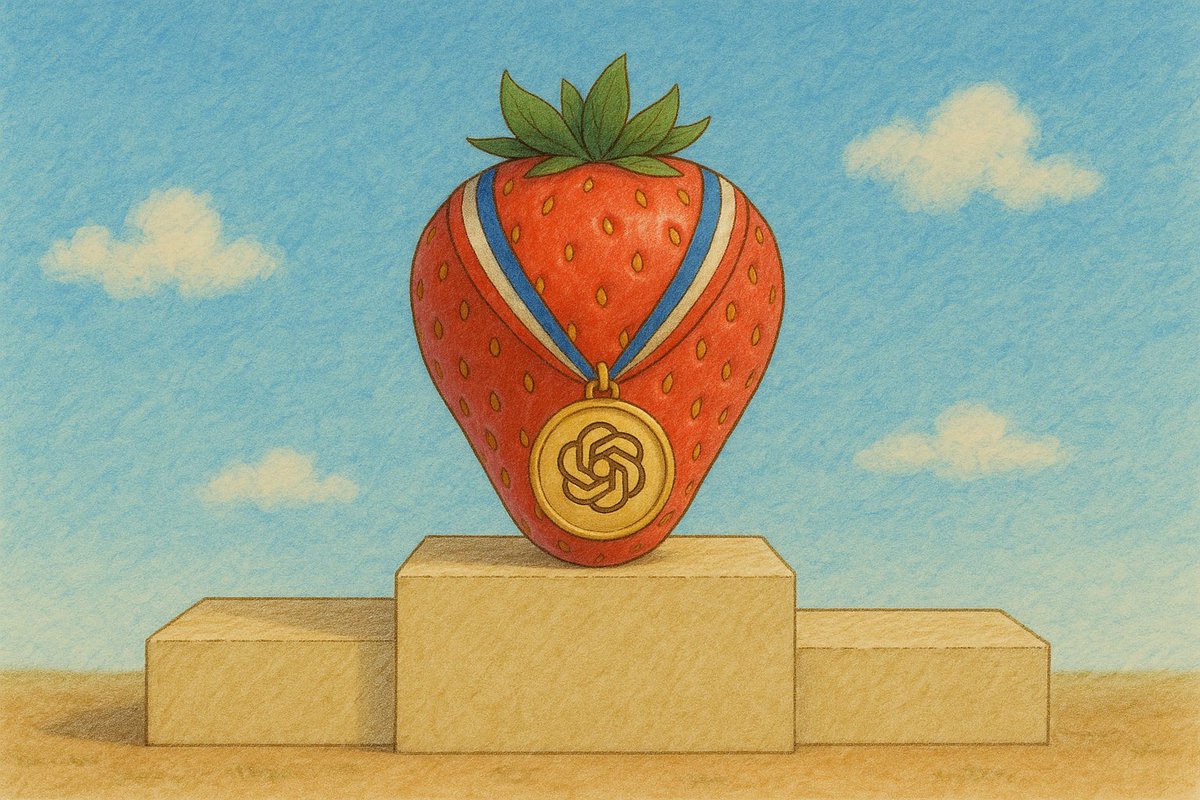
1/N I’m excited to share that our latest @OpenAI experimental reasoning LLM has achieved a longstanding grand challenge in AI: gold medal-level performance on the world’s most prestigious math competition—the International Math Olympiad (IMO).
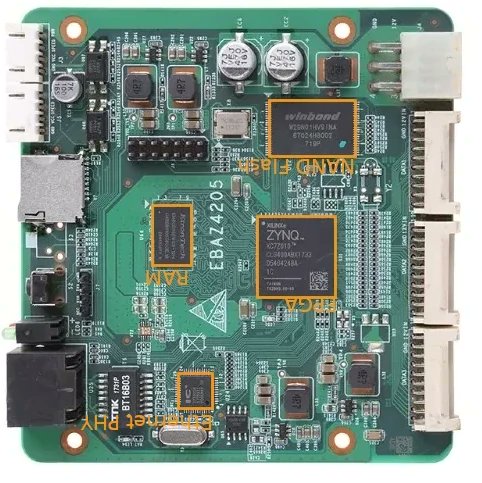
My new blog on FPGA Zero to Hero series is there.
#FPGA#Zynq#Xilinx#Z7010
I chose the cheapest FPGA board most commoners can use. Read more here:
https://t.co/IrfLGggpoQ
L-am sunat pe @NicusorDanRO și l-am felicitat pentru alegerea sa în fruntea României.
În pofida numeroaselor încercări de manipulare, românii au ales în această seară democrația, statul de drept și Uniunea Europeană.
Franţa va fi alături de dumneavoastră pentru a consolida parteneriatul nostru și pentru a lucra împreună pentru o Europă mai puternică, mai suverană și mai independentă.
Great (and scary) visualization of 2024 daily temperatures compared to prior years by the BBC today. Evocative of the iconic Joy Division album cover from 1979: https://t.co/o2zLigFV7h