Delighted to share our new preprint on sex differences in polygenic risk prediction.
https://t.co/x4kiLnFXJc
Using 3,000+ PRS in @PGSCatalog across 145 traits in UK Biobank
Key:
✳️Sex bias is widespread
✳️Driven more by biology than methods, sample size
✳️Implications for clinical use
Thread👇
Grateful to share that I’ve been promoted to Professor of Medicine @harvardmed@Harvard.
I am deeply thankful for my family, mentors, collaborators, and trainees who have carried me here.
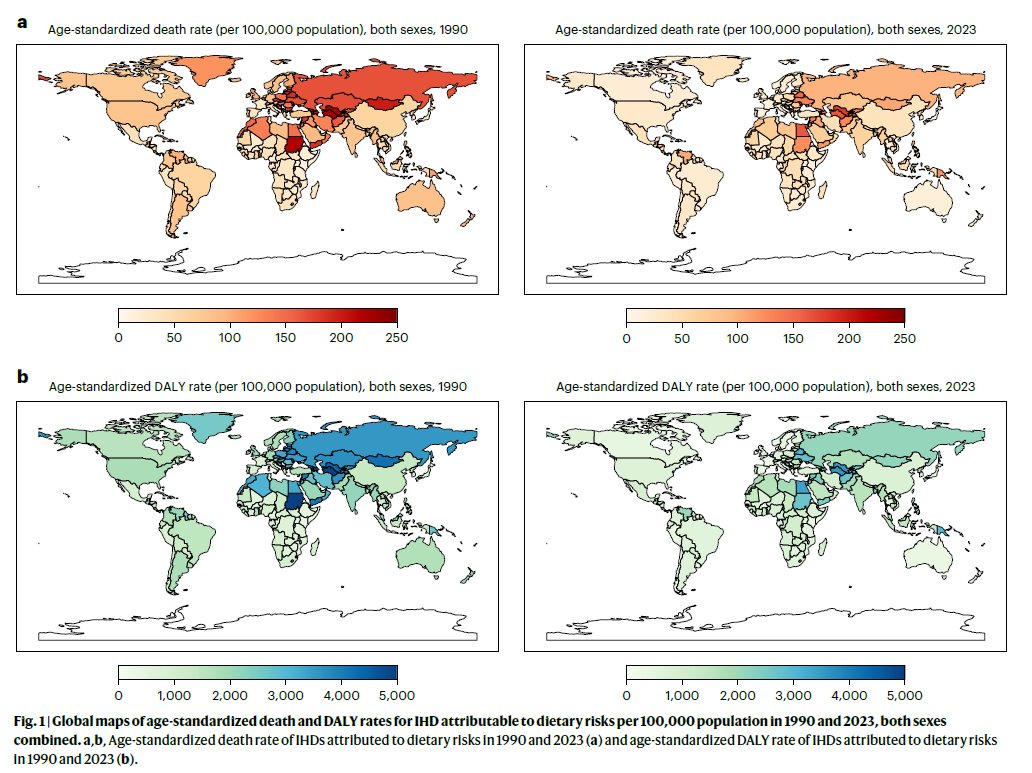
🫀Excited to share research that I supervised as senior author, now published in @NatureMedicine: the largest global analysis of ischemic heart disease burden attributable to suboptimal diet to date.
As a researcher in cardiovascular epidemiology, I've always believed that what we eat is one of the most powerful levers we have for preventing heart disease. Our data now quantify just how large that lever is, and the findings are both sobering and actionable.
We assessed 13 dietary risk factors across 204 countries from 1990 to 2023. In 2023 alone, suboptimal diet was responsible for an estimated 4.06 million ischemic heart disease deaths worldwide.
Key takeaways:
1️⃣ The patterns of suboptimal diet vary substantially across the globe. While developing countries most often face ischemic heart disease burden related to undernutrition and limited access to protective foods (ie, whole grains, fruits, vegetables, omega-3 fatty acids), developed countries are more commonly burdened by overconsumption of harmful dietary components (ie, processed meats, sugar-sweetened beverages).
2️⃣Global efforts have historically targeted sodium, sugar, and fat reduction. Our data suggest that promoting the intake of whole grains, nuts, fruits, and legumes deserves equal, if not greater, priority.
Special thanks to the @IHME_UW for enabling this work and to the remarkable #GBD collaborators worldwide. It has been a privilege to supervise and work closely with Sooji Lee, Hayeon Lee, Yejun Son, Jae Il Shin, alongside Prof. Dong Keon Yon.
Paper: https://t.co/XYcv7lf5IY
#CardiovascularHealth #Diet #Nutrition #IHD #CAD #GBD #GlobalHealth #PublicHealth #HeartDisease #FoodIsMedicine
@broadinstitute | @MGBResearchNews | @MassGenBrigham | @kh_univ
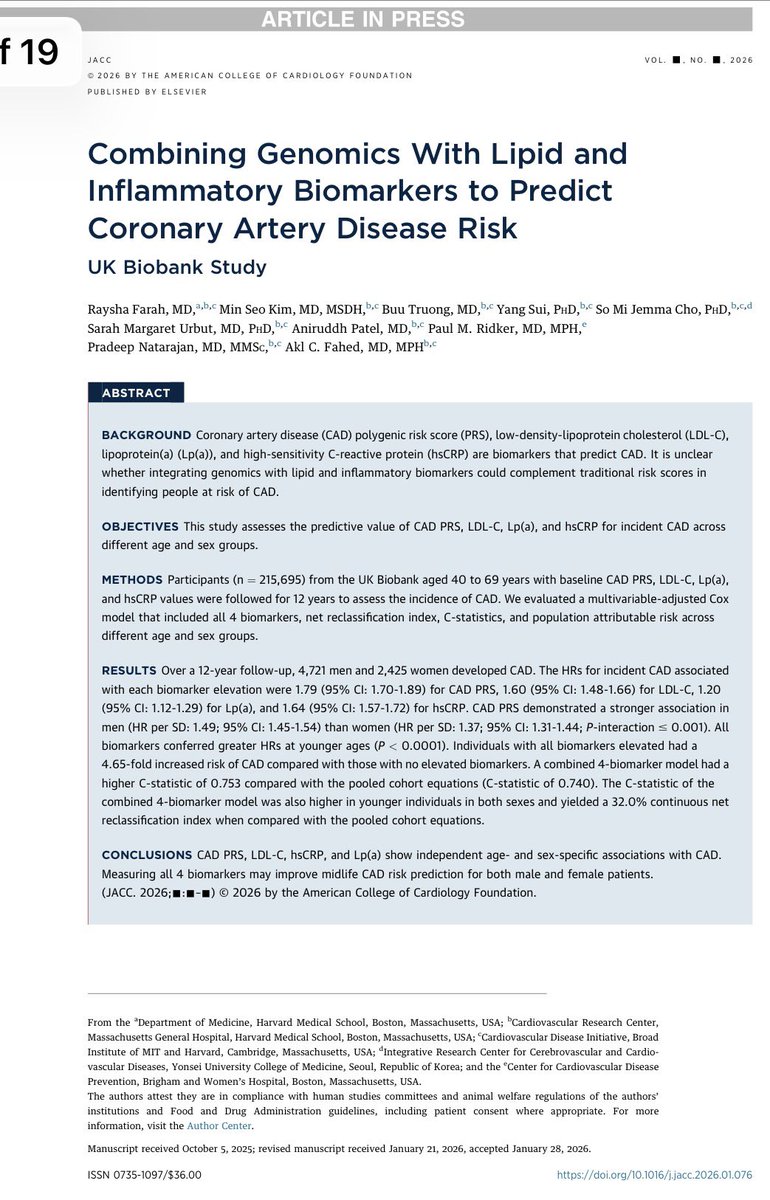
New from @rayshafarah in our group published in @JACCJournals
🔸 A single measurement of 4 blood-based biomarkers in midlife, namely CAD PRS, hsCRP, LDL-C, and Lp(a), is strongly predictive of future CAD incidence in both sexes and across the age spectrum from 40 to 69 years
🔸 A biomarker-based prediction model achieves comparable performance with clinical risk calculators and may identify populations who are not detected using a traditional clinical risk calculator, creating an opportunity for improved primary prevention, particularly in younger age groups, where the performance of biomarker-based screening is highest.
🔸 Interpreting risk as a cumulative burden of genetic, lipid, and inflammatory pathways provides a straightforward approach to prioritizing earlier, targeted primary prevention.
Article: https://t.co/uSeeARZNKh
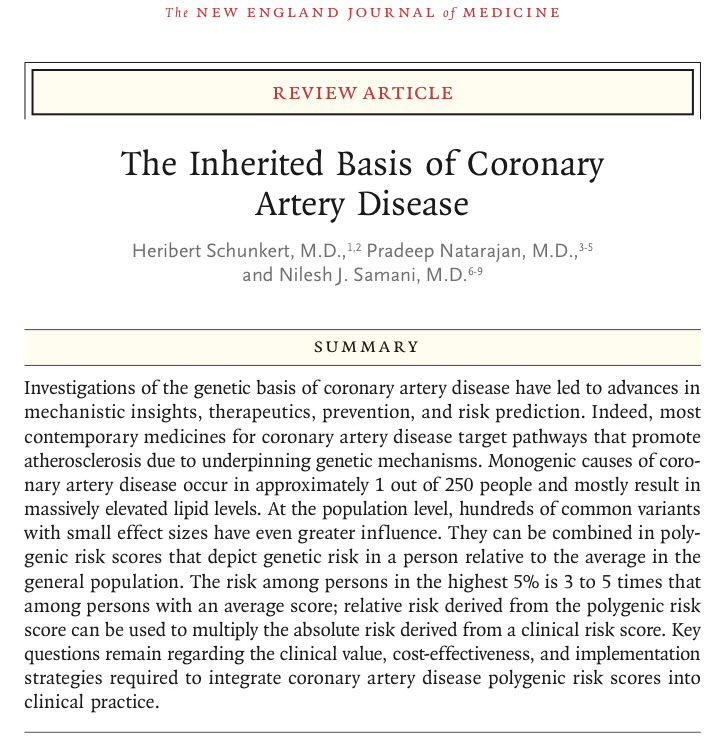
Builds on prior work form Paul Ridker et al in @NEJM last year https://t.co/nHYgbxcBuC
going from 3 to 4 biomarkers by adding genetics
@MinSeoKim_MD@buutruong11@YangSui@somijemmacho@AniruddhPatelMD@pnatarajanmd@MGBResearchNews@broadinstitute
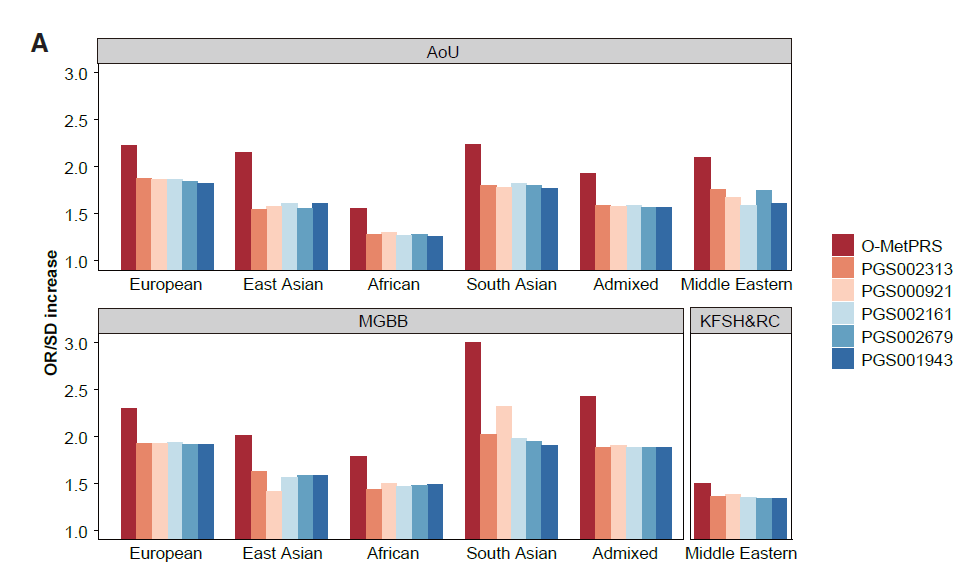
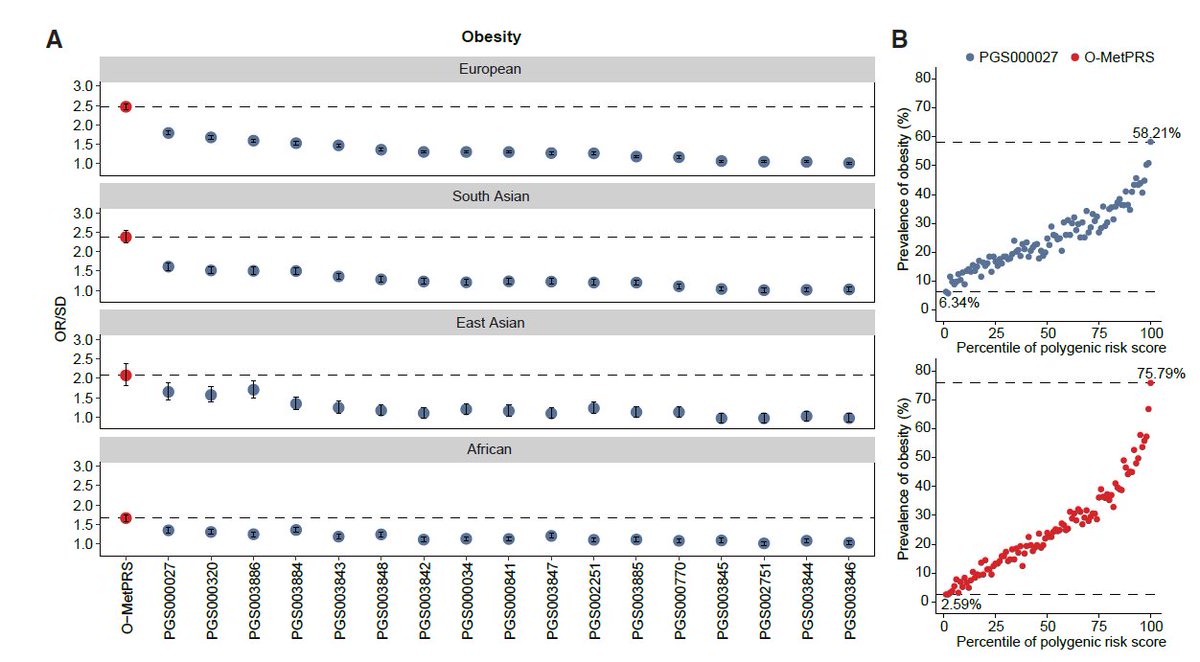
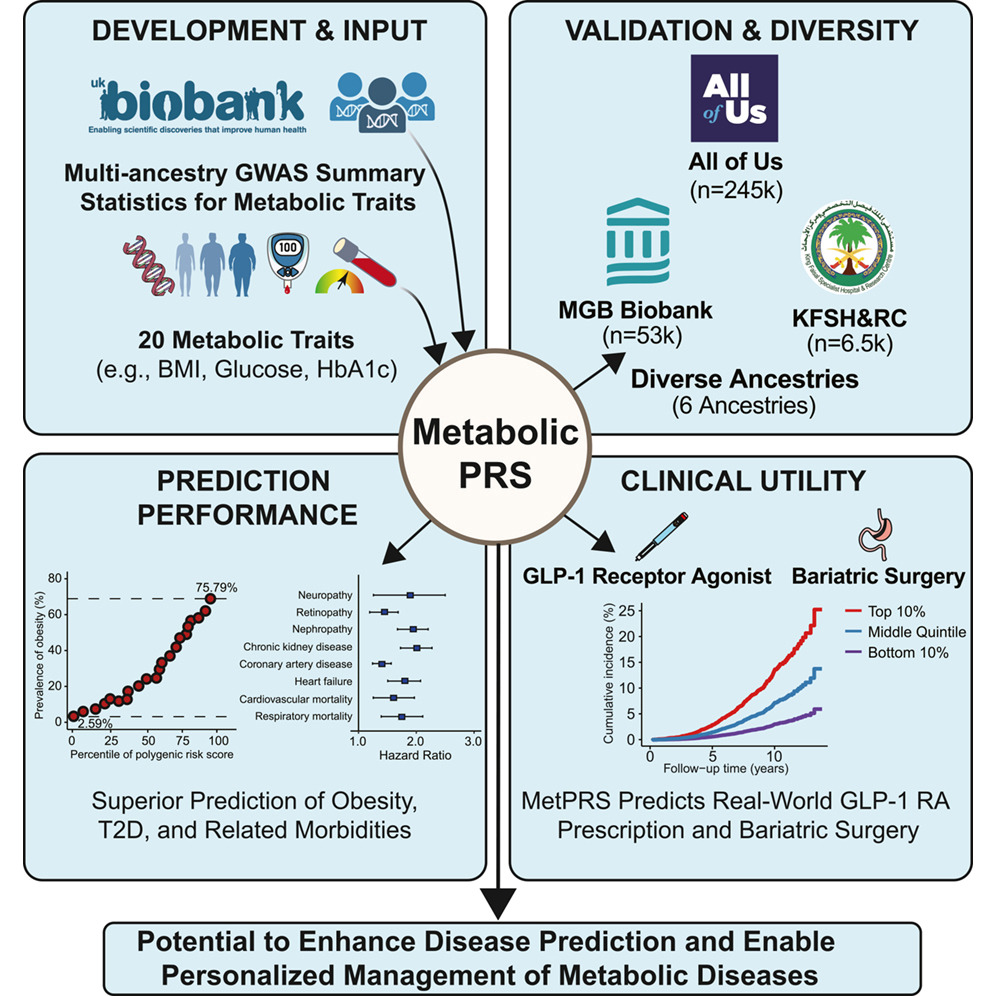
🎉Excited to share our new research published in @Cell_Metabolism on the metabolic polygenic risk score
To date, polygenic risk scores (PRS) have been developed and validated against single traits. In this study, we generated a PRS that captures metabolic dysfunction.
Key take-aways:
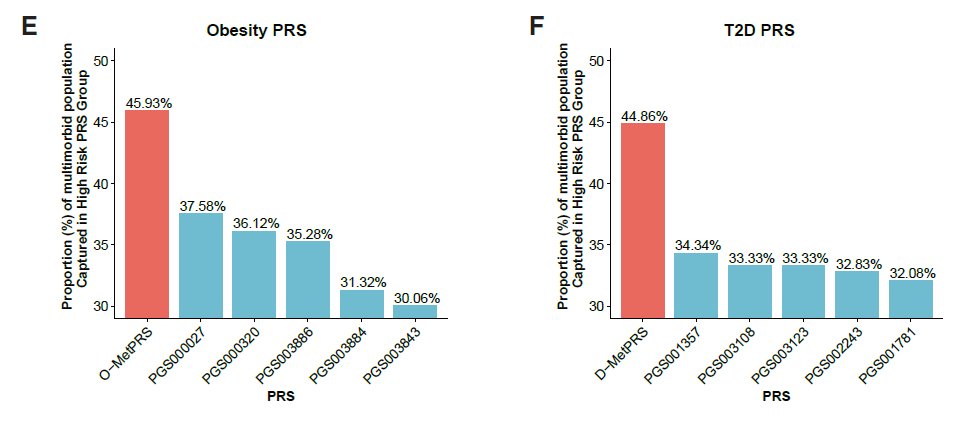
👉 Biologically enriched Metabolic PRS was developed from GWAS of 20 metabolic traits
👉 Metabolic PRS demonstrated superior obesity & diabetes prediction across six ancestries
👉 Beyond predicting future risk of obesity and type 2 diabetes, Metabolic PRS effectively identified individuals at high risk for metabolic multimorbidity, and even likelihood of requiring GLP-1 receptor agonist & bariatric surgery, which proxy the clinical severity of metabolic dysfunction
Huge thanks to co-first Qiuli Chen & Yang Sui, and co-seniors @aklfahed, @patrick_ellinor, and Minxian Wang who made this project possible! Deep appreciation to every contributor who helped bring this together: @LuChenWeng, @somijemmacho, @skoyamamd, @pnatarajanmd, and many more!
Paper: https://t.co/bICkgRt1EC
Support of
@MGBResearchNews@MGHMedicine@mghcvrc@broadinstitute
Really exciting to see. One cool thing was the explicit mention of PRS.
As someone working on PRS, it’s great to see CAD PRS recognized alongside FH and Lp(a) as part of genetic risk identification. A step toward bringing PRS into routine cardiovascular risk assessment.
Honored to contribute to the 2026 ACC/AHA Dyslipidemia Guidelines - out now! Indebted to @rblument1 & @PamelaBMorris for their expert leadership and stewardship.
Major themes:
- earlier prevention
- more personalized risk assessment
- lower LDL-C targets
@AHAScience@AHAScience
[1/14] 🧵
Our study led by 🌟 @harvardmed student C. Harper & with @NakaoTetsushi constructs a nomogram for CAD-PRS x LDL-C combos to approx CAD risk of LDL-C ≥ 190 mg/dl, a current 1o threshold for lipid-lowering Rx.
LDL-C 190 mg/dl ~ LDL-C 160-190 mg/dl + CAD-PRS >70th percentile ~ LDL-C 130-160 mg/dl + CAD-PRS > 80th percentile ~ LDL-C 100-130 mg/dl + CAD-PRS > 90th percentile.
This simple two-biomarker framework expands the identification of high risk individuals.
https://t.co/trlTMzZRK1 @AJPCardio
Our paper is now out in Nature Communications 🎉
We introduce PGS-Hub, a unified platform for a large-scale polygenic score calculation
Check our paper here:
https://t.co/6Ns1uOlNcU
Theads👇
@m_gabbett Thank you for sharing this perspective.
We agree that PRS has the potential to fundamentally change how we explain risk to patients.
One motivation behind our work was to better understand when and how PGS methods are reliable, so that this promise can translate into real-world.