New on the UCSC Genome Browser (hg38): MPRA tracks. MPRA Base catalogs 40,938 experimentally tested enhancer elements across 6 cell lines; MPRAVarDB scores 239,028 allelic variant effects from 18 studies. Great for GWAS fine-mapping. Learn more: https://t.co/hoQ2c6FKp5
Thrilled to share our @NatureComms paper on a long-read human pangenome approach to nuclear‑embedded mitochondrial DNA (NUMTs) (https://t.co/LUrWkfXqj4). We build a high‑resolution NUMT map across diverse human genomes, reveal their population and epigenetic dynamics, and
10x team productivity with Gemini CLI 📺
At Google Cloud Next there were some awesome sessions on Gemini CLI.
Hear from @LyalinDotCom and @ntaylormullen on how Gemini CLI can boost your team's productivity. 👇
https://t.co/4APCRFG8oo
🧬 Can we convert “cold” tumors into immunotherapy responders?
Most MMR-proficient (MSS) cancers don’t benefit from checkpoint inhibitors.
This Cancer Discovery study tests a bold idea:
👉 Pharmacologically induce MMR deficiency
🔬 What they did
Developed NP1867 - a first-in-class PMS2 inhibitor
→ Directly blocks mismatch repair (MMR)
📊 Biological impact
NP1867-treated cells developed:
• ↑ Tumor Mutational Burden (TMB)
• MSI-High phenotype
• MMR-deficient mutational signatures
🧪 Functional impact (key finding)
Previously resistant tumors became:
👉 Sensitive to anti-PD-1 therapy
In murine models:
• ↑ Tumor-infiltrating lymphocytes
• ↑ T-cell and cytotoxic activity
• ↑ Antigen presentation (MHC pathways)
• ↓ Tumor growth with PD-1 blockade
🧠 Concept shift
This is NOT just immunotherapy
👉 It’s tumor reprogramming
Turning MSS → MMR-deficient → CPI-responsive
⚠️ Reality check
• Entirely preclinical
• Lead drug NOT suitable for long-term in vivo use yet
• Safety of inducing MMR deficiency in humans remains unknown
📌 Takeaway
A provocative strategy:
👉 Instead of selecting the right patients for IO
👉 Engineer tumors to become IO-sensitive
Could expand checkpoint benefit beyond MSI-H disease.
🔖 Bookmark this - conceptually important for future IO combinations
📖 Full paper in comment ⬇️
#OncoTwitter #MedTwitter #Immunotherapy #CancerDiscovery
@OncoAlert@JCOPO_ASCO@ASCO@myESMO
My team built a thing!
Today we shipped the first official agent skills for @googlecloud.
This repo initially covers 13 top products, 3 pillars of our Well Architected framework, and 3 common journeys (e.g. auth).
Plug into your fav agentic tool: https://t.co/iQXpb9H0Tu
Today, we’re releasing a feature that allows Claude to control your computer: Mouse, keyboard, and screen, giving it the ability to use any app.
I believe this is especially useful if used with Dispatch, which allows you to remotely control Claude on your computer while you’re away.
We are also releasing self-contained lecture notes that explain flow matching and diffusion models from scratch. This goes from "zero" to the state-of-the-art in modern Generative AI.
📖 Read the notes here: https://t.co/RULWDgn9pm
Joint work with @EErives40101.
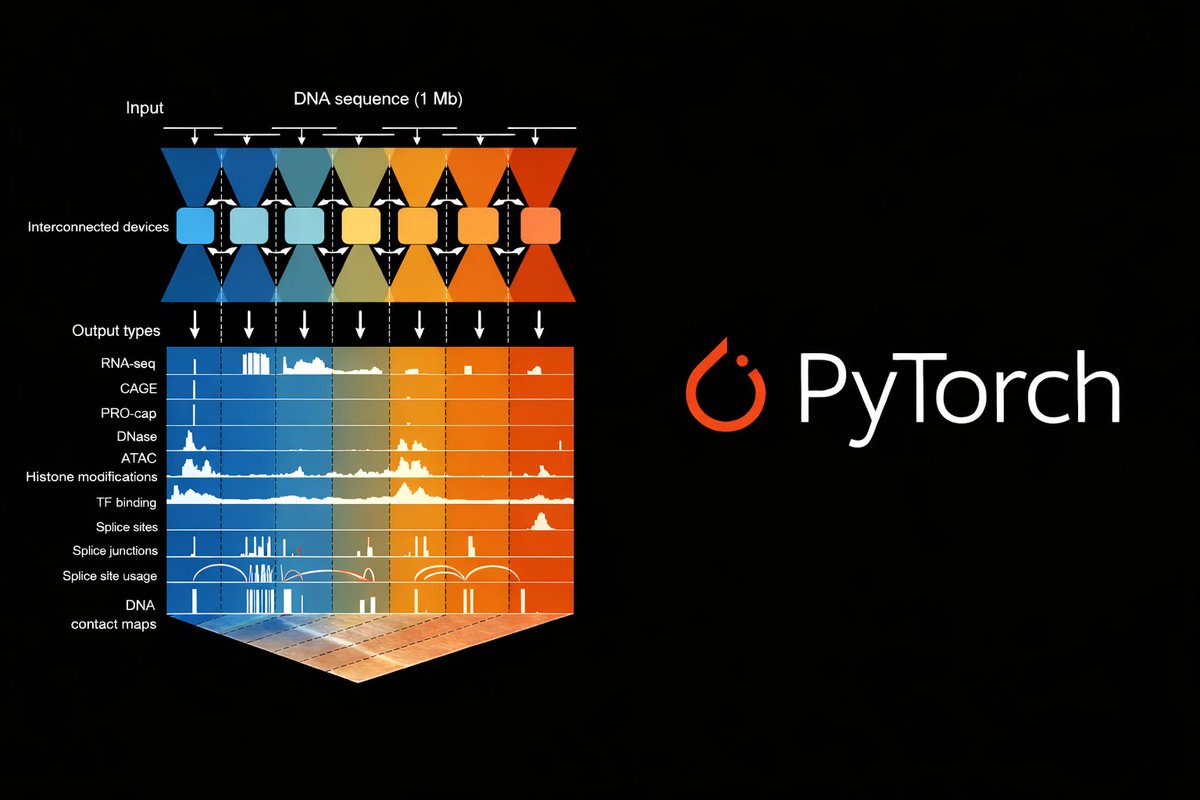
Thrilled to announce alphagenome-pytorch, an accurate, readable, and careful port of AlphaGenome's architecture and weights to PyTorch. Work with @gtcaa@m_kjellberg@chriswzou@tuxinming as part of the GenomicsxAI initiative between @anshulkundaje and @pkoo562 labs.
Built an Apple Silicon / MLX port of your autoresearch — runs natively on Mac, no PyTorch needed. The loop found that depth=4 beats depth=8 on M4 Max because more optimizer steps > more parameters in a 5-min budget. https://t.co/BRvG6kLzuc @karpathy
Introducing kuva: A scientific plotting library in rust, along with cli binary with the option to plot directly into the terminal.
Feel free to drop me some feedback as an issue on the repo
https://t.co/5uSwsOdboA
https://t.co/m5tHEVrtJj
How to estimate the right DNA sequencing depth from a very shallow initial survey.
Everyone in bioinformatics needs this. I needed it long before I found it.
https://t.co/p4zK3n0Jak