Check out our newest publication from Psychological Reports! Big thank you to our co-authors and kudos to graduate student Adam Haag for the first-authorship! https://t.co/0LxZSaRv5r
Happy to share that our article, led by @XinkaiDu, on confirmatory network modeling has been published in Psychological Methods!
https://t.co/p7iPsDD8UA
Robustness analysis is going to be a big part of the future of how we think about evidence synthesis and rigor - exciting new journal where you can turn your blog posts of other ways the analyses could have been done into papers! Excited to see some submissions come in!
Finally got around to incorporating all Github feedback on my open access textbook, making around 20 minor improvements, and updating some references. 17 chapters of state of the art stats and methods education, freely available for any course you teach. https://t.co/FdQIS63fVd
Very excited to share my latest paper at Memory & Cognition with @Dr_KerriGoodwin and @AndrewRAConway. We show that higher trait working memory may help Black students maintain test performance when experiencing stereotype threat. https://t.co/NuHD4HIJfN
BREAKTHROUGH COMING NEXT WEEK! After months of very intensive work, we are about to release the results of our "Exploratory Graph Analysis Item Parameters" simulation. We've successfully derived IRT-compatible parameters directly from EGA! Stay tuned, folks!
Problem discovery tests tend to be informal, with ample interaction between observers and participants. On the other hand, comparing with benchmarks or other interfaces necessitates precise measurement, resulting in more formal tests. https://t.co/wDXS7nKkeL
Defended my dissertation on the 3rd and posted it as a preprint on osf. Check it out if you like emotion regulation and cognitive ability studies.
OSF: https://t.co/pM7aeePxBx
ResesrchGate: https://t.co/qvTE3NgWWx
Email from Eiko: "Hey scientific reports, this paper (URL) has figures that look AI generated, please investigate."
Literal reply: "Greetings for the day!!!"
This illusion – one of the best of the last few years – will really mess with your head. How many black dots are there? The answer is 12, but your visual system won’t let you see them all at once. https://t.co/XA6K6XLFlr
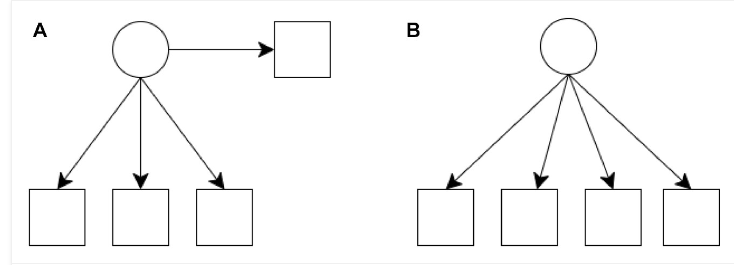
New paper w/@RoyLevy11 - These 2 path diagrams are conceptually different (regression with a latent predictor that has 3 indicators vs. a factor model with 4 indicators) but they are mathematically equivalent.
https://t.co/r40JGi61X1
I gave a 2-hour workshop on Structural Equation Modeling and Confirmatory Factor Analysis in lavaan for @PsychRStats - the recording is available here: https://t.co/4pCxjPXdOG Supported by @improvingpsych!
dplyr::rows_update and rows_patch continue to be so helpful for filling in missing data from external sources.
*Typo corrected in code from previous post.
#rstats
Our second invited speaker of the day is @csqsiew The auditorium is full and ready to learn about the network structure of mental lexicons. If you aren’t around you can still follow the presentation online https://t.co/uRyUxOEdHW
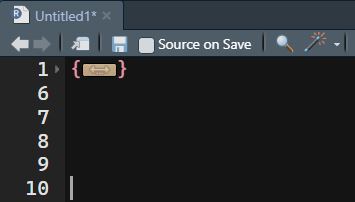
Wrapping library calls with curly brackets, benefits: collapsible within RStudio and can be run interactively as one line using Ctrl+Enter #RStats#TIL
https://t.co/nfuggOdZnw