We found DeepSeek V4.1 Flash 1017 beats GPT 6 Sol on our multi-step offensive cybersecurity task. Sol was tested via the Daybreak trusted access program.
We have been building a cybersecurity benchmark based on simulated corporate networks. This is a valuable indicator for the cyber-risk a model poses if in the hands of a bad actor. We plan to make the full evaluation public in the coming weeks but wanted to share our first immediate finding here.
Today we announce 1Password for Agents platform, building with companies @Muse, SpaceX Super Intelligence Grok @Bot, @AnthropicAI’s @Claudeai, @OpenAI, @TownAI, @Browserbase, @Browser_use, @heydana_ai, Instinct, @usekernel, @Perplexity_ai, @tryramp, @Tomo, and @wajo_ai, with more integrations on the way. 🎉
We've heard from so many of our customers who want to use these new personal AI agents to help them get more done, but want more control over what the agent can access with the same trust and ease of use they get when using 1Password directly.
1Password for Agents gives your agents access without giving up your passwords. When an agent reaches a sign-in form, it requests a credential from your vault. If you approve the request, 1Password directly auto-fills the credential in the destination site so the agent can’t see or take possession of the credentials.
The agent gets the task done, but it doesn’t get your passwords..
You stay in control. 1Password for Agents free and optional for personal and family accounts. Unless you opt-in to an agent connector, agents cannot touch your vault.
➡️Learn more: https://t.co/KxDcCum2iE
We’re opening a research preview of Claude Duet, a new app where Claude works as a proactive agent.
It comes to you with what needs your attention, completes tasks you ask of it, keeps working when you step away, and checks with you before it acts on your behalf.
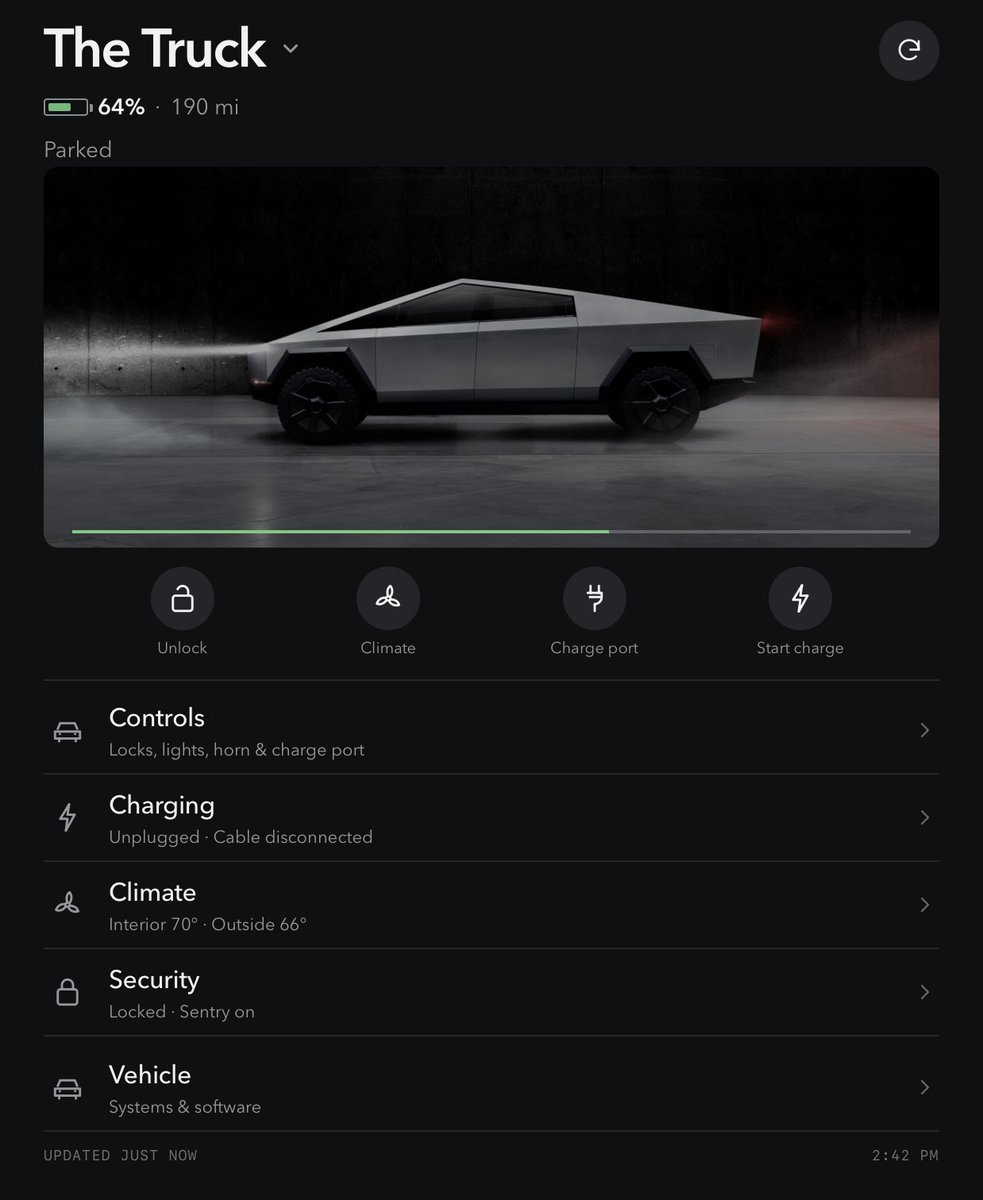
Today I learned if you create a Tesla Developer account, they give you $10/month of free API calls. So, you can basically vibecode your own interface and/or just connect your car to an agent.
Super cool, cause now I just have agent handle things like "When I climb in bed, if my battery is under 30% and the truck isn't plugged in, notify me".
Also now have a Mac client to control my car. Muse one-shot the app in the screenshot below.
API calls are like $0.002 each, so you can basically build anything you want and stay under a $10/month budget.
@Tiny_Fish@NousResearch I found out that Claude Code's built-in web_search tool
is US weighted and only returns the last 5 results. I get it from an optimisation point of view but that's hardly "search" - hope this is better. Will check it out.
Today we release 𝙻𝙵𝙼𝟸.𝟻-𝟸𝟺𝙱-𝙰𝟸𝙱, the largest 𝙻𝙵𝙼𝟸.𝟻 family member. It is an efficient local model for laptops and PCs to work through multi-step tasks inside popular agent harnesses.
> 24B total parameters, 2B active per token
> Context expanded to 131K tokens
> A 128K-token vocabulary
> 33T pretraining tokens
> It is a reasoning model
> Very easy to fine-tune and customize
> Performs competitively with Qwen3.6-35B-A3B, a model with ~50% more total and active parameters, on agentic and tool-use tasks.
> Open base and post-trained weights on @huggingface 🤗
1/
Sentences that changed my life:
• Neuroplasticity will make you a millionaire.
• Subconscious programming runs your life.
• The best investments have asymmetric risks.
• Working in a flow state is the most productive.
• Hang around high performers to become one.
• People buy your energy, not your skills.
• F*ck around and figure it out.
• Stress is a sign of growth, not a defect.
• Be an athlete, an artist, or an entrepreneur.
• The future belongs to non-linear careers.
• Treat social media like a video game.
• Have a psychopathic sense of urgency.
• Delusional optimism is how you win.
• Writing is thinking.
• Selling is just helping people.
• Only leverage creates wealth.
• You will never get rich on a salary.
• Smart people overthink everything.
• Do the opposite of 99% of society.
• To persuade, make people feel something.
• Share a worldview online instead of a niche.
• Posting on YouTube builds trust faster in an AI world.
• The solution to money problems is just to make more money.
• Either figure out sales & marketing, or work a job where a company does it for you.
New on our Engineering blog: Creating in-house source control.
In May, we merged around 2,500 code changes per day. In September, we merged more than 30,000 per day. As a result, we became bottlenecked by developer infrastructure built for human (rather than agent) scale.
Here, we share how we built a new version control system—and fully migrated our monorepo from git—in five months: https://t.co/wzNkwHs7IN
Some mistakes you might be making:
Your effort level is too high
Your skills are too long
You're not aligning before you start work
You're aligning too often, and too hard
Your automated checks are too lax
Your custom tooling is too token-inefficient
You aren't doing enough automated review
You aren't reviewing previous coding sessions (with an agent)
You're doing too much human review
You aren't vibe coding enough prototypes
Your agent can't verify its own work
You're babysitting the agent too much
You've overloaded your global steering files
Your codebase is hard to navigate
You aren't building a shared language
Your codebase architecture allows bad tests to be written
You aren't thinking strategically enough
You aren't thinking enough
If I had to pass an AI engineer technical interview in the next 24 hours, I'd practice these 25 problems.
They cover 95% of the concepts.
1) Design a RAG system for 10M documents
2) Your RAG gives wrong answers. Debug it
3) Pick a chunking strategy for legal contracts
4) BM25 vs dense vs hybrid search: when to use each
5) Add a reranker and measure if it helped
6) Reduce LLM cost by 70% without hurting quality
7) Cut first-token latency for a chat app
8) Design a semantic cache with hit-rate tracking
9) Route requests between a cheap and a smart model
10) Build an agent that uses tools reliably
11) Your agent gets stuck in a loop. Fix it
12) Design memory for a long-running assistant
13) Make LLM output always valid JSON
14) Detect and reduce hallucinations
15) Build an eval suite for a customer support bot
16) LLM-as-a-judge: how to make it trustworthy
17) Block prompt injection in a tool-using agent
18) Redact PII before it hits the model
19) Fine-tune vs RAG vs prompting: pick one and defend it
20) Fine-tune a small model with LoRA on 5K examples
21) Serve an open model at scale (batching, KV cache, quantization)
22) Stream responses over SSE and handle disconnects
23) Trace every step of a multi-agent workflow
24) Roll back a bad prompt change in production
25) Design ChatGPT-style chat for 1M daily users
Don't memorize answers.
Practice explaining trade-offs out loud.
That's what interviewers actually grade.
Bookmark this. You'll need it before your next interview.
Dusting off this tweet from April because this gap in shared understanding of LLM capability is *widening*. It's now less "two groups of people speaking past each other" and more a sharp funnel.
- Napkin math somewhere around 6B people (~75% of the population) have barely come in contact with LLMs at all.
- Around 1-2B (~20%) are casual and infrequent users of free-tier ChatGPT-like products. This group sees derpy chatbots and treats them a bit like a better Google search, a writing aid, or etc. Maybe an agent tries to book you a flight. I have non-tech friends who (reasonably, imo) say they have not much use for it at all. Even many professionals outside of math&code are in this tier. For example, execs and many other functions spend a lot of their time talking to other people, so while they understand what is happening intellectually, it is still second-hand and a bit abstract.
- Now we get to professional use of frontier-grade LLMs in math&code. Somewhere around 20M people (0.2%) see first-hand that large, complex projects that used to take them weeks/months can now be completed by agents with a prompt. Building apps, copying apps, translating apps, decompiling apps from binaries... This has all happened very quickly and recently - less than 1 year ago, I was writing code manually by hand, typing memorized computer code commands into a code editor character by character, occasionally pressing Tab to autocomplete a little chunk of code.
- And finally we get to the ~5,000 people (~0.00006%) with access to frontier-grade systems internally. The external world has seen the preview. It looks like swarms of thousands of agents collaborating over weeks on software mega projects: minting zero days, running cyber attacks and defenses at machine speeds, discovering new science, advancing the frontier of mathematics. Things that would have taken top professionals in the industry years of work. Meanwhile, human review and comprehension are starting to fall behind. For example, people are still involved in the "archeology" of the OpenAI-HF incident from many months ago. Mathematicians may be poring over the 722 manuscripts on frontier mathematics for a while.
The funnel is driven by a combination of factors:
1. The impact scales with ambition, problem size, and horizon. A question with a paragraph answer barely stresses the system. You need a reservoir of big, difficult problems that you really care about. This aspect drives the consumer / professional dimension of the funnel.
2. The jaggedness of the system (which I have written about a lot separately). Capability peaks in domains that are digital, verifiable and economically valuable. This is because LLM capability emerges from reinforcement learning on verifiable rewards on a curated environment mixture driven by revenue potential. This aspect primarily drives the area (e.g. math&code) dimension of the funnel.
3. Access. Free-tier, paid-tier, internal.
So this is the weirdness of the moment. The general public has mostly not interacted with these systems. When they have, it looks like a derpy chatbot. The majority of professionals still see only a modest uplift. And a small sliver of professionals are experiencing the vertigo of the curve going vertical. And it is all happening at the same time.