The real reason for our adherence to the Cosmological Principle is not that it is surely correct, but rather, that it allows us to make use of the extremely limited data provided to cosmology by observational astronomy. -- Steven Weinberg
@PlotAstro Congrats! Great plot!
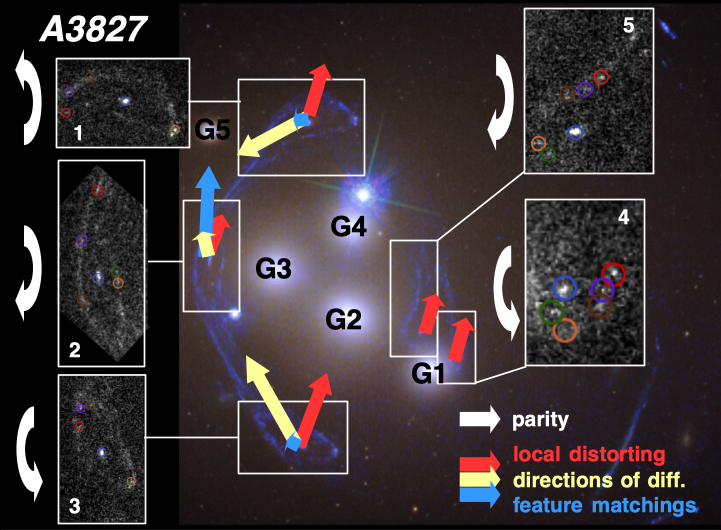
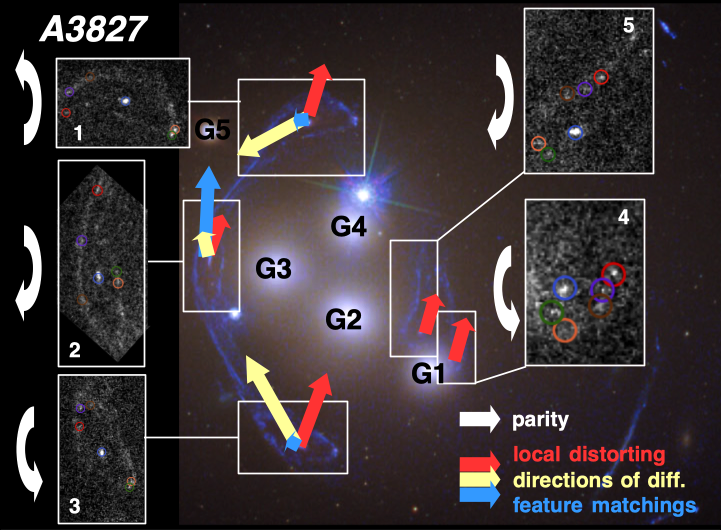
After the selection is before the selection, here is our suggestion for the next one from https://t.co/Fe6ptiiefR - first visualisation of local distorting props in the strong lens A3827, directly inferred by the observable data, no lens model needed!
@Dr_CMingarelli More support for your enthusiasm from our @cosmo_of_69 community: we love asking fundamental cosmo questions & we want to build bridges between different communities!
https://t.co/7nJA0rYJjX
Thus, we are cheering for @NANOGrav & pulsars next week, too! 😍 #ScienceTwitter
@NASAWebb is new, but we can still learn a lot from @NASAHubble! Here is our @PlotAstro from A3827! First visualisation of distorting directions and their *direct* dependence on the input data. The plot also shows the unusual rotations of the parity vectors.
On @arxiv now: https://t.co/Fe6ptiiefR
The 4-body problem in A3827, the strong lensing signal it causes, and inferred dark-matter props.
Congrats to our great student Joyce Lin from @CarnegieMellon and thanks to @NASAHubble for the data! 🥰
#astronomy#NASA#scicomm
Let's go beyond virtue signaling to further think outside the concordance-cosmology-box, because "[virtue signaling] avoids the hard work required to improve on what we know." @cosmo_of_69 did a first step
https://t.co/yUONiHcv0G
So who can offer funding to do more hard work?
Big review paper on the cosmological principle by @GravityGrinch@missalexialopez@KMigkas and their co-authors is out in the Classical and Quantum Gravity Journal
https://t.co/zJE2pvyl4e
Happy that a Nobel Laureate points out what I have unsuccessfully fought for the last years! @cosmicpinot is right to call for more international collab. & I want to add that we also need sustainable methods (more theor. understanding, less AI) for our research field!
Monday, monday, here comes something to brighten the start of your week: simulations of observable luminosity distances in full general relativity! Enjoy reading https://t.co/3ZTgHDEyp1
#cosmology#paper#astronomy#simulation
Sergei Odintsov talked about the best, consistent thermodynamical description for black holes based on the Bekenstein-Hawking entropy: https://t.co/FyNjKmFB4C
#cosmology
And here are the news from the second last day of the modified gravity workshop currently ongoing at BGU! David Benisty talked about tests of modified gravity based on the stars orbiting Sgr A*, so far, everything in good agreement with GR: https://t.co/Gmixl8SIiO
#gravity
@ChangeItLouis The test with the Bullet Cluster is still missing, as it is easy to get rid of DM on galaxy scales but much more difficult to do the same on cluster scales. Curious whether it can be achieved! Stay tuned for updates on that!
Here comes another gem from today's modified-gravity workshop session: https://t.co/aUvRwdO0YF Can we explain dark matter away as retardation effects in the weak-field limit of general relativity? Have a look at the paper, it seems possible at least on galaxy scales.
The question should be rephrased: why bother to make the background metric complicated if we can adjust the perturbation level? -- These views may be just different representations of the same observables but studying them both may give us a better understanding of cosmology!
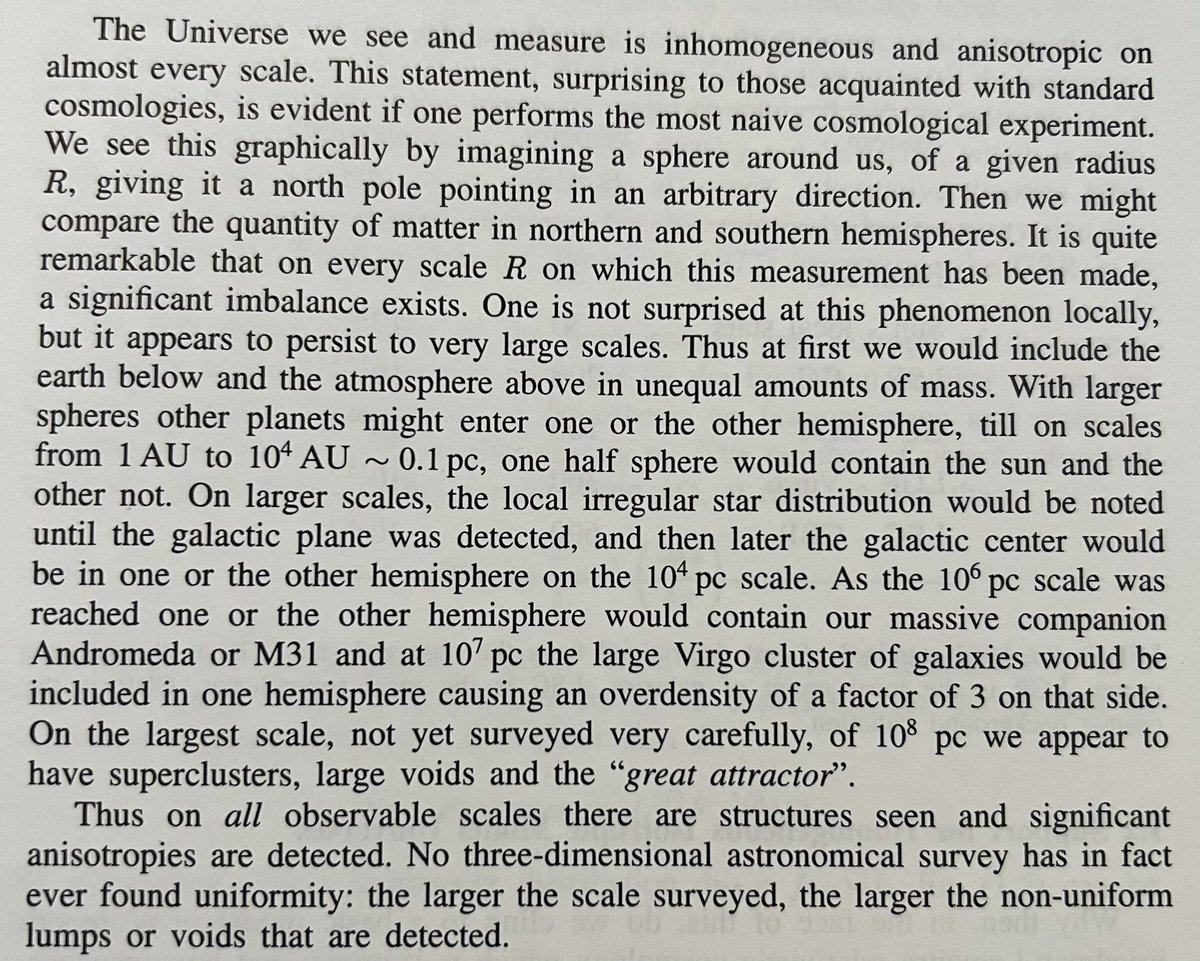
The universe we see and measure is inhomogeneous and anisotropic on almost every scale. Why do we cling on to a model where the universe is smooth and instead suppose that fluctuations are local phenomena - details to be gotten past? (Ostriker 2003)
“Because it works well”
@briankeating What would it take for you to abandon our current cosmological concordance model? (e.g. what questions the existence of Dark Matter or Dark Energy for you and when would you resort to modified gravity?)
...and we continue with the next workshop this week! This morning, David Benisty talked about constraining the cosmological constant using observations of the Andromeda galaxy: https://t.co/HnepBlmX1B Intriguing idea! Do we really constrain Lambda in that way?
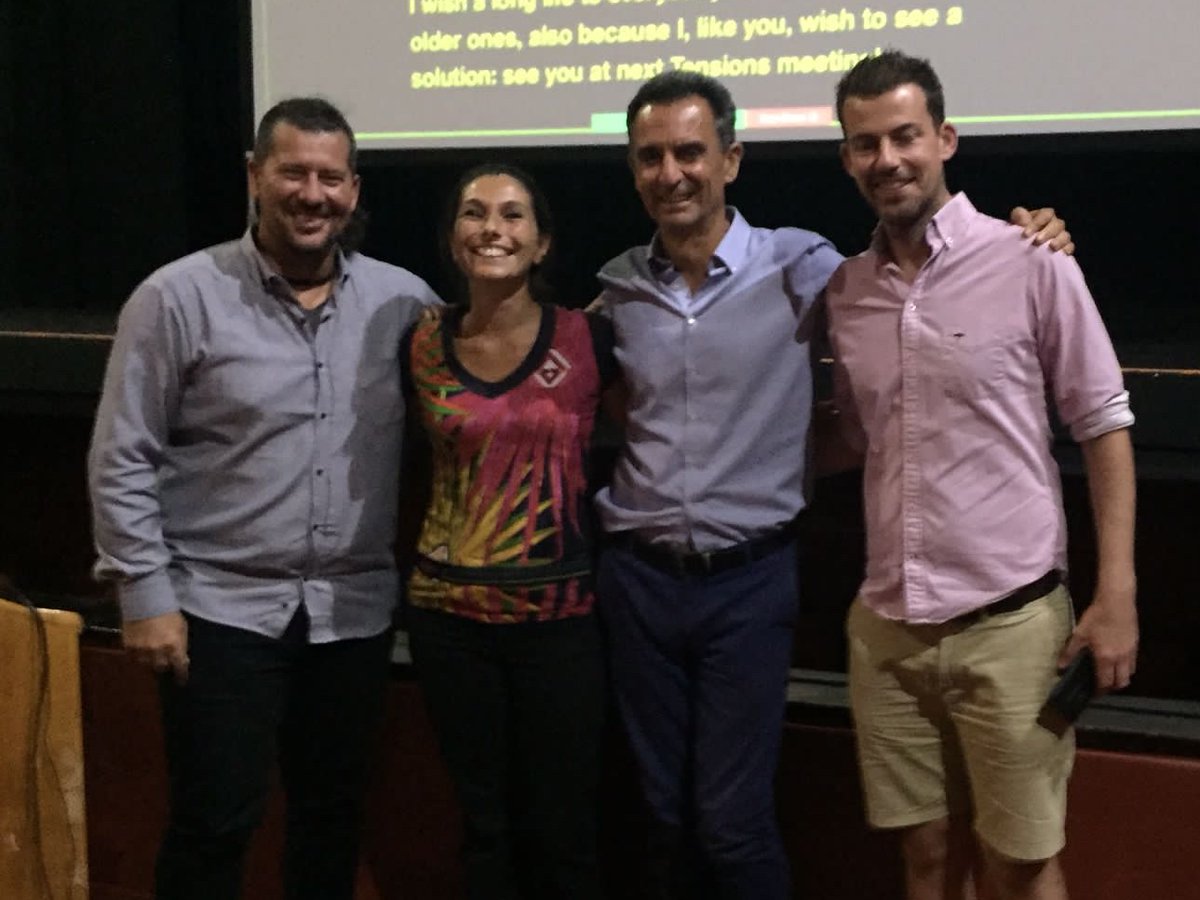
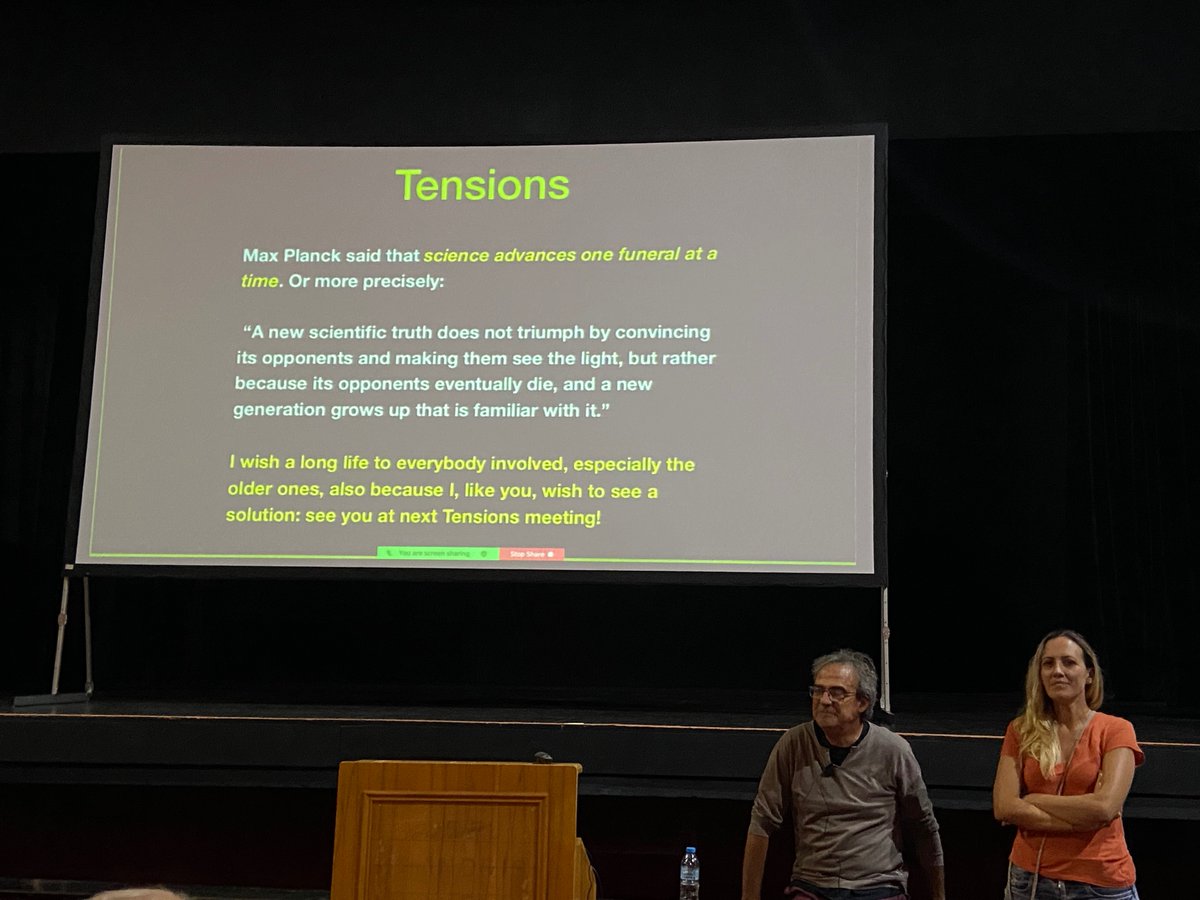
Today we had the last day of our "Tensions in Cosmology" conference in Corfu! It was so nice to meet many people for the first time in person. I would like to thank all the people who attended the conference and the OC, especially Manos. It was very tiring, but also a lot of fun!