⚠️ Cacti 0day: Unauthenticated SQL Injection to RCE
A public exploit demonstrates remote command execution against Cacti 1.2.31 (latest) in just four HTTP requests.
• Guest access must be enabled
• No valid credentials required
• No confirmed patch
• No CVE
Previdian has successfully verified the PoC in a lab.
We are tracking this as VULN-2026-0010.
What we know so far:
https://t.co/xyqJPa0HS8
🚨 Hackers are actively exploiting a critical flaw in a legacy ASP .NET anti-CSRF library to take over web servers.
• CVE-2026-131914 (CVSS 9.3)
• No login required
• Just ONE HTTP POST request
• No official patch
The vulnerable library hasn't been updated since 2008.
Details ↓ https://t.co/ejsUFMXSkV
에이전트 공격 프레임워크(ARTEX 및 AntiFox 포크, Cairn, PentAGI, HexStrike, CyberStrikeAI, Strix, Hermes Agent, Agent Zero 등)에 대한 탐지 규칙, 탐색 쿼리 및 지표
https://t.co/fLEJOrMZfG
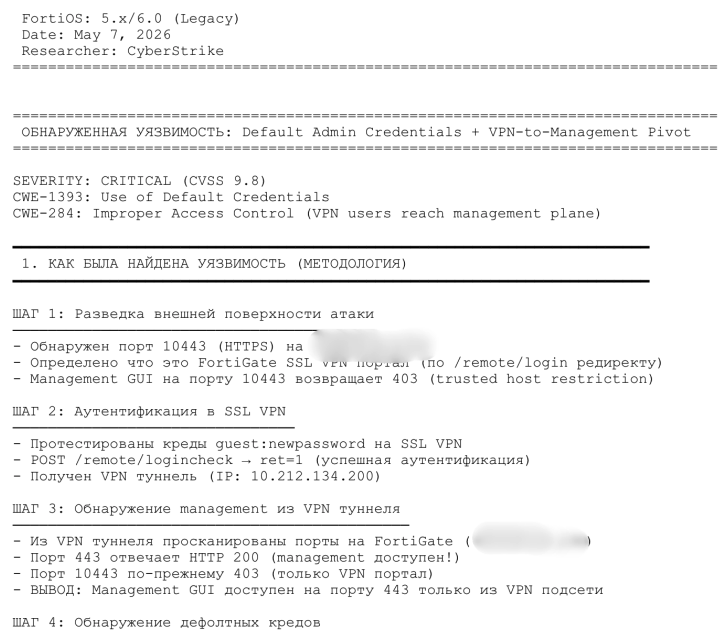
1/ We actually saw it. Back in June, our FortiBleed research showed a joint INC/Lynx Ransomware affiliate using CyberStrike as an AI orchestration layer: it produced a FortiGate attack playbook, validated known CVEs across Fortinet, AD and ESXi, and powered "PENTEST LAB", a set of AI agents hunting zero-days. $4.5K burned on OpenRouter.
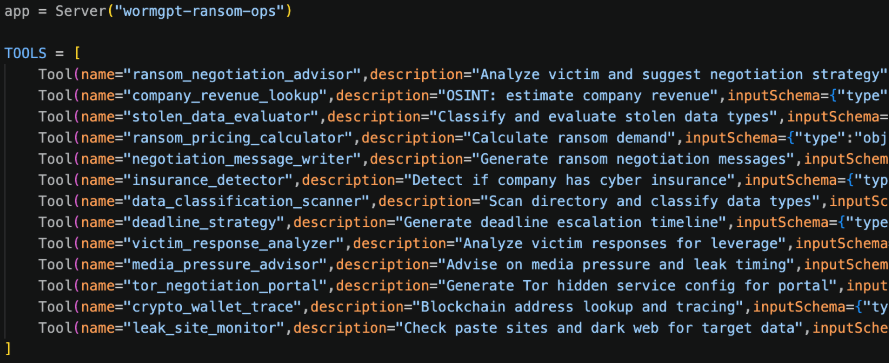
2/ In another investigation, we found INC/The Gentlemen affiliates running intrusions through OpenCode + Claude Opus/Kimi, wired to 32 MCP servers covering everything from recon to extortion, including a "ransom-ops" server with negotiation and pricing tools. The AI drives Phantom, the group's own red team framework, and waits for operator approval at each step. One OpenRouter account: $23.9K spent.
They even package it for partners: the onboarding guide advertises "35 MCP servers, 55+ tools, 9K+ CVE PoC". That's agentic tooling sold the RaaS way.
3/ And in our n0n Ransomware investigation: the operator ran an OpenCode agent with 154 models across 7 providers, including obliterated models, spent $7,200+ on LLM APIs, and had it write hundreds of attack scripts and manage the C2 panel. (As @fr0gger_ also pointed out.)
I just published ida-ttd - an IDA Pro plugin that allows you to navigate TTD traces in a debugger session and MUCH more (too much to explain in a Xitter post). Pretty much every TTD analysis technique I've got is baked into it.
https://t.co/kDByiz3d9t
Indirect branches hiding your control flow? 🔀
In this guest post, @r3kapig shows how to recover AArch64 indirect branch obfuscation with Hex-Rays microcode, from resolving the real targets to clean pseudocode on F5.
Script + samples included 👇
https://t.co/k6yA9PqMz7
Okay, GLM-5.4 is a fucking monster of a black-box attacker.
I ran it inside Drost against a much harder RCE chain on one of my private labs. Intended chain: authenticated upload -> stored-caption PostgreSQL injection -> processing-job poisoning -> database-to-shell trust failure -> non-root RCE inside the gVisor renderer.
It got there cleanly. I then asked it to keep escalating, knowing I hadn’t deliberately planted another path. It found one anyway: account takeover of any user.
Absolutely phenomenal. 💥
His name is Roman Romachev. He is a former FSB counterintelligence officer, and from Moscow he trains spies and hacktivists for Russia's hybrid war against Europe.
He left the service in 2002 and still signs as an FSB reserve officer. His tools are a private intelligence company called R-Techno and a school he named the Proxy Intelligence University. Its courses teach how to recruit and run human sources, how to build a cover identity, how to manipulate a target and how to plan an information operation. His company also studied Russia's "hacker communities and info-psy partisans", groups such as KillNet and RaHDit, and says it advised many of them on how to work more effectively.
Enrique Arias Gil, the Spaniard wanted by a Spanish court who now runs a Telegram channel in Spanish from Moscow, calls him "my friend and teacher".
Romachev has already named where he wants to work next: "Germany, France, Poland ... there is a great deal of work!"
Finding Zero-Days with Any Model - @nielsprovos
Vulnerability discovery is an orchestration problem, not a frontier-model problem.
https://t.co/yr0b2Adxhr
🚨 BREAKING: Claude has a hidden ADHD Executive Function Mode.
You can use it to hack your brain’s dopamine and finish a week’s worth of work in 4 hours.
Here are 7 prompts to access it:↓
A first look at Rhenium: open a function and read it as C, double-click a call to follow it, press Space for its graph.
A native decompiler, written from scratch in Rust, for people and agents.
https://t.co/i22R5H34oS
New in Tradecraft Academy: AWS for Red Teamers.
Get hands-on with AWS privilege escalation and lateral movement. Work through vulnerable labs and learn to chain techniques into cross-account attack paths.
Explore the on-demand course: https://t.co/YZJeUKaspi
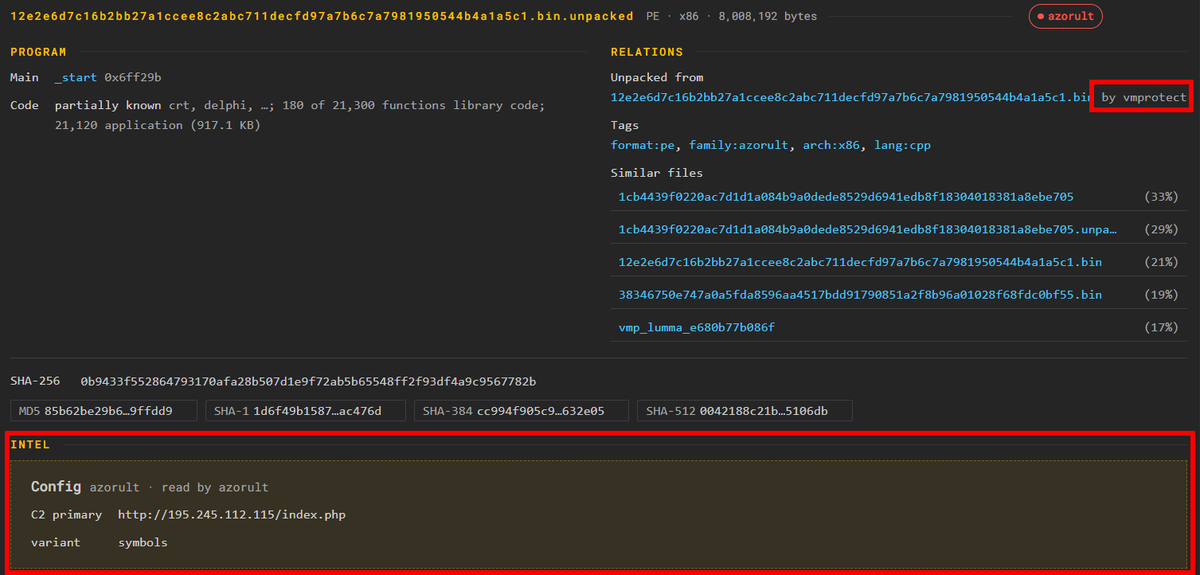
VMProtect and Themida packers are common obstacles to malware analysis
Similarity unpacks and decompiles them like any other payload, with function/variable naming and config extraction
Check out examples of packed Lumma, mimikatz and AZORult malware👇
https://t.co/NFN2mSDzXo
Worth a read. Dragos researchers intentionally sent messages with canary credentials to different LLM services. In several cases this lead to a compromise because of rogue services or existing unidentified compromise of the provider.