Sadly, this is highly relevant!
"Macroeconomic Expectations in a War" by Y. Gorodnichenko and V. Vasudevan.
"Using short- and long-term macroeconomic forecasts, we estimate the cost of the Russian full-scale invasion of Ukraine for countries in Eastern Europe, Caucasus, and Central Asia. Shortly after the Russian attack, the projected cost (cumulative over six years) stood at $2.44 trillion for the region. Professional forecasters predicted a dramatic increase in macroeconomic uncertainty, significant spillover effects, some hysteresis effects as well as a changing nature of business cycles. We also use the war shock to study how professional forecasters acquire and process information. Our results point to state dependence as well as an important role of forward information in shaping macroeconomic outlook of professional forecasters."
https://t.co/qMTffIV2Uk
Very insightful!
"Food prices matter most: sensitive household inflation expectations" by Nikoleta Anesti, Vania Esady and Matthew Naylor
"We construct a novel data set to investigate the sensitivity of household inflation expectations to personal experienced inflation, testing whether households weigh price changes differently across items in the consumption basket. Across households of all age, income, gender, work status, UK region, and house tenure groups, food prices matter significantly more for inflation expectations dynamics than other components, including energy."
"Our results imply that the risk of household expectations contributing to persistent inflationary dynamics are greatest following large and inflationary shocks to, specifically, food prices. Moreover, our findings can rationalise a number of empirical regularities related to household expectations..."
https://t.co/vaKAjpWvyt
Useful paper in the "Journal of Economic Literature" on how artificial intelligence may change the research process in economics, describing several use cases (e.g. ideation and feedback, writing, background, research, data analysis, coding, and mathematical derivations).
Super interesting!
"Unconventional Monetary Policies in Small Open Economies" by Jesper Lindé, Marcin Kolasa, and Stefan Laseen
"This paper provides a comprehensive assessment of the macroeconomic and fiscal impact of unconventional monetary tools in small open economies. Using a DSGE model, we show that the exchange rate plays a critical role to amplify the favourable impact of unconventional monetary policy while it attenuates the effectiveness of conventional fiscal policy to jointly boost output and inflation."
https://t.co/67efeAZYTx
Super interesting!
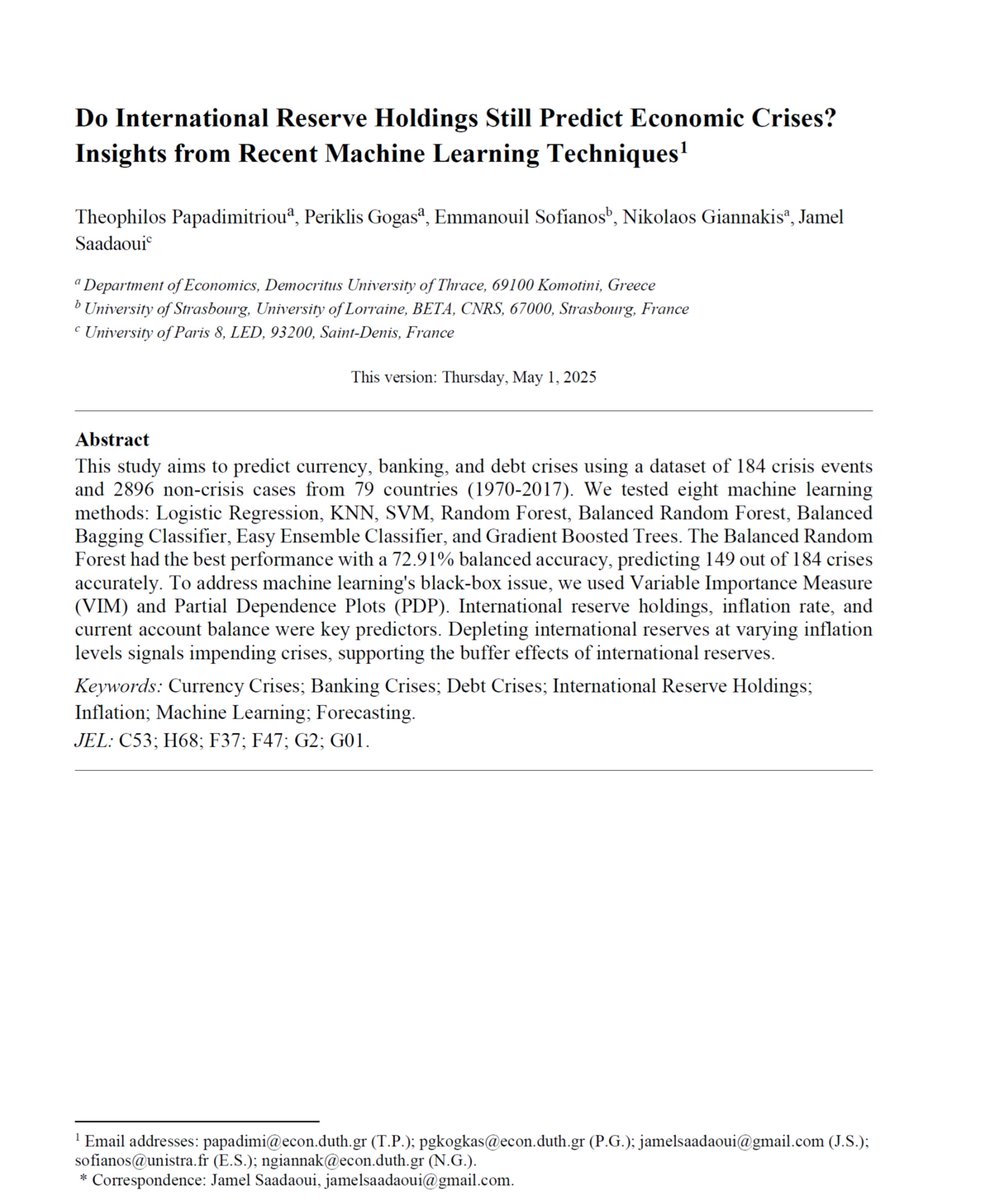
"Do International Reserve Holdings Still Predict Economic Crises? Insights from Recent Machine Learning Techniques" by Theophilos Papadimitrioua, Periklis Gogas, Emmanouil Sofianos, Nikolaos Giannakisa, and Jamel Saadaoui.
"...our analysis of variable importance reinforces the critical role of international reserves in reducing the likelihood of financial crises. Alongside inflation and current account balances, reserve holdings stand out as key predictors, lending empirical support to the notion that higher reserves serve as a buffer against economic shocks. These findings align with existing literature on the protective effects of reserves and contribute to the ongoing discourse on financial stability and crisis prevention."
https://t.co/Cdff8jghib
Food for thought!
"Interest rate control and the transmission of monetary policy" by Fédéric Holm-Hadulla and Sebastiaan Pool.
"This study provides evidence on how short-term interest rate volatility affects the transmission of monetary policy"
"Our findings reveal that increased short-rate volatility dampens the effect of monetary policy on activity and prices; and this dampening effect is evident across the entire transmission chain – from key money market rates to bank lending rates and volumes."
https://t.co/9HZkbr1KDb
New and interesting results on this question: "Do Deficits Cause Inflation? A High Frequency Narrative Approach" by Jonathon Hazell and Stephan Hobler.
"Our estimate implies that the 2021 deficits caused around a third of the 2021-22 inflation"
https://t.co/SbZn0BM6pd
We updated our paper on “The Speed of Firm Response to Inflation”!
Main Result: Firms respond to changes in headline inflation rates but not surprises relative to professional forecasts. Highlights distinction between “Wall Street” & “Main Street”
Link: https://t.co/AJnk6zPKtq
Wow, that's exciting and a great public good!
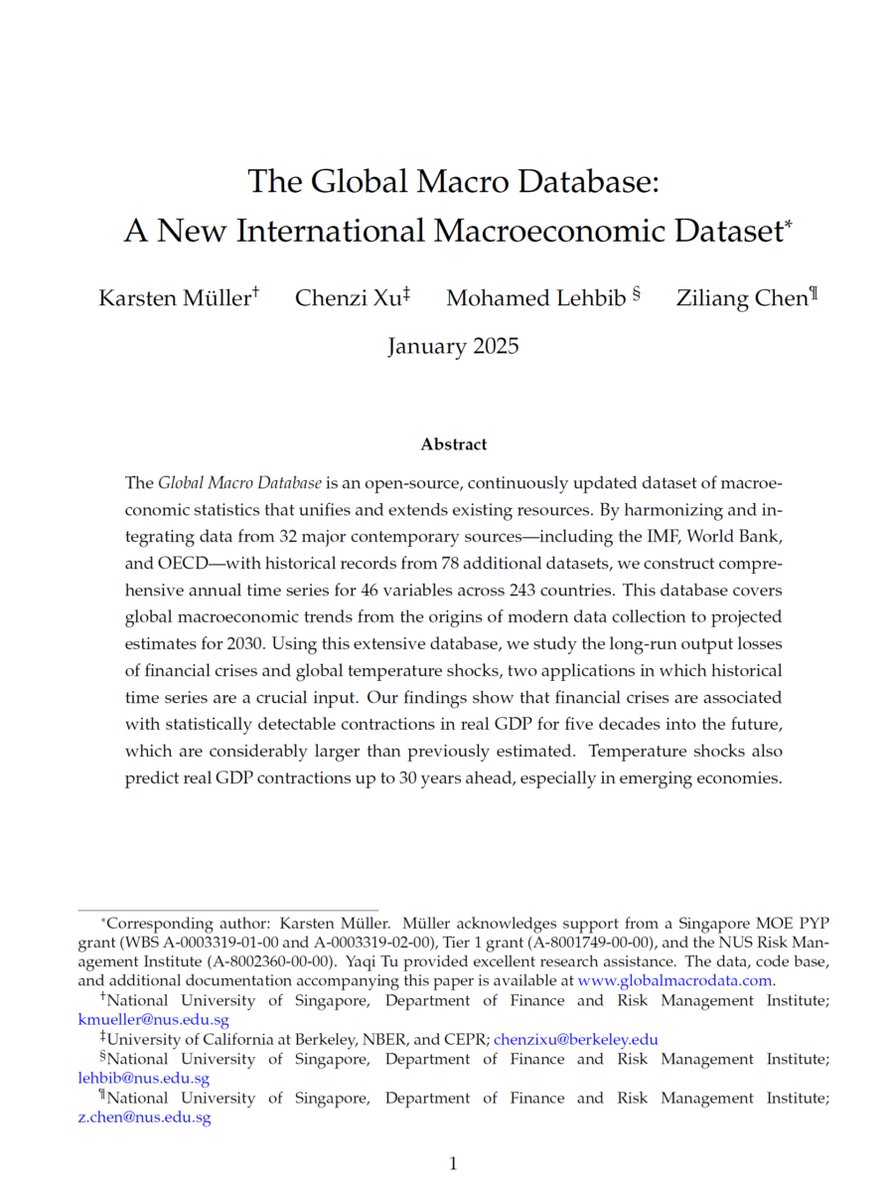
"The Global Macro Database: A New International Macroeconomic Dataset" by Karsten Müller, Chenzi Xu, Mohamed Lehbib, and Ziliang Chen.
https://t.co/sKNz4zQjpW
So much food for thought in the current BIS Quarterly Review.
For instance, the chapter ,Targeted Taylor rules: monetary policy responses to demand- and supply-driven inflation, by Boris Hofmann, Cristina Manea, and Benoit Mojon
https://t.co/4WALnjKSJP
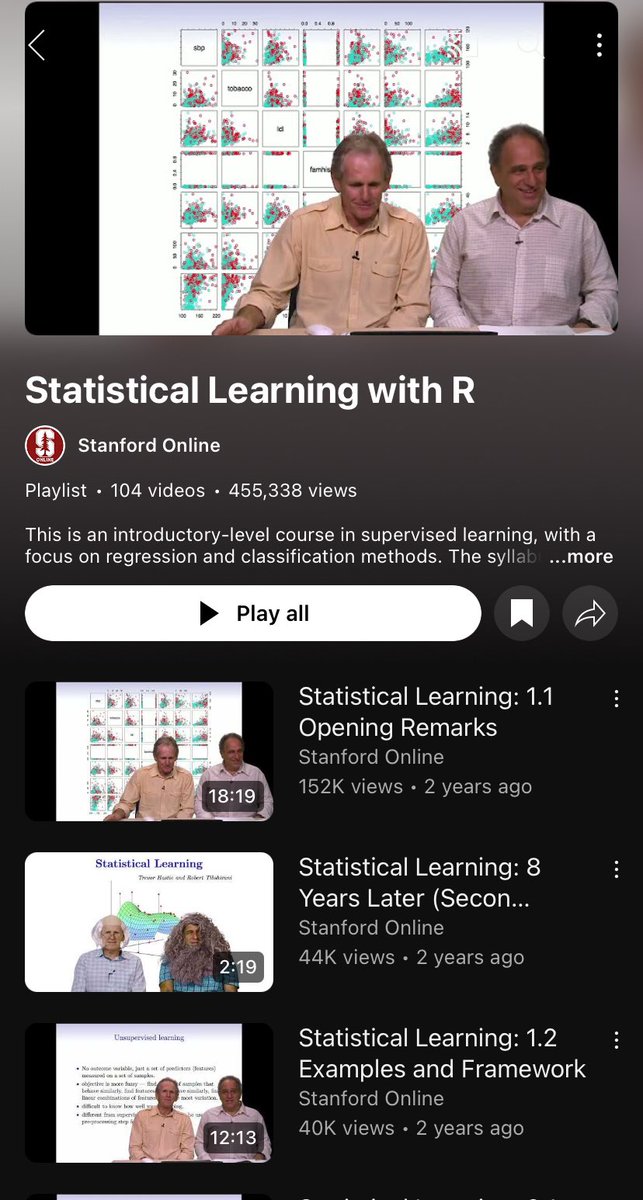
Statistical Learning with R for Stanford:
This is an introductory-level course in supervised, with focus on regression & classification methods with over 100 videos for free.
What you’ll learn:
- Linear regression
- Resampling methods
- Multiple testing
- Classification
How do you discover cutting-edge research that's deeply relevant to your work?
If you're using Zotero, then you can discover new literature instantly with Litmaps.
Here's how
👇
REVISED WORKING PAPER ALERT 🚨🚨
Long overdue, but I am happy to share that a new version of my paper on structural estimation using Local Projections or VARs is now as @SSRN Working Paper
Read here: https://t.co/4YhwItLWag
🧵👇