Excited to join Mike Mesa @CLI_UTHealth and Amanda Alexander @Scholastic to talk about small-group literacy instruction on Monday: https://t.co/s9pnoSdQQy
@MJK_PhD @UVAEdu Thanks so much, @MJK_PhD -- I know you know this already but I am hugely grateful for your mentorship during the OSEP grant proposal writing process (and for the example of your work on other Stepping Up projects!).
@NateJoseph19@haemesmer@Dr_KOConnor@CuriousReader13 Only 20% of our treatment conditions included instruction in morphology; 41% included instruction in vocabulary. There's definitely room for more research on this topic, and for better-powered meta-analyses.
@NateJoseph19@haemesmer@Dr_KOConnor@CuriousReader13 And it's worth looking at the way we coded study instructional components (see Table 3) to see if you agree with our codes, and to ask: in studies coded as having a morphology component, was the morphology instruction representative of how morphology instruction SHOULD be done?
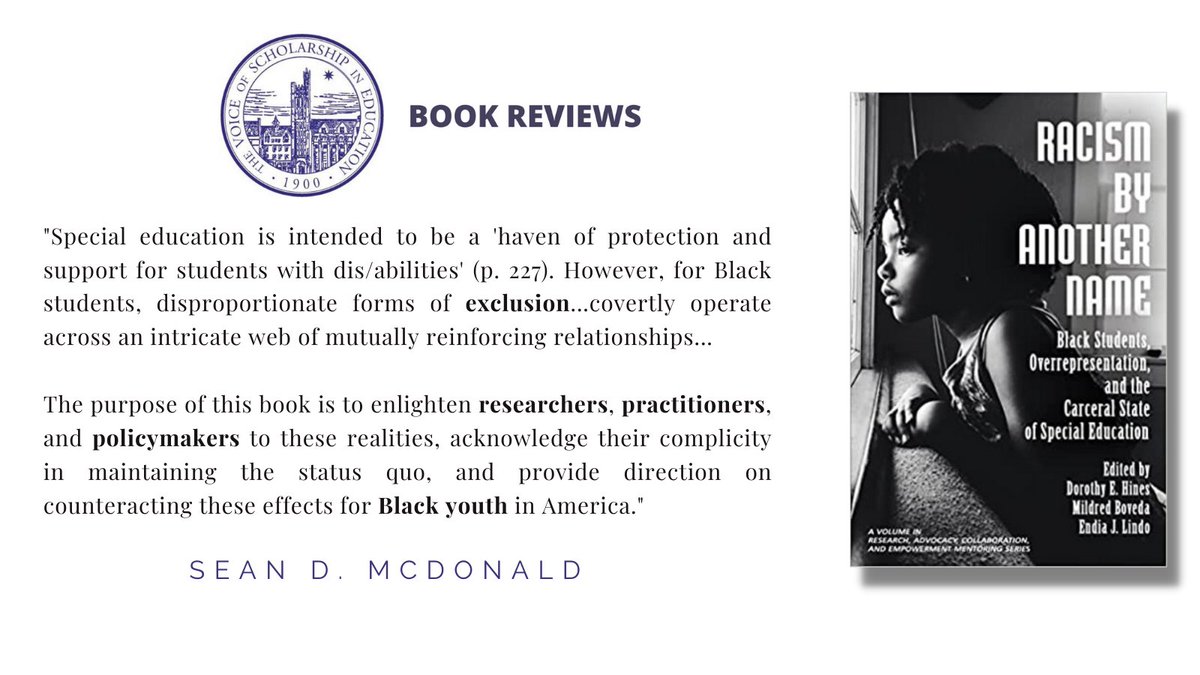
Dr. Hines, Dr. @mildredboveda, & Dr. Lindo's book chronicles how "racism, ableism, and other forces in and around special education function to perpetuate the school-to-prison pipeline for Black children." Read @SeanDmcD's review: https://t.co/MiI79beilW
We reviewed and meta-analyzed forty years of reading intervention research for K-5 students with or at risk for dyslexia! https://t.co/xUJ4GrOMSt Published online, open access, at Reading Research Quarterly (@ILAToday).
And to @DrNathanClemens and Sharon Vaughn (guest editors of this special issue) and all the RRQ reviewers who provided feedback and made this a better paper.