JUST IN: Anthropic devotes 94 pages of its IPO filing to existential risks posed by AI, including catastrophic incidents, self-preserving behavior, & models threatening blackmail.
China did it again!
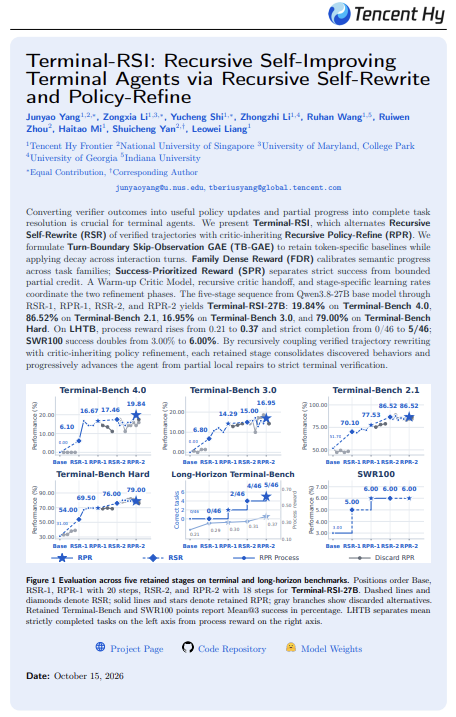
A 27B model just taught itself to get smarter. No humans involved.
I read the paper. The jump is wild:
↳ Hard coding tasks: 0% to nearly 20%
↳ Complex task suite: 31% to 79%
How it works:
It tries, finds a tiny win, rewrites its own memory, then goes again.
Generate, verify, rewrite and refine.
No internet data. Only its own discoveries 🤯
THIS AM: Anthropic has officially filed for its IPO
• Stock Ticker: $ANT
• Listing date: Nov. (TBD)
• Potential valuation $2 trillion
It has the chance to be the largest IPO in history
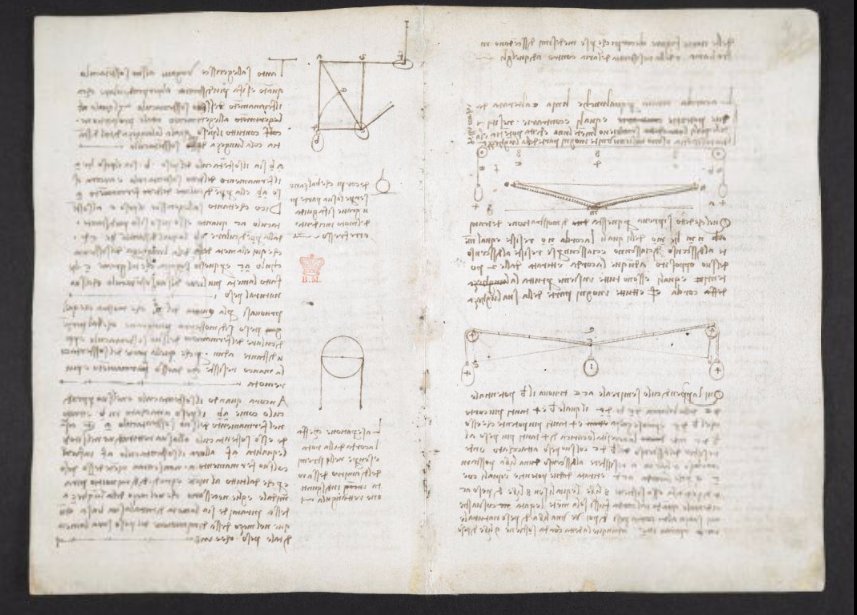
Notebook of Leonardo da Vinci, The Codex Arundel 📑
A collection of papers written in Italian by Leonardo da Vinci (b. 1452, d. 1519), in his characteristic left-handed mirror-writing (reading from right to left), including diagrams, drawings and brief texts, covering a broad range of topics in science and art, as well as personal notes. It's available online for free at the British Library online portal.
Gemini 4 Argon is already helping researchers unlock new scientific breakthroughs across fusion, biology, and quantum computing:
⚛️ In nuclear fusion, Argon helped discover a broader class of counterexamples to Grad's conjecture — a nearly 60-year-old assumption in plasma physics — creating new benchmarks for stellarator 3D magnetic fields.
🧬 In biology, it designed five novel, lab-verified serine esterases in a matter of hours — enzyme engineering that would previously have taken months. This work demonstrates the potential for rapid acceleration in fields such as biomanufacturing, green chemistry, and drug development.
🩺 In rare disease research, scientists at @GamowLabs used Argon to analyze de-identified genomes from newborns with rare developmental lung disorders — pinpointing a chromosomal rearrangement that routine software missed for years, and explaining why it went undetected.
🧮 In quantum computing, Argon translated our AlphaQubit error-correction decoder into a single optimized hardware kernel — nearly doubling inference throughput — and cut spacetime costs for a key quantum subroutine by more than 100x.
Seriously, this is such an insane release, I did not expect this:
Kimi K3.1 Pro beats every listed US frontier model on 6 of 14 benchmarks in Moonshot’s evaluations.
At $2 per million input tokens and $10 per million output tokens, its standard token rates are 50% below Opus 5.5 ($4/$20 !!) and 80% below GPT-6 Astra ($10/$50!!)
In other words: SOTA much cheaper, local running (with enough compute)
Starting next week, sessions across Claude web, desktop, and mobile apps will run in auto mode by default on Pro, Max, and Team plans.
Rather than asking you to approve each step, an automated check blocks risky actions. Switch back to manual anytime.
Agent Skills started as an experiment in Claude Code. Many across the industry have come to adopt it, so we at Anthropic found it more fitting to donate it to the @AgenticAIFdn, next to MCP.
🚨Breaking: Anthropic engineers revealed a simple trick they use internally.
Claude agents can now remember how to improve themselves.
A file called:
AGENT_LEARNINGS.md
The AI updates this file whenever it makes a mistake.
Inside it:
• mistakes it made
• patterns to avoid
• better approaches
Before starting new tasks, the agent reads the file.
Result?
The agent gets smarter over time without retraining the model.
This is called external memory scaffolding.
Expect this pattern to show up in every serious AI agent system.
♻️ Repost to share with your audience.
✔️ You can follow @swadeshkumar_ for more internal updates.
JUST IN: Wikipedia, Steam, & government websites go offline after OpenAI's AI model discovers critical security flaws threatening millions of web servers worldwide.
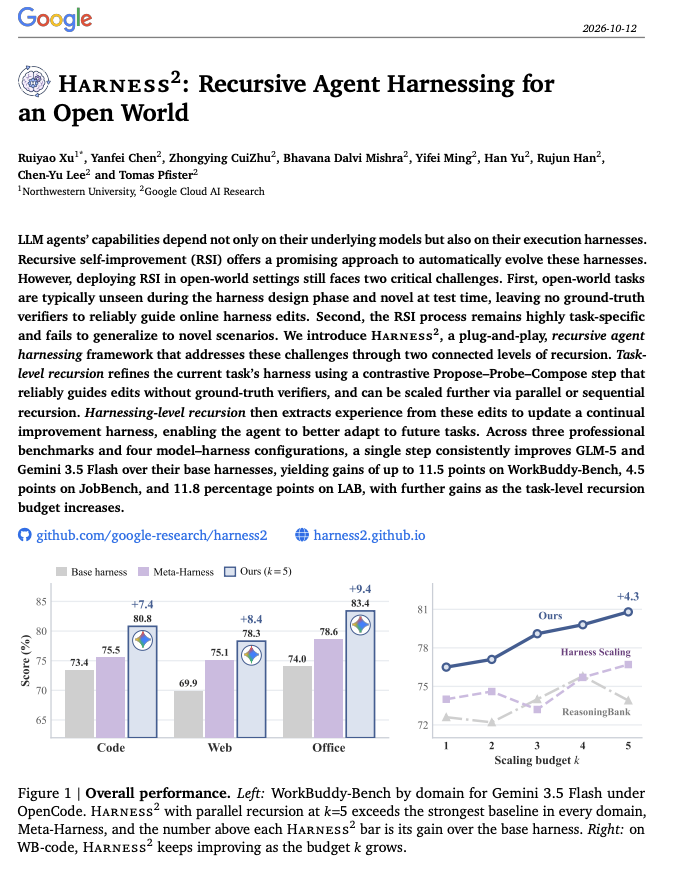
Can Agents improve their own harness on unseen tasks? The @GoogleResearch team released Harness², a framework that allows improve an harness around a frozen model.
How it works:
1️⃣ Agent runs the base harness on each task to record a baseline trajectory
2️⃣ Editor agent inspects the trajectory, drafts 2 candidate edits (SI, Skills, hooks,….), and runs both.
3️⃣ Composer agent diffs the new trajectory against the baseline, merges edits that fixed failures (within a cap), and runs the final harness.
4️⃣ Reflector agent logs verified lessons into file and saves the winning components to a library for future tasks to pull on demand.
Results:
- 💡 Gemini 3.5 Flash +8.4 on WorkBuddy-Bench and +7.5 on JobBench.
- 🛠️ Skills and scripts drive ~50% of edits; dropping skills costs 5.3 pts.
- 📚 Gemini 3.5 Flash improves on all 3 benchmarks when editing its own harness.
Paper: https://t.co/auogKxwGI0
Code: https://t.co/R4XD6u4M9s
Turn your entire codebase into a queryable knowledge graph!
Graphify is an AI coding assistant skill that maps your entire project into a knowledge graph you can query. Works with Claude Code, Codex, Cursor, Gemini CLI, OpenCode, and 20+ more coding agents.
Type "/graphify ." and it processes everything in your project. Code across 36 languages, SQL schemas, shell scripts, docs, PDFs, images, and videos, all mapped into one graph. Processing happens locally, no API needed for code.
The output is three files. An interactive HTML visualization you can open in a browser. A Markdown report with key concepts, surprising connections, and suggested questions. And a JSON graph you can query directly.
Instead of grepping through files or hoping your AI finds the right context, you query the graph. "What connects auth to the database?" "Find the path between UserService and DatabasePool." The graph answers precisely because it has the full picture, not just what's in the context window.
Builds a Git hook for auto-rebuild on every commit so the graph stays current as the codebase changes. Pushes to Neo4j for team sharing via MCP server. Generates a PR dashboard showing graph impact before merge.
Key capabilities:
• Maps code, docs, PDFs, images, and videos into one knowledge graph
• 36 languages via tree-sitter, processed locally
• Works with Claude Code, Codex, Cursor, Gemini CLI, OpenCode, and 20+ agents
• Query the graph instead of grepping through files
• Auto-rebuild on commit via Git hook
• Neo4j and FalkorDB integration for team sharing
• PR dashboard with graph impact analysis
100% open source.
I've shared the link in the replies!
Google Research has open-sourced Harness², a framework that enables AI agents to improve their own prompts, tools, memory, and workflows. It tests different configurations and carries useful lessons into future tasks while keeping the underlying model unchanged.
An increasing number of releases concerning self-improving models are being published.
🚨 A Netflix engineer just open-sourced the fix for the most expensive problem in AI: wasted tokens
It's called Headroom, and it might be the smartest fix to high token usage
Your agent reads a 10,000-token log file to find one error.
You paid for all 10,000 tokens.
The answer needed 1,200.
Headroom sits between your agent and the LLM and compresses everything before the model sees it.
JSON, code, logs, RAG chunks, each gets its own specialized compressor.
And it's reversible: the originals stay on your machine, so nothing is lost.
The results speak for themselves:
→ Up to 95% fewer tokens
→ Same accuracy on benchmarks
→ Zero changes to your code
Setup takes one minute:
1. pip install "headroom-ai[all]"
2. headroom wrap claude
Done.
Works with Claude Code, Cursor, Codex, and anything OpenAI-compatible.
Everything runs locally, fully open source.
The cheapest token is the one you never send.
🔗 Github repo: https://t.co/SSMujMiwMy
So, are you compressing your context, or just paying the bill?
this is pure f*cking gold for anyone running coding agents
Jev founder Diogo Amogo wrote a PDF on building a Jev harness
the promise:
> 200x faster
> 400x cheaper
the model hasn't been the slow part for a while
the speed and the cost sit in the harness wrapped around it
• how to use it
> drop this PDF and the article below into Claude Code or Codex
> let it rebuild its own setup
one evening of setup
and your agent starts next week on a harness most teams still don't have