The future of the firm is a learning loop in which human capital and token capital compound.
With our new Frontier Co., our ambition is to help every enterprise build its own AI capability, and to help create a frontier ecosystem where every organization can turn its knowledge, workflows, and judgment into its own AI systems that continuously improve. https://t.co/mvYhkRFyqa
Seeing the coverage of the amazing news of @kunalb11 becoming the WhatsApp CEO, there is a regulatory angle being overlooked. Payments is central to WhatsApp achieving its full potential, and having someone who has worked with the regulators who can make or break it is critical.
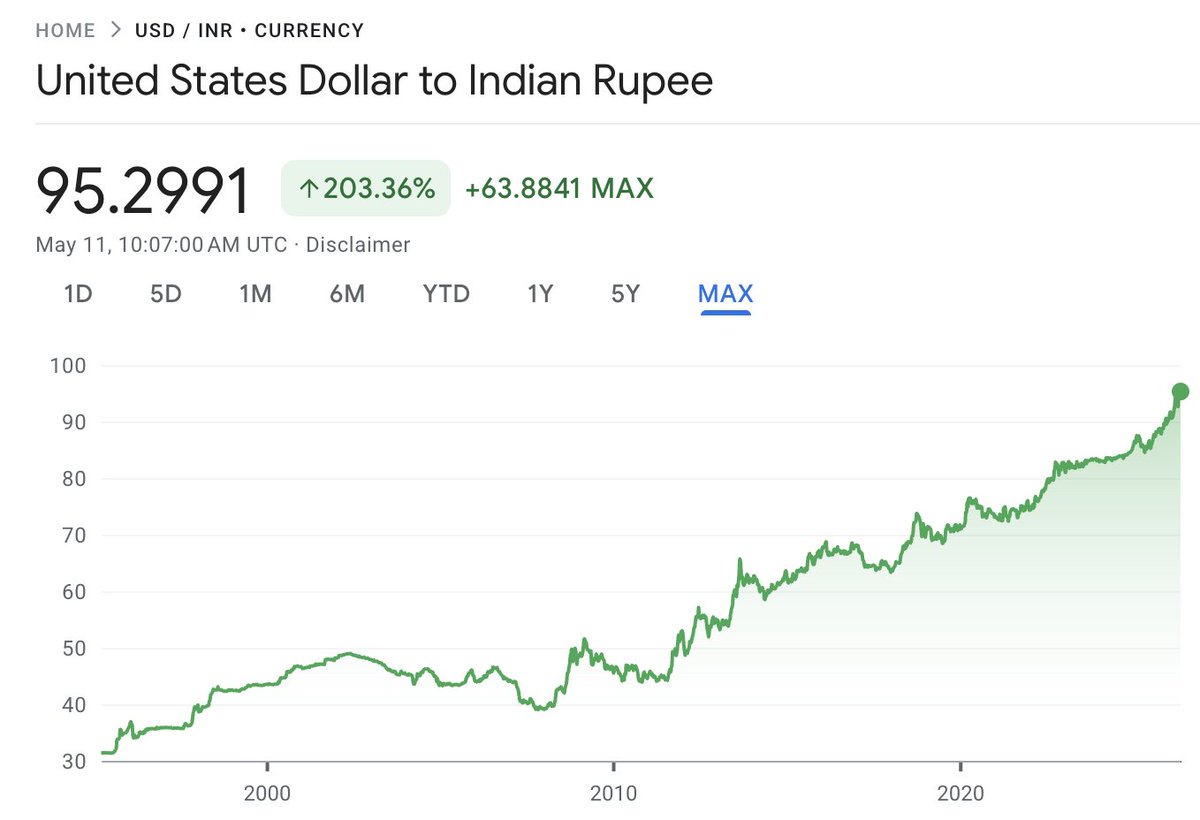
A friend was talking up how a particular Blore area was a good real estate investment when another said "not in dollar terms" (he's in the US)....had to look it up, crazy how much its gone up!
Now I know why the FIIs have been consistently selling!
Whether it’s existing consulting firms, new ones that emerge, FDEs from agent vendors, or new internal agent engineering roles, the amount of work that is going to be created to implement agents in enterprises will exceed anything we imagine today.
The complexity of implementing agents in any existing organizations is very real. When I talk to large enterprises, as you move from a chat paradigm to agents that participate in meaningful workflows, there are a number of things they need to do.
First, you have to get agents to be able to talk to your data securely across your systems. In many cases, enterprises have decades of legacy infrastructure that contain the valuable context for AI agents. That’s going to take a ton of work to go modernize and move to systems that work well with agents.
Then, you need to ensure that you’ve implemented agents with the right access controls and entitlements, the right scopes to be safely used, and have ways of monitoring, logging, and securing the work that they do.
Next, you need to actually document the processes in the organization in a way that agents can utilize for doing the work. You also need to figure out what the new workflow looks like when agents and people are working together on a process, and who steps in where. Just replicating the old workflow will mute the gains. Oh and you likely need to create evals for your top new end-state processes.
Finally, you have to keep up with a rapidly changing set of best practices and architectural shifts happening in the agent space. While it’s fun for people to change their personal productivity tools on a dime, it’s 100X harder to do this in a business process. The speed of change is a blessing and a curse right now for anyone trying to keep a stable system design.
All of this means that individuals and companies that develop expertise on the above set of components (and more) are going to be needed to help organizations actually implement agents at scale. This is also the rationale for vertical AI agents right now that can go in deep on a business domain and help bring automation to it.
This is a huge opportunity right now whether you’re doing this internally or as an external business provider.
Holy cow.
I’ve been reading the Rockefeller archives, and found this gem, where John D. Rockefeller comments on Napoleon Bonaparte.
"It is hard to imagine Napoleon as a business man, but I have thought that if he had applied himself to commerce and industry he would have been the greatest business man the world had ever known.
My, what a genius for organization! He also had what I have always regarded as a prime necessity for large success in any enterprise - that is a thorough understanding of men and ability to inspire in them confidence in him and what is of equal importance, confidence in themselves. See the men he picked as Marshalls, and the heights to which they rose under his inspiration and leadership.
It is by such traits as these, that men get the world of the world done. It is all a battlefield. Bonaparte, without the able marshals he had about him, would not have been the master of his age. he went into a battle with the knowledge that his marshals could be depended on - that in a given situation they could be relied upon do to the necessary thing. Their devotion to him, coupled with their enthusiasm - that’s another great attribute - and the qualities which his influence upon them brought out, won the fight.
Another thing about Napoleon was his virility - his humanity. I mean humanity in the broad sense, of course. He was a human being, and virile because he came direct from the ranks of the people. There was none of the stagnant blood of nobility or royalty in his veins. There’s where he had the advantage over the the monarchs of Europe to begin with. He could think quicker and along more individual and original lines than any of them. And being from the people, he was in close touch with the people.
The men with whom he had to combat didn’t understand either him, or the people and it is always hard to successful control what you don’t understand. Napoleon didn’t play the game, as the saying goes, as they understood it. And then, coming direct from the people he had the sympathy; he appealed to their imagination; Europe had not yet been education to the fact that it could get along without any kings at all, and the French people, I believe, reasoned that if they have to have king to rule them, it was better to have a king of their own kind and from their own ranks, than from the breed which had ruled them for a thousand years. In an age when the people had been but recently released from slavery and had not acquired the art of governing themselves, leaders of their own kind were few, and that made it easier for Napoleon to rise to the heights which he attained.
A Napoleon would be impossible in our day. Democracy has educated us away from such a think. There are too many able and ambitious rivals to hold in check one who aimed too high."
Good prompt. What has beaten Excel in specific areas?
Google Sheets: online, semi-casual Excel
Carta: captables
Python ML stack: far better for real data analysis
Airtable/Notion: better for strongly typed data
Keynote/LaTeX: better high-end table aesthetics for presentations
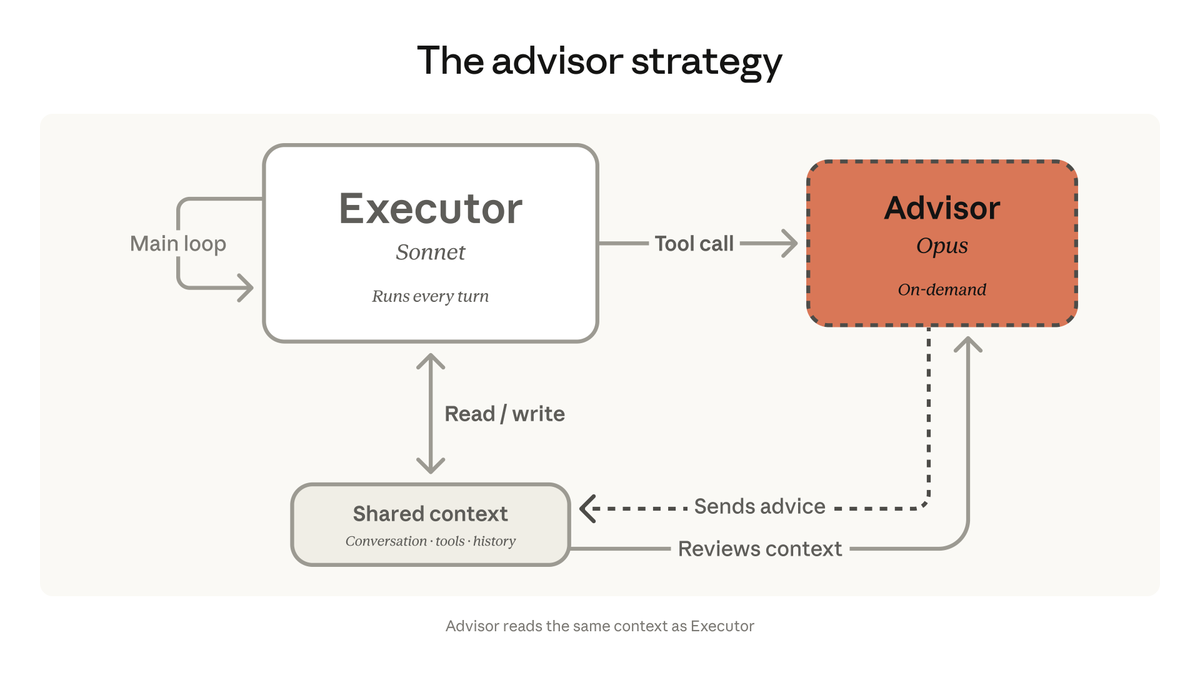
We're bringing the advisor strategy to the Claude Platform.
Pair Opus as an advisor with Sonnet or Haiku as an executor, and get near Opus-level intelligence in your agents at a fraction of the cost.
At Dhan, we built our products grounds up from scratch and then improve / adapt based on usage, feedback and suggestions. 9 out of 10 features are suggested by users, even today.
UI is just one factor, there is core trading engine, tons of innovation, features and capabilities along with lot of tech that Dhan has shipped in just 4 years.
Yes, we do get harsh feedback that Dhan isn't easy for first time investors or traders, it's not built for them. > 85% of our users move from other platforms to Dhan.
We are very small compared to the large platforms out there, and specifically building for niche of power traders and long-term investors.
A spectacular win by the Indian team in the ICC Women’s Cricket World Cup 2025 Finals. Their performance in the final was marked by great skill and confidence. The team showed exceptional teamwork and tenacity throughout the tournament. Congratulations to our players. This historic win will motivate future champions to take up sports.
#WomensWorldCup2025
Apps are a decades old construct. Like all evolution, we must move past it as the default paradigm on your phone. Its not a tech problem, the incentives aren't aligned.
I want my old Nokia powered by AI.
The phone/computer will just become an edge node for AI, directly rendering pixels with no real operating system or apps in the traditional sense.
There isn’t enough bandwidth to transmit video to all devices from the servers and there won’t always be good connectivity, so there still needs to be significant client-side AI compute.
In pursuit of product-market fit, you should be less of a data scientist and more of an anthropologist.
Every week I see teams pretending to be scientists and analyzing metrics on a test group of a few hundred users who came from odd sources unrepresentative of their broader target audience — like a Discord server or a handful of friends & acquaintances.
Instead, keep it simple:
Your analytics dashboard should literally just be a table of users with the following columns:
• Name
• Registration Date
• Last Active Time
• Number of Sessions
Then follow these steps:
1. Sort the list by Last Active Time
2. Look up the most active users on Instagram or Linkedin
3. Then interpret their behavior on your app through the lens of their online identity
4. If you have a messaging channel such as Intercom, send them a generic message asking for their feedback (and maybe offer a $25 gift card)
Do this regularly.
It’s certainly not science but it will tell you more about what’s resonating about the product than a bunch of statistically insignificant data.