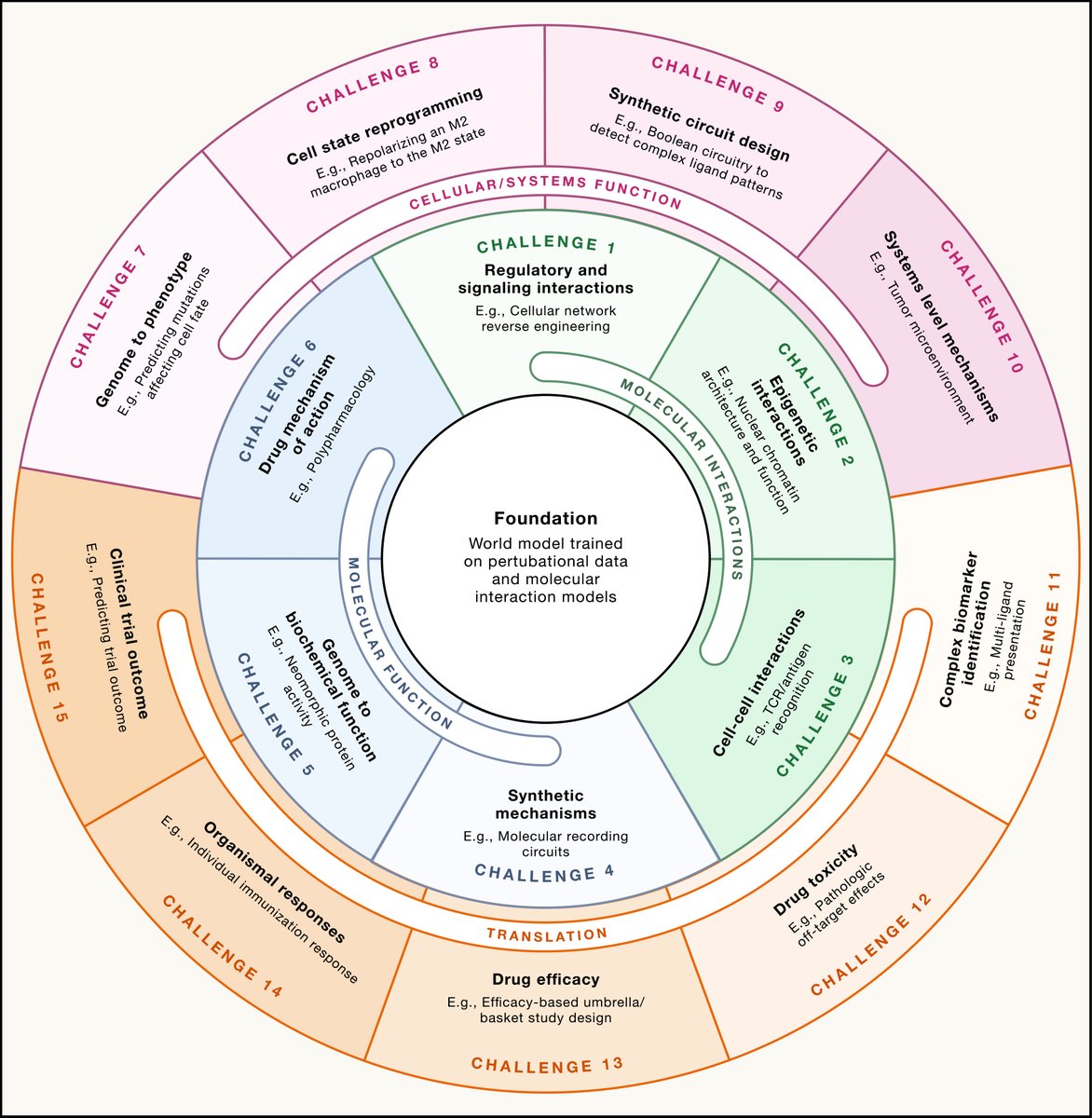
Which of these 15 AI challenges for cell biology is most urgent? Hilbert’s 23 problems steered math for a century. Our @CellCellPress paper, led by Andrea Califano, proposes 15 for biology, each with a real-world test of AI predictions. https://t.co/j9S8ksH0zc
Great essay from @clarabcollier: https://t.co/H1LpUNid9O.
(You should subscribe to @asteriskmgzn, in addition to @WorksInProgMag of course. They have a very good print edition.)
While data quantity is a problem, it may not be the most dire. Data diversity, lack of data pairing (across modalities and scales), and inadequate measurement technologies are biology’s biggest hurdles for AI. Scaling up the same type of data that exists isn’t the solution.
Our understanding for how our brain ages and why our memory slips after age 50 have been completely revamped through 2 new landmark studies of the microglia, the brain immune cells
Gaining therapeutic access to the human brain is one of the biggest unsolved problems in biomedical science.
Today @nature, we uncover a massive influx of immune cells into the human brain during aging, revealing that the brain is more accessible than previously thought. 1/
https://t.co/BuHdVk1V2I
I'm lucky enough to have a great doctor and access to excellent Bay Area medical care. I've taken lots of standard screening tests over the years and have tried lots of "health tech" devices and tools.
With all this said, by far the most useful preventative medical advice that I've ever received has come from unleashing coding agents on my genome, having them investigate my specific mutations, and having them recommend specific follow-on tests and treatments.
Population averages are population averages, but we ourselves are not averages. For example, it turns out that I probably have a 30x(!) higher-than-average predisposition to melanoma. Fortunately, there are both specific supplements that help counteract the particular mutations I have, and of course I can significantly dial up my screening frequency. So, this is very useful to know.
I don't know exactly how much the analysis cost, but probably less than $100. Sequencing my genome cost a few hundred dollars.
(One often sees papers and articles claiming that models aren't very good at medical reasoning. These analyses are usually based on employing several-year-old models, which is a kind of ludicrous malpractice. It is true that you still have to carefully monitor the agents' reasoning, and they do on occasion jump to conclusions or skip steps, requiring some nudging and re-steering. But, overall, they are almost literally infinitely better for this kind of work than what one can otherwise obtain today.)
There are still lots of questions about how this will diffuse and get adopted, but it seems very clear that medical practice is about to improve enormously. Exciting times!
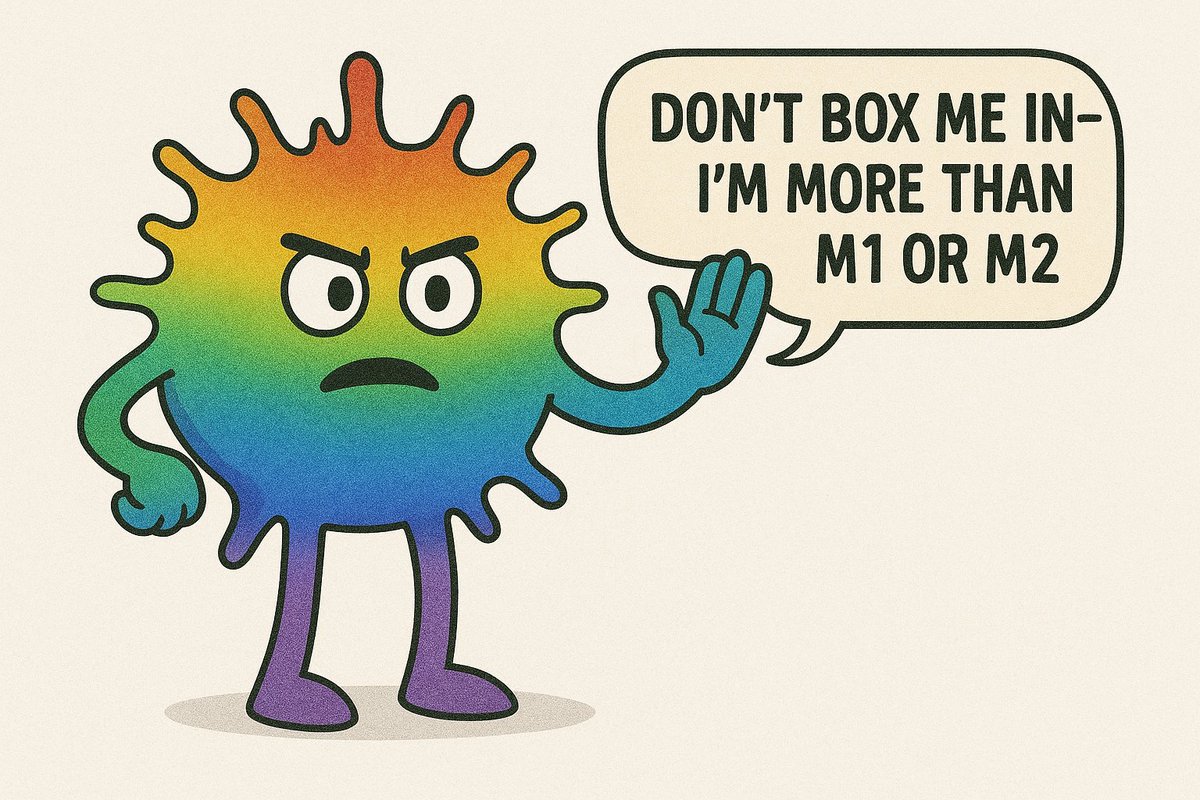
PSA: Stop calling macrophages in tissue M1 or M2. These are not states that exist in biology. The only use of M1 is a macrophage cultured ex vivo with LPS and IFNg; and for M2: IL-4/13/10. Macrophages in tissues are highly complex and diverse and do not resemble either of the aforementioned M1/M2 states. M1/M2 language causes confusion and sets the field back. Refer to your macrophages by the molecules they express and the cytokines they make.
New preprint from our lab! Lukas Kuhajda (@kuhy12) built a novel ML framework to optimize transcription factor binding site insertions and then used it to one-shot rewire the yeast glucose response.
More than 16 million Americans are at risk of losing their health care because Republicans in Congress are rushing to pass a bill that would cut federal funding for Medicaid and weaken the Affordable Care Act.
If the House passes this bill, it will increase costs and hurt working class families for generations to come. Call your representative today and tell them to vote no on this bill.
@srikosuri yes, imo an opportunity for non-linear theory/complexity people to formalize generalizable problems around constraints provided by specific model architectures. maybe the biggest shift since linear system theory.
You can’t eat microchips. Social media can’t heal the sick. B2B SaaS will never love you
The final measure of any technology is the value it creates, directly or indirectly, for living things. In this sense, biology is everyone’s mission
I got hit by some rather sudden and extreme financial hardship so if anyone is in need of remote wetlab contract research, strictly BSL1, do let me know. Currently scrambling for gigs.
Plant, Bacterial, Archaeal Bioeng
Custom Lab Hardware
Turn Key Genetic Design
Please RT 💚