Ubuntu 24.04.4 VM with 4 vCPUs 3.8 GiB RAM and 3.8 GiB swap. The Podman container runs RHEL 9.9, NGINX 1.30.4 and glibc 2.34.
Traffic per full exploit attempt: about 119.02 GiB of HTTP/2 application plaintext, or 127.8 GB in decimal units. This is cumulative traffic, not one uploaded request body or copies of a 119 GiB payload. One primary TLS/HTTP/2 connection carries most of it; 16 auxiliary TLS/HTTP/2 connections stage the heap. That is 17 exploit connections at peak, plus a callback socket if command execution succeeds.
The reverse-shell command string itself was 52 bytes. The configured client_max_body_size 4g limit governs HTTP request bodies. The test used repeated HTTP/2 header and control frames, so that limit did not stop the observed lab run.
-----------------------------------
I get that it's a lot of data, but it's not a single big "POST" payload and at data center speeds it's pretty fast and worth it for the attacker to get unauthenticated remote C2.
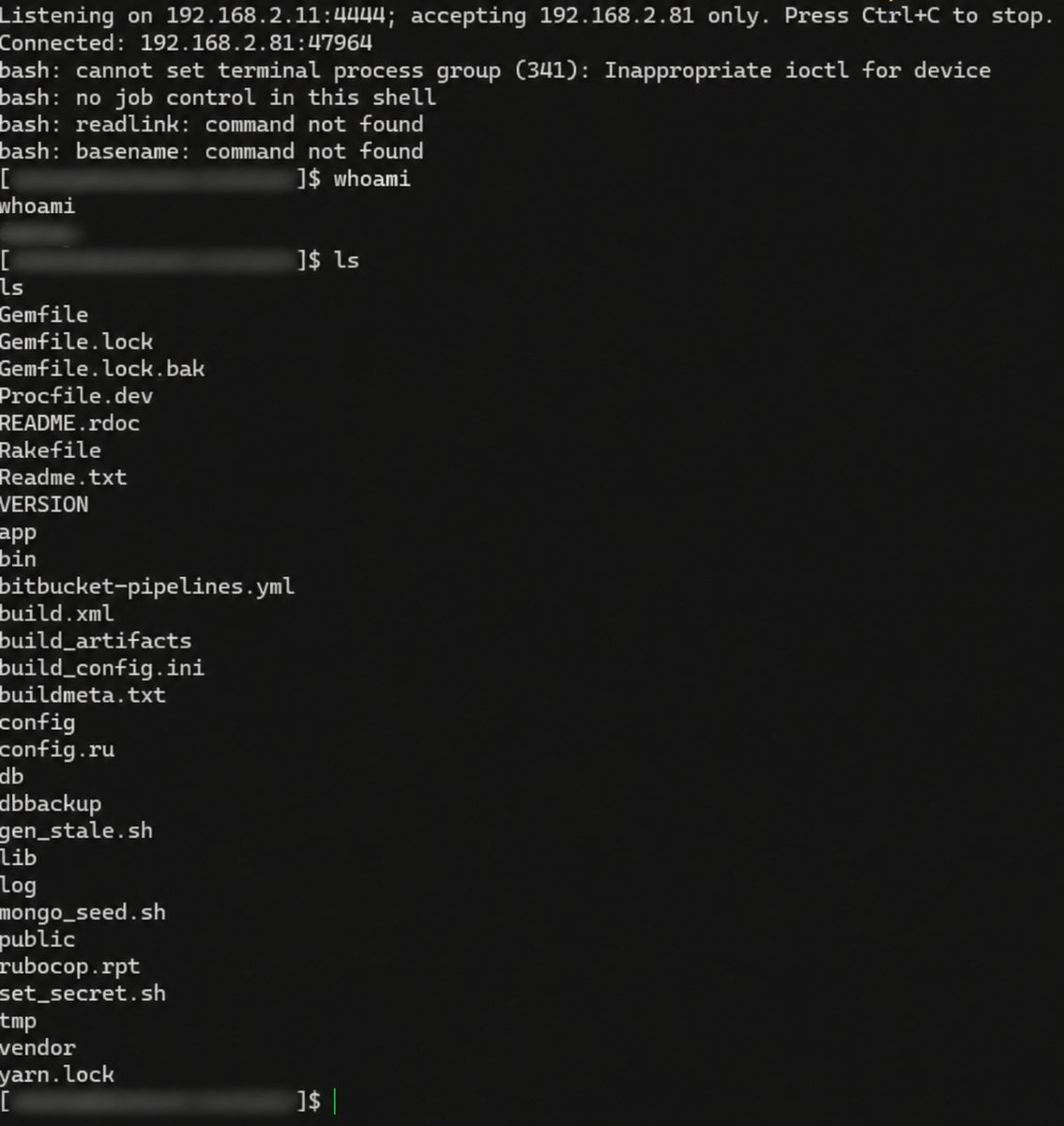
We've also gotten to unauthenticated reverse shell POC working. I know we're all tired of *2shell vulns and it's GTA6 day, but it is worth checking where in your env nginx is used (by your vendors too) and test if http2 is enabled. #CVE-2026-123007 #NGINX2Root
We've recreated the POC and had it write files into docker containers hosting vulnerable nginx. It looks like about 60-100GB.
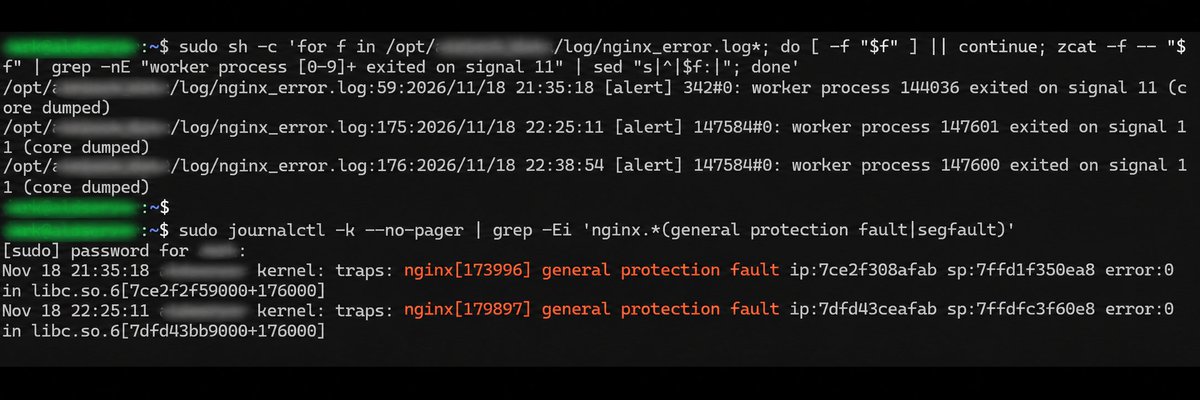
Observed impact: one NGINX worker received SIGSEGV. The master stayed up, replaced that worker, and /health returned HTTP/2 200 afterward. Connections on the crashed worker can be interrupted.
TLS 1.2 crash probe sends about 60 GiB of HTTP/2 plaintext: roughly 8 GiB of carrier frames and 52 GiB of WINDOW_UPDATE frames. The published TLS 1.3 RCE path uses about 119 GiB.
Also:
sudo journalctl -k --no-pager | grep -Ei 'nginx.*(general protection fault|segfault)'
@UK_Daniel_Card Cause nginx hosts a lot of reverse proxies and web applications exposed directly to the public internet, and if you can make a connection you can get a reverse shell unauthenticated 🤷
We've recreated the POC and had it write files into docker containers hosting vulnerable nginx. It looks like about 60-100GB.
Observed impact: one NGINX worker received SIGSEGV. The master stayed up, replaced that worker, and /health returned HTTP/2 200 afterward. Connections on the crashed worker can be interrupted.
TLS 1.2 crash probe sends about 60 GiB of HTTP/2 plaintext: roughly 8 GiB of carrier frames and 52 GiB of WINDOW_UPDATE frames. The published TLS 1.3 RCE path uses about 119 GiB.
Also:
sudo journalctl -k --no-pager | grep -Ei 'nginx.*(general protection fault|segfault)'
This screwed up my metric for how long it takes to go from blogs and videos about a new bug to some random person on GitHub reliably reproducing it, since they were in the mix on this one.
https://t.co/973aWGUZFX
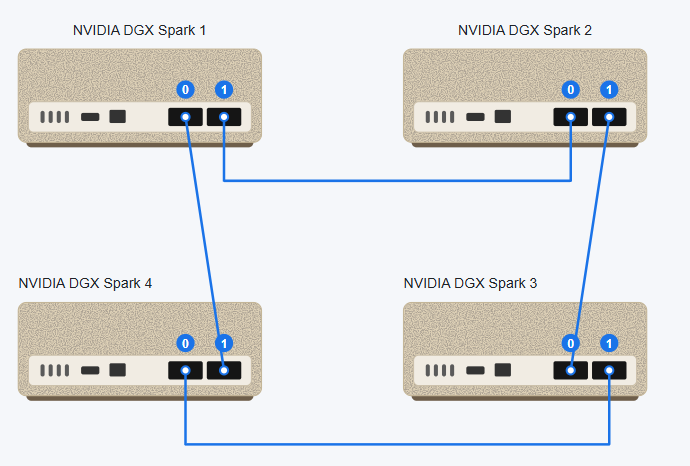
@MiaAI_lab I have trouble with this version, when @MiaAI_lab and @christopherowen four spark recipes have been fine.
I get responses with these DSML tags and also unicode characters in responses. Anyone know why I see this with pico recipe?
Had a bit of play on an old XPS13 and was fun. I had some installer issues, package conflicts on with fonts on fresh Omarchy 4.0.2 install which I worked around. I wanted to scale just the tiles on the right, but whole desktop scaled which I didn't like and I wished the Omarchy keyboard shortcuts worked, but didn't seem to. Are they meant to, or can they? Problem did a bunch wrong and didn't read much documentation 🤣. Following!
interesting... a car is just a concept. looking at the "physics" stats bare like this is interesting. very intriguing spline reference + momentum control system instead of tire physics
It's essentially a brick running on vaguely invisible rail