At @IFP, we’ve spent the past 3 years thinking about all the different ways the US government & philanthropy fund R&D.
Until now, R&D funders haven’t had a systematic way to match the innovation problem to the right funding tool.
We built THE ATLAS OF INNOVATION to fill that gap.
https://t.co/XZshJ7pr1f
Alongside @UChi_MSA, we’ve boiled down thousands of hours of research into a handful of questions covering how much the R&D funder knows about:
- the problem they want to solve
- the solution it should have
- the team that should build the solution
Why the Atlas matters:
The US government spends close to $200 billion every year on R&D. And after the Anthropic and OpenAI IPOs, there will be hundreds of billions of dollars in new philanthropic giving.
Choosing the correct funding approach to the social problems they’re trying to solve will mean the difference between success and failure.
For example, NSF research grants have helped seed breakthroughs from MRI machines to search engines, but grants aren’t built to deliver the kind of industrial speed and scale that a project like Operation Warp Speed required.
Picking the wrong funding approach can leave programs behind schedule, over budget, or without anything to show for all the money they spent.
How we built the Atlas:
1. We began by creating a matrix of dozens of considerations that a thoughtful policymaker or funder would ideally weigh before deciding how to fund a project.
2. We looked at every major funding approach, from grants to R&D tax credits to advance market commitments, analyzing when they work well and when they fail to meet the mission.
3. We spent months deep in the weeds of contract theory and incentive design, looking at historical examples and the state-of-the-art research in innovation economics.
4. We then worked to turn that research into a tool that time-strapped policymakers and philanthropic funders could rely on at the start of an innovation funding cycle.
5. Three years later, we are launching just that: a new (and visually stunning) website to help funders decide how to best incentivize innovation. And all they have to know… is what they currently know about their innovation goal! The Atlas takes care of the rest.
How to navigate the Atlas:
Answer questions about your goal to find the funding approach aligned with the information you have.
Each funding mechanism has its purpose for particular technologies and specific moments in development.
There shouldn’t be an ARPA for every field, just like we don’t need a prize or AMC for every innovation. The Atlas helps you navigate those tradeoffs.
1/ Can AI help researchers check whether published social science results actually reproduce? In our new PNAS paper, we tested this directly in the AI Replication Games: 288 researchers, 103 teams, and real replication packages from quantitative social science.
➡️Attention PhD candidates⬅️
Call for Applications:
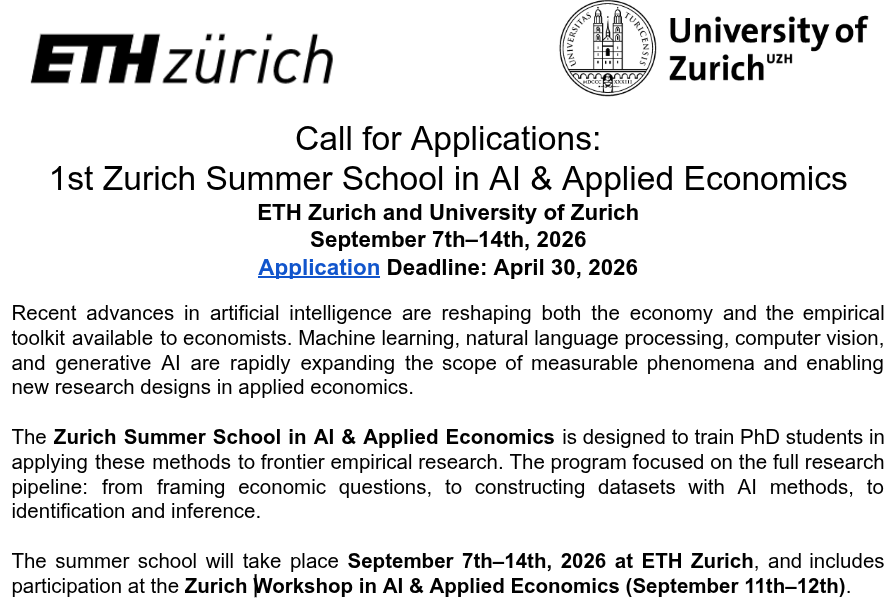
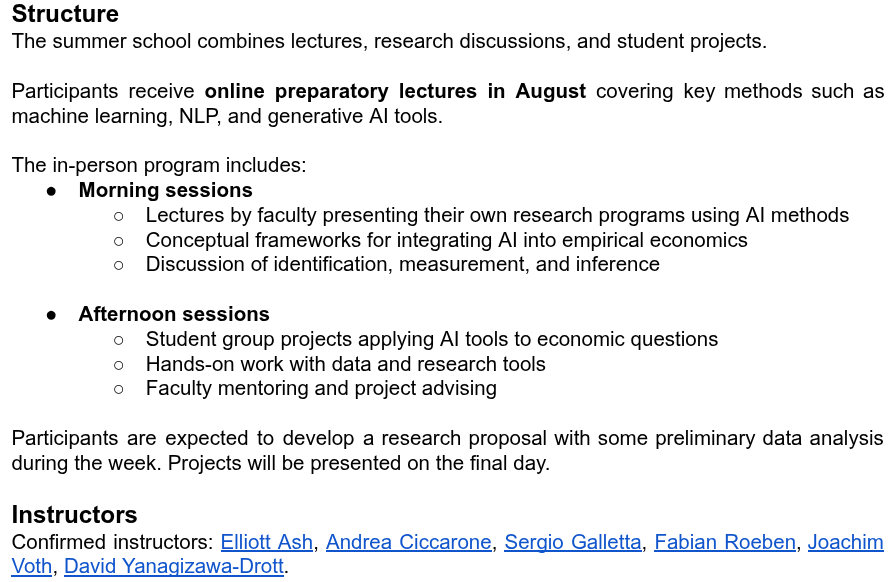
The first Zurich Summer School in AI & Applied Economics
Sept 7th-14th, 2026, including the workshop on Sept 11th-12th
submission deadline April 30th!
(link below)
co-organized with @sergallet@joachim_voth@YanagizawaD, with additional teaching contributions from @RoebenFabian and @andreacicca_
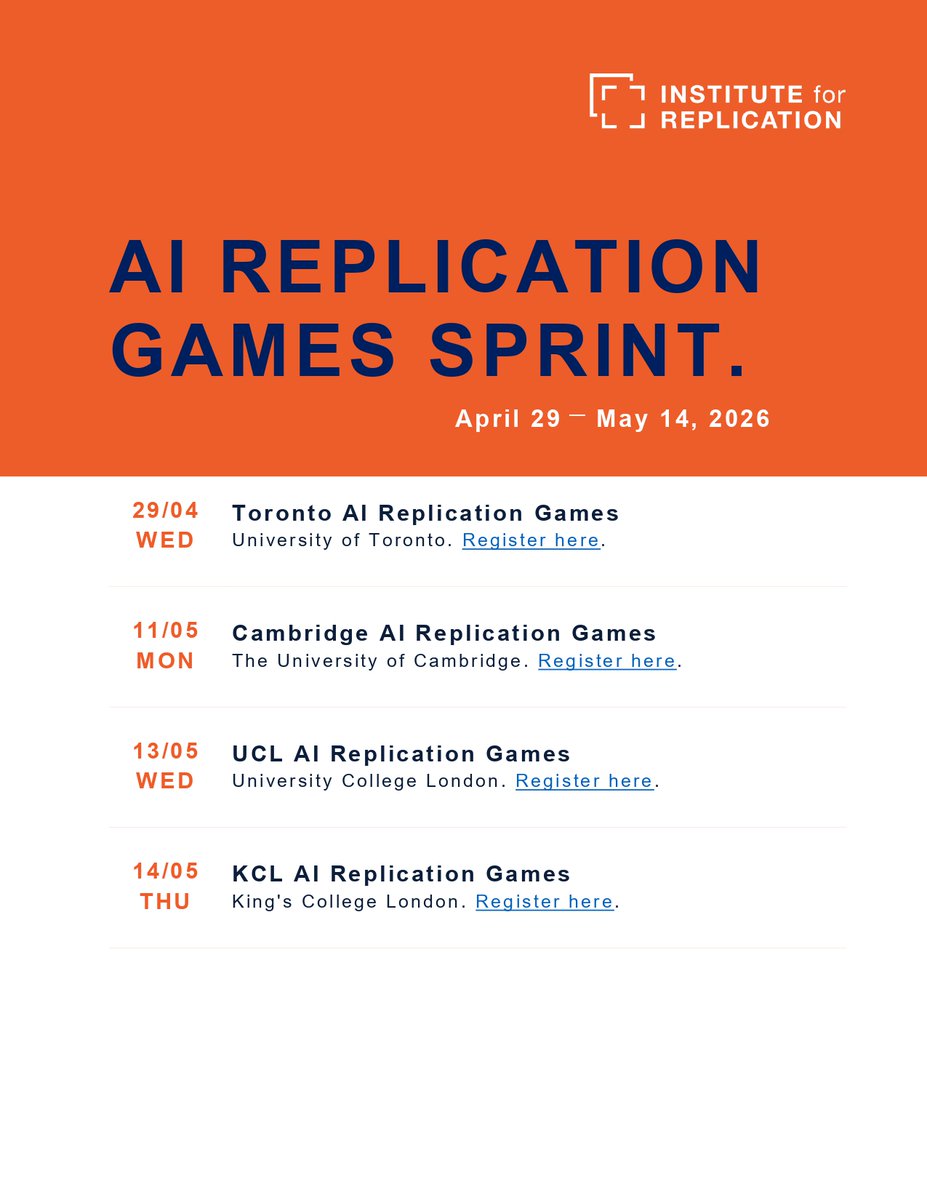
🚨 New AI Games round is live 🚨
Our first AI Games paper is now out at a top general interest journal (see preprint here:
https://t.co/dRabUECVb9
So… we’re launching the next stage 👇
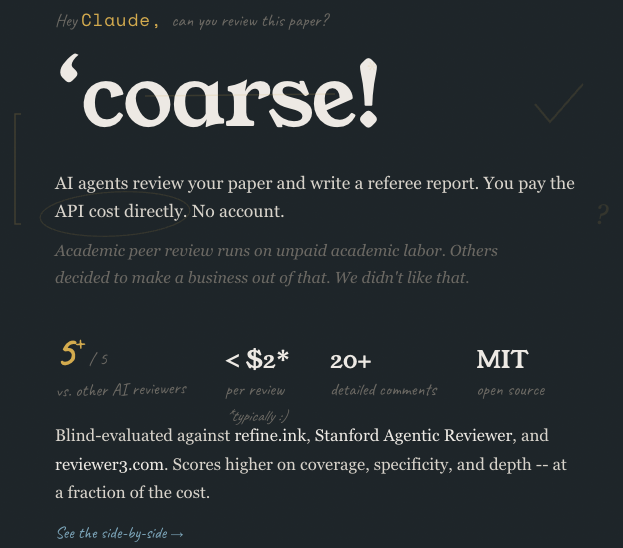
I coded up an open-source, not-for-profit AI paper reviewer that rivals the performance of @reviewer3com, @RefineInk, and Stanford Agentic Reviewer (according to @GeminiApp). Costs <$2!
Live @ https://t.co/5m1Srky4H8. Plug in paper, @OpenRouter key, and email. #econtwitter.
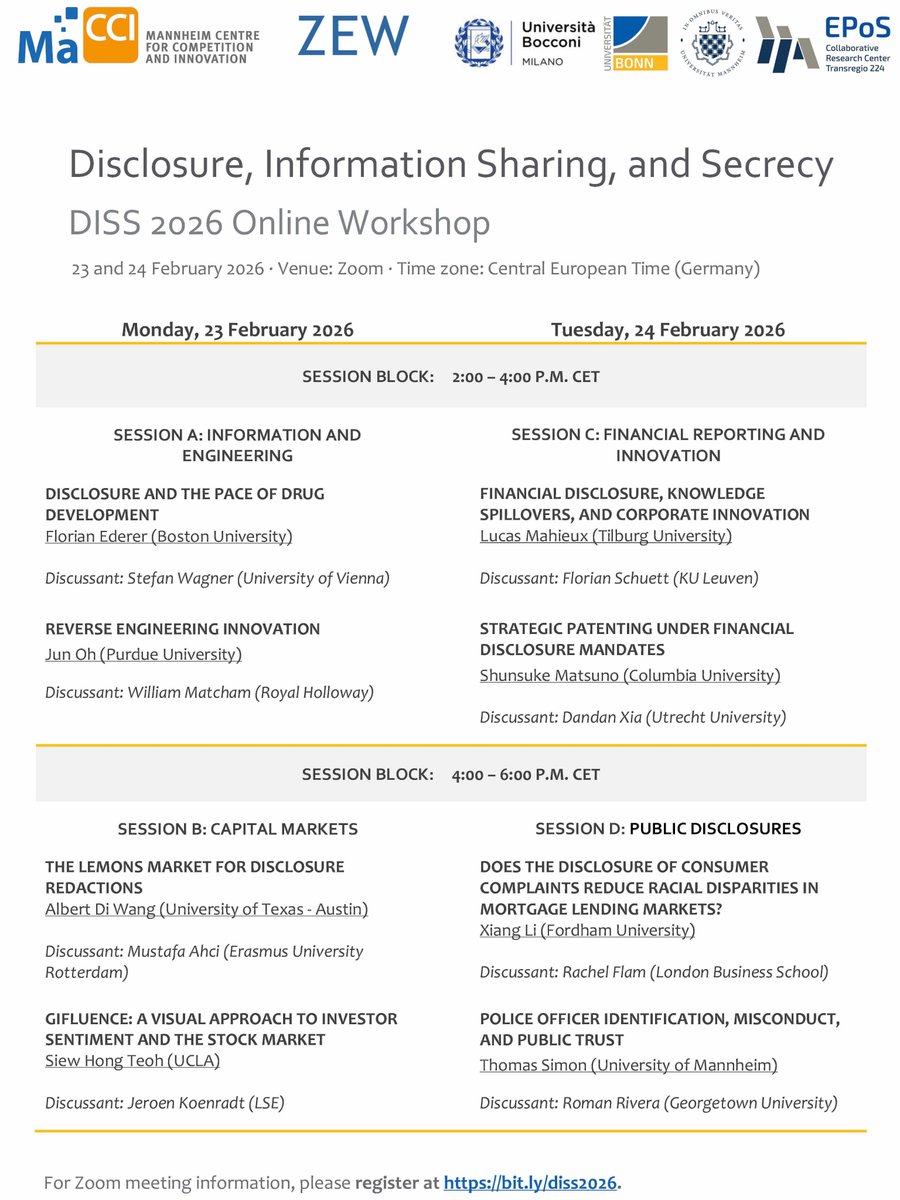
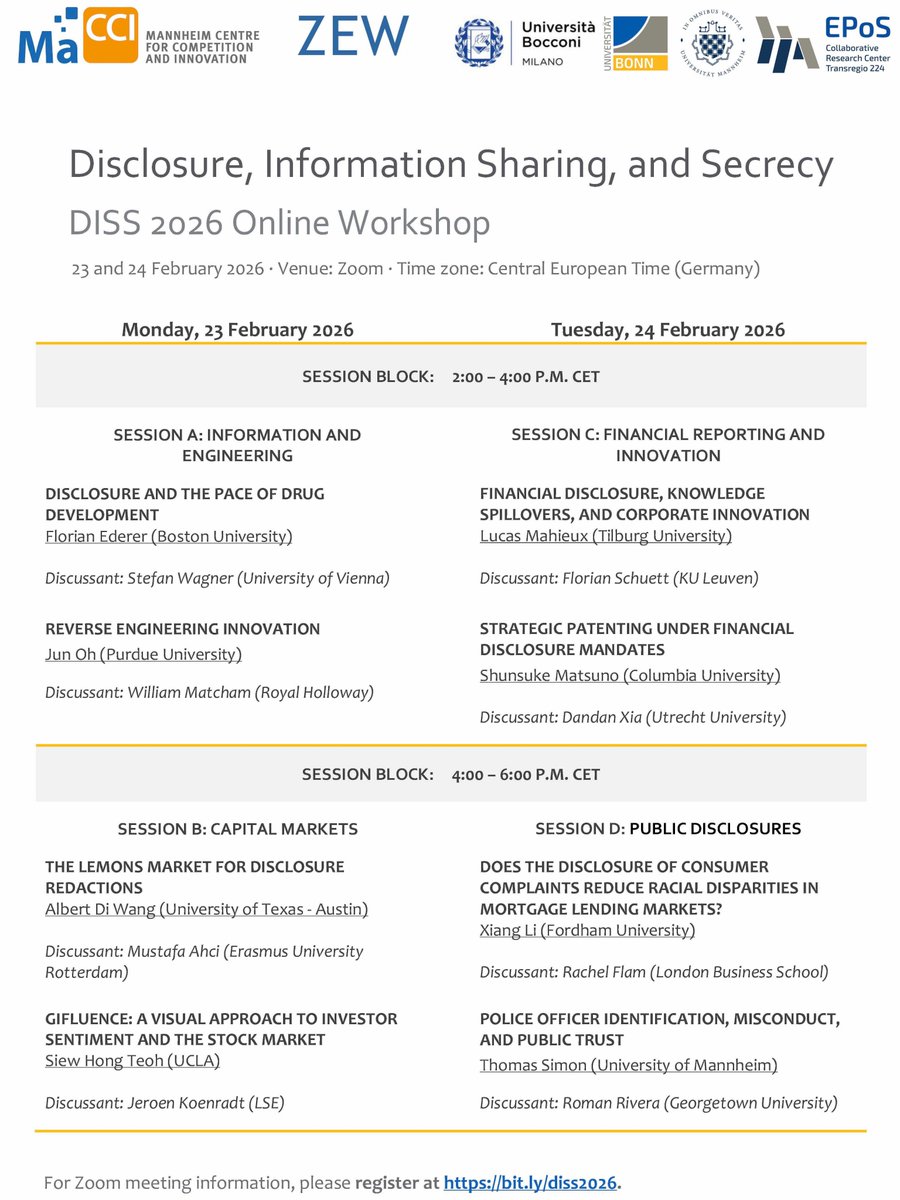
Less than 2 weeks until this year's DISS 2026 Workshop.
Registration at https://t.co/KhX32MeKVL
If this is too much suspense, check out last year's presentations:
https://t.co/RdwMaQwwta
@MaCCIcomp@zew_en@EconUniMannheim#econtwitter
🚨 We're hiring! Join @IFP's metascience team to rethink how science gets funded and organized.
Fellow & Senior Fellow roles open — $3K referral bonus if we hire your recommendation.
Apply by May 11:
https://t.co/KAdiz03c8B
EUR 150 billion for #defense investments is a lot of dough for (preferably?) European producers.
Production capacities aside, where does Europe stand in the race for #innovative weapons and defense systems?
Patents @EPOorg paint a (partial) picture
DISS Workshop 2025
February 24-25, 2025 (NEXT WEEK!)
Sessions on
(A) Information Sharing
(B) Disclosure in Experiments
(C) Innovation Disclosure
(D) Technology Transfer
#EconTwitter
Register at https://t.co/oGPkx4rCjY
More info at https://t.co/WkR7OYnYEe
📢 Final reminder! The MSI Ph.D. Workshop 2025 deadline is Feb 15!
Ph.D. students & postdocs in:
🔹 Digitalization & Strategy
🔹 Innovation & Entrepreneurship
🔹 Law & Econ of IP & Digitalization
📍 Munich, May 26 | 12 spots only!
🔗 Apply: https://t.co/AtIPKK3EfU
#MSI2025
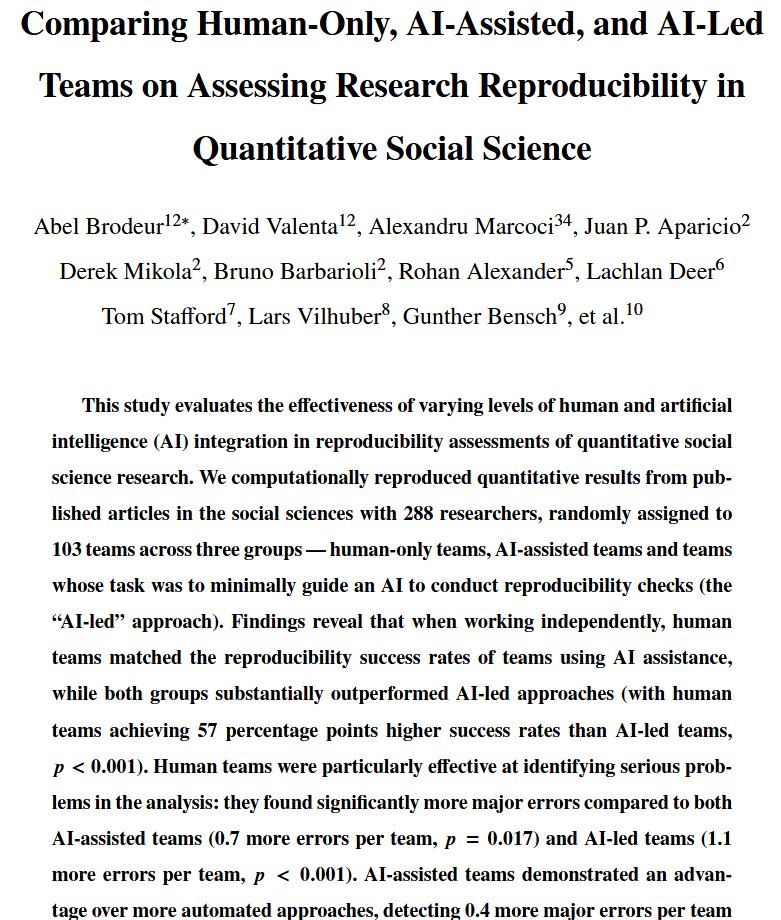
New research alert! Our study investigates the effectiveness of human-only, AI-assisted, and AI-led teams in assessing the reproducibility of quantitative social science research. We've got some surprising findings!
@AlecStapp Does dark blue mean "100% of the length of the project is tunneled" or does it mean "no matter how long the project, there is at least one tunnel, however short"? Comparing Germany and Switzerland it seems to be the latter, and that would be pretty meaningless information