Congratulations to the newly announced crew for Artemis III! We are thrilled that these four distinguished astronauts will be “carrying the fire” for our next mission toward establishing a long-term human presence on the surface of the Moon.
On Tuesday, June 9, we’ll announce the four astronauts who will orbit Earth aboard the @NASAArtemis III mission!
Watch our live event at 11 a.m. EDT (1500 UTC) to find out who will test the docking capabilities necessary for crewed Moon landings: https://t.co/TyU7StKGxH
@NASAMoonBase The first of three @NASAMoonBase missions will be the @BlueOrigin Mark I Endurance lander, set to launch NET Fall 2026.
@NASAAdmin Isaacman describes how this mission will send scientific payloads to the lunar South Pole region and reduce risk for future astronaut explorers.
@NASAMoonBase@blueorigin@NASAAdmin The second @NASAMoonBase mission will fly cargo to the lunar surface aboard the @Astrobotic Griffin lander and the third will deliver payloads chosen through open competition as well as international partners.
Both missions are targeted to launch before the end of 2026.
Nice catch, @astro_reid! From our shared legacy of almost 26 years of a continuous human presence conducting science and technology demonstrations on the @Space_Station to the successful return to the Moon with the Artemis II mission, all of us at @NASA are so excited to have entered the @NASAArtemis era. We explore together as one humankind.
Only one chance in this lifetime…
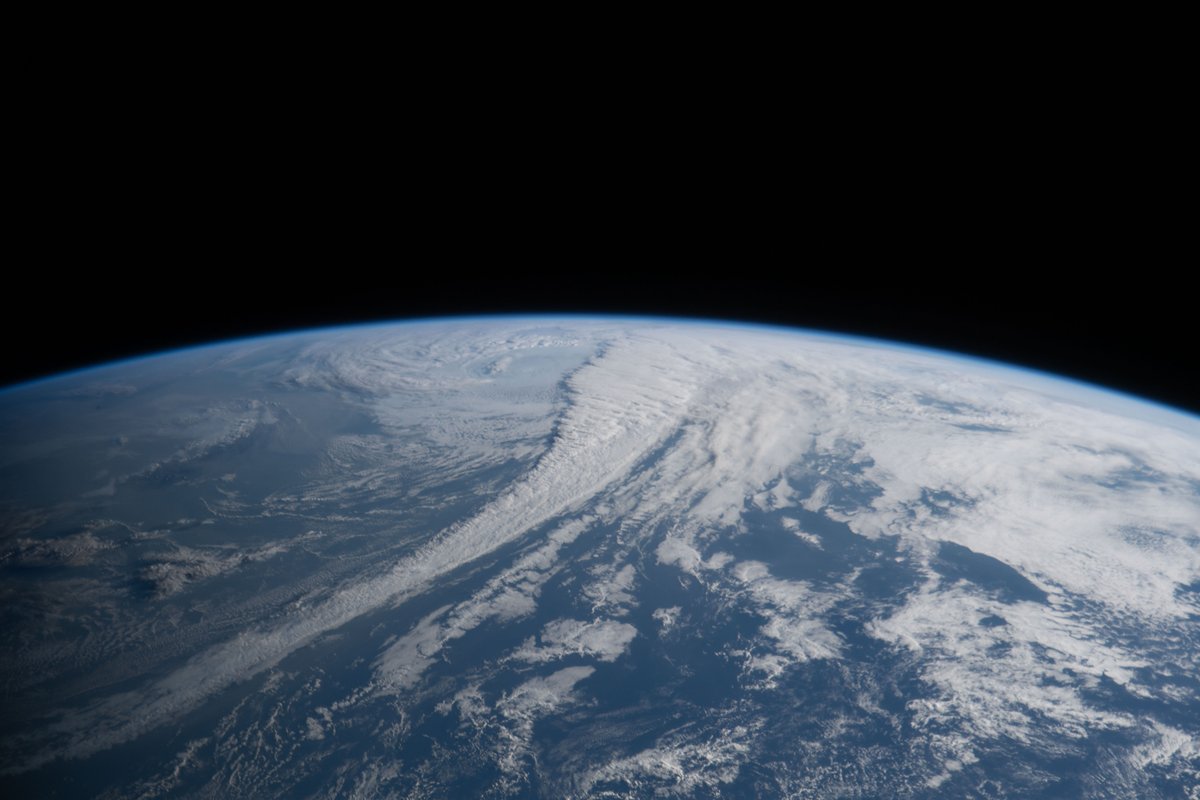
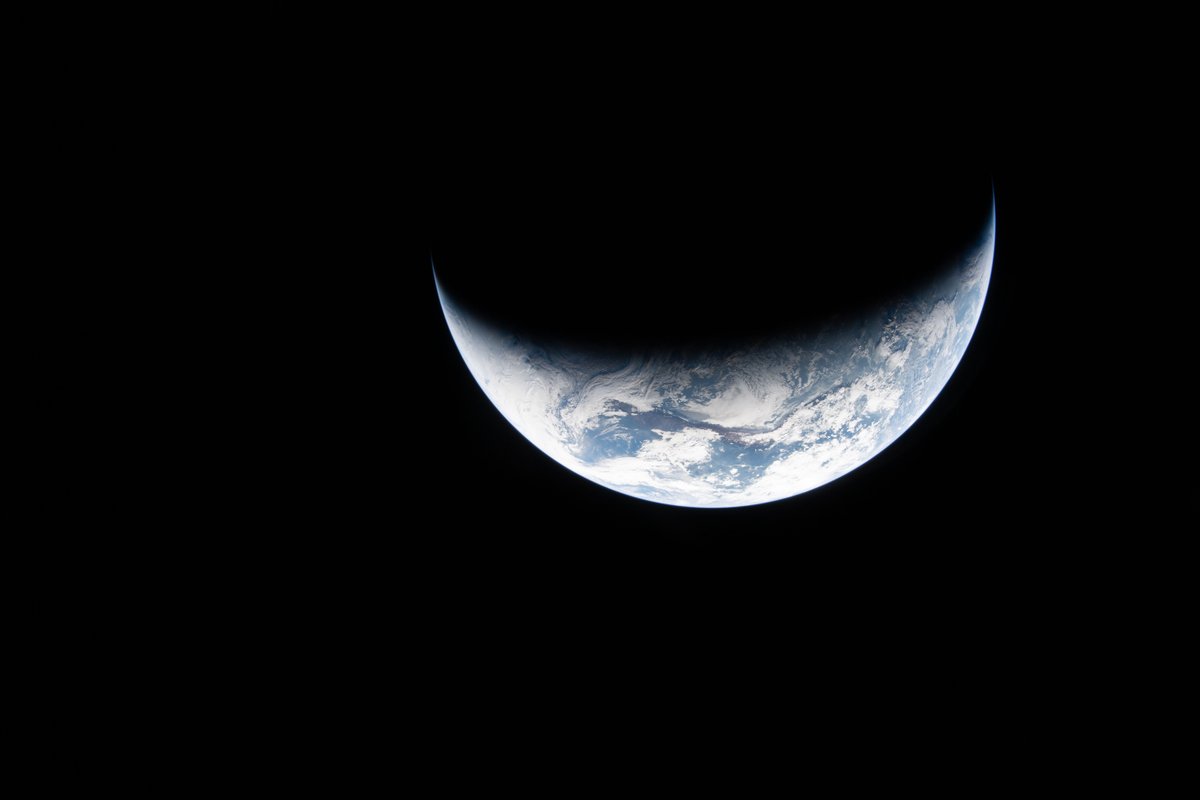
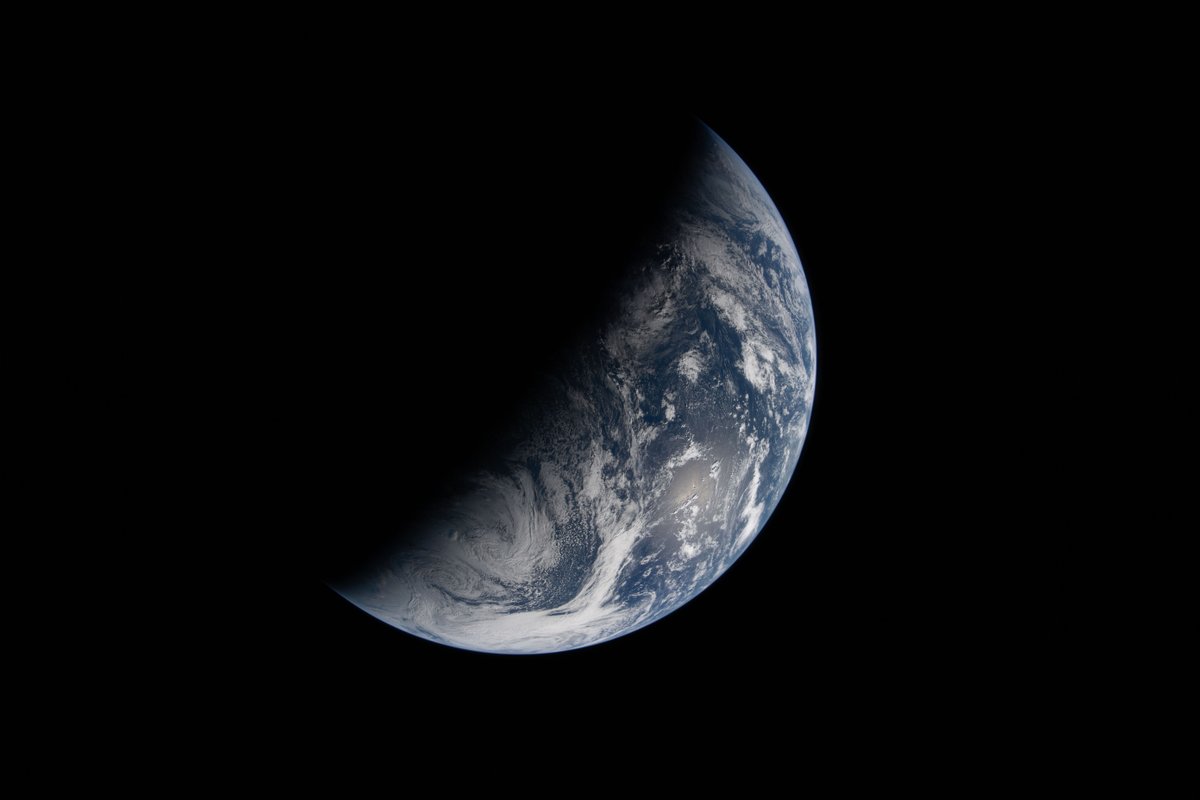
Like watching sunset at the beach from the most foreign seat in the cosmos, I couldn’t resist a cell phone video of Earthset. You can hear the shutter on the Nikon as @Astro_Christina is hammering away on 3-shot brackets and capturing those exceptional Earthset photos through the 400mm lens. @AstroVicGlover was in window 3 watching with @Astro_Jeremy next to him.
I could barely see the Moon through the docking hatch window but the iPhone was the perfect size to catch the view…this is uncropped, uncut with 8x zoom which is quite comparable to the view of the human eye. Enjoy.
Congratulations to Artemis II on a successful mission! You captured the wonders of space and our planet beautifully, taking iPhone photography to new heights, and we’re grateful you shared it with the world. Your work continues to inspire us all to think different. Welcome home!
"Welcome to my old neighborhood." Our @NASAArtemis II astronauts woke up on the sixth day of their mission to a special message recorded in 2025 by astronaut Jim Lovell, the pilot of Apollo 8.
STARLINK SATELLITE EXPANSION IS ONE OF THE LARGEST AND FASTEST INFRASTRUCTURE BUILDS IN HUMAN HISTORY
SpaceX has now launched over 11,400 Starlink satellites, with nearly 10,000 currently in orbit and active.
The constellation is growing so fast that Starlink already serves more than 9 million users across 150+ countries and territories — and the real explosion is still ahead.
Here’s why this scale is a massive deal:
• True global coverage is almost complete The latest V2 satellites (larger, more powerful, with laser links) are filling the final gaps. Polar regions, deep oceans, remote deserts, and mountain ranges that never had reliable internet are now coming online fast.
• Direct-to-Cell is coming soon Regular smartphones will soon connect directly to Starlink satellites — no dish needed. Emergency calls, texts, and basic data will work literally anywhere on Earth.
• Speeds & reliability keep improving Average speeds are already 100–300+ Mbps with low latency. As more satellites join, the network gets faster, more resilient, and capable of handling tens of millions of users.
• Real-world impact is already enormous
• Disaster zones restored within hours
• Rural schools and hospitals in Africa, South America, and Asia now have high-speed internet for the first time
• Commercial flights, ships, mining operations, and remote communities run on Starlink
• Conflict zones stayed connected when ground networks were destroyed
• It funds the multiplanetary future Starlink revenue is the main cash engine paying for Starship development. Every new satellite launched is helping build the vehicle that will take humanity to Mars.
This isn’t just “satellite internet.”
This is the largest, fastest-deployed global communications network ever created — turning “no signal” into a sentence from the past for billions of people.
The expansion is relentless, and the best is still coming.
Launching every 10 months.
Two lunar landings in 2028.
This is what it looks like when NASA moves with urgency and purpose. We’re building the cadence needed to return to the Moon and stay there.
President Trump gave the world the Artemis Program, and NASA and our partners have the plan to deliver. We will standardize architecture where possible, add missions and accelerate flight rate, execute in an evolutionary way, and safely return American astronauts to the Moon, this time to stay.
This is the NASA that once changed the world. This is the NASA that will do it again.
What better celebration of America’s 250th birthday than launching a spacecraft to take the @NASAArtemis II crew farther into space than any human has gone before!
Rockets of this power are marvels of American engineering and informed by the lessons learned throughout our nation’s rich history of leadership in space.
@250Freedom_ 🇺🇸🚀🌕
Keep an eye on the night sky in October—you might catch a falling star!
The Orionid meteor shower reaches its peak on the night of Oct. 21-22, and the Draconids will also be visible earlier in the month. Check out what else to watch out for: