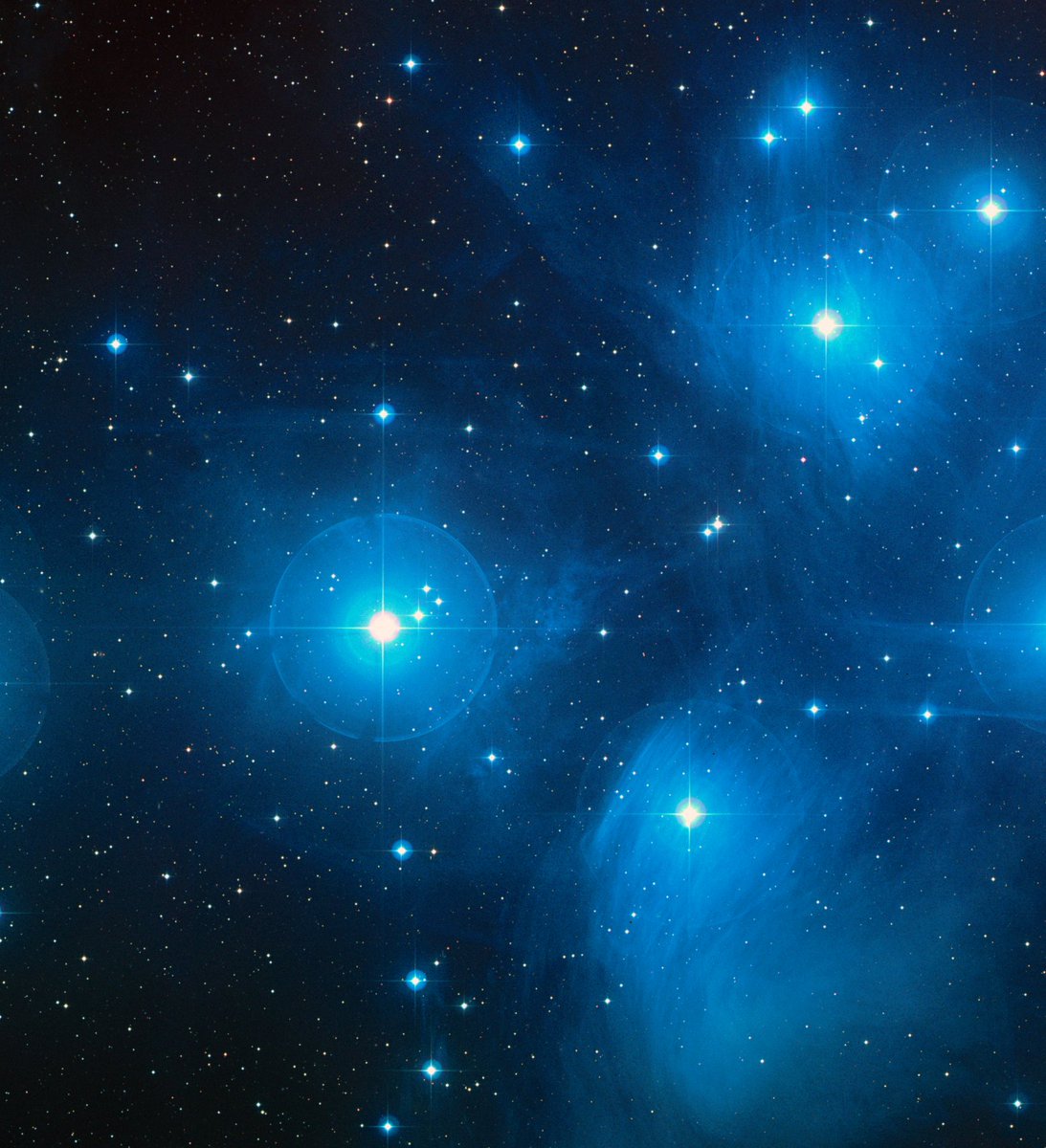
It's something of a mystery why so many cultures have myths of the Seven Sisters, the Pleiades star cluster, when most people can only see six stars. But tens of thousands of years ago, seven stars were in fact visible. A beautiful, but highly speculative, idea: maybe the origin of these myths is truly prehistoric.
https://t.co/n5iNDjD1X7
Four hundred fireflies, each blinking at its own slightly different pace, start as random sparkle.
Each one nudges its rhythm toward the flashes it sees. Below a critical coupling nothing happens; above it a crowd suddenly locks, and the whole field blinks as one. The switch is a phase transition, like water freezing.
The model was written down by Yoshiki Kuramoto in 1975 for chemical oscillators. Real fireflies do it too: along some Southeast Asian rivers, thousands of males flash in unison, and early reports of it were doubted for years.
The same maths describes pacemaker cells in the heart and the moment a concert hall's applause turns into clapping in time. In theory the switch sits at K = 1.0 (grey curve), and the crowd needs a little time to follow it.
I'm now building an "improvements" feature into all of my personal vibecoded applications: a freeform text input that's hooked up to an agent that yolo implements whatever is submitted.
It's an interesting experience -- the activation energy barrier to sanding any rough edge or implementing any new feature becomes extremely low. Someone else who uses one of the applications I created has already implemented 150 improvements over the course of a few days. This pattern feels like a new kind of tool -- liquid software? -- and every application that doesn't have this feature now has a slightly rigid and anachronistic flavor. Why can't I just tell it how I want it to be different?
Now, it's not obvious to me how this pattern can or should scale. Does it become unmaintainable after a while? (Maybe model intelligence improvement outstrips my feature appetite such that it's fine?) How does collaborative software work in this model? Can software designed this way be secure and reliable?
Whatever the larger questions about broader deployment, it definitely works great in a personal context. It reminds me a little of the visions of Lisp/Lisp machines, Smalltalk, and HyperCard -- systems that the user can take control of and modify. Those visions never quite worked, though: the vast majority of software today is not end-user modifiable in any useful way. So, while this "liquid" affordance is a very small touch, the way it changes one's relation to the software feels a bit transgressive and empowering in a Lickliderian and Engelbartian way.
Technical moats are mostly over at this point. If you’re building something that is meant to be durable, the only moats now are:
• Proprietary data
• Network effects
• A physical component
Apparently they tried the model on about 8,000 problems. So, right now it “merely” solves ~5% of the longstanding open mathematical problems that it’s asked about, the problems that communities have spent years on, after a single 3-hour attempt on them.
https://t.co/DOB1pldmRf
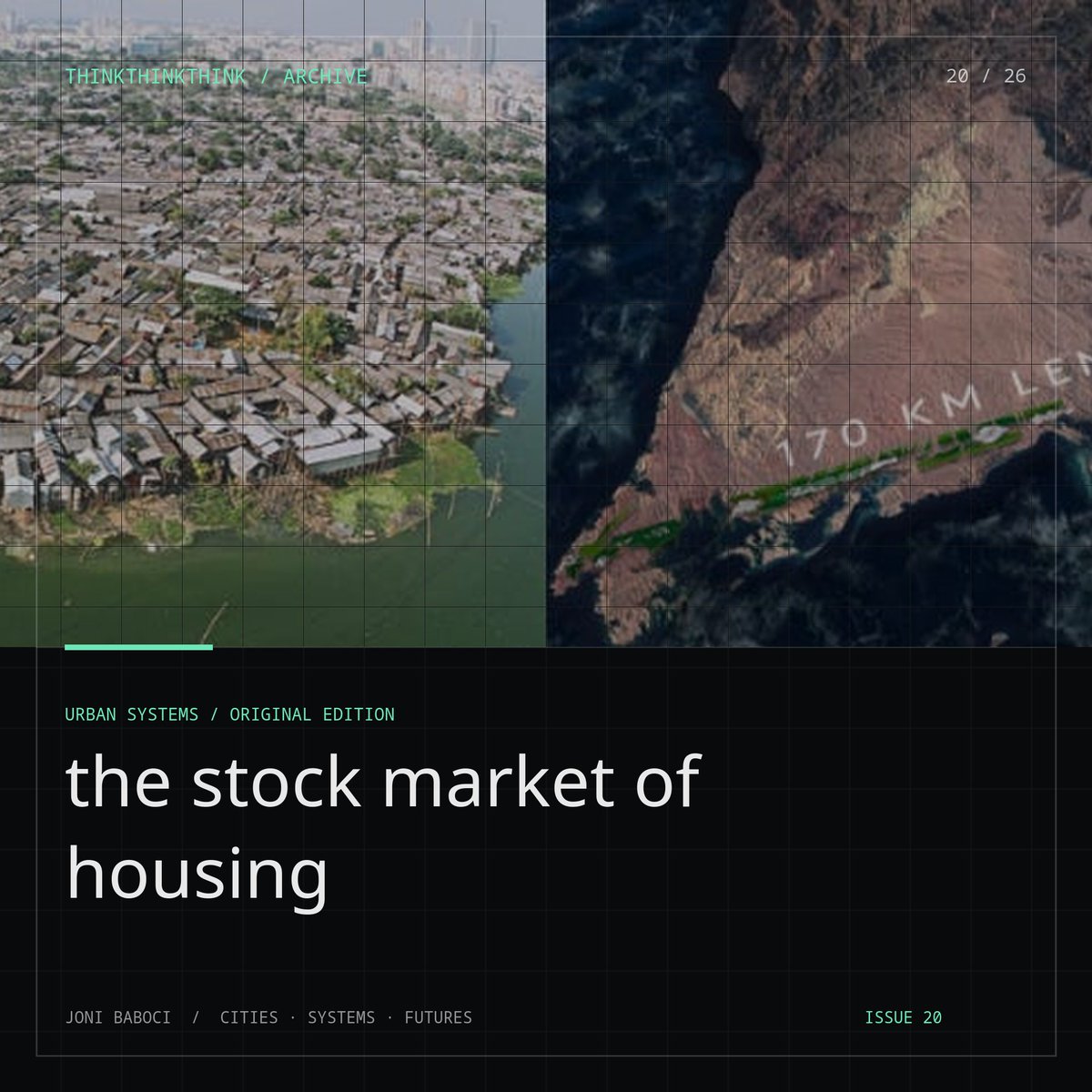
Housing has become less like shelter and more like the stock market. The price of a home is increasingly driven by the expected value of land, scarcity and future appreciation - not only by what it costs to build.
We need ownership and finance models that treat housing as long-term social infrastructure: cooperatives, mutuals, community land structures and other ways to share value without making permanent scarcity the objective.
Good cities accumulate. They create history, grit. Durability is not the ability to remain unchanged; it is the ability to keep changing without losing what matters.
@pashadelics Try using @nimbalyst as your work environment. Folders as primitives where you throw everything about a project / task and start making sense of it with any LLM you work with. Working like a charm for me.
I want a futurism that feels like this. Like we've mastered nature and mastered the human-scale longed for ideals.
Not like flying plastic or plants on top of glass-plastic