I wrote something a while ago, and I realized that now, more than ever, it feels relevant. Just parking it here in case you’re bored and have nothing else to read, lol. #mentalhealth#SuicidePrevention
https://t.co/EKmra3egD4
Ang gagaling ng mga staff niyo @enjoyGLOBE ayaw ako bentahan ng sim card kasi walang panukli ng 1000 pesos. So kasalanan ko na wala akong smaller bill?! Sa @LiveSmart na nga lang ako bibili ng sim. Hmpf.
Why, yes, I am polite to @ChatGPTapp because when AI takes over the world, I want to know I'm not the first to go 😅😂 (also yes, I shamelessly asked ChatGPT for help to make my email signature less wordy lol)
@fllyPAL I dont believe it is necessary for me to give you my mobile number. I will however follow you and send you a DM. Also, why do you announce “additional servicing” when clearly, your crew and pilots have just walked out of the aircraft?!
What the hell @flyPAL we’ve been stuck in a hot, stuffy aircraft where there is no air whatsoever but supposedly our safety is your concern? HOW? Why weren’t we just deplaned instead of stuck in the plane?!?
@flyPAL We are on PR595 to Hanoi. Really awful how you guys are handling this situation. If the aircraft is clearly malfunctioning, why keep the passengers on it?!
@paulcatiang@flyPAL So awful! It took them 1.5 hours to decide that hey maybe this plane doesn’t actually work. Meanwhile my 11-month old is sweating and is turning red coz its really stuffy in the plane. Boo.
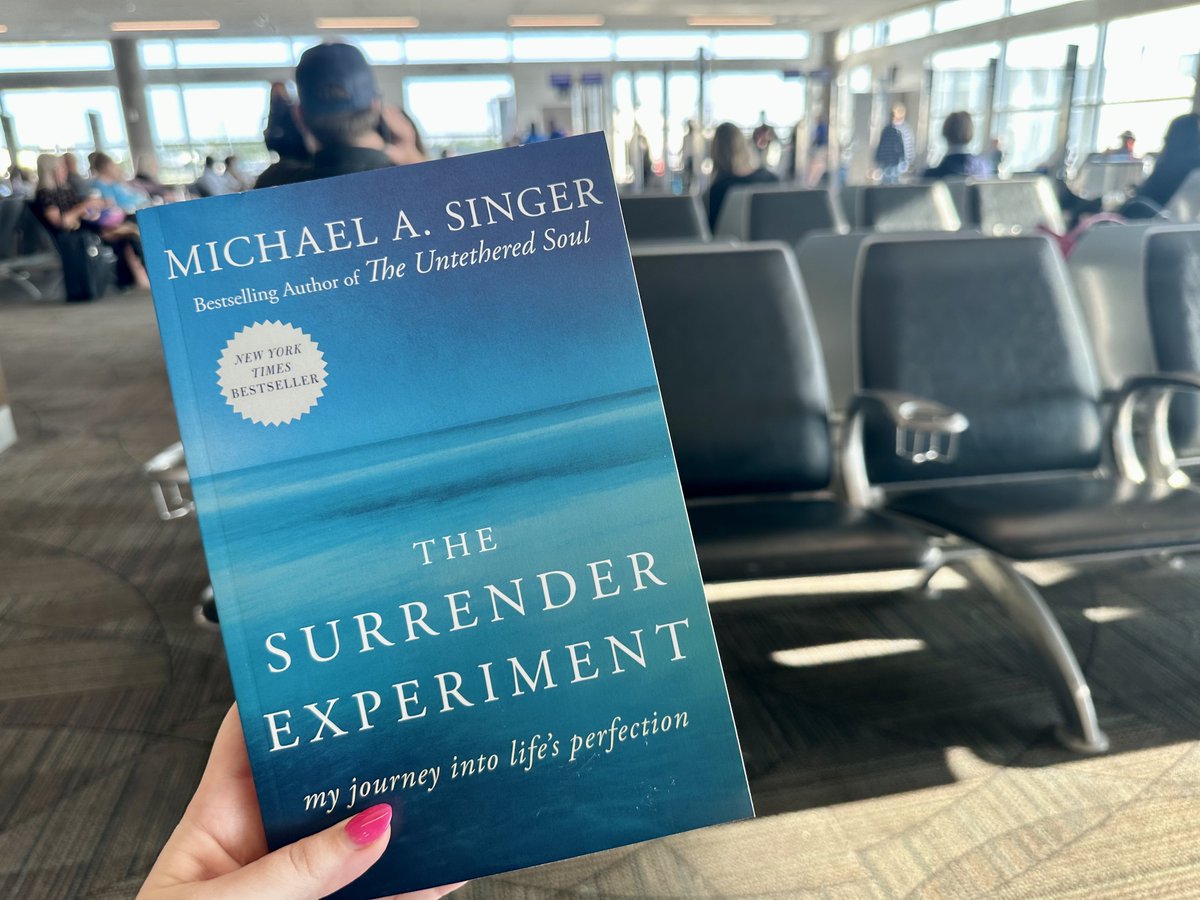
I’m at the airport reading, and a man in his ~60s walks by me and says: “Great book. Wish I had it earlier.”
So I ask, “Really? Why?”
That sparked a convo about how he went from Harvard MBA to investment banking in NYC… to an existential crisis at 35 where he lost himself, gave it all up, found himself, met his wife, and built multiple business.
What stuck with me the most is how he talked about his wife. He just LIT up.
“If you think I’ve had an interesting life, you should meet my wife! She’d blow you away. She blows everyone away. She’s the most impressive woman I’ve ever met. She’s my linchpin.”
Me: “What advice would you give for choosing a life partner?”
Him: “If you have a big vision and want a big life, you need someone who knocks your socks off. It’s gotta feel like winning the lottery. This person is your #1 advice giver. Your lifelong backup. Your companion for thousands of meals, events, problems. You need someone better than you in a lot of ways. Whose mind and heart amaze you. I wake up every day like, ‘How on earth did I land her?’ She says the same thing. That’s when you know.”
Then he showed me like 300 pictures of them and their kids on vacation around the world.
Couple goals. 🥹
The Silent Pandemics
1. We don't eat real food.
2. We don't exercise.
3. We sit at desks and then come home to sit on couches.
4. We numb our emotions with food, drugs & alcohol, which makes the emotions come back even worse.
5. We decided that the sun is dangerous for our health.
6. We don't allow ourselves to be bored anymore.
7. We created a pill for every ill.
8. We've decided that being entertained is more important than living.
9. We have a constant connection to our devices but no connection to ourselves & our communities.
10. We eat too many calories but not enough nutrition.
11. Testosterone levels are declining and some people think that’s a good thing.
12. Some scientists promote sugary cereals to be more nutritious than eggs and beef.
13. We believe our feelings are facts.
14. We want to cancel others we disagree with and people who hang around others we disagree with.
15. Pharma companies are second to tech companies in marketing spend to consumers.
16. We trade our sleep for more social media time, which messes up our sleep even more.
17. We are mentally unhealthy because we're physically unhealthy.
18. There's a health food section in the grocery store when it should be where the whole foods are.
19. We get exposed to the extremes on social media and think they are the reality we live in.
20. People watch mainstream news to keep us informed when they’re incentivized to keep us angry & scared.
21. We put focus too much on money & status and not enough on health, family & community.
I don't have all the answers but I believe that we can live better lives by doing the opposite of this list.
Take action. Be proactive.
Siddhartha by Hermann Hesse is recommended by many of my podcast guests.
There is one takeaway that Naval Ravikant (@naval) has reinforced with me several times on our long walks.
The protagonist, Siddhartha, a monk who looks like a beggar, has come to the city and falls in love with a famous courtesan. He attempts to court her, and she asks, “What do you have?” A well-known merchant similarly asks, “What can you give that you have learned?” His answer is the same in both cases, so I’ve included the latter story below.
Merchant: “. . . If you are without possessions, how can you give?”
Siddhartha: “Everyone gives what he has. The soldier gives strength, the merchant goods, the teacher instruction, the farmer rice, the fisherman fish.”
Merchant: “Very well, and what can you give? What have you learned that you can give?”
Siddhartha: “I can think, I can wait, I can fast.”
Merchant: “Is that all?”
Siddhartha: “I think that is all.”
Merchant: “And of what use are they? For example, fasting, what good is that?”
Siddhartha: “It is of great value, sir. If a man has nothing to eat, fasting is the most intelligent thing he can do. If, for instance, Siddhartha had not learned to fast, he would have had to seek some kind of work today, either with you, or elsewhere, for hunger would have driven him. But, as it is, Siddhartha can wait calmly. He is not impatient, he is not in need, he can ward off hunger for a long time and laugh at it. ”
***
I think of Siddhartha’s answers often and in the following terms:
“I can think” → Having good rules for decision-making, and having good questions you can ask yourself and others.
“I can wait” → Being able to plan long-term, play the long game, and not misallocate your resources.
“I can fast” → Being able to withstand difficulties and disaster. Training yourself to be uncommonly resilient and have a high pain tolerance.
You can see something 10,000 times on your phone, but never understand it until you see it in person for the first time.
That’s the lesson from the park bench scene in Good Will Hunting.
Matt Damon is the arrogant, book-smart intellectual who’s seen little but read everything. Robin Williams is the wise professor who rolls his eyes at Damon’s hubris. The stuff of life can only be fully absorbed through direct experience, he says.
This is one reason why school falls short. It conflates regurgitation for understanding.
Shakespeare’s plays have been reduced to bite-sized cramming on SparkNotes and exam questions the following day. Or, take entrepreneurship, where certain kinds of wisdom can only be gained in the trenches of a sales call or when you have to fire the executive you swore was going to save your company.
Travel, too.
Something about the Golden Gate Bridge can only be understood when you feel the Pacific Ocean wind and shiver under a blanket of fog. Something about the life of Moses can only be understood when you stand atop Mount Nebo (where he died) and look down at the Promised Land of Israel. Something about Italian food can only be understood when you slurp “siero” in a Parmesan cheese factory and meet the 4th-generation shop owner.
Pixels on a screen aren’t enough.
Get out and Do the Thing because certain kinds of knowledge can only be gained through tactile, first-hand experience.
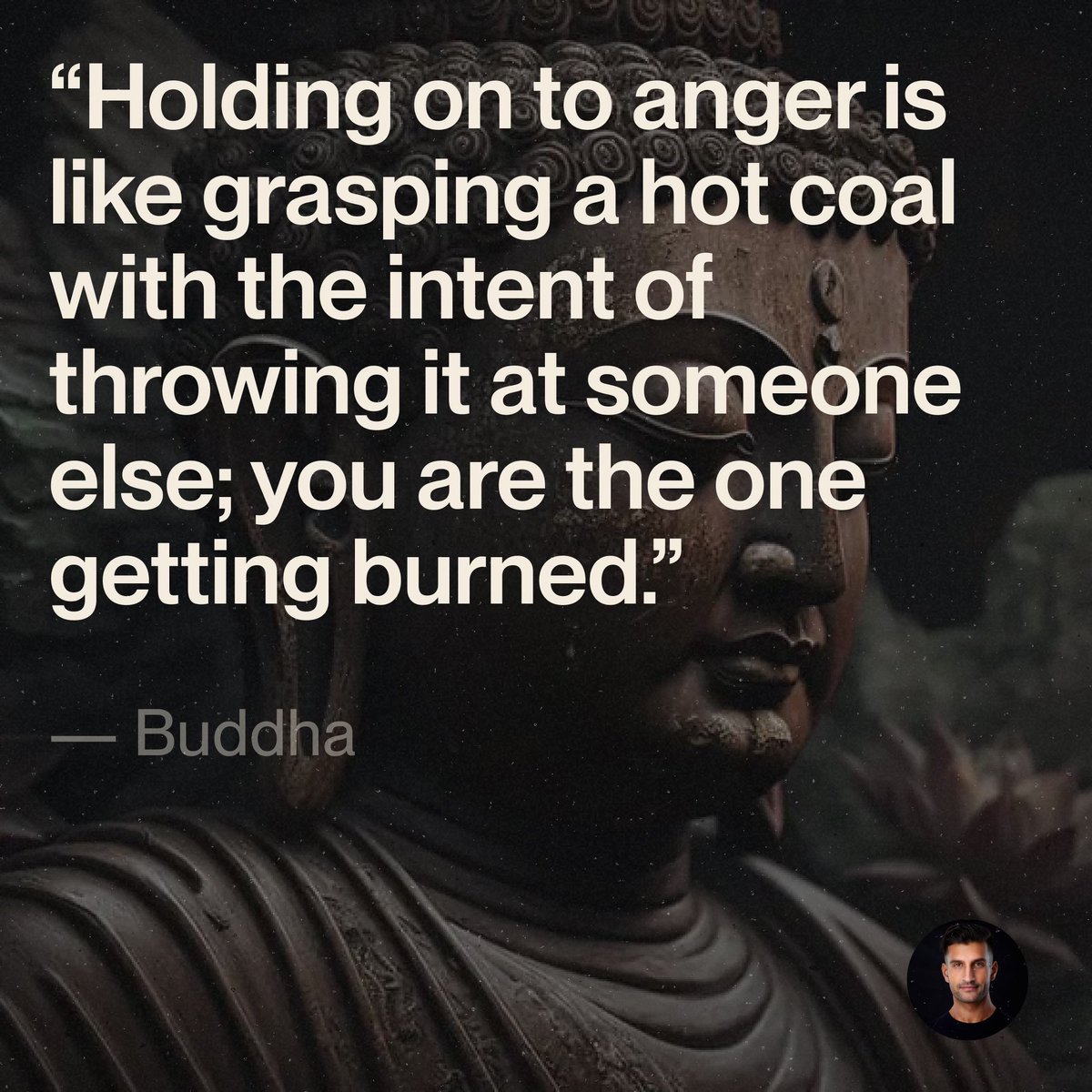
When I was a kid, my grandfather told me the story of the Buddha and the Angry Man.
It offers two powerful lessons that we all need to hear:
One day, the Buddha was walking through a village when a young man approached and began yelling at him.
"You are a fake! How can you claim to have wisdom to teach others? You know nothing!"
The Buddha paused and smiled at the young man, which further angered him.
"What do you have to say to me? I attack you and you just smile?"
The Buddha replied:
"If you buy a gift for someone and that person doesn't accept it, to whom does the gift belong?"
The young man, agitated, replied that the gift would still belong to him, because he was the one who had bought it.
The Buddha nodded:
"The same applies to your anger. If you come to me with anger, but I choose not to accept it, the anger still belongs to you. You are the only one who is moved by it."
I love this story.
It carries incredible wisdom for navigating the world in the modern age, where everyone seeks to draw you into their latest, greatest outrage.
Two lessons to internalize:
(1) Expressing anger often creates more damage internally than it creates impact externally.
(2) If someone comes to you with anger, always remember that you can CHOOSE not to accept it.
Worth thinking about as you navigate life in the days, weeks, and months ahead...
If you enjoyed this and learned something new, follow me @SahilBloom for more like it in the future.