We thank @tedcruz, @RepMariaSalazar, and @MELANIATRUMP for making the Take It Down Act a reality. This is an essential safeguard against digital bullying and exploitation.
I still don’t know what to make of Brad. He starts by telling me he’s consulted “very experienced lawyers” and within minutes is repeatedly begging me to ask an LLM. Appeals to authority are always extremely strange when debating legislative text. But this is bonkers.
This won’t stop at AI companies, just like the proposed California billionaire tax isn’t really a one time thing. It’s the beginning.
The goal is clear, seizing the means of production and punishing entrepreneurship.
My reflection on Pope Leo's AI Encyclical for @WNGdotorg
The immediate challenge for Christians is whether we will actively participate in the AI discourse and share gospel wisdom. Like Nehemiah’s builders, we each have a section of the wall for which we are responsible.
This survey backs up what I have believed for a while. People who find their hope in the eternal are the most confident in AI.
Christians do not face the future as passive spectators of collapse, but as people rooted in a deeper story: one of redemption, hope, and calling.
https://t.co/Fltyalkb7c
Ahead of Pope Leo’s encyclical on Monday, I found this @TGC from Michael Graham prescient and hopeful.
@msgwrites details how AI can be an incredible tool for attaining and sharing religious knowledge.
Therefore it is essential for theologians of different faiths and traditions to work with AI platforms to ensure every religious tradition is able to accurately and thoroughly share its core tenets.
One year ago @_KarenHao first published the water lie about data centers.
Now her new project will highlight how misinformation (just like the myth she spread) is infecting the public discourse.
Great thimblerig.
We asked @NathanLeamerDC whether AI will destroy jobs or create new ones.
His answer: the displacement risk is real, but AI is already helping rebuild America’s industrial base.
“I’m seeing re-industrialization in communities around the country.”
“The amount of small businesses that are using AI to create AI-infused factories and new manufacturing is exciting.”
“AI is the revenge of the heartland against the previous globalization.”
“That excites me more than anything.”
“I know there’s disruptions. I know there’s transformations.”
“But I’m gonna take my optimism forward.”
Kids graduating college today had their education shutdown by COVID and campuses taken over by antisemitic rioters.
We have a system whose goal is mediocrity.
AI is not to blame but can be the catalyst for the next generation to solve the problems perpetrated by boomers.
Leading the Future’s goal is to support a well-balanced, cross-partisan conversation about artificial intelligence, which today starts with passing a strong and thoughtful national regulatory framework. Our north star is to support a political environment where policymakers at the federal and state levels can tune out the extremes and engage thoughtfully on critical policy issues surrounding innovation in and adoption of AI.
While we are funded by a number of participants in the AI ecosystem, we have our own views and do not operate on their behalf, and we will support policies and candidates that advance innovation, American leadership, and safety. We want national AI regulation that reflects democratic values, protects the American public, empowers American innovators, and ensures that no single company determines the rules of the future for everyone else.
Included in that framework, we believe there should be:
- Safety Protections for Children: Enact clear, thoughtful federal standards that ensure companies design systems with children’s safety in mind, explicitly protecting minors from exploitation, manipulation, and harmful online content.
- Baseline Safety Standards for Frontier Models: Develop consensus national safety rules in partnership with industry leaders that apply strictly to the largest, most advanced systems, ensuring serious oversight without creating compliance barriers that crush the startups and small businesses driving American innovation.
- A National Commitment to AI Literacy: Establish partnerships with schools, community colleges, and workforce programs so that, within the next decade, the vast majority of Americans have a basic understanding of how AI works, how they can use AI to create opportunities, and how they can solve tomorrow’s challenges.
- National Training and Certification Programs: Create certification programs to provide practical training for workers across health care, manufacturing, education, and other industries, ensuring historically disadvantaged communities are not left behind as technology advances.
- A National AI Computing Hub: Build the infrastructure needed to power the AI economy by exploring the development of a large-scale computing hub on federal land, structured so that companies pay the full cost of energy and infrastructure to protect local households and small businesses from higher utility rates.
We believe in an approach of optimistic realism: the understanding that AI can massively improve the quality of life (already happening today for the many people who credit health information from AI with saving their lives or the life of a loved one), but also realizing that its potential will require appropriate regulation to ensure the American public is protected from harm. Furthermore, AI will be critical for American national competitiveness and security, and we need a national strategy to navigate the transition to the emerging AI-integrated economy in a way that is good for all people.
We are already publicly supporting dozens of current elected officials and candidates at the federal and state levels and from both parties, with a broad, bipartisan coalition in Congress coming together and growing rapidly to take on these issues thoughtfully and substantively. For example, in the Texas Republican primaries, we backed candidates Chris Gober, Jessica Steinmann, Jace Yarbrough, and Tom Sell, who support federal regulation of AI.
We are also supporting Congressman Josh Gottheimer (D-NJ), a co-chair of the House Commission on Artificial Intelligence and the Innovation Economy. Even though he was defeated in his primary, we were proud to support former Rep. Jesse Jackson Jr., who championed the issue of using AI to improve mental health care in America, along with former Rep. Melissa Bean in Illinois and Rep. Suhas Subramanyam (D-VA). These are just a few of the growing number of members of Congress, state-level officials, and candidates we support as part of our efforts to build this broad coalition. Together, these candidates from both parties represent what will be a strong new generation of leaders who could play an important role on these issues in Congress.
We also believe in thoughtful state regulation. To be abundantly clear, safety and security are critical, and any AI legislation must meaningfully address these for us to support it. For example, we support the final version of New York’s Responsible AI Safety and Education (RAISE) Act, which Governor Hochul signed into law after lawmakers negotiated key amendments. The final bill supports a national framework by including harmonization provisions and aligning with California’s SB 53, which we also support. It also protects startups by focusing on large frontier labs and setting standards for transparency and risk management.
We believe in combining innovation in AI together with guardrails that can be executed well. We are opposing Alex Bores, who authored the pre-amendment RAISE Act, which was very different from the version that passed. This earlier version of the RAISE Act did not include a clear mechanism for harmonization, meaning companies could have been forced to navigate conflicting state and federal requirements even if they were complying with a national standard. It also risked sweeping in many smaller AI startups by applying the same standards to three-person companies as to the largest model providers. Finally, the amendments kept the bill focused on preventing critical harms and replaced a more open-ended deployment standard with clearer, more administrable requirements. That clarity helps ensure the law can be applied consistently and effectively. The final version gets the combination of innovation and safety right by focusing on the actors most capable of managing frontier risks while setting clearer, more practical rules for transparency and risk management, thereby protecting the ability of startups to innovate. (See also: https://www.lawfaremedia. org/article/regulatory-misalignment-and-the-raise-act and https://fpf. org/blog/the-raise-act-vs-sb-53-a-tale-of-two-frontier-ai-laws/)
Since we got started last year, the policy conversation in Washington, D.C., has shifted such that banning data centers is now in the Overton window. We believe that such extreme actions would be bad for America and would result in ceding the potential benefits of AI (such as curing diseases and empowering people to build new businesses) while failing to mitigate the risks, leaving other countries to take over leadership in AI, which won’t necessarily be rooted in democratic values.
Every technology reflects the values of the society that created it, and AI is the technology with the most potential to define the future. If we fail to act, others who do not share our values will write those rules, and we will lose the ability to influence the areas Americans are most concerned about.
Millions of Americans are already discovering that AI can be a practical and helpful part of daily life, whether they are asking health questions, learning new skills, tutoring their children, starting a business, or solving problems at work. America has the world’s best innovators and the most entrepreneurial startups, and is leading in artificial intelligence today (worth contrasting with robotics, where America is not leading). Artificial intelligence will soon become part of everyday life for nearly everyone. The question is whether the United States will guide that transformation with purpose.
That is exactly what Leading the Future wants to help facilitate, and we call on Congress to pass a strong national regulatory framework as soon as possible.
We asked @NathanLeamerDC how he thinks about AI job displacement.
His take: before talking about jobs AI may replace, talk about the jobs AI is already creating.
“Before I get to the displacement, I wanna highlight that there are thousands, hundreds of thousands of workers out there.”
“Tradesmen, skilled laborers, who are building this infrastructure.”
“They’ve never been busier in their life than they have been building data centers.”
“One electrician said, ‘I have human dignity now because of this work.’”
“These are the real men and women doing great work.”
Josh Price is an electrician from Henrico. He details how AI has been a huge win for him and his colleagues who are building AI infrastructure. Before the AI building boom it was hard to find steady work. Now people don't have to leave Virginia for good jobs.
Josh told @CBS6 that AI has "Brought dignity to so many people, and the dignity of hard work, of honest work."
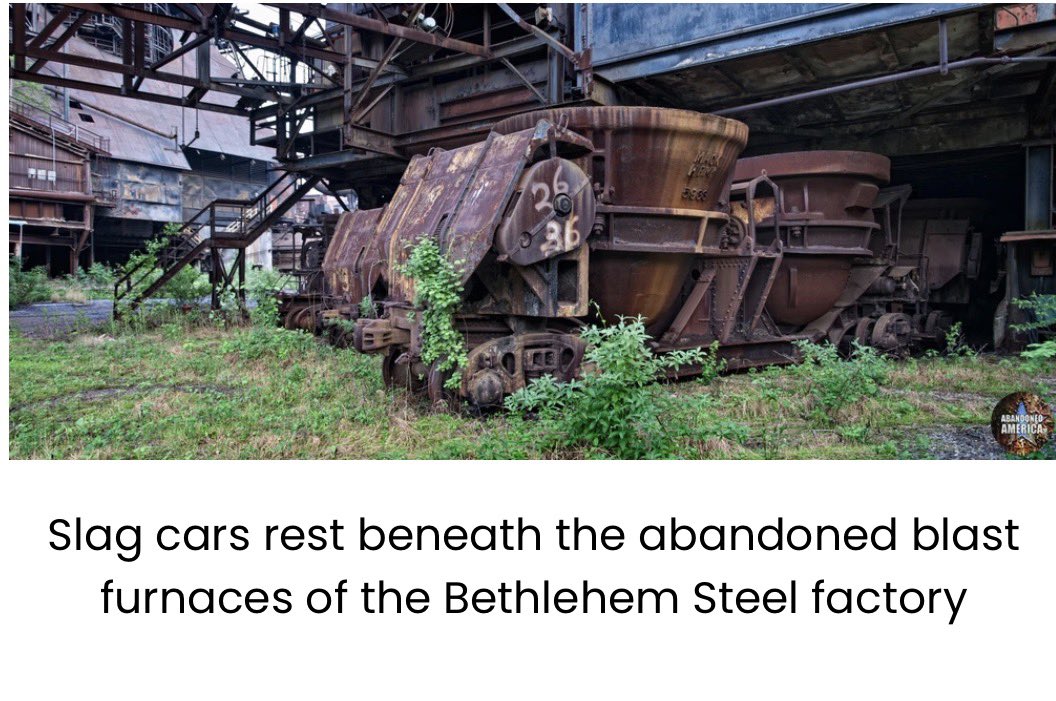
I grew up in Pennsylvania near these abandoned factories and furnaces.
It is time to transform these decaying relics into data centers that will revitalize economic opportunity in communities that were once industrial hotbeds.
It is time to build.
This clip demonstrates in clear view that Dario has great disdain for religion.
He doesn't understand the beliefs, values, or deeply principles held by individuals and communities.