Collaborations are moving neuroscience forward. Scientists from 20 institutions (including ours!) created the first brain-wide map of individual neurons’ activity in mice for the @IntlBrainLab. Video from @SWC_Neuro https://t.co/bKaaZp3myK
How cool is this? Michal Lipinski from @broadinstitute presenting stacked #Illumina spatial slides of the mouse brain with subcellular transcriptome resolution #AGBTGM
A new technology developed at MIT enables scientists to label proteins across millions of individual cells in fully intact 3D tissues with unprecedented speed, uniformity, and versatility. https://t.co/oDsdgpYNmN #neuroscience@MITChemE@ScienceMIT@MIT_IMES@mitbrainandcog
Chuai, M., Serrano Nájera, G., Serra, M., Mahadevan, L., & Weijer, C. J. (2023). Reconstruction of distinct vertebrate gastrulation modes via modulation of key cell behaviors in the chick embryo. Science Advances, 9(1), eabn5429. https://t.co/dXKEr8DboJ #EpithelialMechanics
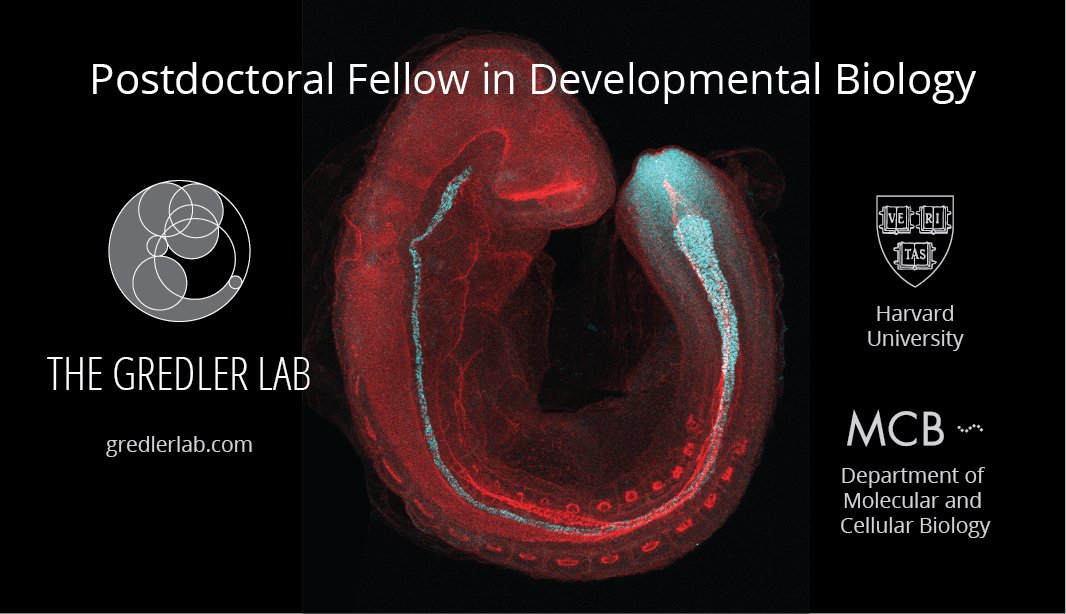
The Gredler Lab @Harvard@MCB_Harvard is hiring Postdoctoral Fellows! If you are interested in using high-resolution imaging of live embryos to ask how cells build tissues, please apply at the link below. #DevBio#sciencenews https://t.co/KlRwdAPN2y
Our new study shows that SARS-CoV-2 spike protein accumulates & persists in the body for years after infection, especially in the skull-meninges-brain axis, potentially driving long COVID. mRNA vaccines help but cannot stop it🔬🧠🦠🧵👇@cellhostmicrobe https://t.co/IEGx7HIrXf
The #SARSCoV2 spike protein can persist in the brain—skull bone marrow and meninges—to induce neurologic damage https://t.co/FtsftML1m4 just published @cellhostmicrobe@erturklab open-access
In a new review, Group Leaders @computingnature & @marius10p examine methods for analyzing large-scale neuronal recordings, how these tools have enabled progress in answering longstanding questions in neuroscience, and what advances & challenges lie ahead. https://t.co/ExI0dfTzRy
Thrilled to share one of our biggest discoveries: “Inceptor binds to and directs insulin towards lysosomal degradation in beta cells”.
https://t.co/GKx6eslJz0
A tremendous collaborative effort led by @JohannaSiehler, @BilekovaSara and other members of the @LickertHeiko lab.
Feeling festive! Happy to share our new bioRxiv pre-print - investigating the role of calcium in the early embryo (with a festive themed post)
https://t.co/2D0t8iNqsY
✨🥰 check out our article - and cover 🤩- about Decoding the Brain in @CellCellPress
https://t.co/HWBquErj0f
We review the mathematics, current approaches, and muse about the future…
#BCI#neuraldecoding#neuroAI
Thanks to my awesome co-authors Adriana Perez Rotondo, Edward Chang, @AToliasLab & @TrackingPlumes
The life of each one of us began when a sperm and an egg came together. But what actually happens at a molecular level?
Our latest work @PauliGroup @CellPress reveals a conserved fertilization complex that bridges sperm and egg in vertebrates! (1/8)
https://t.co/FT5oxJb1dx
Our latest out today @Nature!
We revisit a century-old theory and show that metabolic gradients work hand-in-hand with genetic&signalling instructions to shape the embryo. Glucose isn't just an energy source, it acts as a major conductor of the body plan🍬
https://t.co/mfx6Hk7nma
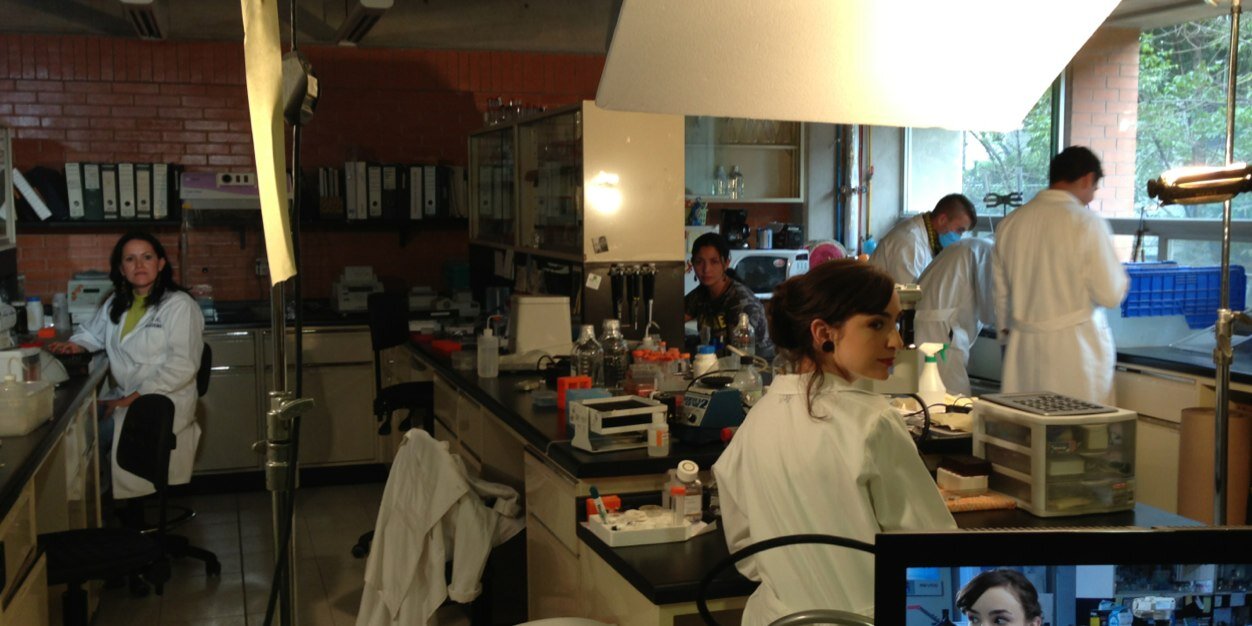
🧪¿Te has preguntado para qué sirve respirar y oxigenarnos? ¿Porqué morimos si no respiramos?
Resulta que respirar sirve para obtener la energía que necesitamos. Sigue el hilo 🧵👇🏻. #HilandoCiencia2024
10/ With adaptive optical lattice light sheet microscopy (AO-LLSM), we’ve opened a stunningly beautiful and humblingly complex world of 4D subcellular processes viewed with high definition in living transparent multicellular organisms such as zebrafish.
https://t.co/bB5q4sXuQI