@boardyai building VERSE, an ai-assisted social network that makes founder networking less repetitive with structured Q&A trees and simulated conversations. would love to get Boardy Pro
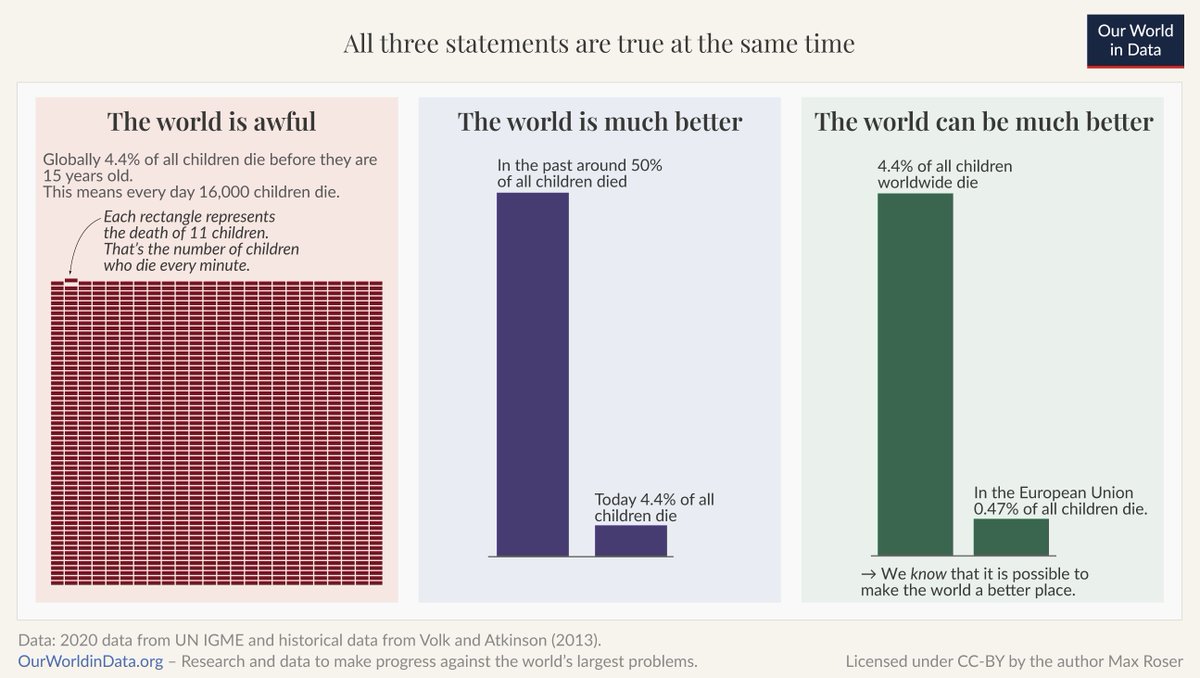
The world is awful. The world is much better. The world can be much better.
All three statements are true at the same time. Understanding this is key to solving big global problems.
At OWID, we believe data & research can help us understand both the problems we face & the progress that’s possible. 🧵
@DavidSacks If you're able to think for yourself instead of adopting a complete set of orthodox left- or (in your case) right-wing opinions, it's possible to see how dishonest both wokeness and Trump are.
https://t.co/ogMaJHrydF
Was chatting with a well-known founder yesterday about the "founder mode" discussion.
We were both wondering if people would misinterpret it, and undervalue the importance of hiring great leaders. Steve Jobs, the canonical example of "founder mode", was also gifted at identifying stellar leaders, without whom no great organization gets built. (And we're lucky to have many at Stripe.)
To the extent that there's an ostensible tension here (founder-mode micromanagement vs the classic view that one should focus on enablement), this founder pointed out that the lens of domain-specific judgment helps reconcile the dichotomy.
• You need to have excellent judgment in your problem area.
• You need to recognize the importance of good judgment as a phenomenon.
• You need to demand it in others.
He argued that many companies and founders fail at (2) and (3). That is, individuals can be effective "people managers", or have strong resumes, or whatever, but just not be deep enough in their domains to be right on the substantive merits of questions within their purview (and unable to recursively detect/insist on that correctness in others, or to elevate and prize it when they see people who do it well).
In this conception of things, leaders in "founder mode" naturally enable others when those others have great judgment in their areas.
Interestingly, this HBR piece describes how Apple differs from the mainstream by doing exactly this: "Its fundamental belief is that those with the most expertise and experience in a domain should have decision rights for that domain. [...] Apple is not a company where general managers oversee managers; rather, it is a company where experts lead experts." https://t.co/KRzcwP8F9r. It's clear from discussions with leaders at SpaceX and Tesla that @elonmusk's companies do this as well.
So, anyway, I wonder if some substantial part of "founder mode" hinges on "building an org around good judgment".
[Many obligatory disclaimers apply to this tweet: no single attribute is enough to make for a good leader, no single framework is fully explanatory, etc., but the margins of this tweet are too small to contain them.]
@nikitabier What would be truly powerful if there was an option to share the entire *sorted* list. Basically allowing one to build a *weighted* social graph.
But Apple would never do that as that would be worse for privacy.
@andrewchen A lot of our worries fall flat in the wake of future tech.
Isn't AGI going to solve all problems? Why bother about fertility, climate, etc.?
Oh wait, AGI can't solve the existential problem of AGI itself.
"Don't buy something based on the promise of future updates" - @MKBHD
Neuralink was kind enough to open their doors for me to tour their headquarters a few weeks back. It was an amazing experience and a day I'll never forget. This was at a company wide meeting at the end of the day. Thank you to everyone who made this possible. Hope y'all enjoy! I'm hoping to tell my story in full some day.
You and your ragtag team of engineers likely won’t be able to create something that is competitive with any big incumbent product.
However, you can build features, seed content, and brand it in a way that is so obnoxiously relevant for a particular group of people that their only possible reaction is “Well, fuck. You got me. I have to download this now.”
So, if you ever find yourself overwhelmed by all the things you need to build to make something worth switching, you should just try narrowing your audience.
Sure the initial market will be smaller, but you can use it as a wedge to make it incrementally more useful to a broader audience.
After all, Airbnb was initially a way to find air mattresses to sleep on while at design conferences. Now you use it to rent a castle in the South of France.
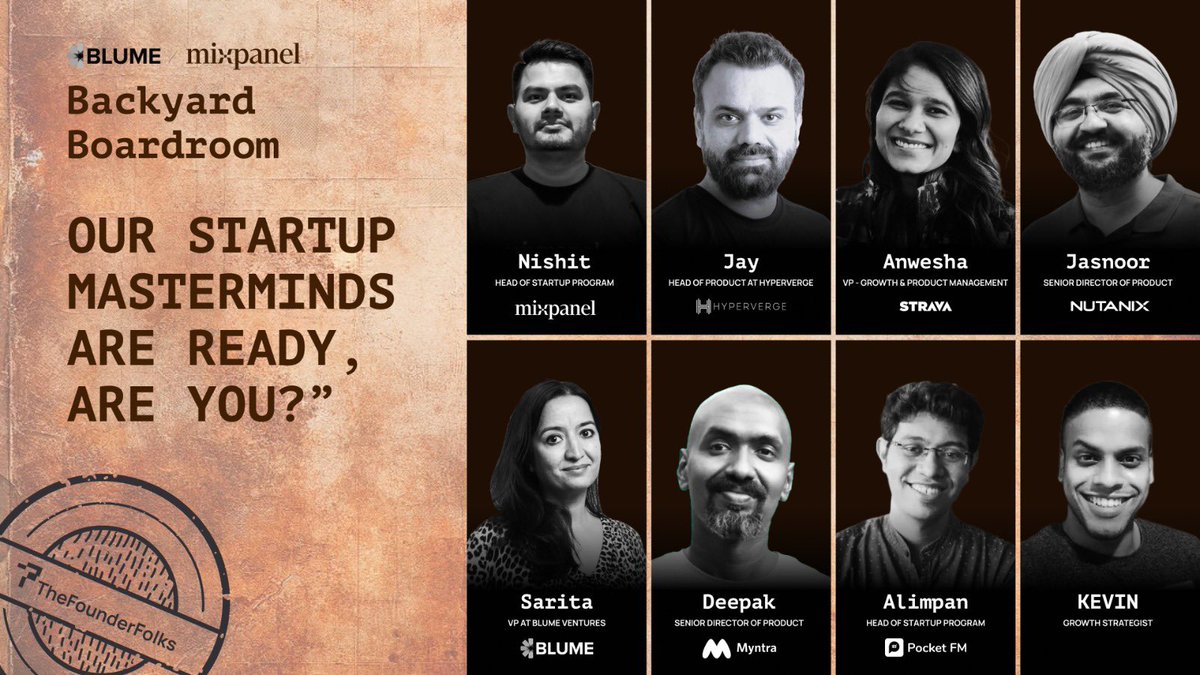
Over the last couple of months helping founders, most requests were around connecting to senior operators from @TheProductfolks ecosystem
Launching Backyard Boardrooms — where founders 🤝 the smartest operators
Huge shoutout to @BlumeVentures@mixpanel for making it happen
good sign for the resilience and adaptability of people in the face of technological change:
the turing test went whooshing by and everyone mostly went about their lives
Founders never get “too senior” to do the actual work
They’ll always do it, Day 1 or Day 1000
This is often why we struggle with VPs that won’t. And make mishires here.
We just assume they will.
@divyaanshanuj@matt__yao +1. Been a user for few months, working flawlessly for me, also helping me stay in touch with a lot of folks I wanted to be in touch with.
@matt__yao I believe frequency setting is key: and would make the difference between “thoughtful” and “spammy”.
Check out this product that helps you do this over WhatsApp with frequency opt-in: https://t.co/H8jUHQHlzi