Reaching energy & climate targets hinges on scaling up batteries fast enough. More than half of emissions reductions needed rely on their use
Energy storage, led by batteries, needs to increase sixfold by 2030 to help meet the goals set at COP28 👉 https://t.co/RgpbioPvBY
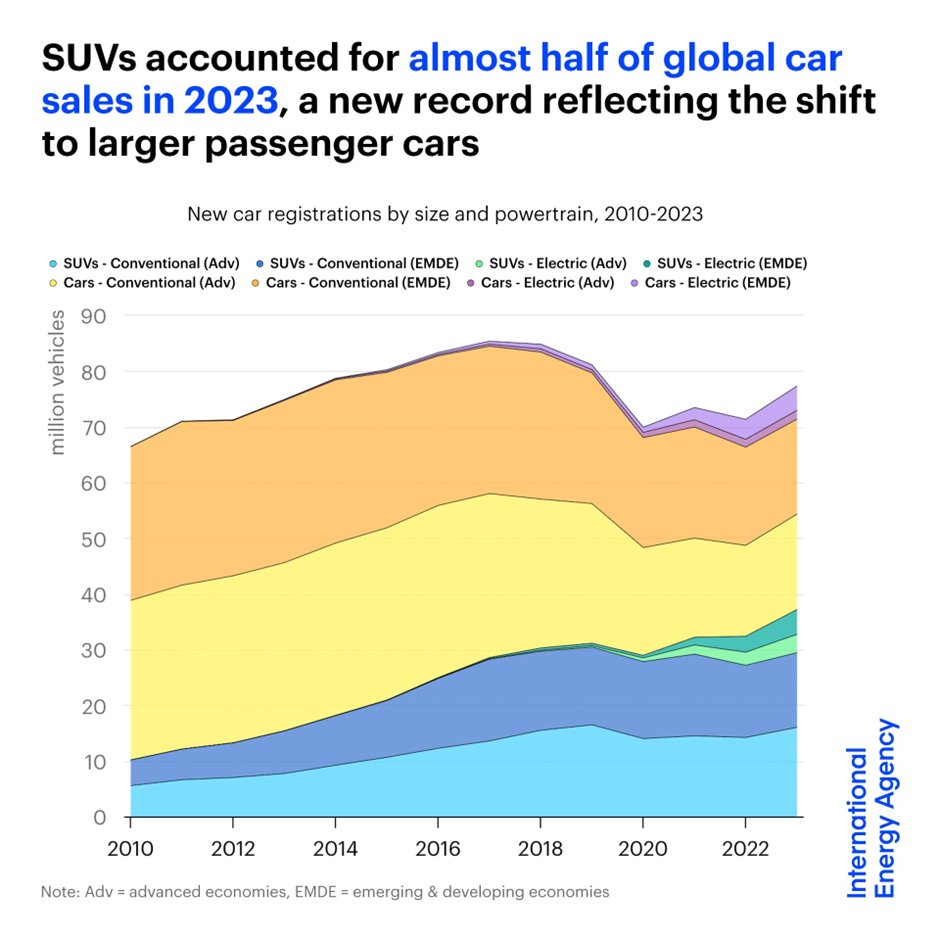
New @IEA analysis on #SUVs with @ApostolosPetro1: SUVs made up 48% of global car sales in 2023, with shares increasing in both advanced & emerging/developing economies. SUVs accounted for >20% of last year's annual growth in global energy-related CO2. https://t.co/C1tySPM3HB
Pledges on renewables, efficiency & methane at #COP28 are positive steps, but brand new @IEA analysis shows the pledges bridge only 30% of the gap in 2030 toward reaching climate goals
An “orderly & just decline of global fossil fuel use” is needed to keep 1.5C in reach
More ⬇️
I'll soon be taking part in #COP28 in Dubai, which comes at a crucial time for the world's energy & climate challenges
In this article, I highlight the 5 pillars that @IEA analysis shows would be needed for a successful outcome - and a cleaner & more secure energy future for all
Global average temperatures this July were the hottest for 120 000 years
2023 is >99% likely to be the hottest year ever recorded.
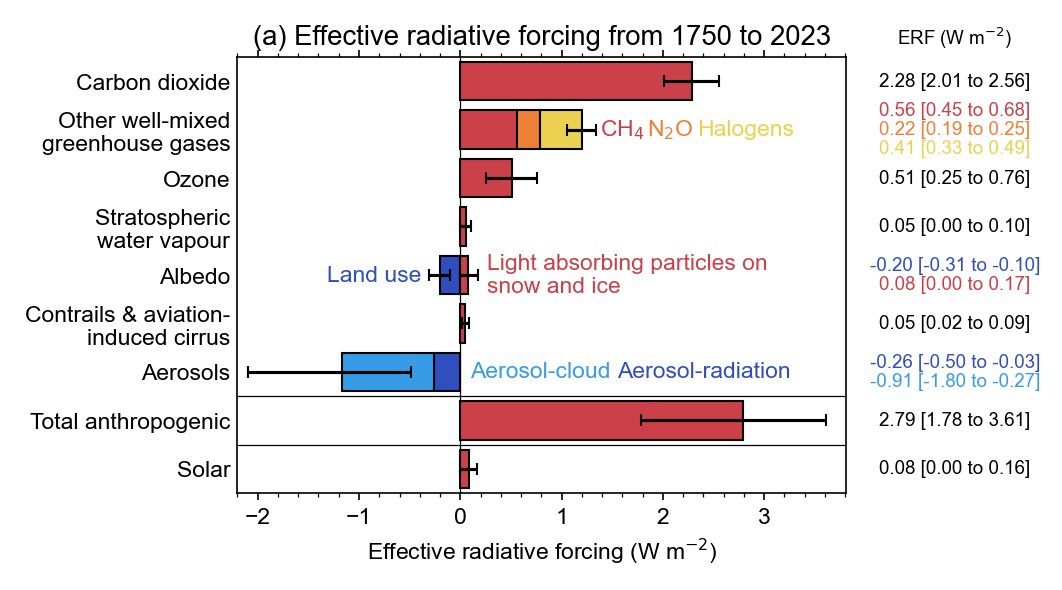
Today's stated policies put us on track for a doubling of the temperature rise by 2100, but #NZE by 2050 would limit further damage. @IEA
Without much stronger action, demand for fossil fuels is set to remain too high to keep the goal of limiting global warming to 1.5 °C in reach 🌡️
Under today’s policy settings, global emissions are on track to push up temperatures by around 2.4 °C 👉 https://t.co/dmvQW6JcxB
The energy world will look very different by 2030, even under today's policy settings
🚗 Nearly 10 times as many electric cars
☀️ Renewables = 80% of new power
⚡️ Electric heating outselling gas boilers
🏭 Fossil fuel demand has peaked
➡️ https://t.co/eTFoghWR2Z
World Energy Outlook 2023 comes out in 5️⃣ days!
Covering all fuels & technologies, it offers fresh insights into how global energy system may evolve.
Join lead authors @Laura_Cozzi_ & Tim Gould and IEA's @fbirol for the LIVE launch event on Tuesday 👉 https://t.co/DorvbotsIS
Implications:
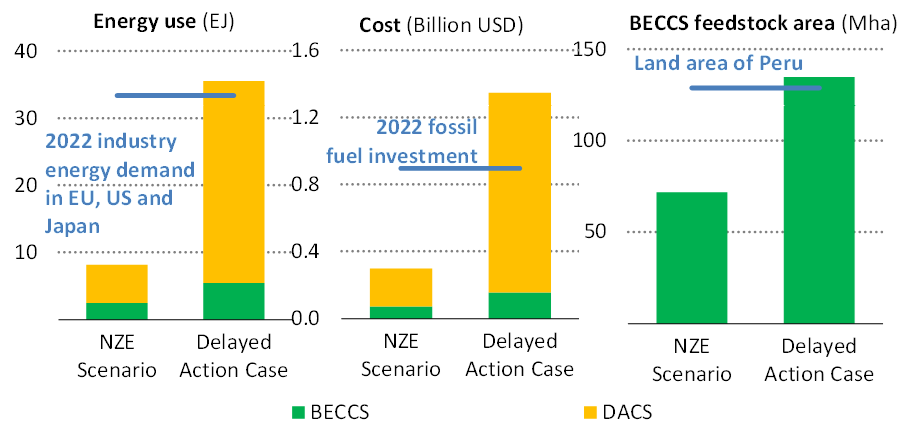
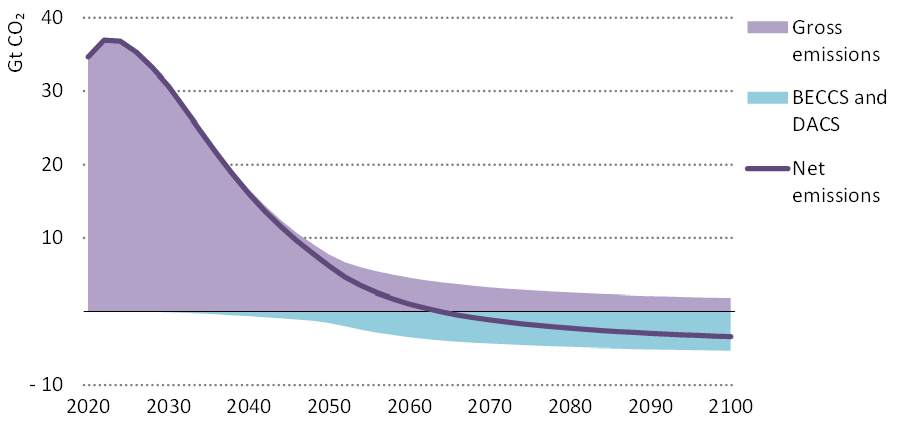
#CDR on this scale is staggeringly costly, energy & resource intensive and uncertain.
DACS = filtering 0.1% of the earth's atmosphere every year
BECCS = feedstock land area size of Peru
@IEA 's new #NetZeroRoadmap describes an equitable and orderly energy transition.
But what would a failure to accelerate progress on clean energy until after 2030 imply for the 1.5 °C goal?
Our high-cost, high-risk Delayed Action Case gives some key numbers.🧵⬇️ #NetZeroBy2050
🚨 Major new analysis coming from @IEA next week 🚨
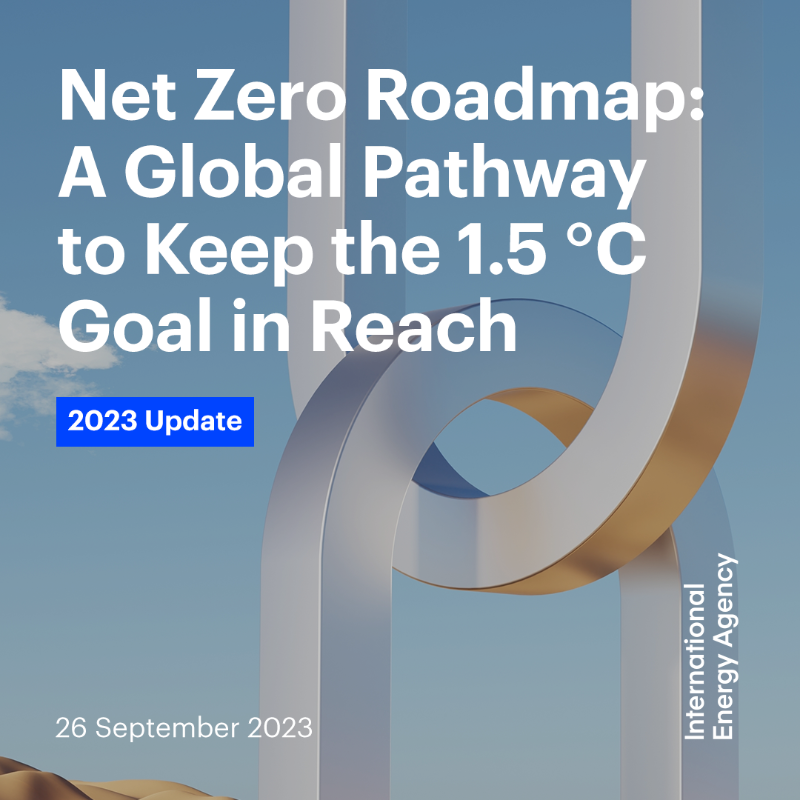
Building on our landmark 2021 report & taking into account key developments in the energy landscape, our updated Net Zero Roadmap will set out a global pathway to keep the 1.5 °C goal in reach.
Out 26 Sept ⬇️
US Special Presidential @ClimateEnvoy John Kerry & I highlight in a joint op-ed for the @washingtonpost today that one of the key conditions for a successful #COP28 is to ensure that the world’s coal plants don’t put the 1.5 C goal out of reach ⬇️
https://t.co/yDKFmJzNZv
In my op-ed in today's @FT, a historic moment for the global energy sector
Just with today's policy settings alone, @IEA projects demand for each of oil, gas & coal is set to peak this decade – driven by the striking rise of clean tech like solar & EVs, and economic shifts in 🇨🇳
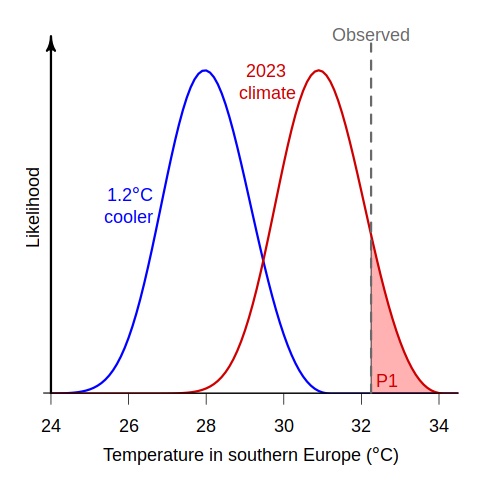
Heat in Southern Europe 👇 & North America impossible without human-induced climate change - new @WWAttribution study. Totally unsurprising but important result. This is what climate change looks & feels. We need to adapt, we need to stop making it worse. https://t.co/3soEuDF7CP
Behavioural changes can play a key role in efforts to reduce energy demand and cut emissions, especially as governments work to address the energy & climate crises.
Timely, clear & consistent policies & investment will be vital to drive these changes ⬇️
https://t.co/aufEMFkAmN
The economic benefits for human health from #AirQuality improvement arising from mitigation action can be of the same order of magnitude as mitigation costs, and potentially even larger.
#CleanAirDay
https://t.co/w7PtOYGN5e
@IEA Investment in clean energy technologies by the oil & gas industry is less than 5% of what it spends on exploration & production
The industry can do far more to scale up clean energy options like renewables, low-emissions fuels, hydrogen & carbon capture