Instead of fighting with this message (which deep down you know is true), you should be thankful that there is a British person who is honest enough to tell you this openly and politely. This kind of honesty is extremely untypical for a British man (IYKYK).
See it as a favour instead of getting mad. The truth is that it's not your country and it never was. Once again, the minute the Shamima Begum verdict was upheld, you should have already figured all of this out.
It's better you hear it from the polite British racist in a suit speaking respectfully to you, than from his ASBO cousin in tracksuit bottoms who will push dogshit through your letterbox and burn down your house.
Give up on the dream of "integrating" with people whose ancestors sold yours as ship cargo, and understand that they can never fundamentally see you as the same. Your home is in Africa. Come back home and fight to make this place independent of this guy and his American cousins. Any other fight is a waste of your limited time on earth.
The condition of one of Nigeria’s most critical highways has been getting worse for years and recently it ground to a complete halt for days.
Al Jazeera asked people on the Benin-Agbor-Asaba road how they view this infrastructure crisis.
“The problem with GOLD IN ZAMFARA is that some persons which you & I know, who were senior military officers (now retired) are the ones MINING THE GOLD, in addition to their FRIENDS IN CHINA. And now I am aware that the US wants to lay their hands on this.
In Zamfara, everyday there is a flight that goes out in the mining fields there that is not tracked, sometimes up to 7 flights go there to pick golds.
The current DG TO TINUBU is one of the richest persons today based on some of these activities.”
~Sowore
“I met the President of Rwanda twice within 48 hours. People were able to communicate with him freely, and he’s so aware of everything happening in the country.” — Rwanda-based Nigerian man reveals
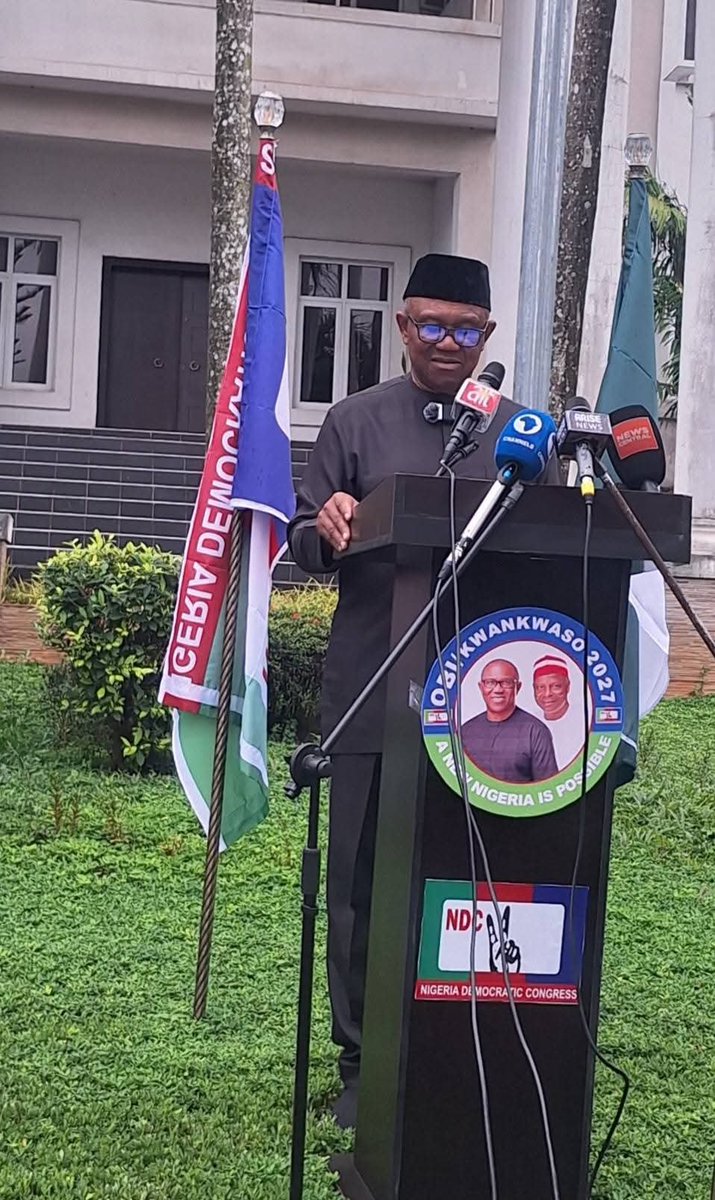
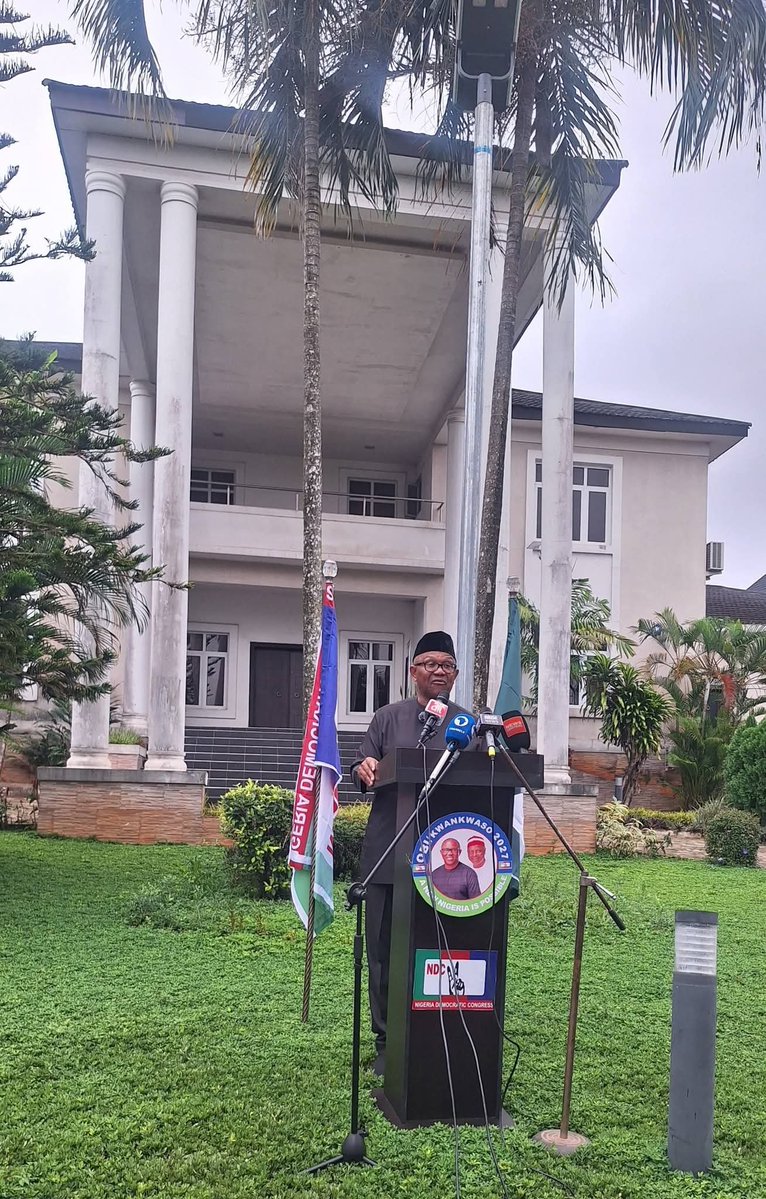
MY ADDRESS TO MARK THE COMMENCEMENT OF THE 2027 PRESIDENTIAL AND NATIONAL ASSEMBLY CAMPAIGNS
21 August 2026
Dear Compatriots,
Members of the Press,
Distinguished ladies and gentlemen,
Wednesday, 19 August 2026, marked the official start of the campaign period for the 2027 Presidential and National Assembly elections.
There is no doubt that this is a defining moment for our democracy. This moment gives Nigerians the opportunity to assess the records, ideas, and plans of those seeking their mandate to lead their country at a time of grave uncertainty in our rapidly changing world.
I consider myself quite privileged to be one of those seeking your mandate to deal with these challenges facing our country.
I enter this contest with one firm conviction: Nigeria can work, and Nigeria must work.
Nigeria faces several serious challenges. Some of them are indeed of existential proportions.
According to the IMF, 63%, or over 140 million Nigerians, live at or below the national poverty line, while humanitarian agencies estimate that 35 million people will need food assistance during the 2026 lean season. About 3.6 million Nigerians remain internally displaced, largely because of conflict and insecurity. Each year, millions of young people enter the labour market, yet too many struggle to find productive opportunities. Weak infrastructure, unreliable power, insecurity, and the excessive cost of doing business continue to burden households and constrain enterprise.
These are more than statistics. They reflect the daily realities of Nigerian families, farmers, workers, students, and businesses.
Yet I do not believe Nigeria lacks the ability to overcome these challenges. We have the people, resources, market, talent, and enterprise. What we must do now is turn these strengths into security, productivity, and shared prosperity.
LEADERSHIP MUST DELIVER RESULTS
My successful private-sector experience, studies in institutions of repute on policy and business matters, and my service as Governor of Anambra State have shaped my understanding of public leadership. Government must manage resources responsibly, set clear priorities, and measure the outcomes of its decisions. Public office is not a reward; it is a responsibility to the people.
In Anambra, I prioritised the foundations of long-term development: education, healthcare, infrastructure, fiscal discipline, and institutional capacity. I do not present that record as perfect, but as an experience from which Nigerians can draw their own conclusions.
Senator Rabiu Musa Kwankwaso brings a different but complementary governing experience.
As Governor of Kano State, he focused strongly on education, technical training, scholarships, infrastructure, and human-capital development. His administration’s investments in education and skills showed an understanding that the people are a state’s most important long-term resource.
Our experiences are different, but our conclusion is the same: Nigeria must invest in its people and manage public resources with discipline.
BUILDING AN ECONOMY THAT WORKS
Nigeria needs more than reactive reforms. We must focus on the questions that matter:
Are Nigerians better off than they were four years ago? Can they afford food, education, and healthcare? Can businesses produce, expand, and create jobs? Can young people find productive work? Can farmers work safely and get their produce to market?
“Every candidate seeking presidency must be willing to present their credentials, defend their records, and subject their vision to open scrutiny.” — NDC Presidential Candidate, Peter Obi
President Tinubu has signed the Electoral Act 2026, and it removes certificate forgery as a ground for challenging election results at tribunals. Politicians can no longer be disqualified over fake credentials. But for hardworking Nigerians, submitting a fake certificate means job loss, blacklisting, and prosecution. For the political class, the rules are different. A double standard has been written into law, and the 2027 elections will be contested under this new reality.
Nigerian Representatives and South African Representatives clash at the Commonwealth Parliamentary Association Conference in Malawi over the xenophobic attacks in South Africa.
I have been thinking about something lately, and the more I think about it, the more disturbing it becomes.
A lot of Nigerians became poor without doing anything wrong.
They didn’t stop working. They didn’t become lazy. They didn’t suddenly become irresponsible.
They simply woke up one day and realised that the money they had worked for could no longer buy the things it used to buy.
Think about someone earning ₦100,000 a month.
The person still wakes up early every morning, goes to work, puts in the same hours, probably works even harder, gets promoted occasionally and does everything society says a responsible person should do.
Yet every year, that person seems to be able to afford less.
At some point, ₦50,000 could buy a reasonable amount of food for the house. Today, you can enter the market with the same ₦50,000 and genuinely wonder where the money went.
Nothing happened to you.
The economy happened to you.
And I think this is something we don’t talk about enough.
Imagine working hard for years, only for circumstances completely outside your control to quietly reduce the value of everything you have worked for.
You didn’t lose your job.
You didn’t lose your salary.
But somehow, you lost your standard of living.
That is poverty too.
And this is why I struggle with the way we sometimes discuss palliatives.
Of course, when people are hungry, you must find ways to help them immediately. There is nothing wrong with providing temporary relief.
But surely, the bigger question should be:
Why did millions of working Nigerians suddenly need palliatives in the first place?
If a man could comfortably buy a bag of rice from his salary a few years ago and today he needs government assistance to buy that same bag of rice, giving him rice may solve today’s hunger.
But it has not solved the actual problem.
The real problem is that his labour has lost value.
And perhaps that is what we should be obsessed with fixing.
How do we make the Nigerian worker’s income valuable again?
How do we make ₦100,000 buy more next year, rather than less?
How do we make food cheaper by producing more?
How do we reduce the cost of energy and transportation?
How do we build an economy where salaries can actually keep up with the cost of living?
Because when I think deeply about it, perhaps one of the greatest things a government can do for its people is not to keep giving them money.
It is to build an economy where the money they earn has value.
There is dignity in being able to take care of yourself from the product of your own labour.
There is dignity in a teacher being able to feed a family from teaching.
There is dignity in a nurse being able to pay rent from nursing.
There is dignity in a young person working an honest job and gradually seeing life improve.
People should be able to look back after five years of hard work and say, “My life has become better.”
Not, “I earn more money today, but somehow I can afford less.”
That is the part that keeps bothering me.
Millions of Nigerians are not asking to become millionaires overnight.
They just want hard work to make sense again.
And maybe that should be one of the simplest ways we measure whether our economy is actually working:
Is the ordinary Nigerian who works hard becoming progressively better off, or progressively poorer?
Everything else is secondary.
Israel-Based Covert Team Worked On Nigeria’s 2015 Presidential Election
The 2015 Nigerian presidential election was a battleground for Western disinformation industry.
This investigation by Manisha Ganguly shows how a covert, Israel-based team—known as ‘Team Jorge’—was actively working to manipulate the outcome behind the scenes.
Using a sophisticated arsenal of over 30,000 automated bots, they orchestrated a massive propaganda campaign to distort reality and influence voters.
This is another reminder that Africa is in an information war and we must interrogate every narrative especially when it's coming from the West.
Despite denials from the South African Police in Bellville, Cape Town,
This video shows South African police officers restraining Chika Ibe, a Nigerian from Abia State, in a manner that involved strangulation and suffocation.
Sadly, Chika Ibe later died following this. South Africa is a vile xenophobic hostile shithole for black Africans.
'For 400 years Westerners... killed us in every possible way' — Ibrahim Traore, President of Burkina Faso
'They TRAUMATIZED us', but 'we LOVE them more than we love ourselves...
That's the Stockholm syndrome'
No Sharia Law In Burkina Faso- Traore
“I am a Muslim, but everyone in Burkina Faso has the right to practice their own religion. There will never be Sharia law in this country.
“To those Burkinabè studying Sharia law in Saudi Arabia, do not return to Burkina Faso. Instead of acquiring technological knowledge and skills that can help develop our country, you chose to study Sharia law. Stay where you are, you won't be allowed back here- President Traore
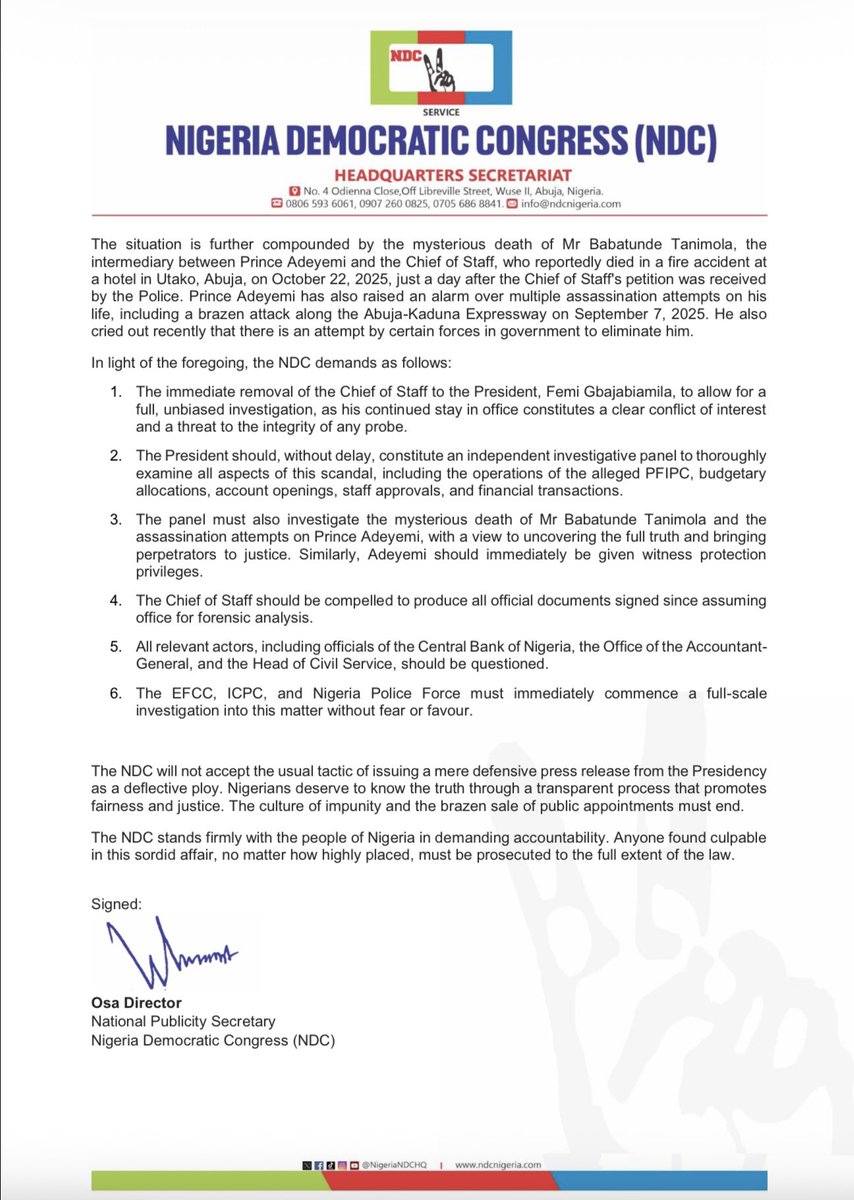
PRESS STATEMENT: - NDC Demands Immediate Sack of Chief of Staff to the President, Femi Gbajabiamila Over Massive Corruption Scandal Involving Fake Agency and Sale of Appointments.
This youngster, Don Anele Munachimso Marvelous, was the best Chemistry student in Nigeria in IGCSE. He won the ₦5 million star prize as the best in the 2026 South East Maths Olympiad. He also took first position in the country at the National Mathematics competition in Abuja.
He also won a $100k scholarship in Canada.
He will compete with students from 154 other countries in Rome, Italy, this Saturday.
He is a genius, and the world will know him.