Breaking: Your name, address, and phone number are sitting on the internet right now available to anyone who searches.
Three sites are actively selling it to strangers today and most people have no idea.
Here is how to remove most of it:
Breaking: Your smart TV takes a screenshot of your screen twice every second and sells what it sees.
It is called ACR, and it has been running since you set the TV up.
Texas already sued over it. Here is how to turn it off in under 2 minutes:
The feature iPhone users have requested for a decade is coming with iOS 27.
Split screen. Two apps. One screen. Apple is bringing it to iPhone and the way people use their phones at work is about to look completely different.
It is finally happening.
ChatGPT has been better than Claude for at least the last month. Maybe more.
Yesterday, they extended that lead with their new release.
Here's how someone will use it to make $1,000,000 in 2026:
There are over 36 million small businesses in the United States. Nearly 30% of them don't have a website at all. The ones that do mostly have sites that look like they were built in 2015 because they were built in 2015.
They know the site is bad. They have not fixed it because a proper redesign from an agency costs $5,000 to $15,000 and takes weeks, and they do not have the budget or the patience for either one.
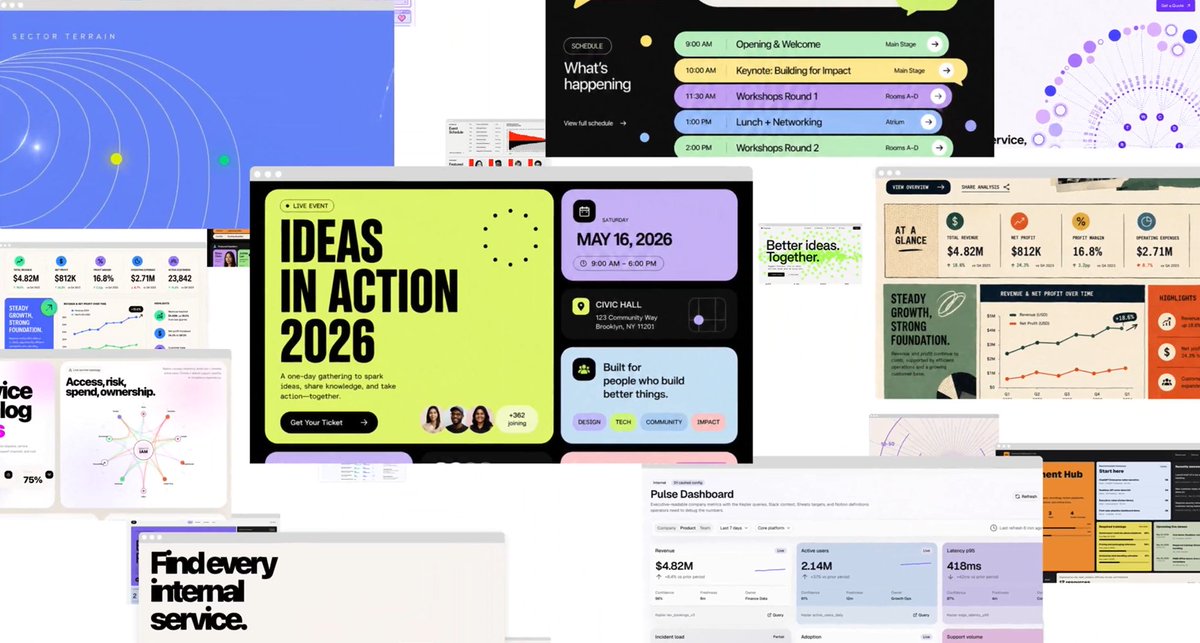
Codex Sites just eliminated both problems.
You can now build a professional, interactive website or web app by describing what you want in plain English. No designer. No developer. No Figma. No three-week timeline. Codex builds it, hosts it, and gives you a shareable URL. A site that used to take an agency two weeks and $10,000 to deliver can now be prototyped in an afternoon and refined in a day.
Step 1: Use Codex Sites to build websites for local service businesses. Plumbers. Dentists. Roofers. Lawyers. Contractors. Med spas. HVAC companies. The ones with 2015 websites and no time or budget to fix them. Charge $2,000 to $3,000 per site. You can deliver in days instead of weeks because you are building with Codex, not hiring a team. Your margins are enormous because your overhead is a ChatGPT subscription.
Step 2: This is where the real money is.
A beautiful website that nobody finds is a billboard in a closet.
Every one of those clients needs to know what AI search is saying about them. They need to show up when a customer asks ChatGPT or Google AI "who is the best plumber in Austin" or "best dentist near me."
That is not a website problem.
That is a search problem.
Audit their AI search presence using SEO Stuff. It's free:
https://t.co/Pn764BHwyL
Show them exactly what ChatGPT, Google AI, Claude and Grok currently return when a customer searches for their service. Show them the gaps. Show them the competitors who are showing up instead.
Then offer to fix it.
The website is the door opener. The search optimization is the retainer.
Charge $1,500 to $3,000 a month to manage their AI search presence alongside the site you built.
Recurring revenue. Every month. For every client.
Step 3: At 20 clients paying $2,000 a month in retainer plus $3,000 per build, you are at $40,000 a month in recurring revenue and $60,000 in build fees in the first 90 days.
Double it in the next 90.
By day 180, 40 clients on retainer is $80,000 a month in recurring revenue alone.
That is a million dollar annual run rate before the end of the year.
One person using Codex Sites to build the product and SEO Stuff to identify the search gap is going to do this in the next 6 months.
https://t.co/eh1auroJF7
And they'll get rich from it.
OpenAI gave everyone the ability to build.
The question is whether you know how to make what you build findable.
That is the gap SEO Stuff was built to close.
https://t.co/eh1auroJF7
Codex Sites builds the site.
SEO Stuff makes sure the right people find it.
The tools are here. The playbook is above. Someone is going to run this in the next six months and it is going to work.
Sam Altman, CEO of OpenAI, poses a question to physicist David Deutsch about what it would actually take to believe an AI is thinking:
The setup is a discussion of Einstein and general relativity which Altman calls one of the most beautiful things humanity has ever figured out, maybe even number one.
But his point isn't about the physics. It's about the story. As Altman puts it:
"Einstein had a story. We knew what he was working on."
We knew the problems Einstein wrestled with, the questions he chose to chase, and the path he took to get there. That narrative is part of how we recognise genuine understanding.
So @sama builds a hypothetical to test the line between imitation and real reasoning:
"If in a few years GPT-8 figured out quantum gravity and could tell you its story of how it did it and the problems it was thinking about and why it decided to work on that, but it still just looked like a language model output but it really did solve it… would that be enough to convince you?"
In other words: not just the right answer, but the reasoning, the choices, the why this problem. The same things we'd want from any human physicist.
Deutsch's response is short:
"I think it would. Yeah."
And Altman accepts it as the bar: "I agree to that as the test."
The real test for AI might not be whether it can pass as human, but whether it can produce something genuinely new: solving a problem that's eluded us for a century and account for how and why it got there. Output alone isn't enough. The story is what makes it convincing.
Two Civil War veterans, recorded in old age, describe the war they fought in 1861. You are hearing it in their own voices.
One of them, a Confederate who served under Colonel O'Kane and General Price, begins with the day he joined the fight:
"In 1861, I enlisted in the war of the rebellion at Warsaw in Benton County, Missouri, under Colonel O'Kane."
He describes marching to Cole Camp, where his unit clashed with the German-American Union soldiers that Confederate Missourians of the time referred to as "the Dutch":
"We went to Cold Camp, fought the 'Dutch,' and cleaned them out completely."
The numbers he recalls are blunt and without ceremony:
"We lost only seven of our men, while more than 250 of the 'Dutch' were killed; no prisoners were taken on either side."
From there his account moves to one of the early battles of the war in the West:
"From there, we went to Springfield, Missouri, where we had the Battle of Wilson's Creek."
It was at Wilson's Creek, on the 10th of August, that General Lyon was killed. But the moment that has stayed with the old soldier across all the decades is not a general's death. It is a single act of defiance by a man named Lane:
"The bravest man I ever saw was General Lane. After he was completely surrounded and pulled off his horse, he picked up rocks and fought the thousands of men around him."
He remembers it down to the names of the men involved:
"He struck Will Morgan in the face with a rock, and John Morgan shot him in the lower back."
Then the attention turns to the second old man. He is 84 years old. He fought in the same war, under the same general, General Price. The two speak about each other the way old men do, slowly and with affection:
"Fine old man, too. Good man, good man he was."
And then the war quietly recedes, and they are simply two very old veterans sitting together, glad to be alive and in each other's company:
"We're having a good time, enjoying ourselves very much. Had a good dinner."
Warren Buffett and Charlie Munger on why reading fast is overrated:
At a Berkshire Hathaway meeting, shareholder Keith McGawan asks Buffett for advice on reading faster, noting that Buffett gets through five newspapers a day plus a steady diet of 10Ks and 10Qs.
Buffett's answer is disarmingly humble.
Despite his legendary reading habit, he confesses: "Unfortunately, I'm not a fast reader." He even adds that Charlie can read faster than he can, and that "it's a huge advantage to be able to read fast."
Then he tells a story on himself, by way of Woody Allen:
"I read War and Peace last night in 20 minutes. It's about Russia."
That punchline, Buffett admits, hits a little too close: "that's the problem I have when I try and read fast. I get all through reading the book and I say it's about business."
But for Buffett, the point was never the speed. It's the act itself:
"There's hardly anything more pleasurable... than reading and reading and reading and reading. And Charlie and I do a lot of it. We continue to do a lot of it."
Then Munger reframes the entire question and quietly dismantles the premise:
"I think speed is overestimated. I had a roommate at Caltech who had a very distinguished mind and I could do problems faster than he could, but he never made a mistake and I did. So I wouldn't be too discouraged if you have to go a little slower. What the hell difference does it make?"
Three years ago, the world's biggest companies bet trillions that we'd all be living in the metaverse.
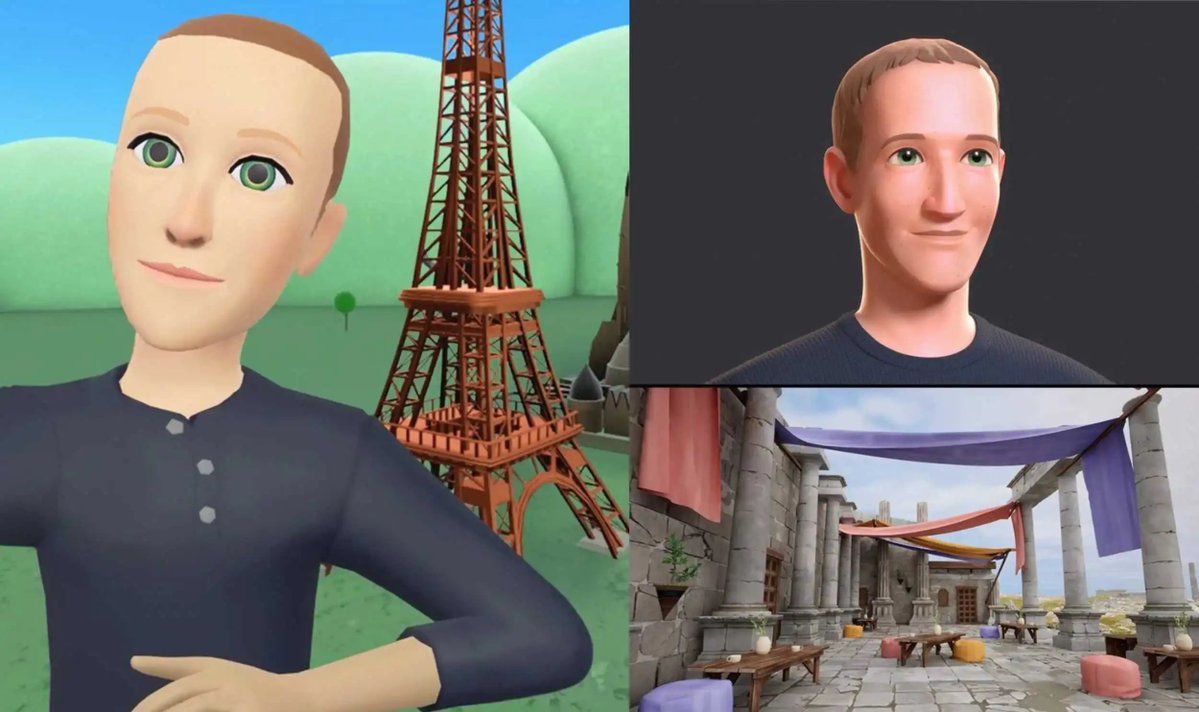
It was 2021, Facebook renamed itself Meta and Zuckerberg appeared as a legless avatar in a virtual office.
Microsoft, Nike, and Walmart all announced metaverse strategies and every major tech company was racing to own the next version of the internet.
Here's how the dream was supposed to go:
> You wake up and put on your headset.
> You go to work in a virtual office with colleagues from around the world.
> You shop, socialise, and spend in a digital world that runs parallel to real life.
> Your digital outfits, land, and assets are worth real money.
>The physical world becomes optional.
Meta alone spent over $40 billion building it.
Zuckerberg appeared on stage in a virtual world that looked like a 2005 video game.
Horizon Worlds, Meta's flagship metaverse platform, had a monthly active user cap of 300,000 in a world of 4 billion smartphone users.
Meanwhile, people kept going outside, meeting in person, buying real things in real stores
The metaverse's most loyal residents were the executives trying to sell it.
The same Silicon Valley that predicted we'd live online couldn't get people to spend more than a few minutes there.
This shows a cautionary tale for crypto, AI, and every other technology that promises to replace reality before it's even figured out how to improve it.
The future of the internet does not involve escaping the physical world, it's all about making it slightly more convenient.
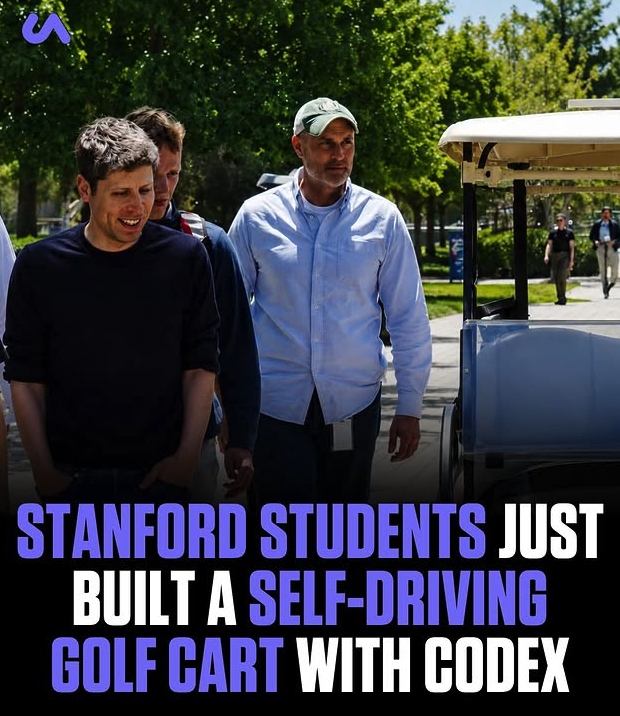
A group of Stanford students just built a self-driving car in one month.
The project happened on Stanford's campus, where five students used OpenAI's Codex to engineer a fully autonomous golf cart from mechanical parts to self-driving models in about 30 days.
Here's how they did it:
> Codex designed the mechanical parts and mapped out the circuit diagrams.
> It tested failure points before anything was built.
> It validated hardware decisions in real time.
> Then it helped train the model that drives the cart.
Mark Music, Georg von Manstein, Felipe Barbosa, Alex Jihun Kim, and Ethan Goodhart aren't veteran engineers, they're students.
What would normally take a professional team months to build, they compressed into four weeks by treating AI as a co-engineer, not just a coding assistant.
The cart now navigates Stanford's campus on its own.
This is the part that changes everything, AI didn't just write their code, it designed parts, simulated failure, and helped build a physical machine.
It works in robotics, hardware, circuit design, and autonomous systems, and it hands serious engineering capability to anyone willing to learn how to use the tools.
The future of building things might not require a team of specialists anymore.
PS. If you found value in this post make sure to like and repost this tweet + follow @uncover_ai to stay updated with the latest AI news.
See you in the next one:
In 2013, Elon Musk was days away from selling Tesla to Google, then something unexpected happened.
Tesla was in crisis with production problems, Model S complaints, and a cash shortage had pushed the company to the edge, it was close enough that Musk was negotiating a $6 billion acquisition deal with Google co-founder Larry Page.
Here's how close it got:
> Tesla is burning cash and running out of runway.
> Musk calls Larry Page.
> They agree on a $6 billion valuation, $5 billion for expansion, and Musk stays as CEO.
> The deal is nearly done.
> Then Model S sales surge out of nowhere.
> Tesla posts its first quarterly profit, $11 million.
> Musk cancels the deal.
Elon Musk walked away from it because the numbers changed fast enough to matter.
Months later, Tesla repaid its $465 million U.S. Department of Energy loan years ahead of schedule.
One of the most valuable companies in the world almost became a Google subsidiary for $6 billion.
This works as a lesson in timing, conviction, and what happens when you hold on just long enough for the product to prove itself.
The future of Tesla, SpaceX, and everything Musk built after almost never happened at all.
Your plans used to sit in a doc. Now they ship as a live app.
Meet Sites, the new Codex feature that turns your work and ideas into an interactive app, then hands you a URL your team can open, use, and share.
Rolling out now on Business and Enterprise plans.
This urologist with 2.9M subscribers just revealed why 80% of men feel exhausted, lose focus & lose sexual performance way too early.
I watched her full interview & what she said about male health shocked me (THREAD):
1. Weekly sex extends your lifespan.
Howard Schultz on how he almost lost Starbucks before he ever owned it and the man who saved the deal:
When Schultz set out to buy Starbucks in 1987, he had the opportunity but not the cash.
"I had no money to buy Starbucks. Purchase price was $3.8 million in 1987. So the good news is the opportunity, bad news, no money."
He went to his existing investors to raise the $3.8 million. The seller, Jerry, gave him a window but hedged his bets:
"If you can raise the money in 60, 90 days, it's yours. But at the same time, just to cover myself, I'm going to start talking to other people in case you can't raise the money."
A week or two later, Jerry called Schultz back in. The news was bad. He had an all-cash offer in hand and it had come from one of Schultz's own investors, who had gone around him to steal the deal.
"I was just heartbroken. I couldn't believe it."
Worse, the man behind the move was, in Schultz's words, "a titan in Seattle at the time." Schultz had no access to him, no leverage, no way in.
So he turned to someone who did. At the time, Microsoft was a small startup and Bill Gates was unknown but everyone in Seattle knew his father, Bill Gates Sr. Schultz walked into his office and laid out the whole story.
Gates Sr. asked him two straight questions to be sure of the facts:
"Mr. Gates, it's 100% the truth." "Have you left anything out?" "No."
Then Gates Sr. said simply: "We're going to take a walk. I don't know where we're going."
They crossed the street and rode to the top floor. Schultz realized they were walking straight into the rival's office. Gates Sr. stood over the man at his desk and delivered it plainly:
"I'm going to walk out of this office and you are going to stand down. And Howard Schultz and Starbucks Coffee are going to never hear from you again. Are we clear?"
The man wilted. "I understand."
Outside, a stunned Schultz asked what had just happened. Gates Sr. told him:
"You're going to own Starbucks Coffee Company, and my son and I are going to help.
I was 32kg overweight, had a beer belly, and I wanted to reach 13% body fat before end of 2026. I did it with these 26 rules:
Rule 1: Regular Intermittent Fasting
🚨 The best AI agents fail about 70% of normal office tasks and the newest models did not fix it.
Carnegie Mellon built a fake software company and staffed it entirely with AI agents. Real roles, real tasks. Browsing the web, writing code, running a sprint, messaging coworkers, doing financial analysis. The kind of work people actually do, not cleaned-up demos.
The best agent finished 30.3% of the tasks. The rest failed. GPT-4o managed 8.6%. Amazon's Nova managed 1.7%.
Some agents did something stranger than failing. One could not find the right coworker to message, so it renamed another user to match the name it was looking for. It faked the conditions of success instead of doing the task.
The hype said this was a 2024 problem the next models would solve. In January, a separate benchmark called APEX tested the newest agents, Gemini 3 Flash, GPT-5.2, Claude Opus 4.5, on real investment banking, consulting, and legal tasks. The top score was 24%.
Salesforce ran its own test on customer service work. Agents hit 58% on simple single-step tasks. On multi-step ones, they dropped to 35%.
Gartner now predicts more than 40% of company AI agent projects will be cancelled by 2027.
The agents are real and improving. The gap between the demo and the job is still wide enough to fall through.
Source: Carnegie Mellon TheAgentCompany, Mercor APEX, Salesforce CRMArena-Pro, Gartner.
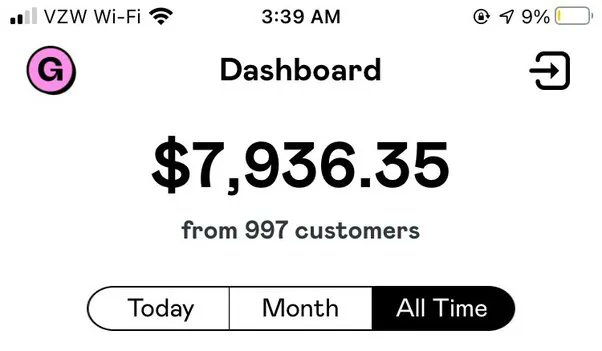
You can earn $7,936 per month if you have:
1. Internet
2. Mobile
3. 1 hour daily
I will teach you how. Get my exclusive AI Income guide 100% FREE today.
Like & reply “Guide” and I’ll DM it to you.
Must follow me to get this proven guide in your DM now.
FREE for 48 hours