Trials are ultimately experiments on people. I really don’t like this from an ethical lens, and it opens up a can of worms. Would people enroll in non-consensus trials? should patients know the betting odds of trials they are enrolling in; would it lead to better decision making for patients? Can companies hedge their own risk in a trial; would that lead to incentive for bad behavior? Would this allow for capitalizing more trials? I certainly don’t know the answers to these questions, but it worries me and the consequences of it going badly are big (if it actually catches on).
In vivo gene editing of human hematopoietic stem and progenitor cells using envelope-engineered virus-like particles | Nature Biotechnology https://t.co/QekH1DPIng
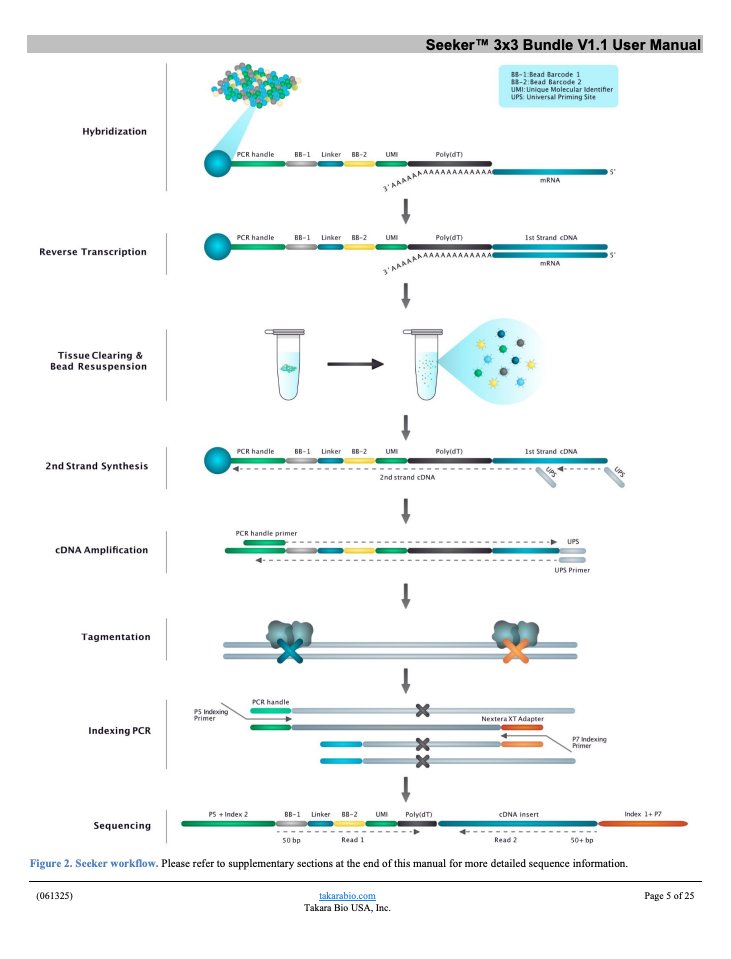
If you work regularly with molecular data, but don't prep it yourself, highly recommend reading the user manual for a kit you interact with cover to cover. Every little step is there for a reason + will teach you interesting biology. Small deviations at the bench often perturb your chunk of data in subtle ways.
🚨 Liver Biopsy remains a 🔑 tool in our 🧰 , so #GIHepFellowshipBootcamp is here to get you ready to understand:
💉Utility of biopsy across conditions❕
💉Biopsy histologic characteristics❕
💡The table below is GOLD 🏆
https://t.co/eUOMCGDjdN
From River Xiang to Harvard, from Columbia to Today: Reflections at a Critical Moment
Nearly 40 years ago, I came from China to the U.S. with $50 in my pocket. I was fortunate to pursue graduate studies through the Harvard-MIT Health Sciences and Technology program — one of the world’s most rigorous interdisciplinary tracks. Almost 30 years ago, I joined Columbia University, helped found its Department of Biomedical Engineering, and later served as its Chair. These institutions shaped me, and I remain deeply committed to their missions.
Today, Harvard, Columbia, and many peer institutions face unprecedented challenges — not just in science or funding, but in public trust, politicization, and cultural division. Yet I believe, more than ever, in their resilience.
We must confront difficult truths. Discrimination — whether antisemitism, anti-Asian hate, or bias of any kind — still exists, even within institutions meant to lead on equity. We must not look away.
And yet, while universities strive to uphold their values, we are seeing troubling actions from the outside. One striking example: the federal government’s decision to cancel Harvard’s international visa sponsorship program. This move doesn’t just shut doors on global talent — it weakens America’s innovation ecosystem and undermines our leadership in the world.
Let us be clear: meaningful reform must come from within. Universities thrive not by decree, but through open dialogue, reflection, and academic independence. We must protect that.
Each day, discoveries at places like Harvard and Columbia change and save lives — from curing disease to developing next-gen technologies. Undermining these institutions is not reform; it is self-harm.
No university is perfect. But the strength of academia lies in its ability to evolve under pressure and emerge stronger. I believe they will.
Let us defend the spaces where knowledge is created. Because when universities fall, society falters.
#HigherEducation #Harvard #Columbia #Innovation #GlobalTalent #AcademicFreedom #Leadership #STEM
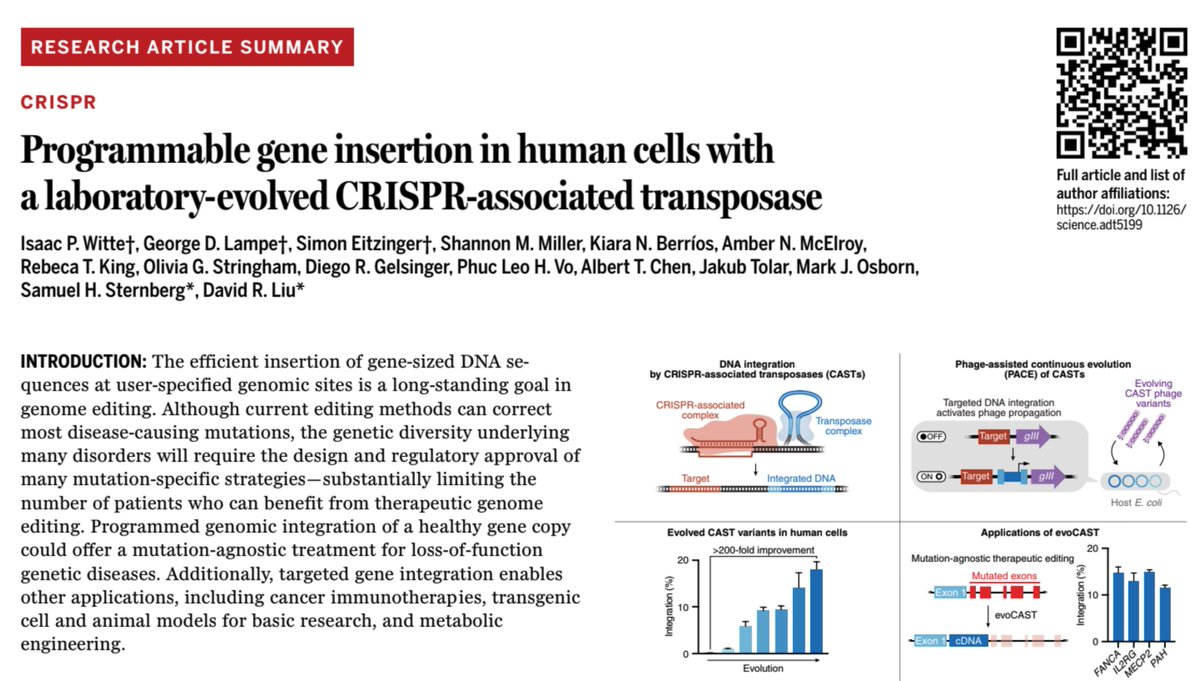
Today in @ScienceMagazine we report the development of a laboratory-evolved CRISPR-associated transposase (evoCAST) that supports therapeutically relevant levels of RNA-programmable gene insertion in human cells, a collaboration with @SternbergLab.
1/13
https://t.co/ZLHtZm5Gmw
Today, NIH announced a new initiative to expand innovative, human-based science while reducing the use of animals in research. This aligns with @US_FDA’s initiative to reduce testing in animals. https://t.co/i4QH6FwqlC
Systems biology framework for rational design of operational conditions for in vitro / in vivo translation of microphysiological systems https://t.co/6O6hmdGNix #biorxiv_sysbio