$ABVX "...obefazimod led to a pooled 16.4% (p<0.0001) placebo-adjusted clinical remission rate at Week 8; met primary and all key secondary endpoints..."
JUST IN: LEOPOLD ASCHENBRENNER'S SITUATIONAL AWARENESS TELLS INVESTORS IN LETTER THAT IT LOST 65% IN 3Q: WSJ
ASCHENBRENNER TO INVESTORS: INVESTING OPPORTUNITIES ARE 'HIGHEST POTENTIAL RETURN WE HAVE SEEN': WSJ
Here is an excellent FT chart which wonderfully explains the rationale behind today’s announcement that Sanofi is acquiring Insmed for $175 per $INSM share and for a total of $41B in cash! $SNY blockbuster drug Dupixent (dupilumab) - a targeted biologic injection that calms chronic overactive Type 2 inflammation, has generated more sales last year (~$16B) than all of Sanofi’s 10 other best selling drugs ($14B). Amid a “patent cliff” scenario Sanofi literally had no other choice!
In academics, the high volume cataract surgeon averaged 300-400 cases a year and at her busiest did at most 600.
I average 1400-1500 a year. I own an ASC and my own practice where my work employs a number of people.
Because we do not have site neutrality the facility fee for the academic center is a multiple of what my ASC gets. Which means the healthcare system cost for academic care is probably higher than the cost of me delivering care despite delivering 3-5x more care to patients.
Then you add on the fact that my private practice pays business tax while the academic system enjoys a nonprofit tax designation … and it becomes clear that regrowing and prioritizing private practice is so important to a functional healthcare system.
I deliver more care, more efficient care, more timely care, and more affordable care as a private practice physician. I am not your enemy when I say Medicare for All is the fastest path to imploding … I’m literally trying to do everything in my power to care for my local community. Consolidation is not good for doctors and patients when the economies of scale are used for max extraction.
The more I dig into this $ABVX short report the more wild it is
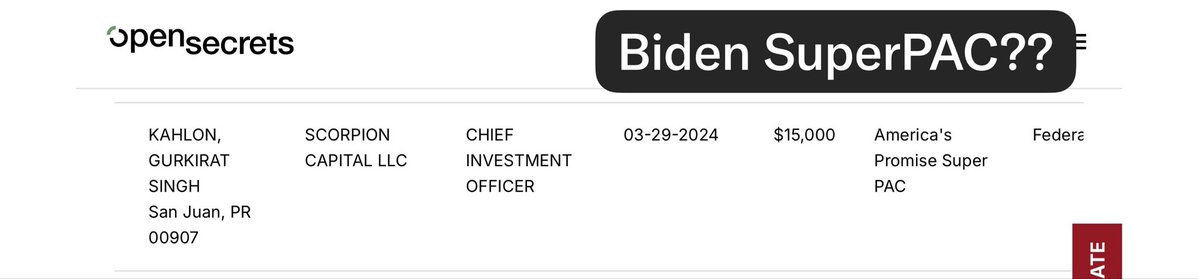
Gurkirat Singh Kahlon, an Indian Born Short Seller, who worked for Carl Icahn, the fund in San Juan? Grand Rapids? but donates to Super PAC for Joe Biden per OpenSecrets (to be verified) after he let in tens of millions of illegal immigrants
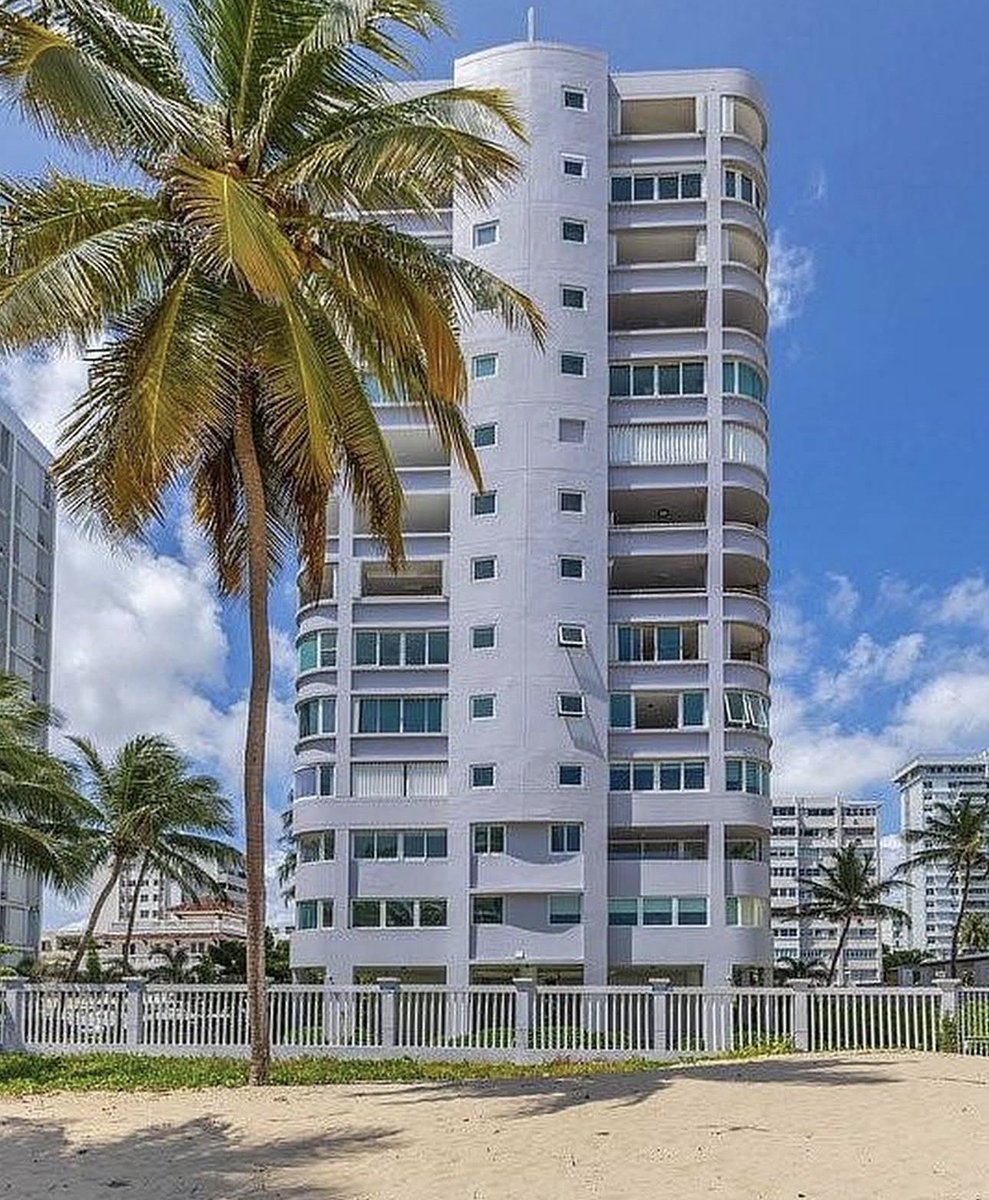
Then in San Juan there is a lawsuit against the HOA of a Condominium with someone of the same name (not sure if same)
The craziest thing is the report is that the sources are linked to ChatGPT source tracking URLs
All of this is unverified, do your own DD, but when investing it is important to see opposing viewpoints but you must understand who you're getting them from
Does anyone know why a fund might incorporate in San Juan?
If you immigrated to a country and benefited from their schools, roads, police, public universities would you pay full taxes or find ways to minimize your taxes?
Lastly in the FOIA requests I went through I thought it was interesting that Scorpion requested 9/10/25 which was AFTER the short $SLNO report 8/15/25
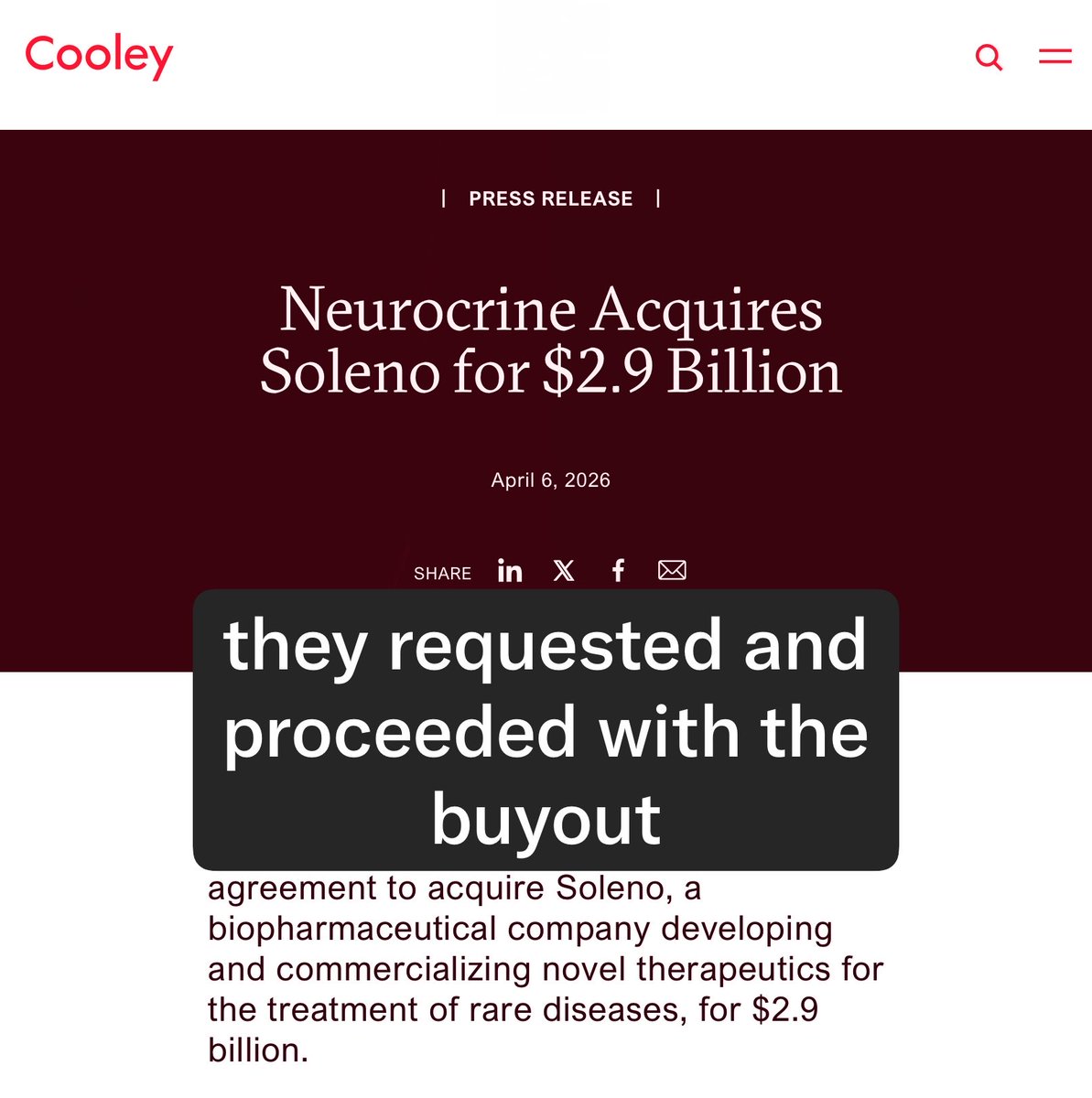
Under a separate FOIA request I also found the law firm Sr. Regulatory Analyst from Cooley LLP (Neurocrine aka $SLNO buyer) requested for all communication with Scorpion
After receiving that information they proceeded with the buyout for $2.9BN, so how did they view the credibility of that previous short report?
Perhaps this is why he feels the need to disclose he covers shorts quickly per the report?
I'm not at all against short selling, and many of you probably are aware of my all time great short selling on $NVO $HIMS Etc. But this report feels like Spaghetti on the wall to me
It literally doesn't make any baseline against other UC trials then goes on about Ukraine and China and just like... It doesn't seem cohesive to me at all (personal opinion)
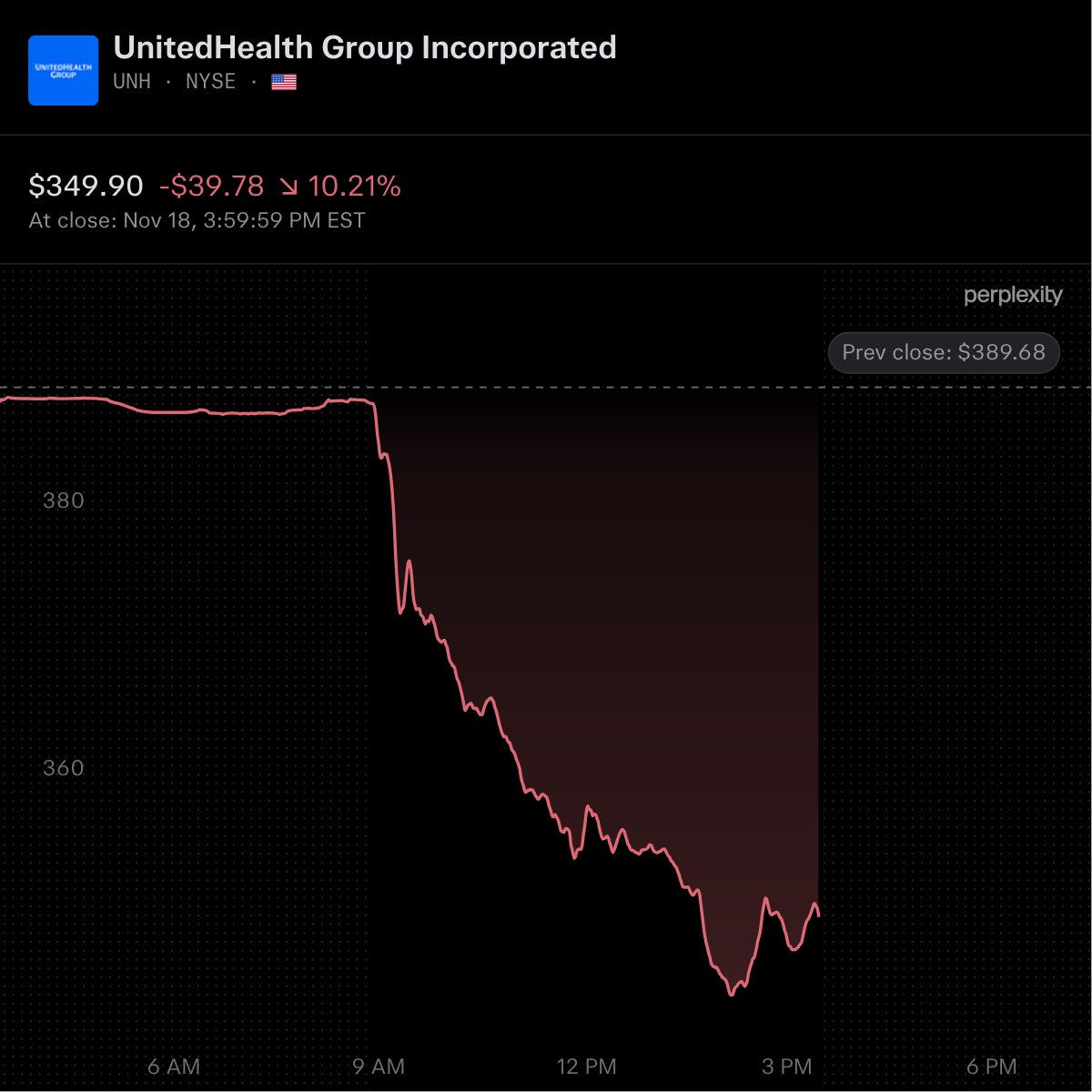
The fact that the stock dropped over 10% on this just seems like a combination of
1. Short sellers (look up FINRA and French essentially 5/5 and realize that's a larger percentage of float than FINRA is calculating)
2. Generalists panicking / stop losses
3. Algos algoing
4. Retail
5. The previous cancer blunder being pointed out again (again NMSC and two slow growing cancers)
6. EOY Tax harvesting
7. Broader $XBI poor performance (and again $MRNA squeeze affecting long funds)
8. HF locking in gains
So these factors above aren't going away. Especially EOY Tax Harvesting.
I had already predicted that the potential buyout would be in 2027 because there's always loose lips with these deals. It wouldn't be so weak over time like it has been. If a deal was to be done it likely would have been done a month or so after maintenance data. Why it wasn't is likely tied to price.
I'm guessing they (ABVX MGMT) wanted a huge deal. I don't think MGMT wants to launch, but if they don't get their price they will. I am also thinking that potential buyers were trying to do a CVR for CD next year that maybe took too much cash up front.
The stock price may truly lower in the short term due to all these factors. The price is so high that Biotech specialists cannot alone hold it up, and generalists don't have a ton of patience.
I plan to hold and add as price drops, because I do not believe a conspiracy across multiple management, countries, and medical agencies. So if the Phase 3 data is true then it is, in my eyes, the greatest drug available with a Unique MOA for UC.
That's potentially decabillions of revenue.
These lulls are not uncommon post Phase 3.
For those of you who have been following me for some time you may remember when I (NFA) called out $IMGN $BBIO $CYTK $MGDL as these similar opportunities.
If this data holds, which I have no reason to believe it won't despite this short report...
Then we can hang $ABVX in the same rafters
Some call me the GOAT, some call me a Schizo, but even my haters have my notifications on
Godspeed,
Dr. DD
Meme'r, comedian, commentator, not financial advice, actor, LONG AND BIASED
If you are good enough at your job, you have a longer leash than everyone else.
Here’s a little story about me you guys probably don’t know:
I was one of the top performers in my previous company’s history. Year after year I was the top revenue producer and presidents club winner.
Even though I was an IC, I was on the interview panel. My job was to grill senior candidates to make sure they knew their sh*t, and junior candidates to make sure they knew what they were getting into.
One day I was interviewing a woman my age. I was trying to grill her but she had such an infectious energy and a beautiful laugh and smile that captivated me and we hit it off.
We started dating a few months after she started, but we kept it under wraps. Dating in the work place was a big no-no in our company.
We essentially lived a secret life for a couple years. We moved in with each other, adopted a cat and two dogs, went to weddings with each other etc.
Eventually it was time to tell my boss and president everything as I was getting ready to propose.
I essentially told them this is what happened, it is what it is, I know you guys are going to be pissed but I love her and this is happening.
They sat in silence for a bit. They told me they were ok with it, and even changed up the policy where dating is ok as long as it’s reported and no one reports to each other.
Fast forward to today, we’re married with two kid.
Kevin O'Leary: Different agencies are going to investigate Nvidia over the next two years. The chance that Jensen Huang comes back during that period is zero.
5 minutes later... "We have some breaking news"
O'Leary: Unprecedented
[The Hill's Rising]
I am convinced that one of the most underrated life skills is staying quiet. Stay quiet when you're angry. Stay quiet when you're tempted to gossip. Stay quiet when you want to prove you're right. Silence isn't weakness. Sometimes it's the strongest thing in the room.
I'm a spine surgeon. You asked a fair question, so here's the plain-English answer.
Before 2012 you could buy an individual plan online for about $200 a month, pick from six or seven insurers, and choose your own deductible: $500 if you wanted to pay more up front, $5,000 if you didn't. If you were healthy, that is. If you were sick, they could turn you down, and that part was real and had to be fixed.
Obamacare fixed it by requiring every plan to cover everyone for everything. Good. But that made the real price of a plan jump, and the only way to keep the monthly number from looking insane was to push the cost onto the back end. That's your $6,500 deductible. You're paying comprehensive prices for catastrophic coverage.
Then the quiet part. The law caps what insurers can keep at 20% of premiums. So the only way an insurer makes more money is if the total bill gets bigger. 20% of $10,000 beats 20% of $5,000. They have no reason to fight the hospital's price. They pass it through, take their cut, and send you the premium.
And the hospital's price went up. Hospitals bought the independent doctors, and the same visit & surgery under the hospital's name now costs 3-10 times more. Hospital prices are up 281% since 2000.
The number of insurers you can choose from fell to one in half the counties in America by 2018. Meanwhile, six in ten adults now have a chronic disease, so the pool is sicker.
So: sicker patients, pricier hospitals, an insurer that profits from a bigger bill, and a law that moved the cost to your deductible. That's what you're paying for.
Nobody in that chain gets paid more if you get better. That's the part to fix.
Ophthalmology's flagship procedure, cataract surgery, goes underwater in 2027.
What does the end of private practice actually look like? This ophthalmologist is asking you to put on your glasses, because you'll see it for yourself in about a month.
Ophthalmologists perform cataract surgery. We perform other surgeries too, but that's the big one. Everything I'm about to tell you is linked to sources below, and most ophthalmologists already know it from experience.
In 2018, cataract surgery paid $656.27 (Medicare rates). Published overhead for ophthalmology practices ran as high as 70%. The practice I worked at ran at 70%. At that rate, you were paid about $197 and about $460 went to overhead. That's in 2018 dollars.
In 2026, cataract surgery pays $462.94 after this year's 11% cut. It is slated to drop to $444.34 in January 2027.
Starting in 2027, the total payment for cataract surgery is $15 less than the 2018 overhead, before adjusting for eight years of significant inflation. You are now paying $15 for the privilege of taking responsibility for a surgical procedure, performing it, seeing the patient after surgery (usually at least twice per eye) and being available night or day for ninety days. You are paying for that, not getting paid.
And that's before inflation. Consumer prices rose about 34% from 2018 to 2026. Adjust that same $460 in overhead and it becomes about $617 per case. Against a 2027 payment of $444.34, a 70% overhead practice loses about $173 on every Medicare cataract surgery. That's the conservative estimate, because staff wages and practice costs rose faster than general inflation.
So what does the end of private practice look like? Do practices spontaneously combust? Of course not. That's not how the real world works.
Until now, the answer was "more and faster." As cataract reimbursement dropped, surgeons who could do ten a day learned to do twenty, then thirty, then forty. I did that too. But what happens when stepping harder on the gas only moves you backwards? 2027 is that year. What happens when adding two more patients to the schedule solves nothing?
A lot of negative things will happen, and some positive things too. It will be a mix.
Some physicians will leave. Some practices will push patients harder into self-pay options. Some will limit access to cataract surgery unless patients buy add-ons. Patients who can't afford all of that will start waiting longer for routine surgery. All of this will come true, as sure as the day is long.
Other things will happen too. Physicians will step back and ask: what are we doing here? Some will try new things. Some will reinvent the wheel, or at least try to get it to roll forward again.
I stepped away two years ago and built a practice that runs with no full-time staff, using AI automation. It has only two rules: I leave happy every day, and the patient leaves happy every day. It's a micro-practice. Instead of forty cataracts I do four. Instead of thirty patients a day I see a handful. The overhead is minuscule, and in this setting cataract surgery has value again.
That's how I reinvented the wheel. Others will find other solutions.
Traditional private practice is over. In truth, it has been over for a while. 2027 makes it official, at least for ophthalmology. But medicine won't end. It will change.
My colleagues are the best and the brightest, and I have complete faith in them to rise to this challenge. It may not be easy, but inevitability is the push no one wants and everyone needs. It guarantees that change is the only way forward.
Sources:
2018 ($656.27): https://t.co/Qp722RjluH
Overhead range, 50 to 70%: https://t.co/Vkut3Mq1GT
2026 ($462.94, -11.27%): https://t.co/Z8LtxvHbdX
2026 11% cut: https://t.co/VvbFDugY3i
2027 ($444.34, proposed): https://t.co/5uusDELrU7
Inflation 2018 to 2026, 34.34% (BLS CPI): https://t.co/nbGoewtD3Y
$UNH -10%; $HUM -13%
Following Medicare proposed a crackdown on overbilling by its private insurance plans. The proposal would let Medicare claw back overpayments going back to 2018.
The CVS analysis shows these medicines reduce hospital stays 34-42%, ER visits 10-12%, and major heart event odds 14%. That is the news.
On price: the $617-766 employer figure is dated. Employers can now get Zepbound KwikPen for $449 a month (less employee out-of-pocket) at every dose; Foundayo is even lower. Medicare and Medicaid pay $245. U.S. realized prices fell 15% in Q3 2025 and another 7% in Q3 2026.
Three years is a short window for a chronic disease; modeling shows compounding benefits over time. Greater access in employer insurance markets could cut health costs and deliver broader human and economic gains. We agree with CVS: broaden coverage for Americans.
The U.S. losing its status as a nation that has eliminated measles is a damning indictment of federal health leadership. Vaccine skepticism has contributed to the surge in measles that has infected more than 5,400 Americans and killed 10 more. One of the most recent deaths, tragically, was a child here in New York State. Ending this outbreak and getting our elimination designation back should be an urgent priority for the Administration.
@SecKennedy RFK Jr for 25 years ;
Relentlessly attacking and undermining vaccines
Promoting anti vaccine frauds like Andrew Wakefield
Downplaying measles
Becomes Health Secretary - measles cases explode
RFK Jr : NOTHING TO DO WITH ME!
The @FDA grants accelerated approval to neladalkib for advanced ALK+ NSCLC:
• After alectinib as the only prior ALK TKI: ORR 49%
• After ≥2 ALK TKIs + platinum chemotherapy: ORR 32%
Another option for patients facing ALK inhibitor resistance. #LungCancer@OncoAlert@IASLC@OpenMedInsights
https://t.co/TDWZaEjfZ0