Interested in becoming a #Sepsis expert? Whether you are grad student, PDF, health care professional or a patient or caregiver with lived experience here is your opportunity. @SepsisCanada is now taking applications for our training program https://t.co/0TEOFQvvqd
Hi everyone!
As many of you may know, we are currently conducting our program evaluation to help us identify opportunities to improve program systems, processes, and outcomes.
Your feedback and suggestions are an important part of this process!
This is true far outside Quebec as well. Should be required reading for government.
Opinion: My son is studying medicine. It’s opened my eyes to Quebec’s doctor problem https://t.co/QVBW84hpUT
Our Scientific Director, @drfoxrob, is speaking at an upcoming webinar hosted by Baxter on Tuesday, Nov 24: “Recognize Early, Respond Faster: Sepsis Recognition and the Power of Early Warning Scores.”
[...]
"Acts of compassion during a period of trauma may last a lifetime in a person’s memory."
Brian Kulp describes the lasting effects of compassion and humour from healthcare professionals during a medical emergency
https://t.co/pgJtutIvi9
Your septic shock patient has a CRT of 5 seconds. Why is this? This one-page figure maps all six causes and their supporting findings. 🎩 tip to the authors, including @AndromedaShock@edu_kattan@RCastro_L https://t.co/sSr8PFzSBW
🚨 ED overcrowding is not an emergency department problem.
It is a health system failure.
The new CAEP position statement argues that hospital access block, not inappropriate ED use, is the primary driver of crowding. Patients waiting for inpatient beds experience worse outcomes, while clinicians face increasing burnout and moral distress.
Key messages:
✅ Overcrowding is a patient safety crisis
✅ Access block is the main cause
✅ Boarding harms patients and staff
✅ Hospitals need occupancy targets, flow accountability, and discharge capacity
✅ Governments must expand acute, long-term, community, and mental health care capacity
The solution is not "fixing the ED."
The solution is fixing patient flow across the entire health system.
#EmergencyMedicine #HealthPolicy #PatientSafety #AccessBlock #EDCrowding #CAEP #MedTwitter #FOAMed #CJEM
https://t.co/V4lmxrVQ0C
Why does optimism matter in times of deep uncertainty & how do we keep it alive in our teams?
In our sector, many teams face long periods of uncertainty: financial & operational pressures, restructuring, changing policies, shifting priorities & job roles. Creativity & bold ideas shut down. Conversations turn to what might go wrong next. Pessimism becomes a shield against false hopes. Teams slip into learned helplessness, the state people enter “when they conclude their actions can no longer change the outcome.” This kills productivity & performance.
@MichelleGielan describes this pattern in her new @HarvardBiz article “How Leaders Counter Pessimism in Trying Times”. Her answer is “resilient optimism”: the ability to see challenges clearly while believing our actions can make a difference. At its core is agency, the sense that we can act & influence outcomes, whatever the circumstances.
It has to be realistic. Optimism “won’t fix a broken strategy or an unsafe workplace,” but it can shape whether people “disengage and wait, or stay in problem-solving mode long enough to find the next move.”
The impact is significant. Her team has tested more than 25,000 professionals in large companies, healthcare & education. Those with the highest work optimism are 3 times more likely to be highly engaged, 40% more likely to be promoted within 12 months & 5 times less likely to burn out.
As leaders, we shape our teams’ mood & optimism through tone, body language & small actions. In a University of Pennsylvania experiment, fundraisers briefly thanked by their manager made about 50% more calls the following week.
Practical actions to build resilient optimism in our teams:
1) Choose what you pay attention to. Teams read their leaders closely. Focus on purpose, progress & positive signals: thanks from a service user, a problem a team has solved. Every change effort produces progress that goes unnoticed. Making it visible is part of leading change.
2) Name the reality, then the next move. The author borrows “yes/and” from improv: “We have lost funding for this programme... & here is how we can protect what matters most for patients.”
3) Prioritise visibly. When everything feels urgent, ask: What can I step out of? What can I hand off with support & guidance? What am I doing out of habit or guilt? Leaders who show this discipline give teams permission to do the same.
4) Create positive dots. Tell someone what you noticed about their work & why it mattered. Ask a colleague what small thing would make their next step easier, then provide it.
5) Model recovery. Optimism requires energy. Talk about breaks & weekends as part of sustainable performance.
Resilient optimism starts with seeing the problem clearly, which optimists & pessimists can both do. What separates them is agency: whether we believe our next step can make a difference. The leadership work is what happens next.
The article:
https://t.co/WuHAla4cqd
In addition:
“Build the Mindset That Keeps Your Team Moving Forward”, HBR Executive Masterclass with Michelle Gielan
https://t.co/5P2lVRr3Eb
and a podcast with the author: "Optimism Is Now an Essential Leadership Skill" https://t.co/I9O1YnYlWw
I paired this with a graphic by Dr Hayley Lewis @Haypsych.
Great work @CarmeloGurnari#Sepsis is a stress test for the marrow. Emergency #hematopoiesis seems to unmask low-VAF clones, and in some patients new clones emerge after recovery. Survivors with lingering cytopenias or new CH may need hematology follow-up, not just an ICU discharge.
#CHIP #leuksm #Hemesm
Know any women with those awful, painful recurrent UTI’s?
Pass this article on- it’s about a study that may help a lot of women avoid a lot of needless suffering
https://t.co/fAMQ8ZGCKE @CTVNews@SepsisCanada@kidneycanada#WomensHealth
🗓️ Just 3 weeks until the 2026 AMR Symposium, hosted by our partner @biomerieux ! Celebrating 5 years, Nov 18-19 at the Hyatt Regency Toronto: “Fighting AMR Where We Can Make the Most Impact.”
👉 https://t.co/EGxHMaqF9x
How do we believe change happens in systems?
One of the most positive moves in change practice in our sector is a shift towards “systems change”. By this we mean identifying & addressing the causes of problems in the system rather than treating their symptoms.
Often, we start by identifying methods & approaches for our systems change initiatives. As we build our practices in this area, we should dig deeper. We need to reflect on our “mental models” about how we undertake systems change. This means the beliefs & assumptions we hold about how change happens, shaping what we notice, what we expect & how we act.
I’ve been thinking a lot about this recently, as a result of an international improvement initiative I’m involved in. If we want to make big, positive changes happen in the world, do we start by identifying areas for collective action & “leverage points” for change? Or do we start by building the relationships & connections that create the conditions for change to emerge? By being explicit about our mental models & assumptions, we avoid the risk of different partners in the change operating with conflicting, unspoken views about how systems change and can align all our change activities (strategy, methods, reporting etc) around agreed ways forward.
I have found an article by @JewlyaLynn & Julia Coffman very helpful for my own thinking (all links in comments). They describe two mental models in systems change. “Systems dynamics” assumes a system’s main patterns are predictable. Our change strategy here targets high-leverage points with a theory of change & defined outcomes. “Systems emergence” assumes new patterns grow from the relationships between people. Our change strategy here brings in new voices, builds trust & learns alongside partners.
Neither model is better. Some parts of a system are predictable & others are in flux, so many strategies use both. Problems can start when the models get mixed unnoticed. The most common mismatch is emergent work held to systems dynamics accountability. Boards tend to favour clear predictions & quantitative metrics.
Russ Gaskin sees the same pattern. Initiatives speak the language of co-creation while using consultation methods, & the people involved never come to own the work. Systems maps & theories of change keep their value when they become a starting point for conversation.
Three reflections from me:
1) Whose mental model sits at the centre matters. When leaders impose their own view or process of change on the people closest to the work, they reinforce the power dynamics they set out to shift.
2) Our reporting mechanisms carry a mental model. When the strategy is emergent & the Board asks for predictions, the reporting pulls the work back towards prediction.
3) Naming our mental models is part of the work. Teams that make their assumptions visible can align strategy, methods & reporting with the system for better outcomes.
Links:
Lynn J & Coffman J. Passing in the Dark: Making Visible Philanthropy’s Hidden and Conflicting Mental Models for Systems Change. The Foundation Review, 2024;16(1):142-60. https://t.co/OzJ0uihk2o
See also a shorter piece these authors wrote on the same topic: https://t.co/zGR3nrAa1K
Gaskin R. The Emergence of Dialogic Systems Change. Horizons of Change, January 2026. https://t.co/V0NIjEPUw0
"Why are we so sick?"
In 1800, about 43% of children died before their fifth birthday.
Today it's under 4%.
No seed oils, fluoride or vaccines back then.
Just a lot of very small graves.
The virus causing polio was discovered in 1908 by Karl Landsteiner and Erwin Popper. Landsteiner was later awarded a Nobel Prize for another discovery, that of human blood groups.
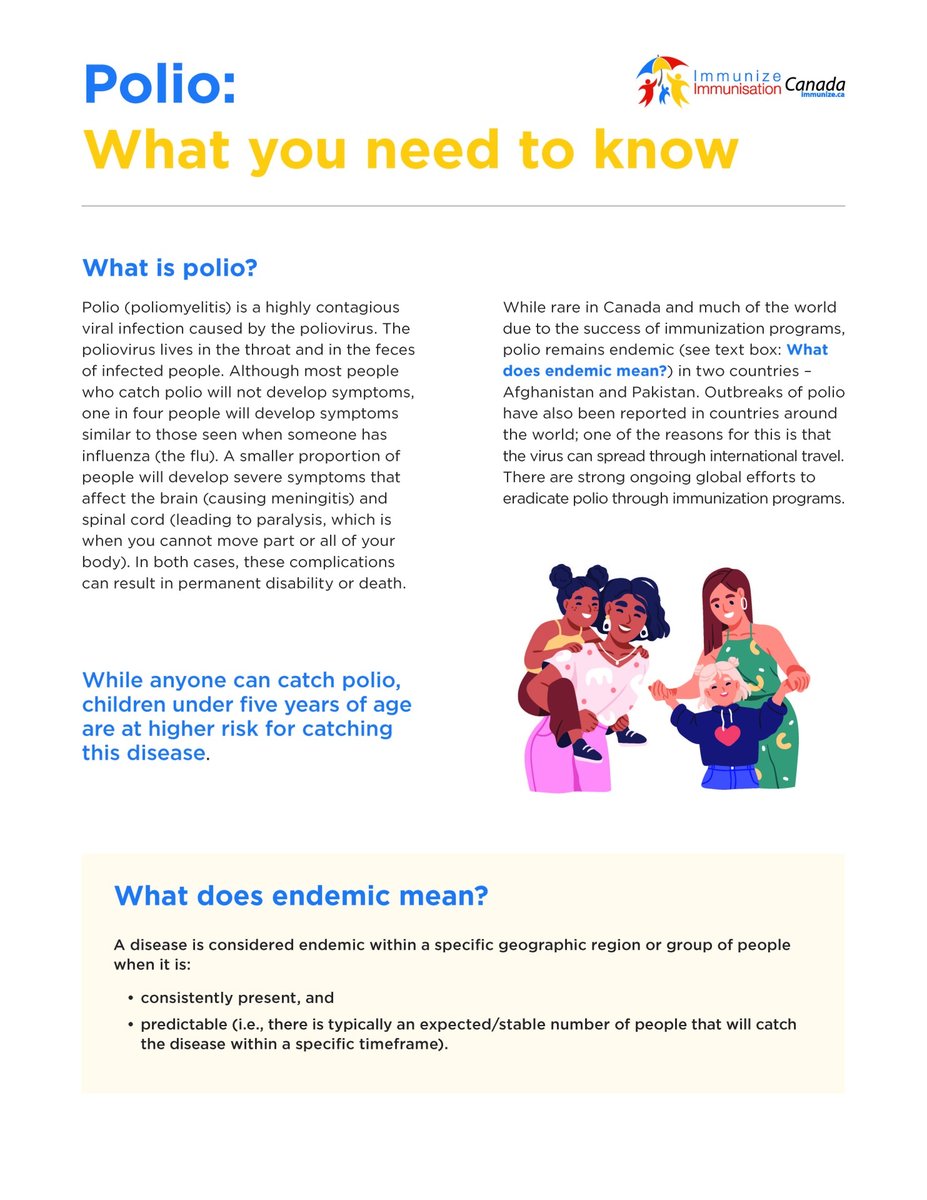
Today polio is almost eradicated thanks to a safe and effective vaccine.
#endpolio
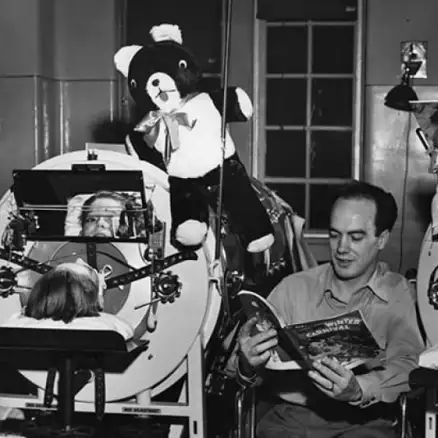
Today is World Polio Day.
Canada's Connaught Labs played a critical role in the development of the polio vaccine by Dr. Jonas Salk.
📸 Winnipeg Tribune
Learn more in my Deep Dive 👇
https://t.co/mACr01LB8d