ABD'nin 40 trilyon dolarlık borcunu ödemenin iki yolu var. İkisinde de kazanan taraf aynı.
Dünyanın en zengin adamı kendi ülkesi için şunu söyledi.
Yapay zeka ve robotlar zamanında gelmezse iflas edeceğiz.
Elon Musk'a göre başka hiçbir şey bu borcu çözmüyor.
Sadece o robotları yapmaya yetecek kadar zamana ihtiyaç var.
Dün ABD Hazinesi tam olarak o zamanı satın aldı.
Hazine, uzun vadeli tahvillerinde en fazla 6 milyar dolarlık geri alım yapacağını duyurdu. Bu alımların üst sınırı daha önce 2 milyar dolardı.
Geri alınan tahviller 10 yıldan uzun vadeli. Yerine konan borç ise birkaç aylık.
Bu işlem borcu ödemiyor.
Uzun vadeli tahvili azaltıp borcu kısa vadeye kaydırıyor.
Peki o kısa vadeli borcu kim alıyor?
ABD'de çıkan yeni bir yasa, stablecoin şirketlerine rezervlerini nakitte ya da 93 günden kısa vadeli ABD tahvilinde tutma zorunluluğu getirdi.
Bu paranın önemli bir kısmı kısa vadeli tahvile gidiyor.
Yani telefonunda stablecoin tutan sıradan bir insan, farkında olmadan ABD'ye borç veriyor.
Borç Ağustos'ta ilk kez 40 trilyon doları geçti. Yıllık faiz ödemesi de 1 trilyon doları aştı.
Toplanan her verginin %19'u faize gidiyor.
Bu rakam vergiyle kapanmaz.
Kapanmasının iki yolu var.
Birincisi ekonominin borçtan hızlı büyümesi. Borç aynı kalır ama ekonomi büyüdükçe yük hafifler.
İkincisi paranın değer kaybetmesi. Borç yine aynı kalır ama ödendiği para erir.
Elon Musk birinci yolun geleceğini söylüyor.
Yapay zekanın küresel üretimi %20 ile %30 artırabileceğini belirtiyor.
Robotlar da eklenince ekonominin 10 katına çıkabileceğini ekliyor.
Önümüzdeki 10 yıl içinde 1 milyar insansı robotun tüm insanlıktan fazla üreteceğini düşünüyor.
Aynı adam 2036'ya kadar paranın anlamsızlaşacağını da söylüyor.
Parayı mal ve hizmet almak için istiyorsunuz. İkisi de sınırsız olursa paranın işlevi kalmıyor.
ABD Hazinesi ise ikinci yola göre hareket ediyor.
Bu ikisi birbirinin alternatifi değil. Biri hedef, diğeri o hedefe varana kadar ayakta kalma yöntemi.
Dün satın alınan zaman da bu.
Şimdi asıl mesele.
İki yol da aynı kapıya çıkıyor.
Robotlar her şeyi üretebiliyorsa, üretilebilen her şey ucuzlar. Para da basılabilen bir şey.
Yani hangisi olursa olsun, elinde para tutan kaybediyor.
Kazanan ise üretilemeyeni tutan.
ABD'nin Bitcoin rezervi kurması ve Çin'in yıllardır altın toplaması bu yüzden tesadüf değil.
İki ülke de her ihtimale hazırlanıyor.
1966'da bir adam şunu yazdı.
Altın standardı olmadan tasarrufları enflasyondan korumanın bir yolu yoktur. Güvenli bir değer saklama aracı yoktur. Olsaydı devlet onu elde tutmayı yasaklamak zorunda kalırdı, tıpkı altın için yaptığı gibi.
Bunu yazan kişi Alan Greenspan'di.
1987'de ABD Merkez Bankası'nın başına geçti ve 18 yıl boyunca o parayı basan adam oldu.
Bugün ABD güvenli bir değer saklama aracını yasaklamıyor. Devlet rezervi ilan ediyor.
Bu benim şahsi analizim.
Gelişmeleri izliyorum, sizi bilgilendireceğim.
.@AB_insights Inigo Fraser Jenkins on why 60/40's diversification is broken:
“If we're talking about long duration government bonds, I think it's likely they will not perform the diversifying role that they've performed historically.”
“This post 2022 experience of a positive correlation of stock and bond returns actually looks more normal.”
Listen: https://t.co/mfnaUo1DNT
Watch: https://t.co/RnIrcDOgFb
Which interest rate matter for US share prices? The answer: US corporate bond yields
Historically, the correlation between US stocks and both US Treasury yields and the Fed funds rate varied between positive and negative.
Yet, the correlation between US equity prices and US corporate bond yields has always been negative.
The chart demonstrates that when US corporate bond yields rise (shown inverted), US share prices drop. This holds true regardless of whether the rise in corporate bond yields stems from higher US Treasury yields or wider credit spreads.
With credit spreads currently very narrow (they cannot drop much more), any increase in Treasury yields will lead to lower share prices.
Alternatively, Treasury yields could fall if the economy stumbles. But in this case, credit spreads would widen rapidly. The latter would push corporate bond yields higher, which would be a bearish signal for stocks.
Paul Tudor Jones asked Stan Druckenmiller what he thought about Ray Dalio, who had said a day earlier that even with perfect research he still wanted 15 equally sized, uncorrelated bets:
“I have the polar opposite investment philosophy. Put all your eggs in one basket and watch the basket carefully”
this is him explaining how large his positions actually became, the four days in which he lost $1 billion, and what Paul Tudor Jones told him on the phone the morning he finally gave up
“I’ve had a 350% long-equivalent position in 10-year bonds. In currencies, I’ve had 200% to 300% of my NAV in a single currency. My track record in those positions is much better than in the others”
“I bought the NASDAQ beautifully in 1999, sold it in early 2000, then bought at the exact top. I knew I was trapped. By the time I cleaned up the mess I had created, it had probably cost me 15%”
bookmark & watch the full conversation, then read the article below ↓
A los 30 años, borracho y sin trabajo, me senté en el borde de la cama y pensé: "Anthony, no puedes seguir así".
Había llegado a Londres desde Gales con un sueño: ser actor. Pero el sueño se convirtió en pesadilla. El alcohol me controlaba. Perdía papeles, mi mujer me dejó, mis amigos me abandonaron. Pasaba los días en bares oscuros y las noches en camerinos vacíos.
Una noche, en 1967, entré en una reunión de Alcohólicos Anónimos. Tenía miedo. No del alcohol, sino de mí mismo. De la debilidad que sentía al pedir ayuda.
No bebí un solo trago en 57 años.
Después llegó la sobriedad. Y con ella, el trabajo. "El hombre elefante", "Los restos del día", "El Silencio de los Corderos... un Oscar y muchos premios. Una carrera que todavía hoy continúa.
Pero la fama no curó las heridas. Tuve que aprender a vivir conmigo mismo a aceptar mi pasado y a perdonarme.
Hace unos años, durante la pandemia, grabé un video que se hizo viral. Hablaba de no rendirse. Hablaba de la vejez, de la soledad, del valor de seguir adelante. No lo hice por fama. Lo hice porque aquel chico de 30 años necesitaba oír esas palabras.
Si hoy te sientes perdido, si el alcohol o cualquier otra droga te está destruyendo, pide ayuda. Yo lo hice. Y aquí estoy, medio siglo después, sobrio y contándotelo.
No hay vergüenza en caer. La hay en no levantarse.
Anthony Hopkins🇬🇧
Aliko Dangote has stated that it costs more to ship goods from Lagos port to Accra than from Spain to Lagos.
Africa’s richest man highlighted a major issue in the continent’s trade system, pointing out that transporting goods between African countries is often more expensive than importing from Europe.
He noted that shipping from Lagos to Accra frequently costs more than moving cargo from Spain to Nigeria, which reflects ongoing inefficiencies, poor logistics, and trade barriers across Africa.
Hank Paulson, former Treasury Secretary, doesn't mince words. He says that when (not if) we hit a wall where the Fed is the only buyer of treasuries, it'll be vicious. That's a pretty urgent warning
Full report: https://t.co/G5tZllMOQL
Nigeria🇳🇬 has significantly reduced its dependence on oil, with oil revenue dropping from about 75% to 25% of government income in the last decade.
Tax revenue, especially from non-oil sources, now constitutes nearly 87% of total federation revenue.
Non-oil taxes account for over 70% of tax collections, rising from 25% in 2010 to about 75.9% in 2024/2025.
Between 2022 and 2025, Nigeria’s annual tax revenue nearly tripled, driven primarily by growth in non-oil tax collections.
The tariff's were supposed to bring back manufacturing.
A year after, what actually happened?
Well, the share of Asian imports relative to US domestic output actually WENT UP in 2025.
Companies rerouted supply chains through Southeast Asia and Mexico. They didn't build American factories.
Some products — apparel, computers, electronics - are impossible to reshore in any meaningful way. The cost is still lower offshore even with tariffs.
For products that could be reshored, the investment horizon is 5+ years. No one commits to that without certainty the tariffs survive the next administration.
The supply chains moved. The factories didn't.
Things are getting out of control.
Overnight we had all of the following hitting dangerous levels:
- Brent at $120
- US 30yr yields at 5%
- UK 10yr gilt yields at 5%
- Yen at 160
Stocks are surging but the macro alarm bells are ringing.
12 years of sub-10s over 100m!!🚀
Akani Simbine 🇿🇦 has now run under 10 seconds in the 100m for 12 consecutive years, extending his own record.
He opened his 2026 season with 9.98s, and has now reached 50 career sub-10 performances, the highest by an African man.
Sub-10 Annual Streaks:
🇿🇦 Akani Simbine 12
🇯🇲 Usain Bolt 10
🇯🇲 Asafa Powell 9
🇺🇸 Maurice Greene 8
🇺🇸 Tyson Gay 7
🇺🇸 Justin Gatlin 7
His marks:
2015 - 9.97
2016 - 9.89
2017 - 9.92
2018 - 9.93
2019 - 9.92
2020 - 9.91
2021 - 9.84
2022 - 9.97
2023 - 9.92
2024 - 9.82
2025 - 9.90
2026 - 9.98
South Korean stocks are making history again:
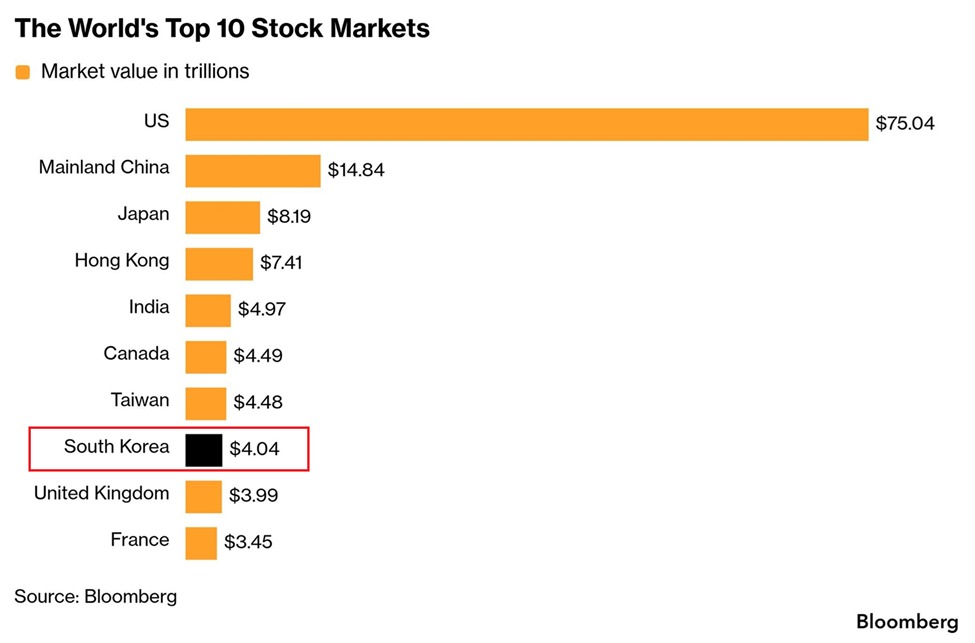
South Korea has overtaken the UK to become the world's 8th-largest stock market.
This comes as South Korea's total market capitalization has surged +45% year-to-date, to a record $4.04 trillion.
During the same period, the market cap of the UK has risen just +3%, to $3.99 trillion.
By comparison, at the end of 2024, the UK's market was ~2 times the size of the South Korean market.
The historic surge has been driven by Samsung and SK Hynix, two AI memory chip firms, which now account for over 40% of the Kospi index.
The index includes over 800 companies, highlighting how concentrated recent gains have become.
Meanwhile, the US market's value stands at a record $75.04 trillion, surpassing the following 9 markets combined by ~$20 trillion.
The AI revolution is redefining the global economy.
Ray Dalio warns of "something worse than recession" and points to 5 forces converging right now:
The billionaire investor isn't worried about a typical downturn. He's mapping something bigger.
"There's a financial problem. There's an imbalance problem," Dalio explains. "There are basically five big forces through history that drive everything."
Force #1: The debt cycle
"First, there's the money, credit, debt, economic cycle in which there's a building up of debt in a cyclical way that becomes too large and we're going to have problems. We're going to have a government debt problem."
In Dalio's framing, this is what's changing our monetary order.
Force #2: Internal conflict
"The second big force through time is the internal conflict force. The left and the right. Differences in wealth and values causing a conflict that we're seeing it changing our political order."
This is what's changing our political order internally.
Force #3: The great world order
"How countries deal with each other. When there's a rising power challenging existing power."
Dalio sees a major shift underway:
"Now we are going from multilateralism which is largely an American world order type of thing to a unilateral world order in which there's great conflict."
Force #4: Acts of nature
"Droughts, floods, and pandemics."
The historical wildcard that compounds every other pressure.
Force #5: Technology
"Technology changing and how they are coming together are the main forces behind this."
Dalio's core warning is about convergence.
No single force is the whole story:
"There can't be imbalances anymore in that environment."