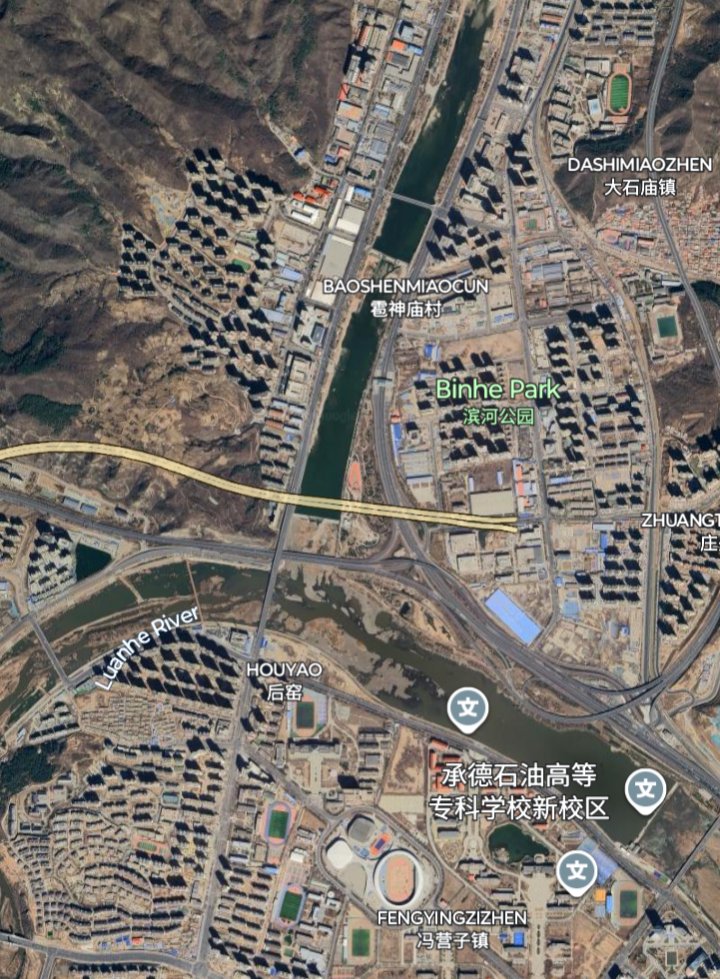
[ Field Footage ] The Chinese Communist Party (CCP) released floodwaters without any warning, sweeping away countless people and causing major casualties and loss of life. After the flood receded in affected areas, the scene is one of utter devastation — homes destroyed, infrastructure ruined. These regions now face at least two years of painful reconstruction and urgent epidemic prevention. Residents are bravely clearing the ruins with their bare hands.
There is an old saying: “After a great flood comes a great plague.” I pray that the disaster-stricken areas will be spared from another tragedy.
Critical epidemic prevention reminder for flood-hit regions:
Major floods almost always bring waterborne and infectious diseases due to contaminated water, poor sanitation, and destroyed infrastructure. Do not take this lightly:
- Never drink or use untreated floodwater — boil it thoroughly or use proper purification tablets/filters.
- Practice strict hand hygiene and personal cleanliness at all times.
- Dispose of garbage and human waste properly to prevent contamination of water sources.
- Control mosquitoes, rats, and other disease vectors immediately.
- Watch closely for symptoms such as fever, severe diarrhea, vomiting, jaundice, skin infections, or respiratory issues — seek medical help right away if they appear.
- Vulnerable groups (children, elderly, pregnant women) need extra protection and monitoring.
The CCP’s failure to issue timely warnings has already cost innocent lives. The Chinese people deserve transparent governance, real accountability, and competent disaster management, not cover-ups and preventable tragedies.
Pray for the victims and survivors. Stay vigilant. Prioritize epidemic prevention now, or the suffering will only get worse.
ACI — Aric Chen | Insights
Although I agree with much of Milanovic says about inequality, I disagree with him here. I think he is confusing "efficient" manufacturing with "competitive" manufacturing.
China is not necessarily building things better and more cheaply than Germany or France, but it is certainly selling them far more cheaply, and the difference shows up both in the extremely low share households receive of what they produce and in the astonishing rise in China's debt-to-GDP ratio. This was the same strategy Japan followed in the 1980s, and not only was it unsustainable, but the high debt and low consumption share ultimately forced Japan into an extraordinarily difficult adjustment.
If Germany and France were willing to suppress wages (or, which is the same thing, to eliminate social transfers), or if they were willing to borrow comparable amounts to subsidize the competitiveness of their manufacturers, it is pretty obvious that French and German manufacturers would also be able to sell much more cheaply in global markets.
But while these policies would increase manufacturing competitiveness, they would not make manufacturing any more efficient. They would simply shift part of the economic costs of production onto the rest of the country.
https://t.co/Dc0DYKbdic
Canada’s quota for Chinese electric vehicles is now in place. The question is no longer whether to allow them in, but how tightly to manage the risk. Very tightly, I’d argue, which is what I told the House of Commons Standing Committee on Industry and Technology. 1/8
A Boston seismologist has spent nearly two years trapped in a foreign prison over public research anyone can find on Google. Dr. Youlin Chen, a 54-year-old naturalized US citizen, was dragged away by Chinese state security at Beijing International Airport on November 5, 2024, and his life has been in limbo ever since.
The facts exposed by Reuters are terrifying. Dr. Chen, a respected civilian scientist with no security clearance, was formally charged with espionage in May 2025 simply for studying the seismic signatures of North Korean nuclear tests, an unclassified project openly funded by the US State Department and the Air Force Research Laboratory. He has endured over 100 intense interrogations under harsh conditions, and now faces a secret, closed-door trial with a potential death sentence.
The Trump administration intentionally kept the case quiet to protect delicate diplomatic channels, including direct talks between President Trump and Xi Jinping. However, with no progress made, Secretary of State Marco Rubio officially designated Chen as wrongfully detained on March 19, 2026. Experts suspect the Chinese Communist Party's real goal is to exploit Chen's specialized research to learn how to mask their own future underground nuclear tests.
When a regime can kidnap an American scientist and turn public academic research into a death-penalty espionage charge, is any international researcher truly safe?
If Richard Gere had shut up about the CCP and Tibet, he would not have found himself cancelled in Hollywood, where Chinese investment holds huge sway. Respect for his principled and long-standing defence of a persecuted people.
Chinese couple at KLIA2 boarding gate in Malaysia holds their young son over a public trash bin to defecate — right in the waiting lounge. Foul stench spreads everywhere, passengers cover their noses and leave in disgust.
Toilets are literally nearby.
After finishing, the mother casually walks to the bathroom to wash her hands. Classic open-crotch pants habit exported abroad with zero public manners. 🇲🇾😷
The CCP's lazy central planners planned most of their cities on the flood zones, wetlands and river banks while blocking the natural path of the seasonal rivers!
In the US the federal government (EPA and @USACEHQ) only allow development of wetlands and flood zones with often cost prohibitive geo-engineering and environmental and flood mitigation, the CCP simply blocked the rivers and built on the river beds!
🚨 Youlin Chen, a Chinese-born American seismologist who has published US-funded work on detecting North Korean nuclear tests, has been detained in China for nearly two years and faces trial on spying charges.
Secretary of State Marco Rubio on Mar 19 designated Chen as “wrongfully detained,” making his release a top US priority. The Trump administration has withheld a public announcement to allow space for high-level diplomacy aimed at securing his freedom, according to his wife, Yufang Rong.
Chen, who became a US citizen in 2011 and lives in Boston, Massachusetts, is the only American currently held in China designated as wrongfully detained.
Rong expressed concern that Beijing has decided even before putting Chen on trial to find him guilty of espionage, a crime that in China carries a possible sentence of up to life in prison or even the death penalty for cases deemed especially grave.
“I believe they will convict him no matter what and the trial will be behind closed doors,” said Rong, who is also a seismologist but does not collaborate on her husband’s work.
US embassy officials have visited Chen several times, but Chinese officials are always present, preventing him from speaking freely, said Rong. She retained a Chinese lawyer, but he was allowed to see Chen only after he had been detained for more than 13 months.
Chinese officials have interrogated her husband more than 100 times about his work on the seismographic signatures of North Korean nuclear tests, said Rong.
Eric Lebson, a former US national security official whose hostage advocacy organization, Global Reach, is advising the family, said he believes China wants to use Chen’s expertise to improve its ability to conceal underground nuclear weapons tests through a technique called decoupling.
Lebson said a similar concern was expressed by experts on nuclear testing consulted by his group.
The Trump administration in Feb accused China of trying to mask a low-yield underground nuclear test blast on June 22, 2020, using the technique in which a device is detonated inside a large underground chamber to reduce the magnitude of the shock waves it produces.
China denies conducting the test.
Lebson said that Chen is employed by a US government contractor, and has never had a US security clearance or performed classified work.
His research on North Korean test blast seismic waves has been funded by the State Department and the Air Force Research Laboratory. It was done in collaboration with Chinese academics, it used publicly available Chinese data and is viewable on the internet.
A Dec 2020 paper by Chen examined the magnitude of North Korea’s six known nuclear test blasts and ways to differentiate their seismic signatures from those of earthquakes.
The cover page states that the paper was written for the State Department’s arms control bureau and “approved for public release.”
Under China's state-secrets law, Chinese authorities retain broad powers to retroactively classify public data, such as official statistics, as national security secrets, potentially implicating anyone who possessed or shared previously open-source information.
Chen was arrested by Chinese state security officers at Beijing International Airport on Nov 5, 2024 as he prepared to fly home to Boston after visiting family and lecturing on his work at two universities.
At the beginning of his detention, Chen was subjected to “harsh conditions,” including being forced to sit all day on a hard stool without being allowed to stand, read or exercise, and was unable to obtain medications for his diabetes and other health problems.
Since then, it has been difficult to learn the conditions of his confinement. Chen has lost 30 to 40 pounds (13.6 to 18.1 kg), is given insufficient food with little protein, fruits or vegetables, and receives only poor-quality medications.
He was charged with espionage on May 1, 2025, but has not yet stood trial.
https://t.co/X9uI0KB4Z7
Why was I the worst in college and the best at my current work???
Cuz my professors r UFWD, their career path will be: being nominated as provincial CPPCC member➡️ national CPPCC member, maybe joining a 🇨🇳 satellite party, and be a DDG level cadre
China has, for the first time, placed individual citizens' overseas investments under a national security review.
New in @ChinaBriefJT, with Charles Sun, on the State Council's outbound investment regulation (Order No. 837), effective July 1:
1."Resident individuals" are now outbound investors under national law: approval, reporting, security review, and penalties. The prior regime reached only enterprises.
2.The review reaches wealth already offshore. Transfer, disposal, and reinvestment of existing assets are all covered. Money already outside the PRC does not exit the framework.
3.Penalties have teeth: forced disposal within a set period, confiscation of gains, fines tied to the investment amount, and multi-year bans.
4.Yet compliance is impossible for now. No grandfather clause, and the implementing rules that would let holders file or regularize have not been issued.
5.The regulation attaches to residence, not account location. Moving the account to Hong Kong, now the world's largest cross-border wealth hub at nearly $3 trillion, changes the venue, not the exposure.
Private outbound flows face a security screen while Beijing courts foreign inflows. No U.S. or European regime subjects residents' investments in the PRC to comparable ex-ante approval.@JamestownTweets
https://t.co/o0MPUv8pKP
China detains US seismologist who has studied North Korean nuclear tests https://t.co/R2LgWoKKHT Chen was arrested by Chinese state security officers on November 5, 2024, at Beijing International Airport as he prepared to fly home to Boston after visiting family and lecturing on his work at two universities,
US Secretary of War just drew a hard line: “China didn’t build Panama Canal, doesn’t operate it & won’t weaponize it. We’re taking it back from China’s influence.”
Doesn't matter who built it. We shouldn't let China take anything, whether it's South China Sea or Panama Canal
@PLMattis@DesmondShum I guess students do want the white privileges in red China. Also professors need to pimp their students to the PRC govt so they could get interviews in return.
Well said. I would add that Taiwan has an indispensable role to play in developing the next generation of China experts.
Taiwan offers Chinese-language immersion, open academic inquiry, and the freedom to test competing interpretations of contemporary China. It should be a cornerstone of China studies before students conduct fieldwork in the PRC.
@DesmondShum is speaking from a great deal of experience and observation.
Its a travesty that the USG recognizes that it needs expertise -- and has done for a long time (Exhibit 1: https://t.co/24XFnO91db) -- but seems to have done little to address these challenges including on ways to deal with concerns about security clearance vetting after people return.
Beijing puts a number of restrictions around genuine engagement, despite trumpeting people-to-people ties (largely an excuse to channel engagement through approved Party channels). Controlled channels can still be useful, but only if we're realistic about what information and experience is in those channels.
The best approach would be to accept that these are structural constraints to certain, necessary forms of knowledge and awareness that the outside world requires. And then identify ways to circumvent those controls, especially at early stages of a career when there is relatively more freedom to explore. The Boren NSEP is grossly insufficient for this.
China (including its government and ruling party) are far too important to be left to incidental initiatives to understand it. A more systematic approach to learning is necessary.
Study China. Don’t Study Under the CCP.
In recent years, many have expressed concern about the declining number of American students studying in China and what that means for the future of American expertise on the country.
I think the more relevant question is not simply how to get more American students to study in China, but how to help China bound exchange students develop genuine expertise on China.
The following article in The Straits Times, like many before it, largely assumes that sending more students to China is inherently beneficial. I disagree. The real issue is preparing students to operate in a CCP-controlled environment so they can extract the most valuable insights from China without allowing their understanding to be shaped by the Party’s carefully curated narrative.
The CCP does not leave these exchanges to chance. The experience is carefully designed and managed—from roommates and coursework to ideological content embedded in teaching, organised trips, and the people foreign students are encouraged to meet. It is curated for a purpose.
If the free world is serious about building the next generation of China experts, every student participating in an exchange programme in China should first complete a mandatory pre-departure course.
That curriculum should include:
- The U.S. government’s strategic assessment of China and the reasoning behind it.
- A concise history of modern China and the evolution of CCP rule, so students understand the political and historical context they are entering.
- Training on how to recognise propaganda, narrative management, and influence efforts.
-Practical guidance on avoiding legal, political, and security risks while living in China, including how to recognise and avoid situations that could expose them to coercion, compromise, or criminal liability.
- Strategies for getting beyond the official foreign-student experience by building independent relationships and seeing China outside of the curated bubble.
The free world absolutely needs more people with first-hand knowledge of China. Reading reports from the comfort of an American campus is no substitute for living in China, speaking the language, and understanding the country firsthand.
But sending youngsters into a tightly managed political environment without proper preparation does not build China expertise. It allows the CCP to help shape it.
The objective should not simply be to increase the number of exchanges, but to ensure that students return with a deeper and more independent understanding of China—one formed through critical judgment, rather than through a narrative prepared for them by the Party.
I often criticized Lindsey Graham. But this weekend, I learned his full story:
- Orphaned young, he adopted & raised his little sister instead of letting her go into the system.
- Grew up dirt poor, racking balls in his parents’ pool hall.
- In search of opportunity, he joined the Air Force. Served 33 years. Retired a Colonel.
- Then spent decades in Congress, earning respect across the aisle.
- Bashed Trump hard in ~2016, then respected the will of the voters, and grew to become a loyal ally.
- Humble. Devoted to his constituents.
- Driven by patriotism (even when misguided). Never in it for the money. Could've cashed in any time like most of his colleagues.
- That Disney trip everyone mocked? Just a good uncle taking his beloved nieces. He smiled through (and ignored) the hate to protect his family.
RIP to a self-made American original.