New in @ForeignPolicy 🧵 with @chrisnyeeee
On the Pentagon's list of "Chinese military companies," Alibaba now sits a few lines above AVIC, the state firm that builds China's fighter jets. AVIC's place there is beyond dispute. Alibaba's rests on nothing more than being "affiliated" with a regulator and a ministry, no customer or contract named.
Liu Xiaobo was awarded the Nobel Peace Prize in 2010 for his long and non-violent struggle for fundamental human rights in China. However, he was prevented from attending the prize ceremony.
In 2017 Xiaobo passed away while held in isolation under guard.
Well said. I would add that Taiwan has an indispensable role to play in developing the next generation of China experts.
Taiwan offers Chinese-language immersion, open academic inquiry, and the freedom to test competing interpretations of contemporary China. It should be a cornerstone of China studies before students conduct fieldwork in the PRC.
When Yao Shunyu moved from OpenAI to lead Tencent’s AI team, he:
- Halted benchmaxxing, realized it was adding garbage to the model
- Had to borrow GPUs from the marketing team
- Replaced heads of pre-, post-training, infra with talent from ByteDance, Kimi, DeepSeek, Meituan
China has, for the first time, placed individual citizens' overseas investments under a national security review.
New in @ChinaBriefJT, with Charles Sun, on the State Council's outbound investment regulation (Order No. 837), effective July 1:
1."Resident individuals" are now outbound investors under national law: approval, reporting, security review, and penalties. The prior regime reached only enterprises.
2.The review reaches wealth already offshore. Transfer, disposal, and reinvestment of existing assets are all covered. Money already outside the PRC does not exit the framework.
3.Penalties have teeth: forced disposal within a set period, confiscation of gains, fines tied to the investment amount, and multi-year bans.
4.Yet compliance is impossible for now. No grandfather clause, and the implementing rules that would let holders file or regularize have not been issued.
5.The regulation attaches to residence, not account location. Moving the account to Hong Kong, now the world's largest cross-border wealth hub at nearly $3 trillion, changes the venue, not the exposure.
Private outbound flows face a security screen while Beijing courts foreign inflows. No U.S. or European regime subjects residents' investments in the PRC to comparable ex-ante approval.@JamestownTweets
https://t.co/o0MPUv8pKP
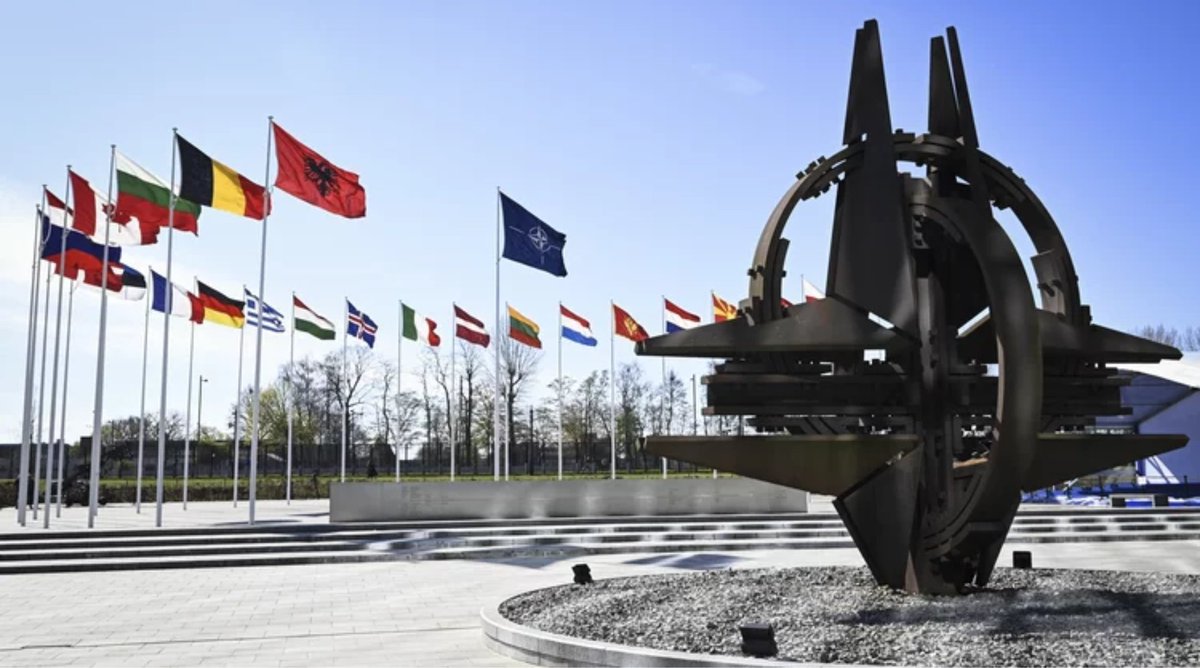
As the latest NATO summit gets underway in Turkey, @McFaul makes the case for why the United States needs NATO, and how leaders can reform and strengthen the alliance for the future.
🌐 READ MORE: https://t.co/cWzdasP62A
"Testing ballistic missiles in international waters without following the proper protocols poses risks to the international community," writes CSIS experts. On July 6, China conducted its first SLBM test into international waters.
Read: https://t.co/snC7WlV0X7
"Whenever a new AI model comes out, there are all these different assessments that happen… But we haven't had any way to assess what happens to human agency when we deploy these models in different decisionmaking contexts." https://t.co/e9F6dCeIae
How has the US-China Commission (@USCC_GOV) shaped strategy over 25 years? Randall Schriver and Mike Kuiken break down the 2027 Taiwan timeline, tech competition, and over-the-horizon risks.
https://t.co/fqQaYWfkmf
#China#NationalSecurity#Taiwan@IIPS_org | @HooverInst
@dennisw5 I don’t think “Zhang Shuguang’s appointment serves the purpose of chipping away at Zhang Shengmin’s powerbase.” They are just two fruits from the same tree...
A hugely underrated part of China's biotech rise was its accession to the International Council for Harmonisation (ICH) in 2017.
It was like China's WTO moment for biotech. China benefited tremendously from syncing up with global regulatory standards and practices for drug development, improving its own domestic industry, and helping it integrate into global drug markets. It helped to lay the groundwork for the boom in multi-billion-dollar drug licensing deals with global pharma companies.
I keep emphasizing this key theme: China has made the most progress when integrating further into the global system, not withdrawing from it. A lesson here for other countries as well.
Under Xi, China's techno-industrial policy has shifted from prioritizing growth and catch-up to prioritizing national security, technological self-reliance, and frontier leadership.
This report outlines how that system operates in practice: https://t.co/XqiLPa6htP
Revisiting The Peloponnesian War is essential to understanding the challenges of our own time. I remain deeply grateful for the opportunity to study this timeless work with Josiah Ober at Stanford, reading it closely, paragraph by paragraph, over the course of several months with an outstanding group of fellows from the Department of Political Science. It continues to shape how I think about power, strategy, democracy, and war.
“Modern-day Athenians, trumpeting the virtue of strength, would do well to heed Thucydides’s warnings if they don’t want to court their own disasters,” writes Jonathan Kirshner.
https://t.co/pRNZg8R7Vj
I went to see I Know Who You Are, https://t.co/BlXN5D9j5T directed by Xiaogang Feng, on America’s 250th anniversary.
Perhaps the greatest gift the United States offers, both to its own people and to a world in turmoil, is the enduring belief that every individual deserves the freedom to live, to think, and to choose.
The film offers a powerful reminder that, across the Pacific, another great power has followed a very different historical path. Many people there have shown extraordinary courage, yet they devoted, and sometimes sacrificed, their entire lives to ideological causes larger than themselves. They witnessed their nation achieve extraordinary progress over the past several decades, while also living through profound human tragedies.
That tension between national achievement and individual freedom is what makes this film so compelling.
On this very day, I was reminded of Fang Fang’s words:
“A speck of dust in the age can fall on each person like a mountain.”
That is precisely what this film portrays: history is never abstract. Its greatest weight is always borne by ordinary people.
I strongly recommend this film to China scholars, China watchers, policymakers, and anyone interested in understanding modern China. It is now showing in theaters, at least here in California.