WTF is this maze cast into your automatic transmission?
It’s a mechanical computer that picks the right gear for you. Runs on oil, not electricity. Worked out decades before the microchip.
Here’s how it works:
- The inputs. Two oil pressures. One rises with road speed. One rises with how hard you press the gas. That’s all it knows: how fast am I going, and how fast do I want to go.
- The job. Route oil to the right clutch so the right gear engages for what you’re asking of the car.
- How it works. A spool, a small grooved cylinder, slides in a bore. Oil pushes each end; harder push wins. Speed pressure on one end, throttle plus a biasing spring on the other.
Slide one way it blocks a passage, slide the other it opens one: oil floods a clutch, the clutch locks, that’s your gear. Floor it and throttle pressure shoves the spool over, drops you a gear, the car surges.
Ease off and speed pressure wins, sliding it back to grab the next gear up. Two pressures, fighting it out.
- Why a maze? No valve decides alone; each one’s output is another’s input. So oil has to run from every valve to the others that depend on it, and oil can’t jump gaps. Every connection needs its own channel carved in metal. Dozens of valves, hundreds of passages, none crossing where they shouldn’t
- It’s a routing problem. Same one a chip designer faces: connect many things to many things without the paths colliding. They even stack plates with a drilled separator between them, like vias on a circuit board.
The result: a real-time computer in aluminum and oil. Only in old-school automatics. In a manual, you’re the computer.
Roughly 30–50% of a modern CPU's dynamic power is consumed by a structure that executes no instructions, holds no data, and performs no arithmetic.
The clock distribution network. It burns more power than most functional units combined and its only job is delivering a square wave.
Took me almost a month, but it’s finally done.
I completely rewrote the first chapter of linux-insides about the Linux kernel initialization process. Now it should be aligned with modern kernels (up to master).
https://t.co/IHwrDtMSpw
En 1964, un diplomático argentino llevó la cuestión Malvinas al centro de la política mundial.
No fue un gesto simbólico. Fue una operación jurídica y diplomática brillante.
El alegato de José María Ruda en Naciones Unidas 🇺🇳.
Abro hilo 🧵
One day, 𝑒ˣ sees 𝑥² running down the street in a panic.
“What’s wrong?” asks 𝑒ˣ.
“There’s a Differential Operator in town!” yells 𝑥². “If I run into him too many times, I’ll disappear!”
“Don’t worry,” responds 𝑒ˣ. “I’ll go have a chat with him. No, don’t worry about me — he can’t hurt me. After all, I’m 𝑒ˣ.”
So 𝑒ˣ walks down the street to the Differential Operator. “My friend tells me you’re a Differential Operator,” 𝑒ˣ says pompously. “Well, I’m 𝑒ˣ.”
“Pleased to meet you, 𝑒ˣ,” says the Differential Operator. “I’m 𝑑/𝑑𝑡.”
🚨 BREAKING:
Iran didn't respond to US bombs with missiles.
They responded with GAME THEORY.
And in doing so, they may have just fired the most dangerous shot at the US dollar in 52 years.
Here's the move most people completely missed: 🧵
(Read this slowly. Share it widely.)
Raytheon’s latest SPY-6 radar contract is worth $3.2 billion. One electrical engineer in Morocco just open-sourced a phased array radar you can build from Gerber files on GitHub.
The cost ladder in radar is absurd. A Thales Ground Master 400 runs $30 million per unit. Morocco’s own air force bought eight Raytheon Sentinel radars for $67 million. The Navy’s SPY-6 engineering development contract alone was $386 million before a single production unit shipped. Commercial phased array systems for civilian use start around $250,000.
The AERIS-10 does electronic beam steering at 10.5 GHz, pulse compression, Doppler processing, and multi-target tracking on a real-time map. The 20km version uses a 32x16 slotted waveguide array with GaN amplifiers, 16 ADTR1107 front-end chips, a custom frequency synthesizer, and an FPGA handling all signal processing. GPS and IMU for accurate target coordinates when the platform moves. This is a real radar system, not a science fair demo.
The bill of materials for the extended version probably lands somewhere between $5,000 and $15,000 depending on component sourcing. Call it a 95% cost reduction from the cheapest commercial alternative. Everything is MIT licensed. Schematics, PCB layouts, FPGA code, Python GUI, all of it.
The defense procurement complex charges what it charges because the technology was classified, the supply chains were locked, and the buyer had no alternative. Open source collapses all three of those barriers simultaneously. A university lab, a drone startup, or a national defense ministry in a country that can’t afford Raytheon pricing now has a starting point that would have required a cleared facility and a nine-figure budget five years ago.
The creator is asking for beta testers, RF engineers, and FPGA developers. The project hit 20K views on X in 13 hours. That ratio of technical depth to viral speed tells you how much pent-up demand exists for radar technology outside the defense contractor paywall.
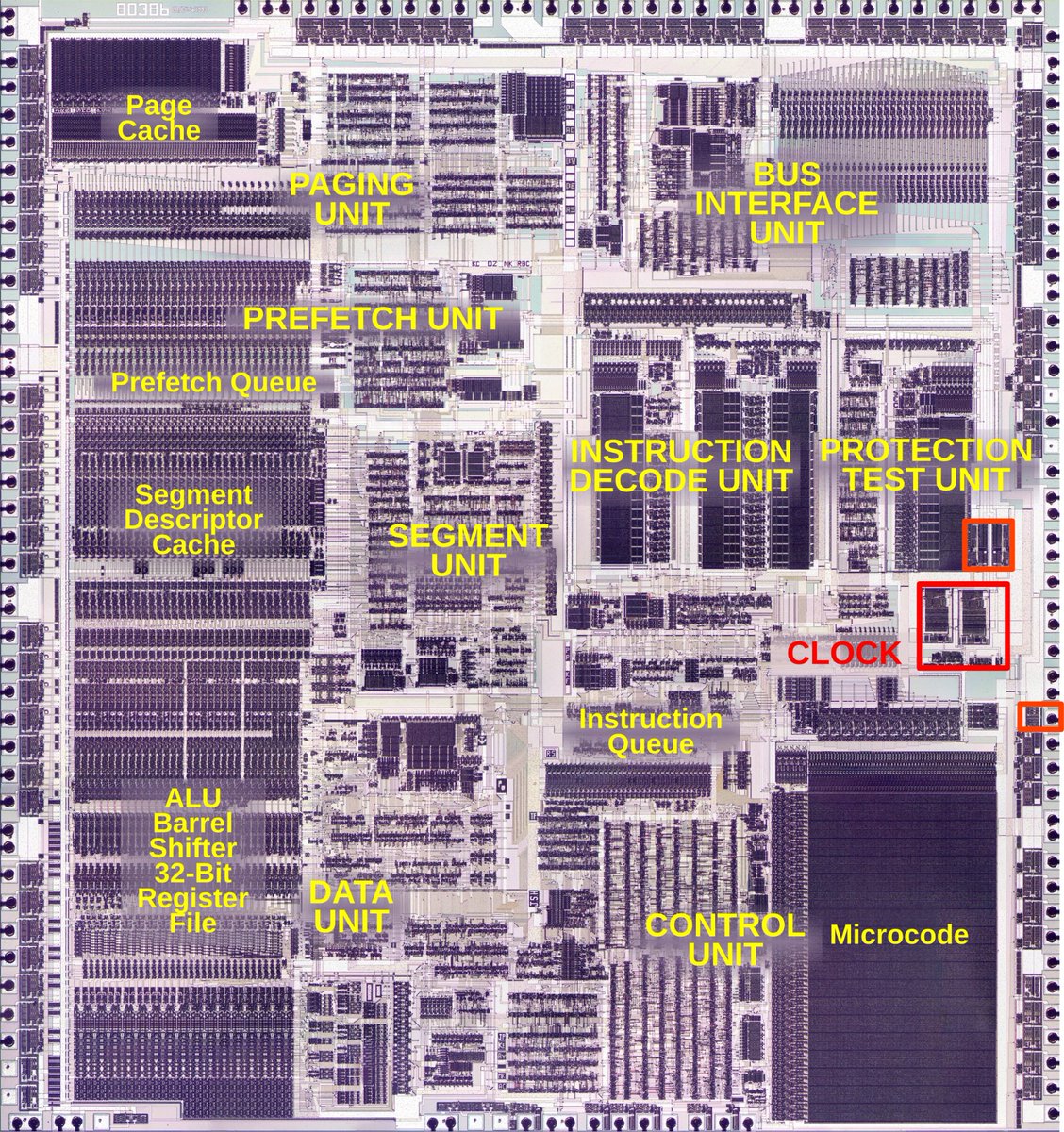
New post 🚀: how the 80386 implements its sophisticated protection mechanisms 🛡️ — with detailed microcode and hardware analysis.
https://t.co/0n5IOl6PDb
Este youtuber grabó un tutorial de 1 hora para dar tus primeros pasos con Claude Code aunque no sepas programar ni hayas tocado la terminal.
Consejos, casos de uso y proyectos reales para que aprendas desde 0.
Te lo dejo aquí ⬇