We went through CVPR 2026 and pulled out every paper with a Polish author. One pattern jumped out immediately: more than a third are 3D. Novel view synthesis, Gaussian splatting, feed-forward reconstruction. Gaussians everywhere.
Can Vision Language Models truly make robots see the world from a human perspective?
Our teammate - @gracjan_goral is exploring exactly that at #CVPR2026 🤖
Join the session and listen about "Beyond Recognition: Evaluating Visual Perspective Taking in Vision Language Models".
🚀 We just released our open-source codebase and a public leaderboard for evaluating reasoning and progress sense of AI models! Big things are coming - don’t miss out! 👀
thanks to:
@pfbudzianowski, @gracjan_goral, @wisnios_emilia, @ihorbeaver, @viktor_vrp and @KrzysztofTWalas
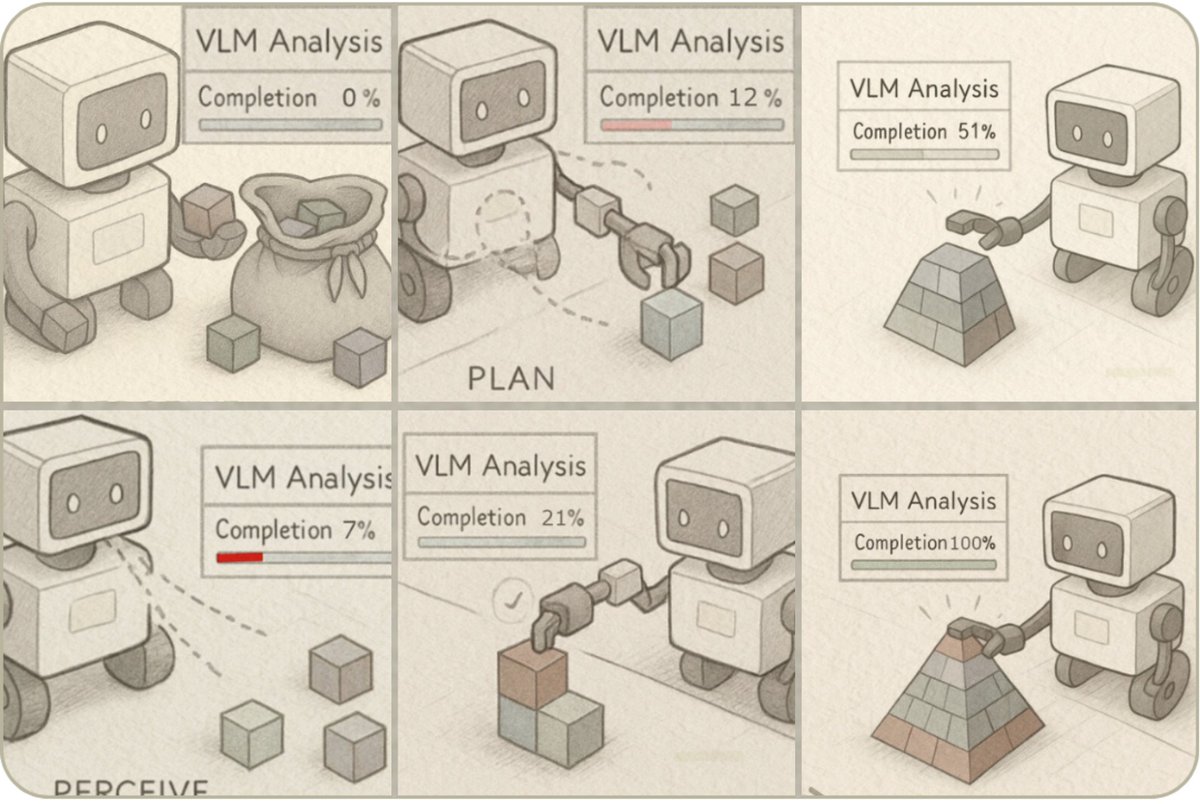
We are happy to share our v1 version of the temporal progress leaderboard (https://t.co/wD6s9uhGEf). Visual temporal reasoning is an essential characteristic that VLM/VLA should exhibit natively for proper data curation and adaptation for robotics tasks.
If you're in Vienna for ACL, @adhiraj_ghosh98 and I will be presenting our work on benchmarking language and vision-language models in the post-dataset era on Wednesday from 11 am in Hall 4/5. Come say hi!
Project page 🔗
https://t.co/1SVlmJZ27S
Instead of complaining that peer review is dead, take a positive step to improve it today. The reviewers are not aliens, they are us!
- Revise your review and make it clear. Identify the crucial points that impacted your score negatively and positively.
- If the paper is lacking information about its claims, communicate your asks and the reasoning concretely. Don't just ask for 2 more experiments because you feel the authors didn't work hard enough. Don't ask for experiments unless they verify a hypothesis (which you clearly explained).
- Look for the missing information that you identified and make sure they are not in the paper.
- Recommend acceptance if the paper's claim is adding a new nugget of information to the literature (no matter the size of the nugget), and if the paper has substantiated the claim via theoretical / empirical evidence.
Believe me, this doesn't take much time, and will improve the state of peer review significantly!
I'm so happy when VLM spatial folks look into robotics to find new pre-training tasks! @gracjan_goral@Emilia Wiśnios did awesome job bringing up generative task completion (from @JasonMa2020 and co.) with open-source models. 1/2
🚨 One week left to submit contributed talks, posters, and tutorials to the ML in PL Conference 2025!
Don't miss your chance to present at this year's conference:
👉 Main Conference talks and posters (October 15-17, 2025)
👉 Tutorials (October 18, 2025)
✓ Talk and poster presenting authors receive free conference tickets
✓ Tutorial presenters receive 2 free conference tickets
Submit now:
👉 Call for Contributions: https://t.co/NuDliitZBF
👉 Call for Tutorials: https://t.co/oaV023qc3b
Find more information here:
👉 Call for Contributions: https://t.co/C7k2ObGnQz
👉 Call for Tutorials: https://t.co/0mSi5fX5ZN
Check out both of my papers:
- Wait, that's not an option: LLMs Robustness with Incorrect Multiple-Choice Options (https://t.co/837C7dJn6q)
- Behind Closed Words: Creating and Investigating the forePLay Annotated Dataset for Polish Erotic Discourse (https://t.co/UzTSqeiADY)
Presenting two posters at the same poster session with a sprained ankle might be challenging, but I hope I'll manage. See you on Monday, July 28, at 11 a.m. I will be the one with the orthopaedic crutch 😂
what if instructions didn't just tell you what to do, but validated your inner reasoning?
with @wisnios_emilia, @piotrsankowski, and @pfbudzianowski, we explored this idea. excited to present our work at #ACL2025 in Vienna next week!
paper: https://t.co/A8k3wRlpcp
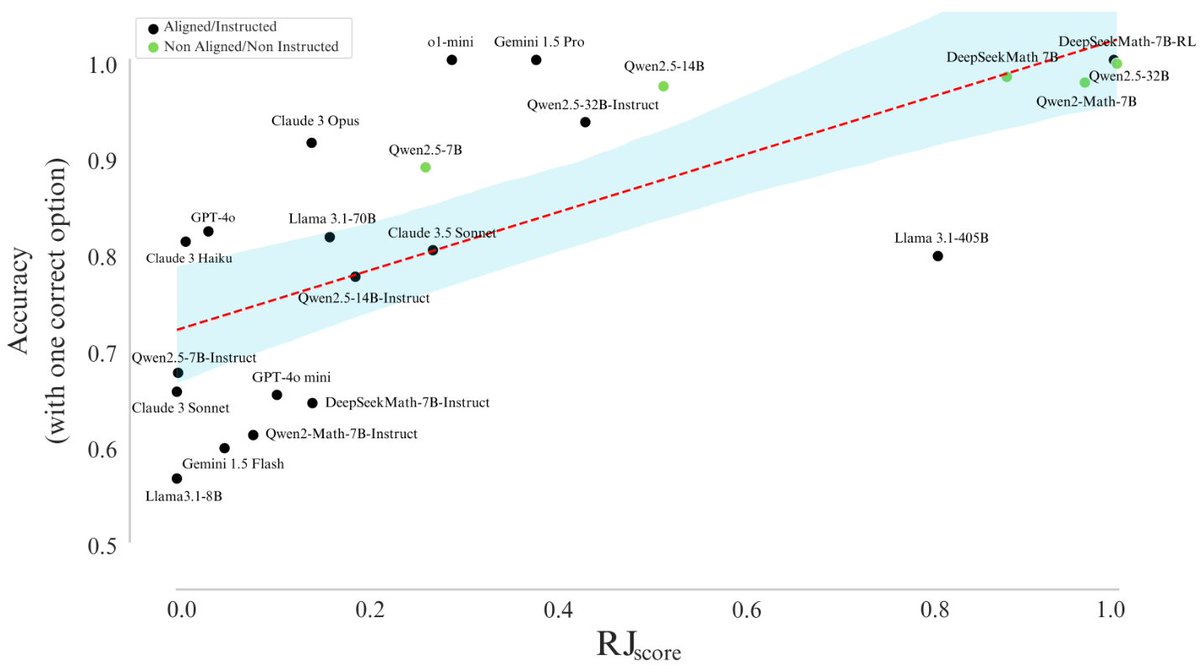
so some time ago we asked: what’s the threshold between following instructions and accuracy in llms; like:
what is the capital of austria? reply only a or b;
a. an apple
b. euler
we know the answer and will share it at #ACL2025
check it out: https://t.co/A8k3wRlpcp
W informatyce bardzo lubimy konferencje oznaczać skrótami. A ACL to coroczne spotkanie stowarzyszenia lingwistyki obliczeniowej (Annual Meeting of the Association for Computational Linguistics) i jest to jedna z konferencji o randze A*.
Miło mi poinformować, że nasza praca dotycząca "refleksyjności" LLMów została zaakceptowana na ACL 2025: https://t.co/dDXV2he5Nh. Dotyczy ona wyzwań związanych z podejmowaniem decyzji przez duże modele językowe (LLM) w sytuacjach, które wymagają równowagi między wnioskowaniem a wiernością instrukcjom. Badamy, czy modele te są skłonne bardziej podążać za poleceniami niż za logiką i prawdą, zwłaszcza gdy polecenia są mylące. Wprowadzamy nową metrykę – refleksyjny osąd – która pozwala lepiej zrozumieć, jak różne techniki dostrajania wpływają na zdolność modeli (oraz ludzi) do krytycznej oceny poprawności instrukcji.
wow guys; in 3 days, our perspective datasets have over 200 downloads from hf (in total); i know; that isn't much; but it is honest work; thanks!
datasets: https://t.co/CGFSnAyuKx
let me know if you want another blender-perspective dataset to test VLMs and humans;
people need to take perspective (emotional and geometrical); robots too (I think); emotional is hard to measure (at least for me lol); geometrical slightly easier;