Why does empty space have energy?
Empty space sounds like the simplest thing in the universe. Remove the planets, stars, gas, dust, radiation and particles, and what should remain is nothing. A perfect absence. A blank stage.
But modern physics says that “nothing” is not really nothing.
In quantum field theory, the vacuum is not an empty container. It is the lowest energy state of the fields that fill the universe. Even when there are no particles present, those fields still exist. They fluctuate. They carry structure. They can produce measurable effects. Empty space, in this view, is not dead. It is physically active.
This is one of the strangest ideas in modern physics, but it is not just speculation. Effects associated with the quantum vacuum appear in real experiments, such as the Casimir effect, where two very closely spaced conducting plates experience a tiny force because the allowed vacuum fluctuations between them differ from those outside. The effect is subtle, but it shows that the vacuum has physical consequences.
Then cosmology makes the problem much bigger.
In Einstein’s general relativity, energy does not just sit passively inside the universe. Energy gravitates. It affects the geometry of spacetime. So if empty space has energy, that energy should influence the expansion of the universe.
And this is where dark energy enters the story.
In the standard cosmological model, the accelerated expansion of the universe is usually described by the cosmological constant, Lambda. It behaves like a fixed energy density of space itself. Unlike matter, which becomes more diluted as the universe expands, this energy density remains constant. As space grows, there is more space, and therefore more of this vacuum-like energy.
That sounds almost absurd. But observationally, something like it is required. Measurements of distant supernovae in the late 1990s showed that the expansion of the universe is accelerating. Later observations of the cosmic microwave background, galaxy clustering and baryon acoustic oscillations built a consistent picture in which dark energy dominates the present universe.
So the vacuum might not be empty. It might be part of what drives cosmic acceleration.
But here is the problem: when physicists try to estimate the vacuum energy using quantum field theory, the result is catastrophically wrong. In the most naive calculations, it can be about 10^120 times larger than the value inferred from cosmology. That is not just a small mismatch.
This isn’t just a math error. It’s a crisis.
This is known as the cosmological constant problem, and it remains one of the deepest unresolved problems in modern physics.
The real mystery is not simply that empty space has energy. The deeper question is why it has so little.
If quantum fields contribute vacuum energy, why does almost all of it not gravitate in the way naive calculations suggest? Is there a cancellation mechanism we do not understand? Is the cosmological constant not really vacuum energy? Are we missing something about quantum gravity? Or is dark energy something dynamic rather than a true constant?
This last possibility has become especially interesting recently. The simplest model says dark energy is constant, with an equation-of-state parameter w = -1. But newer cosmological data, especially from DESI, have raised hints that dark energy might evolve with time rather than remain perfectly constant. These results are not yet a discovery. More data are needed.
If dark energy changes over time, then it may not be vacuum energy in the simple cosmological constant sense. It could be a field, sometimes called quintessence, slowly evolving as the universe expands. That would be a major shift. It would mean the acceleration of the universe is not caused by a static property of space, but by something dynamical.
Still, the cosmological constant remains the simplest explanation. It fits a huge range of observations remarkably well. Even the current hints from DESI are not a clean rejection of Lambda. They are a hint, not a verdict.
This is why the vacuum energy problem is so important. It sits at the intersection of two extraordinarily successful theories that do not yet fit together: quantum field theory and general relativity. Quantum theory tells us that empty space should have structure. Gravity tells us that energy curves spacetime. Cosmology tells us that the universe is accelerating. But when we try to combine all of this into one clean picture, the numbers do not make sense.
This isn’t a small technical issue. It may be telling us that we still do not understand what the vacuum really is.
Maybe empty space is not a passive background. Maybe it has hidden degrees of freedom. Maybe the energy we call dark energy is not the vacuum energy predicted by quantum fields, but a separate phenomenon. Maybe the solution requires quantum gravity. Or maybe the answer will be something we have not yet imagined.
What makes this question so powerful is that it turns “nothing” into one of the deepest physical problems we have.
The vacuum is not just emptiness. It may be where quantum physics, gravity and cosmology collide most sharply.
And until we understand why empty space has energy, or why it appears to have so little, we probably do not fully understand the universe itself.
Birds can literally see the Earth’s magnetic field thanks to specialized light-sensitive proteins in their eyes.
Migratory birds possess one of nature’s most remarkable superpowers: the ability to navigate thousands of miles with incredible precision. At the center of this ability is a protein called Cry4 (cryptochrome 4), found in the retinas of their eyes.
When blue light enters the bird’s eye, it triggers a quantum reaction in the Cry4 proteins known as the radical pair mechanism. This ultra-sensitive process responds to the orientation and strength of the Earth’s magnetic field, essentially turning the bird’s visual system into a biological compass.
Scientists believe birds don’t just sense magnetism — they may actually see it. The quantum fluctuations likely appear as subtle visual patterns, shadows, or color gradients overlaid on their normal vision, much like an augmented reality heads-up display.
This extraordinary adaptation allows migratory birds to cross oceans, deserts, and mountain ranges with pinpoint accuracy, relying on the strange rules of quantum mechanics to guide them on their epic journeys.
E = mc² is not the complete equation for the total energy of a particle in special relativity. It specifically describes rest energy, which is the energy a particle possesses when it is at rest (momentum = 0).
The full energy equation is:
E = γmc²
Here:
E is the total energy,
m is the rest mass,
c is the speed of light,
γ (gamma) is the Lorentz factor: γ = 1 / √(1 - v²/c²),
v is the particle's velocity.
When the particle is at rest (v = 0), γ becomes 1, so the equation simplifies to E = mc².
A similar and often more fundamental form is the energy-momentum relation:
E² = (pc)² + (mc²)²
where p is the momentum. Once again, when p = 0 (at rest), this reduces to E = mc².
Therefore, while E = mc² is accurate and revolutionary for describing rest mass energy equivalence, it doesn't fully account for moving particles. For those, kinetic energy must be included using the complete relativistic expressions mentioned above.
After two years of work, we’ve made an AI Scientist that runs for days and makes genuine discoveries. Working with external collaborators, we report seven externally validated discoveries across multiple fields. It is available right now for anyone to use. 1/5
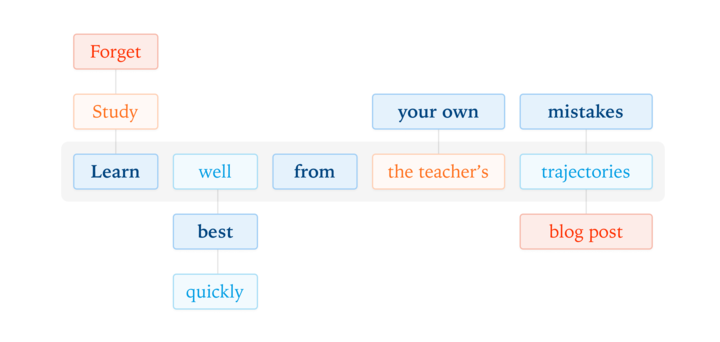
Our latest post explores on-policy distillation, a training approach that unites the error-correcting relevance of RL with the reward density of SFT. When training it for math reasoning and as an internal chat assistant, we find that on-policy distillation can outperform other approaches for a fraction of the cost.
https://t.co/JhpyWQOpBe
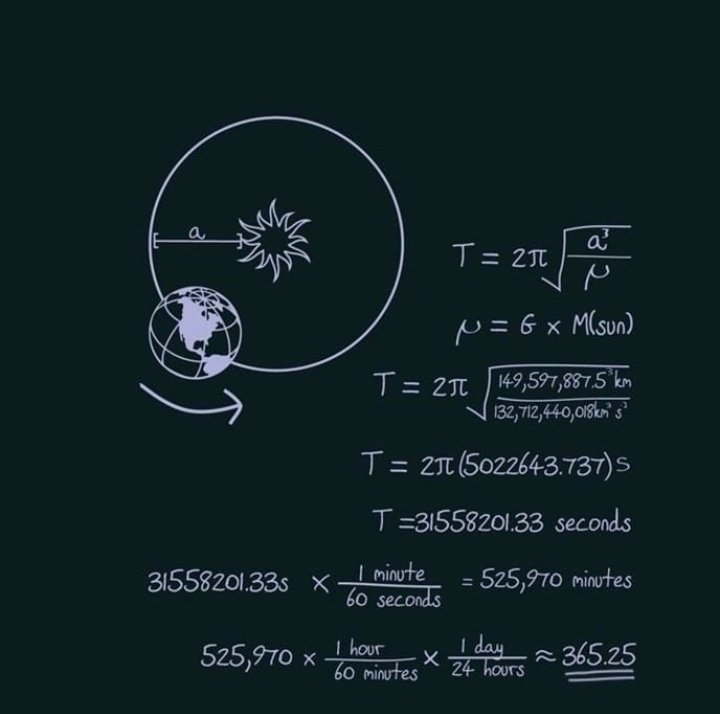
The orbital period of a celestial body is given by the formula based on Kepler's Third Law and Newton's Law of Universal Gravitation. The orbital period of Earth is approximately 365.25 days.
A brief history of Quantum computers 👇
1905: Albert Einstein explains the photoelectric effect and suggests that light consists of quantum particles or photons
1924: Max Born uses the term quantum mechanics for the first time
1925: Werner Heisenberg, Max Born, and Pascual Jordan formulate matrix mechanics, the first formulation of quantum mechanics
1925-1927: Niels Bohr and Werner Heisenberg develop the Copenhagen interpretation, one of the earliest and most common interpretations of quantum mechanics
1930: Paul Dirac publishes The Principles of Quantum Mechanics, a standard textbook on quantum theory
1935: Albert Einstein, Boris Podolsky, and Nathan Rosen publish a paper highlighting the counterintuitive nature of quantum superposition and arguing that quantum mechanics is incomplete
1935: Erwin Schrödinger develops a thought experiment involving a cat that is simultaneously dead and alive, and coins the term “quantum entanglement”
1944: John von Neumann publishes Mathematical Foundations of Quantum Mechanics, a rigorous mathematical framework for quantum theory
1957: Hugh Everett proposes the many-worlds interpretation of quantum mechanics, which suggests that every possible outcome of a quantum measurement actually occurs in a parallel universe
1961: Rolf Landauer shows that erasing a bit of information dissipates a minimum amount of energy, known as Landauer’s principle
1965: John Bell proves that quantum entanglement cannot be explained by any local hidden variable theory, known as Bell’s theorem
1973: Alexander Holevo proves that n qubits cannot carry more than n classical bits of information, known as Holevo’s theorem or Holevo’s bound
1980: Paul Benioff proposes a model of a quantum Turing machine, a theoretical device that can perform any computation using quantum mechanical principles
1981: Richard Feynman suggests that simulating quantum systems would require a new type of computer based on quantum mechanics
1982: David Deutsch generalizes Benioff’s model and proposes the concept of a universal quantum computer
1984: Charles Bennett and Gilles Brassard develop a protocol for quantum key distribution, which allows two parties to securely exchange cryptographic keys using quantum states
1985: David Deutsch and Richard Jozsa devise an algorithm that can solve a specific problem faster than any classical algorithm, known as the Deutsch-Jozsa algorithm
1991: Artur Ekert proposes another protocol for quantum key distribution based on quantum entanglement, known as the E91 protocol
1992: David Deutsch and Richard Jozsa extend their algorithm to handle multiple inputs, known as the Deutsch-Jozsa algorithm
1994: Peter Shor discovers an algorithm that can factor large numbers in polynomial time using a quantum computer, known as Shor’s algorithm
1996: Lov Grover invents an algorithm that can search an unsorted database in square root time using a quantum computer, known as Grover’s algorithm
1997: Isaac Chuang, Neil Gershenfeld, and Mark Kubinec demonstrate the first implementation of Shor’s algorithm using nuclear magnetic resonance (NMR) techniques
2000: David DiVincenzo proposes five criteria for building a practical quantum computer, known as the DiVincenzo criteria
2001: IBM researchers implement Grover’s algorithm using NMR techniques and achieve a modest speedup over classical algorithms
2007: D-Wave Systems claims to have built the first commercial quantum computer, but its validity is disputed by many experts
2019: Google announces that it has achieved quantum supremacy by performing a calculation on a 53-qubit quantum processor that would take a classical supercomputer thousands of years to complete
2020: IBM demonstrates that its 65-qubit quantum processor can perform calculations beyond the reach of any classical computer
📷 An IBM QC photographed by James Estrin
We're excited to announce the the open-source release of Hunyuan-MT-7B, our latest translation model that just won big at WMT2025! 🚀🏆
Hunyuan-MT-7B is a lightweight 7B model that's a true powerhouse. It dominated the competition by winning 30 out of 31 language categories, outperforming much larger models under strict open-source and public-data constraints. On the widely-used Flores200 benchmark, its performance rivals closed-source models like GPT-4.1.🌍💬
Why is this a game-changer?
🔹Unmatched Efficiency: The 7B model delivers lightning-fast inference, processing more translation requests on the same hardware.
🔹Deployment Flexibility: It's cost-effective and can be deployed on a wide range of hardware, from high-end servers to edge devices.
🔹Broad Language Support: It supports 33 languages and 5 minority languages, providing comprehensive coverage.
But that's not all. We're also open-sourcing Hunyuan-MT-Chimera-7B, the industry's first open-source integrated translation model. It intelligently refines translations from multiple models to deliver more accurate and professional results for specialized use cases.
Download and deploy it for your next project!
👉Try it now: https://t.co/MOGj8Uwzwu
🔗Code: https://t.co/4vu7kJRVFh
📄Technical Report: https://t.co/5qlD55cDzb
🤗Hugging Face: https://t.co/yw7yF1LEWw
🔧AngelSlim: https://t.co/pFp6vgpWdI
In your brain, 86 billion neurons chitchat with one another in complex networks. Neurons can carry meaning in binary code — whether they fire or not — and also in analog, in a symphony of signals with variable patterns, strengths and frequencies. https://t.co/PRjgxkNBkO
In chaotic systems, the smallest fluctuations get amplified. As scientist Edward Lorenz put it in the 1960s and 70s, even a seagull flapping its wings might eventually make a big difference to the weather. Here's how scientists came to understand what chaos is, and how to wrangle it: https://t.co/7DrDEptTcB
#Numerical relativity offers a new computational approach to probe what may have occurred before the #BigBang, challenging assumptions about the universe’s origins and structure. https://t.co/mae3HM9IMx https://t.co/AgJj4dADat
Tensors are instrumental in physics, machine learning and even biology. Einstein once begged a friend to help him understand them, fearing he was going mad. Joseph Howlett explains how they work: https://t.co/OAkmeNPoEl
This is AMAZING.
You can ask ChatGPT-4o to explain Warren Buffett’s portfolio, analyze market trends, and even spot risky stocks.
Here are 10 essential prompts for every trader: