I Need employment.
Multiskilled, research, prior auth, accounting, auditing, illness care. No diet advice please. Hi fat intolerant: gallbladder sludge.
Joe Laakso, PhD, Director of Science Policy, shares why it’s of critical importance to take action and protect NIH Funding research. You can make an impact in 30 seconds by adding your name to the campaign or share your story: https://t.co/7czGVJSREj
#ENDO2026
Targeting GLP-1/insulin-vagal signaling may inform novel therapies and dietary or nutritional interventions for #T2D.
Read here ➡️ https://t.co/QhJCCqDVC0
@AmDiabetesAssn@ADA_DiabetesPro@ADA_Pubs
Time-restricted eating matches dietitian-led care for glucose health in people at risk of diabetes after 4 months and is easier to stick with. A promising option where dietitians aren’t accessible #TRE#diet@ev_parr@leonieheilbronn@brookedevlin https://t.co/nZbL20BBsi 🔓
@ChrisPalmermd
I remember getting a prescription steroid cream & hearing a lecture about being careful to apply lightly to avoid absorption.
Now? Everyone is on the GLP-1 RA & ignoring the FACT, we do not understand the rebound effect when med is stopped.
Almost all of the biological, psychological, and social factors implicated in mental illness can be linked to metabolism. Stress, trauma, sleep, diet, exercise, inflammation, hormones, substance use, medications, social adversity, and genetics all influence metabolic function.
One reason I believe metabolism—and more specifically mitochondria—deserves consideration as a central factor in mental disorders is that metabolism is fundamental to life itself.
Metabolism doesn't explain everything, but it is one of the few frameworks that can plausibly connect a vast range of risk factors and biological findings across psychiatric disorders.
Humbled and grateful that our book just won a Silver Digital Health Award & was named a Doody’s Core Title! Head over to the blog to see why this recognition is meaningful to us and how these tools are helping busy providers and patients: https://t.co/4l41j8eLM0
@conscienhealth
@ConscienHealth I had a private discussion with a brilliant expert compounding pharmacist & I need to do some research. It turns out the outer shell around the new GLP-1 RA is designed to NOT dissolve until it passes the stomach.
An abstract from #ENDO2026 drew a press release to suggest GLP-1s make people exercise less. This observed association should prompt curiosity, not activate implicit bias against obesity treatment as a "lazy way out." Correlation ≠ Causality.
https://t.co/HhbUsafgsN
The General Medical Council must be investigated over what it knew about doctors involved in the Nottingham maternity scandal, the government’s new maternity adviser says
https://t.co/h1o3dghUeN
We hope you enjoy this June 2026 issue of @Gut_BMJ, showcasing exciting advances across immunology, microbiome science, hepatology, pancreatic cancer and inflammatory disease. This month’s issue highlights how translational research and systems biology are reshaping our understanding of inflammation, cancer progression and therapeutic resistance.
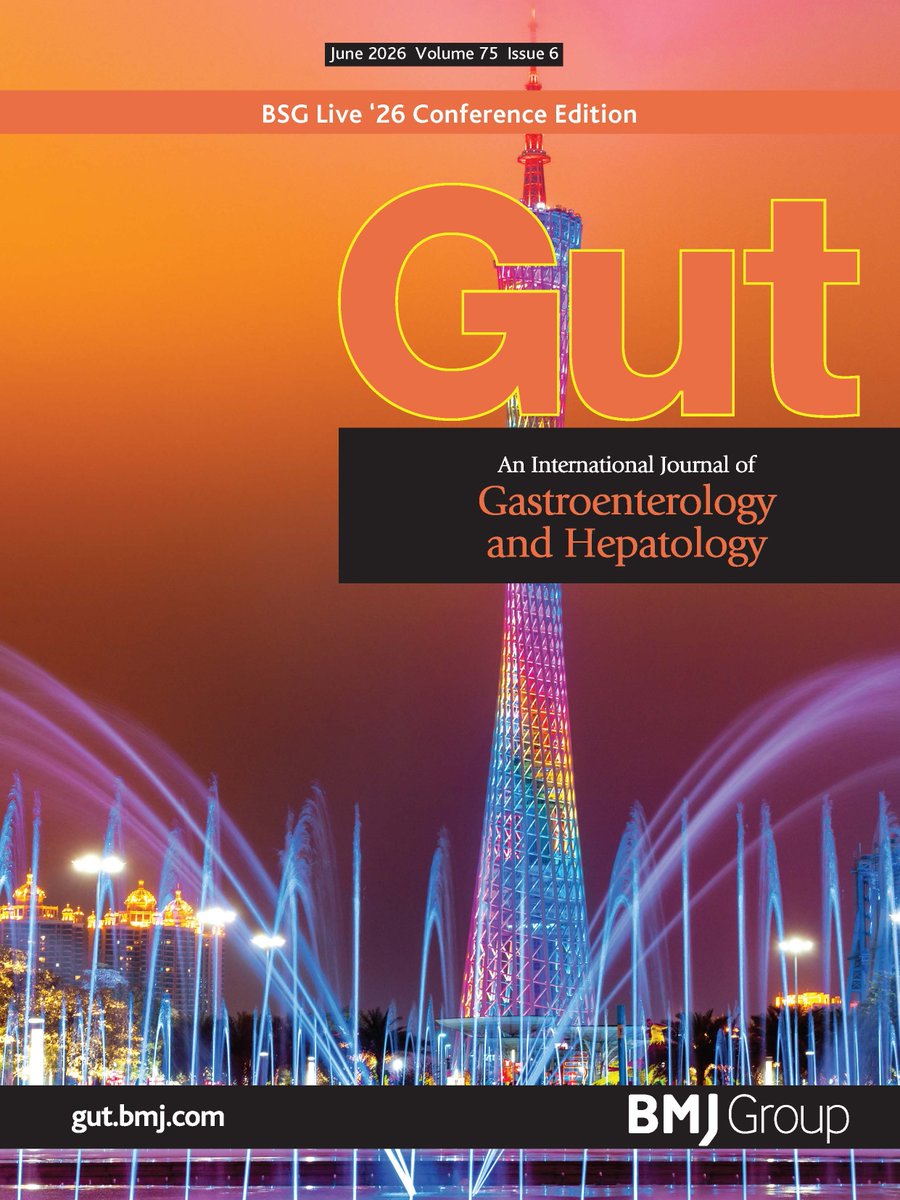
This issue also features an Editor’s Choice paper by Wu et al., highlighted on the #GUTFrontCover which shows the beautiful Canton Tower, Guangzhou, China. The paper is also discussed in the upcoming #GUTPodcast with Professor Wei Wang. The study explores how intraperitoneal translocation of gut microbiota induces NETosis and promotes endometriosis, providing fascinating new insight into the microbiome–immune axis in the disease and could reshape how we think about endometriosis pathogenesis and treatment.
There’s also major progress in cancer immunology this month:
• Tumour-infiltrating B cells are shown to influence chemoimmunotherapy response in cholangiocarcinoma
• MLCK1 targeting may reduce checkpoint inhibitor colitis without compromising antitumour immunity
• New mechanisms of resistance to CLDN18.2-targeted therapy are identified in pancreatic cancer
The microbiome remains front and centre too:
• Plant-derived nanovesicles modulate microbial metabolism in rheumatoid arthritis
• Gut microbial pathways continue to emerge as therapeutic targets across systemic disease
In hepatology, the issue explores:
• Novel fibrosis pathways involving ISG15
• Predictors of post-transplant rejection after immunotherapy in HCC
• A promising engineered vaccine strategy to overcome HBV immune tolerance
And looking ahead, reviews on AI-enabled Crohn’s disease management and spatial single-cell omics highlight how precision medicine is rapidly becoming reality.
Bottom line?
This issue captures the future direction of the field: combining immunology, microbiome science, AI and molecular medicine to deliver increasingly personalised care.
👉 Read the full June issue here:
https://t.co/UaGZemUXQ9
#Immunology #Microbiome #Hepatology #PancreaticCancer #IBD @FrontGastro_BMJ@BMJOpen_Gastro@BritSocGastro
Headlines are spinning out the story that lifestyle change is the "winning strategy" for preventing diabetes. A closer look tells us this narrative glosses over important factors in real life.
HT: @JAMA_current@AubreyNPR
https://t.co/9FC5IIdS5T
Proud to share that Faeth Therapeutics, the company I co-founded, goes public on Nasdaq today under the ticker $FTH.
We started Faeth to bring diet and metabolism into cancer treatment, with the hope of making a meaningful difference for patients. 1/4
Guess who’s at it again! @AnthemBCBS. Ran out of qulipta and they are refusing to fill it. So, let’s recap, 2 migraine medicines refused in less than a year. Migraines from falling down a flight of concrete stairs that haven’t been brought up to code in decades. #boycot