This launch ended up overlapping with a planned vacation. Watching Artemis II launch while sitting aboard a sea ship that would have been unfathomable 150 years ago excites me for the future. Can't wait until people are gathering for dinner on cruise ships to the moon and Mars!
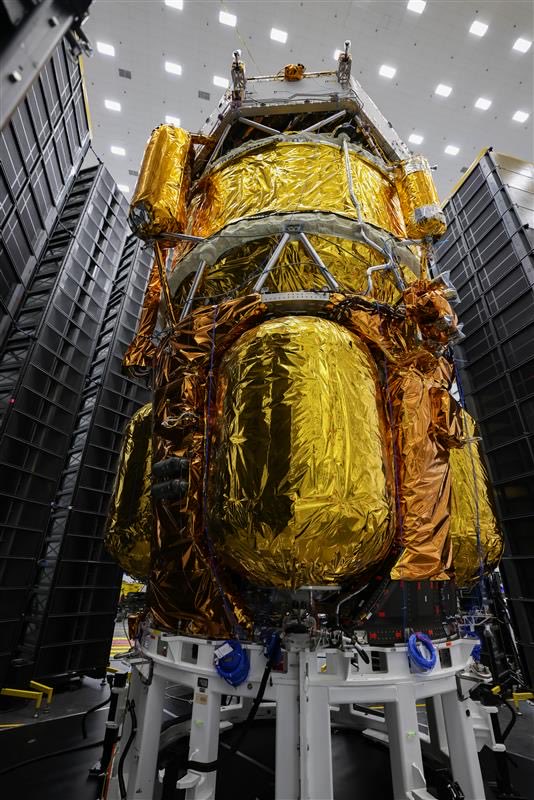
This week we completed direct field acoustic testing on our Blue Moon MK1 lunar lander, a major flight‑qualification milestone.
We surrounded the fully integrated lander with a ring of 34‑ft speaker towers to generate a near‑diffuse acoustic field, matching the New Glenn payload fairing environment at over 138 decibels overall sound pressure level. MK1 ran in a flight-like configuration: tanks pressurized with helium and nitrogen, batteries powering the vehicle, with all critical avionics and guidance systems operating.
43 triaxial accelerometers measured response during a two‑minute exposure at protoqualification levels. Because the lander's vibration environment is driven by acoustic loads, this test replaces traditional shaker-based vibration testing and more accurately represents ascent conditions.
Next stop: @NASA_Johnson for thermal vacuum chamber testing.
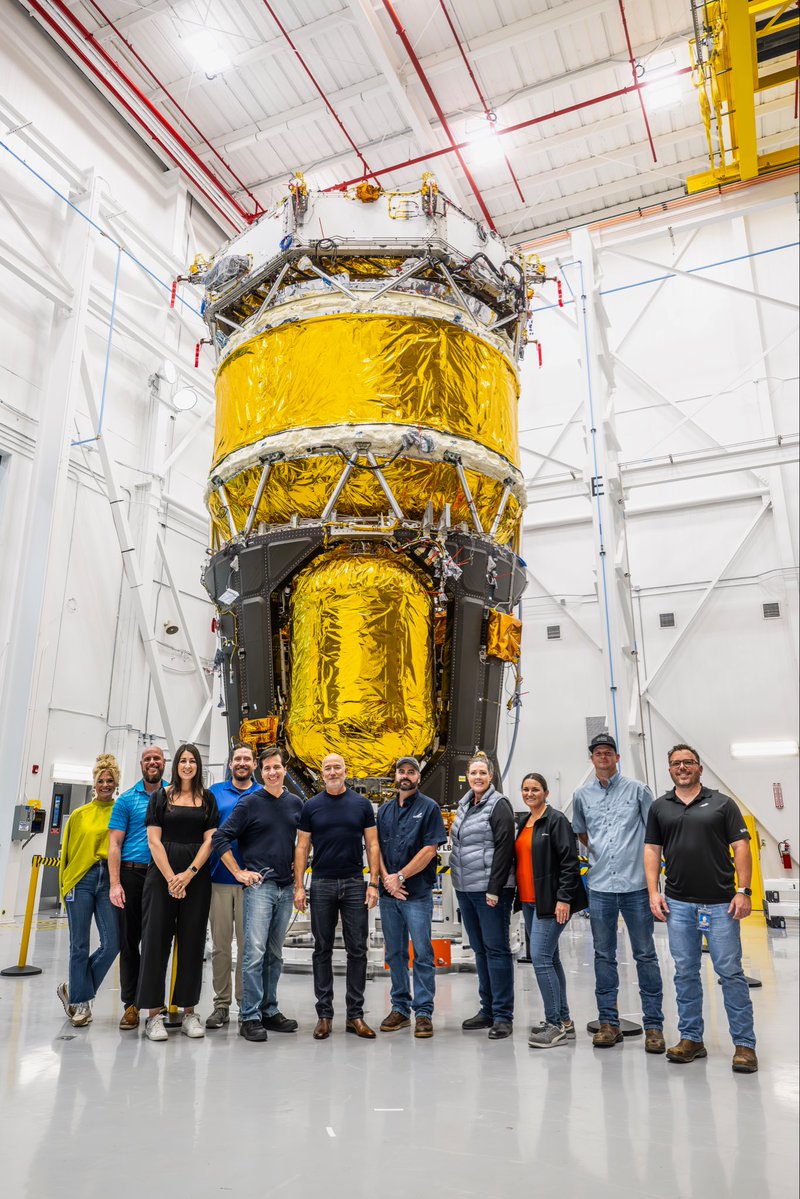
The Blue Moon MK1 flight vehicle that will land near Shackleton crater. We’ll soon be doing fully integrated checkout tests. At over 26 feet tall (8 meters), it’s smaller than our MK2 human lander but larger than the historic Apollo lander.
I'm so excited to lead this team getting ready to land on the moon. It's a true team of professionals who do it all from building out the control room to planning the training to executing commands. We are taking our first steps to open up the lunar frontier for all of humanity.
🌕 Sims today, Lunar South Pole soon
We’re getting close to the final stretch of training for our first Blue Moon MK1 mission. This month, we’re running end-to-end, high-fidelity simulations of several mission phases —launch, apogee‑raise burn, lunar orbit insertion, descent orbit insertion, landing, and surface ops. From our lunar Mission Control in Washington, controllers execute real procedures, send commands into a flight‑representative sim, and read telemetry from an emulation of the global network of ground stations and satellites we’ll use during the flight.
I'm proud to be part of a company that takes the time to really understand and learn from the things that don't go quite right. Our journey back to the moon and beyond will be filled with lots of lessons, but what an incredible journey to be involved in! https://t.co/gwRwthRyfB
@MrPeanut With that monacle and Mr. Monopoly hat, the only way Mr. Peanut is getting a date is by covering himself up in chocolate and a candy shell. #MadeToBeRoastedContest
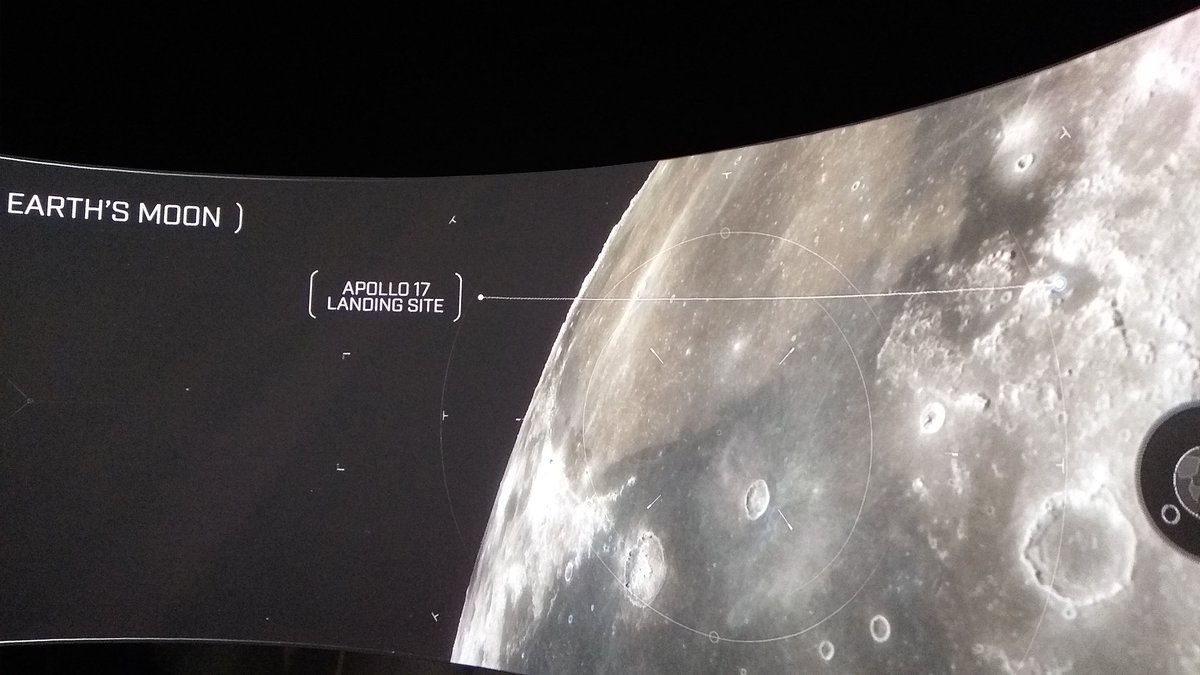
Was really impressed with the new exhibits at the renovated @airandspace museum. Makes me even more excited to put some new American landers on the moon in the near future!
Congrats to the #Cygnus team for a successful capture today. Completing the rendezvous down an entire solar array is a good demonstration of redundancy and design robustness.
Tomorrow will be the first Cygnus mission since OA-7 where I will not be in the control center to support. Love working moon landers but will miss flying Cygnus. Wishing best of luck to my @northropgrumman buddies for a successful mission of the SS Sally Ride!
Actual law: "A United States citizen engaged in commercial recovery of an asteroid resource or a space resource under this chapter shall be entitled to any asteroid resource or space resource obtained, including to possess, own, transport, use, and sell the asteroid resource..."
Check out the powerful #BE4 engine coming to life at our XEEx testing facility in West Texas. Seen here is a hotfire of a @ulalaunch flight engine for #VulcanRocket. 🔥🔥🔥
Sound on 🔊