IUCN has adopted the first-ever global policy on synthetic biology and nature conservation.
The policy was adopted by IUCN’s highest decision-making body, its Members’ Assembly, comprising the Union's Governmental, Non-Governmental, and Indigenous Peoples' Organisations, at the #IUCNcongress in Abu Dhabi.
Learn more ➡️ https://t.co/QXlLGZ7OsA
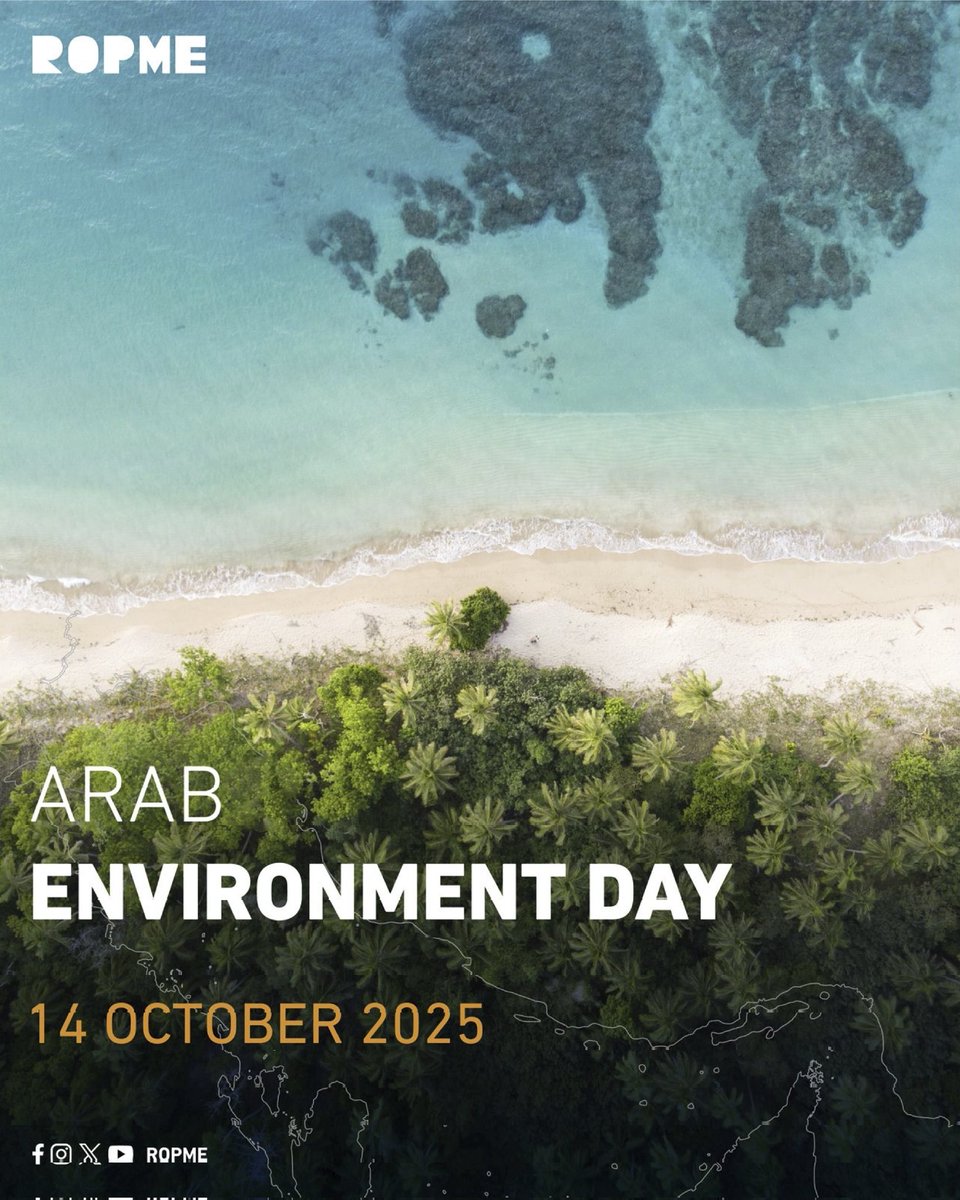
The Arab Environment Day
The Arab Environment Day aims to raise awareness of the increasing environmental challenges in the Arab world and to promote cooperation among relevant bodies to find effective and sustainable solutions to these problems.
The date commemorates the first Arab Ministerial Conference on Environmental Affairs, which held in Tunisia in 1986, where the League of Arab States decided to establish the Council of Arab Ministers Responsible for Environmental Affairs.
Key environmental issues in the region include increase of desertification, drought, aquatic pollution, biodiversity loss, ocean acidification, and climate change. In response, many Arab countries have launched initiatives to mitigate these problems and encourage sustainable development.
ROPME works closely with regional and international partners to address marine environmental issues in the region. To achieve this goal, ROPME has launched new strategic directions for the period 2026–2030, alongside multiple initiatives, events, and activities designed to advance the protection and sustainability of the marine environment.
Very humbled to have been part of the best team of academics I've ever come across. I hope I can impart some of that stardust on my current students 🌟 Thank you, again 🙏🏼 @ZSLScience@lborouniversity
Our Indian Ocean marine science programme supports established researchers and has a major focus on training the next generation of ocean scientists. A big congratulations to all our recent PhD Graduates for 2024!
@explorer_mel@hollystokes94@JoannaLHarris#PhDGraduates
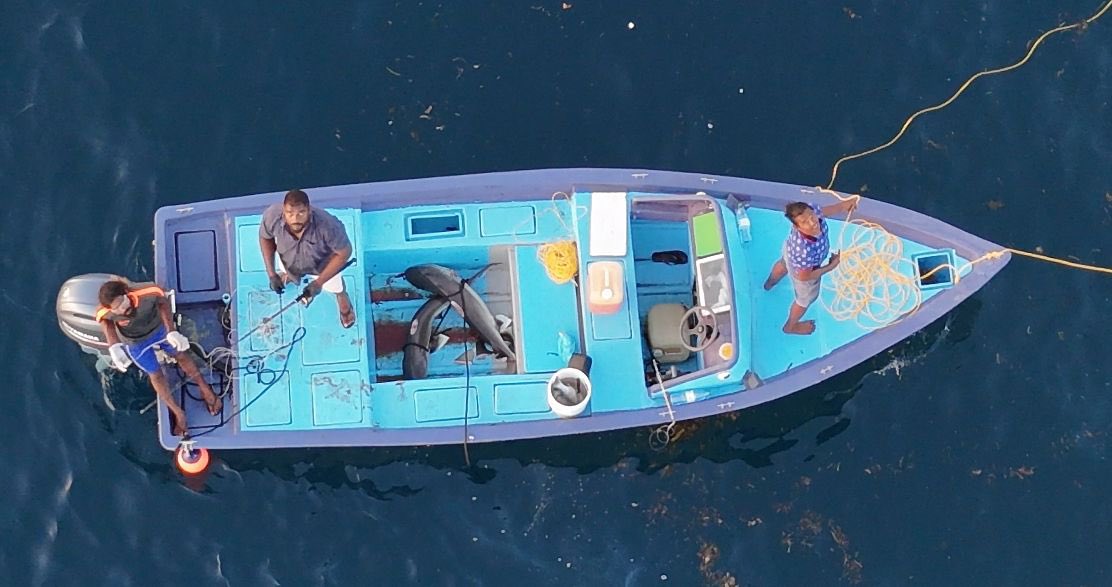
Drone technology catches three morons in the Maldives, deliberately catching and finning sharks... Illegal activity. No doubt these guys will be ID'd and sentenced. @MoEnvmv
We’ve been named as 1st in the UK and 2nd in the world by QS @worlduniranking!
This recognises Imperial as one of the best places to study, research, work and grow.
Thanks to everyone in our community for making this possible 💙
#QSWUR
Here's one of my new projects I'm really excited about! I'm rather humbled to be invited to work on an innovative new programme for #mangrove education and #conservation, led by @earthnaqa and other fantastic stakeholders and academics 💪🏼#projectearthlings#qatar
Some days it’s massive creels and tyres. Other days, it’s heartbreak in miniature, like this tiny bay in the NW of Scotland.
What we found was devastating: a shoreline blanketed in plastic confetti. Microplastics everywhere!
This is a useful compilation of social science resources for conservation researchers and practitioners, and an analysis of where gaps remain - take a look! Led by Diane Detoeuf, Emiel de Lange, Harriet Ibbett with many others https://t.co/T8WIggNl55 @Society4ConBio
This new 3D transformer VGGT is epic! (CVPR'25)
🔵 I just tried running it against 28 pics of my coral reef pictures (from GoPro) and in less than 15s got a 3D point cloud + camera positions ready.
🔵 Everything is end-to-end DL, no traditional SfM. Could instantly see all the holes in the data etc, despite the water being super murky.
🔵 Excited to try it on larger datasets and incorporate it into our workflow 🪸🌎
[PROTOCOL] How to 3D-map Coral Reefs with just a few GoPros 🪸🎥
A simple, low-cost way of creating permanent high-res snapshots of coral reefs for divers using 3D photogrammetry.
🔵 We were recently mapping coral reefs in East Java and I was running a mini photogrammetry workshop. A lot of you friends were reaching out about how to capture a 3D model of a coral reef so that it could be analysed and guide conservation/restoration decisions.
🔵 https://t.co/wGFmH6i1ju -- here is a step-by-step tutorial explaining how to map the reef using relatively cheap equipment! 🎥
🔵 Why? Coral reefs are so precious, beautiful, incredibly complex and threatened ecosystems. We need to understand deeply how coral reefs function, what practices work, what don't, to coordinate precise actions to protect and restore them. Coral reefs are the key to protecting other ecosystems! That's why we doing it.
🔵 Sadly, In 84% of the restoration cases in Indonesia [1] people never come back to monitor their reefs. In many cases those corals would likely just die (same in other countries). The hard truth is that restoration without N years of monitoring is basically a money laundry. But we can’t blame people for that! One of the problems is the huge monitoring costs, it’s just not accessible to everyone. Once monitoring is cheap, a lot of money would be channeled towards projects that work. The whole process would be more streamlined.
🔵 There's a solution! There are thousands of scuba diving centers in the world. Almost any dive center or its visitors have an affordable camera like GoPro. It’s fairly easy to swim with a few GoPros around the reef every 6 months or a year.
🔵 The tech has moved forward very far! Why 3D Photogrammetry? It allows monitoring hectares of coral reefs in centimetre resolution: identifying corals, benthic cover (rock, sand), detecting diseases and their spread. We can track coral demography through time, calculate growth rates, carbonate budget, and more. It's not a silver bullet, but it's an awesome tool!
🔵 Fusing 3D data with other modalities like acoustics, genomics and environmental data (water temperature, salinity, dissolved oxygen etc.) unlocks a comprehensive understanding of coral ecosystem dynamics, and how we can protect and restore the reefs.
🔵 There's already a lot of organisations using this. You should give it a try as well! Watching your reef come to life in 3D is incredibly rewarding. You’ll see every coral, every nook, and every cranny. Remember, you’re not just collecting data, you’re creating a digital twin of the reef that can be studied, shared, and preserved for years to come!
🔵 Huge thanks to @JohnStratford_ , @jtlrocketman, Will Barnes, @BenWilliamsSci and other amazing people for sharing the best practices on data collection!
🔵 We could become the first generation that leaves nature behind better than we found it, if we work together! 🪸🌏
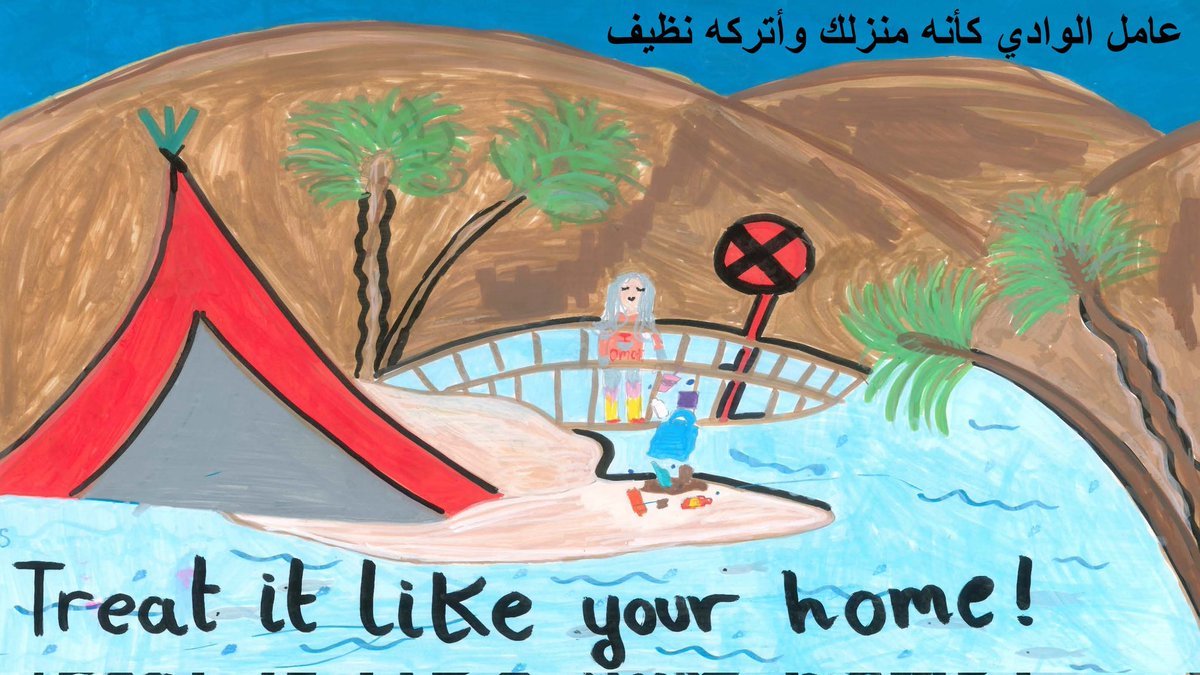
Pupils at #downehousemuscat have been contributing in big ways to some of our research projects: Tagging litter in drone images for @50YoLoS and creating signs for our Project Earthlings X @Research_SQU project to see if child designed signs have an impact on littering. 🚯












![nozdrenkov's tweet photo. [PROTOCOL] How to 3D-map Coral Reefs with just a few GoPros 🪸🎥
A simple, low-cost way of creating permanent high-res snapshots of coral reefs for divers using 3D photogrammetry.
🔵 We were recently mapping coral reefs in East Java and I was running a mini photogrammetry workshop. A lot of you friends were reaching out about how to capture a 3D model of a coral reef so that it could be analysed and guide conservation/restoration decisions.
🔵 https://t.co/wGFmH6i1ju -- here is a step-by-step tutorial explaining how to map the reef using relatively cheap equipment! 🎥
🔵 Why? Coral reefs are so precious, beautiful, incredibly complex and threatened ecosystems. We need to understand deeply how coral reefs function, what practices work, what don't, to coordinate precise actions to protect and restore them. Coral reefs are the key to protecting other ecosystems! That's why we doing it.
🔵 Sadly, In 84% of the restoration cases in Indonesia [1] people never come back to monitor their reefs. In many cases those corals would likely just die (same in other countries). The hard truth is that restoration without N years of monitoring is basically a money laundry. But we can’t blame people for that! One of the problems is the huge monitoring costs, it’s just not accessible to everyone. Once monitoring is cheap, a lot of money would be channeled towards projects that work. The whole process would be more streamlined.
🔵 There's a solution! There are thousands of scuba diving centers in the world. Almost any dive center or its visitors have an affordable camera like GoPro. It’s fairly easy to swim with a few GoPros around the reef every 6 months or a year.
🔵 The tech has moved forward very far! Why 3D Photogrammetry? It allows monitoring hectares of coral reefs in centimetre resolution: identifying corals, benthic cover (rock, sand), detecting diseases and their spread. We can track coral demography through time, calculate growth rates, carbonate budget, and more. It's not a silver bullet, but it's an awesome tool!
🔵 Fusing 3D data with other modalities like acoustics, genomics and environmental data (water temperature, salinity, dissolved oxygen etc.) unlocks a comprehensive understanding of coral ecosystem dynamics, and how we can protect and restore the reefs.
🔵 There's already a lot of organisations using this. You should give it a try as well! Watching your reef come to life in 3D is incredibly rewarding. You’ll see every coral, every nook, and every cranny. Remember, you’re not just collecting data, you’re creating a digital twin of the reef that can be studied, shared, and preserved for years to come!
🔵 Huge thanks to @JohnStratford_ , @jtlrocketman, Will Barnes, @BenWilliamsSci and other amazing people for sharing the best practices on data collection!
🔵 We could become the first generation that leaves nature behind better than we found it, if we work together! 🪸🌏](https://pbs.twimg.com/media/Gl8EMbgbYAMlREU.jpg)





