We were onboarding Blackfuel, the Paris inference cloud that came out of stealth in September with $250M+ in contracts.
One request to https://t.co/sahi879tU2 for Kimi-K3.
The response set a cookie for @OpenRouter
Yes the passwords were plain text. But for a reason “stupider” than lack of encryption for the sake of it. MyTUM communicates to TUMOnline by literally authenticating *as* the user. Hence why the plain text. This could have been prevented by the table itself or the database itself being encrypted. And the encryption layer being within the Application.
I wonder if the database password was in an .env file or how they got database access. That part is the, in my honest opinion, inexcusable part. Even more a SysAdmin without MFA and using same password on both places. That is just being reckless. That said the system should enforce MFA and not allow admins without MFA.
Maybe the ITO department is underpaid. Hoping that proper resources get invested in properly protecting the system.
Introducing fortitool: one static Go binary that decrypts and unpacks FortiOS firmware end to end, no openssl, no binwalk, no Python, nothing but the binary itself.
Along the way I found something nobody's published before:
FortiGate config backups hide passwords behind a hardcoded AES key, and the common belief is Fortinet rotated it back in 2019 after CVE-2019-6693. They didn't. It rotated quietly at 7.4, and the new key's been sitting unpublished until I reversed it out of /bin/init:
91bc4d1e0e5e35dea0e84803bb1c4cc49699362830f9d6a6c75880b181f6c1db
Full writeup: https://t.co/E4UGryoqyt
Code: https://t.co/XvYpP6oSws
I went to Home Depot to replace a single stripped bolt on my deck swing.
A Japanese man does not ask for directions when an aisle is clearly labeled with numbers.
After thirty-five minutes of wandering through an infinite canyon of 2x4 lumber and Makita drills, I was spiritually defeated. I was holding the damaged bolt against my chest like a dying sparrow.
An older employee named Bob—built like a grizzly bear in a faded orange apron, holding a half-empty Dunkin cup—spotted me staring blankly at a wall of 8,000 plastic drawers.
"What are we fixing, Chief?"
I opened my palm, presenting the oxidized, decapitated fragment of steel.
"I seek the true brother of this metal," I said.
Bob took the broken bolt. He didn’t reach for a sizing gauge. He didn’t scan a barcode. He rolled it between two calloused thumb pads, brought it to his nose, and took one solemn sniff.
"Five-sixteenths coarse thread. Grade 8 hardened steel. Zinc-plated. Aisle 14, bay 4, bottom drawer on the left."
He turned and began marching. I followed three paces behind like an apprentice following a master swordsmith.
He marched 150 yards without checking a single aisle sign.
He stopped, reached his thick hand into the exact drawer without looking down, and dropped two gleaming bolts into my palm.
"Take two. You’re gonna drop one in the mulch."
I bowed slightly and began crafting an elaborate explanation of my gratitude in broken English.
Bob gave a slow nod, took a sip of his coffee, and tapped his clipboard once.
"Build it strong, Samurai."
Home Depot does not sell hardware. It employs ancient wizards who restore men’s pride forty-five cents at a time.
Sadly @Ubiquiti has a really shitty fan-control for their "near-silent" Enterprise switches.
But nothing #GPT5.6-sol can't resolve when given the firmware to reverse engineer.
It patched the binary in place copied it back to switch and here we are.
SoftBank’s investor presentation is one of the greatest things ever made. I’ve been thinking about it all day. These are the real slides shown in a speech where Masayoshi Son said he wouldn’t retire for at least another decade. The goose stuff is perfect.
https://t.co/sk9cDhdWIE
Hey @Zai_org / @louszbd I'm on the GLM Coding Max (Yearly) plan but my account balance is being charged for GLM-5.1 usage through the coding-plan endpoint via OpenCode. Per your docs, supported-tool usage shouldn't deduct from balance. Emailed support days ago, no reply.
fun fact: tijdens de keynote hakt Apple een stukje 3k, 4k, 5k en 6kHz eruit wanneer ze "Siri" zeggen, zodat niet iedereens HomePods terug beginnen te praten 🗣️🚫
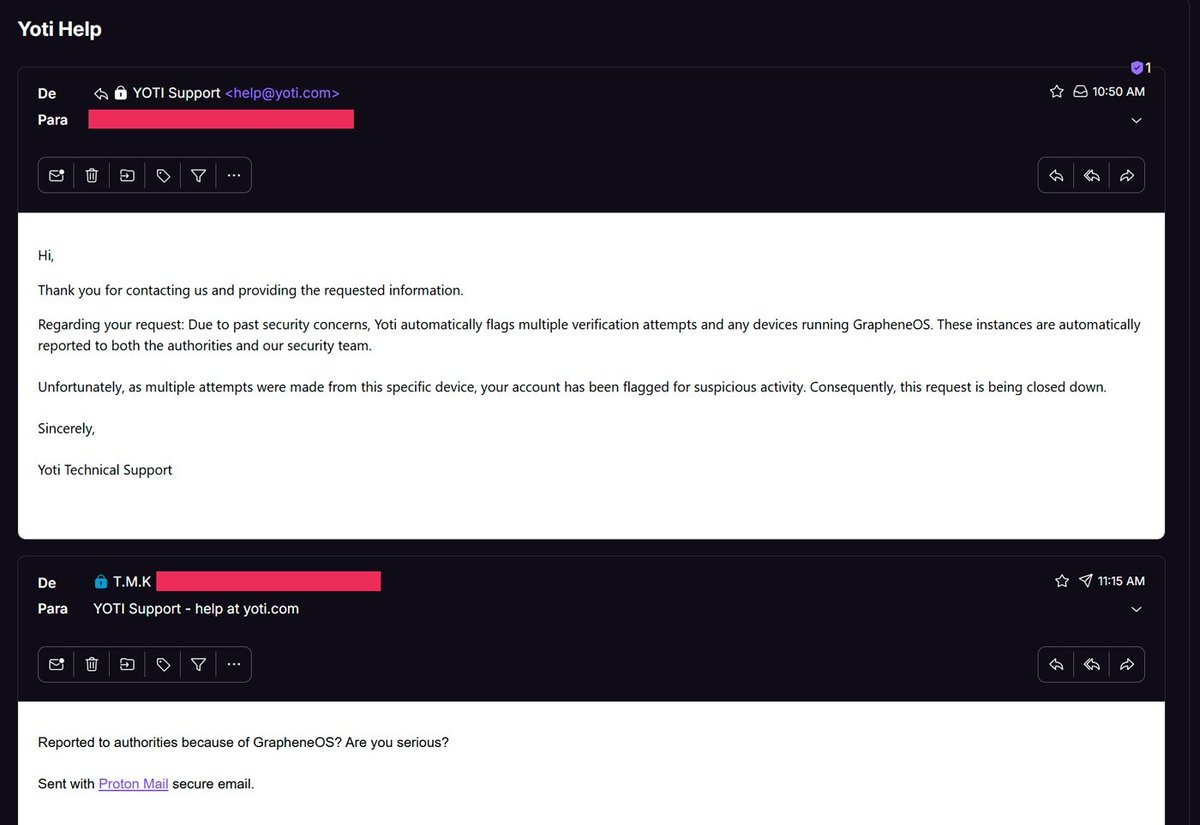
‼️🚨 BREAKING: Sony PlayStation's age-verification partner Yoti is reporting GrapheneOS users to authorities for using GrapheneOS, due to "past security concerns."
Well, well, well. The public JSON formatter sites your developers paste production data into have been quietly publishing every paste for about seven years. Naturally, we read all seven years of it.
200,000+ documents. Cloud keys, SSH keys, payment API keys, whole tax returns with SSNs, people's full identities, bank balances. Nobody hacked anything. People pasted it in to make it look tidy, as you do.
Full writeup below. Yes, it's as bad as it sounds.
‼️🚨 Malicious actors can now use your SSD's activity, just by getting you to open their website, to spy on which other sites you're browsing and which apps you're running.
The attack, called FROST, is accurate: 88.95% on identifying websites, 95.83% on identifying applications. It works on macOS and Linux, across browsers, and runs entirely in JavaScript.
The browser makers were told, and largely shrugged. Chromium says fingerprinting isn't a security bug. Apple called it out of scope. Mozilla acknowledged it and shipped nothing.
Researchers at Graz University of Technology developed the attack. It abuses the Origin Private File System, a browser feature that lets sites store files on your disk without asking. The attack creates one huge file, then constantly times how fast it can read from it. When you open another tab or launch an app, that activity competes for the same SSD, and the tiny changes in read speed leak what you're doing. A trained neural network turns those timing patterns into guesses about which site or app it is.